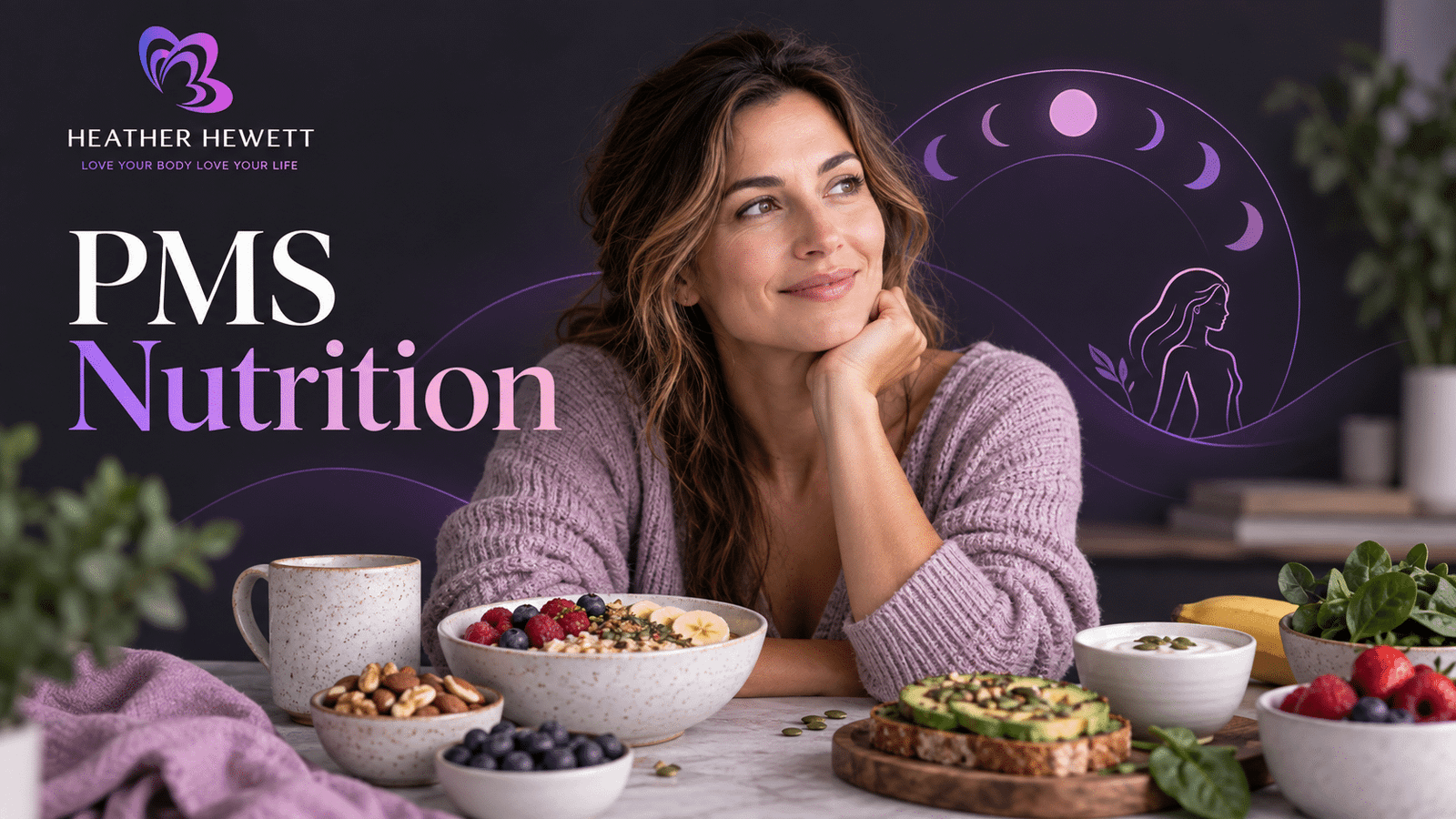
If you are wondering what to eat before your period, you do not need a special PMS diet, a long list of foods to avoid, or a perfectly planned luteal-phase menu.
A useful PMS nutrition approach starts with something simpler: eat enough, eat consistently, include a variety of nourishing foods, and pay attention to the symptoms that actually affect you.
Some nutrition strategies may help with certain PMS symptoms. Calcium-rich foods have some of the clearer evidence. Complex carbohydrate-rich foods, regular nourishment, and meals that include protein, fiber, carbohydrates, and dietary fats can also be practical. Other popular recommendations, including magnesium, vitamin D, omega-3 supplements, and highly specific “cycle-syncing” diets, have more mixed or limited evidence.
Your appetite and cravings may change before your period too. That does not mean you have failed at eating well, and it does not automatically mean your hormones or blood sugar are “out of balance.”
The goal is not to control your body more tightly during PMS.
It is to understand what may help you feel adequately nourished and supported.
Medical note: This article is for educational and wellness purposes only. It does not diagnose, treat, cure, or prevent PMS, PMDD, hormonal conditions, or other medical conditions. Persistent, severe, worsening, or disruptive symptoms should be discussed with an appropriately licensed healthcare professional.
What Is PMS?
Premenstrual syndrome, or PMS, describes a pattern of physical and emotional symptoms that happens after ovulation and before the start of a menstrual period.
Symptoms can include bloating, cramping, fatigue, headaches, breast tenderness, changes in appetite or food cravings, irritability, anxiety, low mood, sleep changes, and difficulty concentrating.
The Office on Women’s Health guide to premenstrual syndrome explains that PMS symptoms usually occur after ovulation and before menstruation, and that symptoms can vary considerably from one woman to another.
That variation matters for nutrition.
There is no reason to assume that every woman needs the same foods, the same meal schedule, or the same supplements before her period.
One woman may notice stronger hunger.
Another may experience bloating.
Someone else may notice cravings, fatigue, mood changes, digestive changes, or very little at all.
Your PMS nutrition strategy should reflect what is actually happening for you.
What Should You Eat Before Your Period?
A practical eating pattern before your period can include:
- adequate meals and snacks for your needs
- carbohydrate-rich foods, including whole grains, fruit, potatoes, rice, beans, or other foods you enjoy
- protein-rich foods
- calcium-rich foods
- vegetables and fruits
- fiber-rich foods
- dietary fats
- enough fluids
- foods that are satisfying and realistic for your life
You do not need every item at every meal.
You also do not need to suddenly eat differently simply because you have entered the luteal phase.
The American College of Obstetricians and Gynecologists PMS guidance specifically discusses complex carbohydrate-rich foods and calcium-rich foods as dietary strategies that may help some PMS symptoms.
The more important question is:
What would help you stay adequately nourished and comfortable during the days when your appetite, cravings, energy, or symptoms may be changing?
1. Start With Enough Food Before You Start Removing Foods
Before deciding that sugar, carbohydrates, dairy, gluten, caffeine, or another food is causing your PMS, look at whether you are eating enough overall.
Ask yourself:
- Am I regularly skipping meals?
- Am I going long periods without eating?
- Are my meals too small to satisfy me?
- Have I been restricting carbohydrates?
- Have I been avoiding fats?
- Do I spend the week before my period trying to “be extra healthy” and then feel intensely hungry later?
- Are food rules making eating more difficult?
Under-eating or inconsistent eating can make hunger and cravings more intense.
If your appetite naturally feels stronger before your period, trying to suppress it through restriction may make food feel even more urgent.
I prefer to begin with adequacy.
What might your body need more consistently before we decide what needs to be removed?
This is also central to my online Hormone Health Nutritionist support. I look at meal consistency, nutritional adequacy, appetite, cravings, food variety, stress, sleep, and unnecessary restriction rather than assuming everyone needs a generic hormone diet.
2. Do Not Be Afraid of Carbohydrates During PMS
Carbohydrate cravings before a period are often treated as something that needs to be controlled.
That can create unnecessary fear around perfectly normal foods.
Carbohydrate-containing foods include:
- oats
- rice
- potatoes
- bread
- pasta
- fruit
- beans
- lentils
- cereals
- tortillas
- other grains
Many also provide fiber, vitamins, minerals, or other nutrients.
ACOG recommends including complex carbohydrate-rich foods such as whole grains, beans, lentils, and brown rice as one possible dietary strategy for PMS symptoms.
That does not mean only “complex carbs” are allowed.
Nor does it mean you need to avoid sugar completely.
A more realistic approach is to include carbohydrate foods as part of meals that are satisfying enough for you.
For example:
- oatmeal with yogurt, berries, and nuts
- eggs with toast and fruit
- rice with chicken, tofu, beans, or another protein and vegetables
- pasta with a protein source, vegetables, and olive oil or pesto
- a baked potato with beans, cheese, vegetables, or another topping you enjoy
Food does not need to pass a hormonal purity test.
3. Include Protein as Part of a Satisfying Meal
Protein can help make meals more substantial and contributes essential amino acids and other nutrients.
Depending on your preferences, protein-rich foods might include:
- eggs
- Greek yogurt
- cottage cheese
- fish
- poultry
- meat
- tofu
- tempeh
- beans
- lentils
- chickpeas
- nuts and seeds
You do not need a specific “PMS protein.”
You also do not need to force unusually large amounts of protein because your period is approaching.
Think of protein as one useful part of your overall meal pattern.
4. Calcium-Rich Foods Deserve Particular Attention
Of all the nutrients frequently promoted for PMS, calcium has some of the more consistent evidence behind it.
Calcium-rich foods can include:
- milk
- yogurt
- cheese
- calcium-fortified plant milks
- calcium-set tofu
- certain leafy greens
- fortified foods
The Office on Women’s Health notes that research has found calcium may help reduce some PMS symptoms, including fatigue, cravings, and mood-related symptoms.
A systematic review of randomized controlled trials also found that calcium was among the nutritional interventions with the more consistent positive findings for psychological PMS symptoms, although the researchers emphasized that the overall nutrition evidence for PMS still has limitations.
For me, that makes calcium worth considering as part of your overall diet.
It does not mean every woman needs a calcium supplement.
Food intake, existing nutrient status, medications, health history, and other individual factors matter.
5. What About Magnesium for PMS?
Magnesium appears on almost every “best foods for PMS” list.
You will often see magnesium-rich foods such as:
- nuts
- seeds
- beans
- leafy greens
- whole grains
- certain fortified foods
These can certainly be nutritious foods.
But the evidence that magnesium supplementation specifically improves PMS symptoms is less consistent than social media often suggests.
The 2024 systematic review of randomized trials found insufficient evidence to support magnesium for psychological PMS symptoms, although the available evidence was limited and does not settle every possible question about magnesium and PMS.
Mayo Clinic similarly describes evidence for several supplements commonly promoted for PMS as limited or lacking.
So you do not need to treat magnesium-rich foods as medicine.
Include them because they can contribute useful nutrients and food variety, not because they have been given a “hormone balancing” label.
6. Does Vitamin B6 Help PMS?
Vitamin B6 is another nutrient frequently discussed in PMS nutrition.
Food sources can include:
- poultry
- fish
- potatoes
- bananas and other fruits
- fortified cereals
- chickpeas
The Office on Women’s Health notes that vitamin B6 may help some PMS symptoms.
A systematic review also found some positive evidence for vitamin B6 in psychological PMS symptoms, while emphasizing weaknesses and inconsistencies in the research overall.
This is an important distinction.
“Some evidence of benefit” is not the same as “every woman should take a B6 supplement.”
High-dose supplementation can also cause harm.
If you are thinking about supplements rather than simply including B6-containing foods, discuss that with an appropriately qualified healthcare professional.
7. What About Vitamin D and PMS?
Vitamin D is sometimes included in PMS supplement protocols, but the evidence is not strong enough to present vitamin D as a universal PMS treatment.
Vitamin D still matters for health.
The question is whether you actually need more of it.
That depends on factors such as diet, sun exposure, existing vitamin D status, life stage, health conditions, and medical guidance.
The systematic review of PMS nutritional interventions found insufficient evidence to support vitamin D supplementation for PMS-related psychological symptoms in people without a relevant deficiency.
So I would not take a “more is better” approach.
8. Do Omega-3 Foods Help PMS?
Omega-3 fatty acids are another popular PMS recommendation.
Food sources can include:
- salmon
- sardines
- trout
- other oily fish
- walnuts
- flaxseed
- chia seeds
These foods can contribute valuable nutrients to your overall diet.
But again, that does not make them PMS treatments.
Current evidence for specific fatty-acid interventions in PMS is less conclusive than many online articles suggest. The 2024 systematic review found insufficient evidence to make firm recommendations about dietary fatty-acid interventions for psychological PMS symptoms.
You can enjoy omega-3-rich foods as part of a varied eating pattern without turning them into another rule.
Why Are You Hungrier Before Your Period?
Feeling hungrier before your period is a common experience.
Changes in appetite are also recognized as a possible PMS symptom by the Office on Women’s Health.
But hunger before your period does not automatically mean:
- your hormones are broken
- your blood sugar is unstable
- you have eaten too much
- you need more willpower
- you should ignore the hunger
Appetite is influenced by many factors.
These can include:
- overall energy needs
- meal size
- how long you go between meals
- sleep
- stress
- physical activity
- satisfaction
- food restriction
- emotions
- menstrual-cycle changes
If you have already been eating less than you need, a stronger appetite can feel even more dramatic.
Instead of fighting the hunger, look at what your eating pattern may need.
You can explore this more deeply in my guide to why you may feel hungry all the time. It looks at meal adequacy, eating patterns, stress, sleep, and other possible contributors to frequent hunger.
Why Do You Crave Sugar or Carbohydrates Before Your Period?
PMS can include changes in appetite and food cravings.
But cravings are not a diagnosis.
Wanting chocolate, bread, dessert, or another carbohydrate-rich food before your period does not prove that your hormones or blood sugar are “imbalanced.”
Cravings can be influenced by:
- physical hunger
- irregular meals
- insufficient food
- food restriction
- sleep
- stress
- habit
- emotion
- reward
- menstrual-cycle changes
- simple enjoyment
This is why I would not respond to PMS cravings by automatically removing sugar or carbohydrates.
If you have spent the rest of the month tightly restricting sweets, your desire for them may become even stronger when appetite increases.
Sometimes the most useful question is:
“Have I actually been allowing myself enough food and enough satisfaction?”
My guide on why sugar cravings happen explores this more fully, including nutrition, sleep, stress, restriction, habits, and emotional triggers.
Should You Eat Differently During the Luteal Phase?
You can adjust your eating during the luteal phase if your appetite, symptoms, or routine genuinely change.
You do not have to follow a special luteal-phase diet.
The luteal phase occurs after ovulation and before menstruation. PMS symptoms happen during this premenstrual part of the cycle for people who experience them.
Instead of following an elaborate cycle-syncing food chart, consider practical questions:
- Am I becoming hungrier?
- Would an additional snack help?
- Are long gaps between meals making cravings stronger?
- Do I need easier foods because fatigue is higher?
- Am I getting enough calcium-rich foods?
- Is bloating affecting what feels comfortable to eat?
- Am I restricting foods because I think I “should”?
Your needs may change.
Your entire diet does not need to.
A Simple PMS Meal Framework
If deciding what to eat before your period feels confusing, use a flexible combination rather than a rigid PMS meal plan.
Try:
Carbohydrate + protein + fruit or vegetable + fat or another satisfying addition
Examples:
- oatmeal with yogurt, berries, and nuts
- toast with eggs and fruit
- rice with chicken or tofu, vegetables, and sauce
- potatoes with beans, cheese, or another protein and vegetables
- pasta with salmon, lentils, meat, or tofu and vegetables
- yogurt with fruit, cereal, and seeds
- a sandwich with protein, vegetables, fruit, and a side you enjoy
These are examples.
They are not prescriptions.
Some days you may want more food.
Some days you may prefer simpler meals.
There is no perfect PMS plate.
What Can You Eat for PMS Bloating?
Bloating is a common PMS symptom.
If bloating is uncomfortable, your first instinct may be to dramatically reduce food.
That is not necessarily helpful.
You may instead consider:
- maintaining adequate hydration
- eating foods that feel comfortable for your digestion
- keeping meals manageable if very large meals worsen fullness
- noticing whether very salty meals seem to worsen fluid retention for you
- avoiding unnecessary food restriction
Both ACOG and Mayo Clinic include reducing very salty foods among possible strategies for PMS-related bloating and fluid retention.
That does not mean sodium needs to be eliminated.
Your body still needs sodium.
The goal is not to create another extreme rule.
If bloating is severe, persistent, occurs throughout the month, or has changed significantly, it deserves appropriate medical evaluation rather than simply being labeled PMS.
Should You Avoid Caffeine Before Your Period?
You do not automatically have to stop drinking coffee because your period is approaching.
ACOG and Mayo Clinic include reducing or avoiding caffeine among lifestyle strategies that may help some women with PMS.
But individual responses differ.
You might notice that caffeine makes certain symptoms, such as sleep difficulty, jitteriness, anxiety, or breast tenderness, feel worse.
Or you may notice no meaningful difference.
Instead of turning caffeine into a forbidden food, observe your own pattern.
Should You Avoid Sugar During PMS?
You do not need to completely eliminate sugar.
ACOG includes reducing high-sugar foods among its general dietary suggestions for PMS, but that does not mean eating dessert causes PMS or that one sweet food will make your hormones “imbalanced.”
Look at your overall pattern.
There is a meaningful difference between:
“Most of my food intake is not meeting my nutritional needs.”
and:
“I ate chocolate before my period, so I failed.”
Those are not the same thing.
Food guilt rarely improves nutrition.
Does Eating Smaller, More Frequent Meals Help PMS?
It can help some people, particularly if bloating, fullness, or long gaps between meals are uncomfortable.
ACOG and Mayo Clinic both include smaller or more frequent meals as possible PMS strategies.
But there is no reason every woman must eat six small meals per day.
Some people feel better with three meals and snacks.
Others prefer larger meals.
Meal timing should support your appetite, digestion, routine, and nutritional needs.
It is a tool, not a rule.
What Foods Should You Avoid for PMS?
There is no universal list of foods every woman needs to avoid before her period.
You will find plenty of articles telling you to remove:
- sugar
- dairy
- gluten
- carbohydrates
- caffeine
- salty foods
- processed foods
- chocolate
- alcohol
- entire food groups
Some of these may be worth adjusting depending on your symptoms, health, preferences, or medical needs.
But automatic elimination is not my starting point.
I prefer to ask:
- What symptom are we trying to address?
- Is there a reasonable connection between that symptom and this food?
- Have you actually noticed a consistent pattern?
- Will removing the food make your diet less adequate or more stressful?
- Is this something that needs medical assessment rather than another food rule?
The first question should not always be:
“What should I stop eating?”
Sometimes a better question is:
“What might I need more consistently?”
Do You Need PMS Supplements?
Not automatically.
Calcium, vitamin B6, magnesium, vitamin D, zinc, omega-3s, herbal products, and combination “PMS support” supplements are widely promoted.
The evidence is not equally strong for all of them.
A systematic review of 31 randomized controlled trials found some positive evidence for calcium, vitamin B6, and zinc for psychological PMS symptoms, but also found important limitations in the overall research and insufficient evidence for several other commonly promoted interventions.
Mayo Clinic similarly notes that evidence for several vitamin, mineral, and herbal remedies is limited or lacking.
Supplements can also interact with medications or cause harm when taken inappropriately.
Food-first does not mean supplements are never useful.
It means they should have a clear reason.
Can Diet Cure PMS?
No.
Nutrition may support wellbeing and may help some PMS symptoms, but diet should not be presented as a cure for PMS.
Researchers still do not fully understand why some women experience PMS more strongly than others. Hormonal changes during the menstrual cycle appear to play a role, but individual sensitivity to those changes also matters.
PMS can involve physical, emotional, neurological, and behavioral symptoms.
Food is one part of the picture.
Sleep, stress, physical activity, medical conditions, mental health, medications, and individual biology may also be relevant.
When Should You Talk to a Healthcare Professional About PMS?
Consider seeking medical support if your symptoms are:
- severe
- getting worse
- new or unexplained
- interfering with school, work, relationships, sleep, or everyday activities
- causing significant emotional distress
- difficult to manage with ordinary self-care
- happening outside the usual premenstrual pattern
The Office on Women’s Health recommends talking with a doctor or nurse when PMS symptoms interfere with daily life.
Tracking symptoms across several menstrual cycles can also help identify whether there is a consistent premenstrual pattern.
What Is the Difference Between PMS and PMDD?
PMDD, or premenstrual dysphoric disorder, is a more severe premenstrual condition.
PMS can involve both physical and emotional symptoms.
PMDD involves more severe symptoms, particularly mood-related symptoms, that can significantly affect daily functioning.
The Office on Women’s Health notes that severe PMS-type symptoms may indicate PMDD and should be medically assessed.
PMDD is not something to self-treat with a special diet or supplement protocol.
Nutrition may complement appropriate care, but it is not a replacement for diagnosis and treatment.
A More Useful PMS Nutrition Checklist
Instead of asking, “What foods balance my hormones before my period?” try these questions:
- Am I eating enough overall?
- Am I going too long between meals?
- Are my meals satisfying enough?
- Am I including carbohydrate foods rather than fearing them?
- Am I getting regular sources of protein?
- Do calcium-rich foods appear regularly in my diet?
- Am I getting enough food variety?
- Are PMS cravings leading me to restrict even more?
- Are bloating or digestive changes affecting how I eat?
- Are my symptoms significant enough to need medical assessment?
Those questions create a much clearer starting point than another list of “good” and “bad” hormone foods.
Frequently Asked Questions
What should I eat before my period?
Focus on adequate, regular meals containing foods you enjoy and tolerate. A useful foundation can include carbohydrate-rich foods, protein, fruits and vegetables, dietary fats, fiber-rich foods, and calcium-rich foods. You do not need a special pre-period diet.
What foods help PMS?
There is no single food proven to eliminate PMS. Calcium-rich foods have some of the more consistent evidence. Complex carbohydrate-rich foods, adequate meals, fruits, vegetables, whole grains, protein-rich foods, and other nutrient-dense choices can contribute to an overall supportive eating pattern.
Can diet help PMS symptoms?
It may help some symptoms for some women. Research supports certain nutrition strategies more strongly than others, but there is no universal PMS diet and the overall evidence for many supplements and specialized diets remains limited.
Why am I hungrier before my period?
Appetite changes can occur with PMS. Hunger can also be affected by how much you are eating, meal timing, sleep, stress, activity, restriction, satisfaction, and other individual factors. Stronger hunger is not automatically a sign that something is wrong.
Why do I crave sugar before my period?
PMS can include food cravings, but sugar cravings can also be influenced by hunger, irregular meals, restriction, sleep, stress, emotions, habits, and simple enjoyment. A craving alone does not diagnose a hormone or blood sugar problem.
Do carbohydrates help PMS?
ACOG includes complex carbohydrate-rich foods among dietary strategies that may help some PMS symptoms. Carbohydrates also provide energy and can contribute fiber, vitamins, and minerals depending on the food. You do not automatically need a low-carbohydrate diet before your period.
Does calcium help PMS?
Calcium has some of the stronger evidence among nutrients studied for PMS. Calcium-rich foods can be a useful part of your diet. Whether a supplement is appropriate is an individual decision that should consider your diet, health, and medical guidance.
Does magnesium help PMS?
Magnesium-rich foods can contribute valuable nutrients, but current research does not provide strong enough evidence to treat magnesium supplementation as a universal PMS solution.
Does vitamin B6 help PMS?
Some studies suggest vitamin B6 may help certain PMS symptoms, particularly psychological symptoms, but evidence has limitations. High-dose supplementation can be harmful, so supplement use should be discussed with an appropriate healthcare professional.
Does omega-3 help PMS?
Omega-3-rich foods can be part of a nutritious eating pattern, but evidence for omega-3 supplementation specifically treating PMS is not conclusive.
Should I avoid caffeine before my period?
Some clinical guidance suggests reducing caffeine may help certain women with PMS. Your individual response matters. If caffeine worsens sleep, anxiety, breast tenderness, or other symptoms, reducing it may be worth considering.
What foods should I avoid before my period?
There is no universal list. Some women find that large amounts of salty foods, caffeine, or alcohol worsen particular symptoms, but automatic elimination of carbohydrates, gluten, dairy, sugar, or other food groups is usually unnecessary without an individual reason.
Are period cravings normal?
Changes in appetite and food cravings are recognized PMS symptoms. Cravings do not automatically mean your hormones or blood sugar are abnormal.
Should I eat differently during the luteal phase?
Only if doing so responds to a genuine change in your appetite, symptoms, or nutritional needs. You do not need a separate luteal-phase diet simply because you are in that part of your menstrual cycle.
When should I see a doctor about PMS?
Talk with an appropriate healthcare professional if symptoms are severe, worsening, distressing, unusual, or interfering with daily activities. Severe emotional symptoms may require assessment for PMDD or another condition.
PMS Nutrition Does Not Need to Become Another Diet
The week before your period does not need to become a monthly nutrition project.
You do not need a perfect luteal-phase meal plan.
You do not need to fear carbohydrates.
You do not need to earn chocolate.
And you do not need to automatically start taking a collection of “hormone balancing” supplements.
Start with nourishment.
Eat consistently enough for your needs.
Include foods that provide protein, carbohydrates, fiber, dietary fats, calcium, and a range of other nutrients.
Pay attention to appetite and cravings without judging them.
Adjust your eating when a change genuinely helps you.
And seek medical support when symptoms are severe or disruptive.
If menstrual changes, cravings, appetite, digestion, or conflicting hormone-health advice are making nutrition feel harder than it needs to, my online Hormone Health Nutritionist service for women offers personalized, food-first support.
My approach is non-restrictive and built around your individual needs. Together, we can look at meal consistency, nutritional adequacy, appetite, cravings, food variety, digestion, stress, sleep, life-stage changes, and unnecessary food rules without automatically putting you on another hormone diet.
If your needs are broader than PMS or hormone-related nutrition, you can also explore my online Women’s Health Nutritionist support, which considers nutrition across different stages of adult women’s lives.