
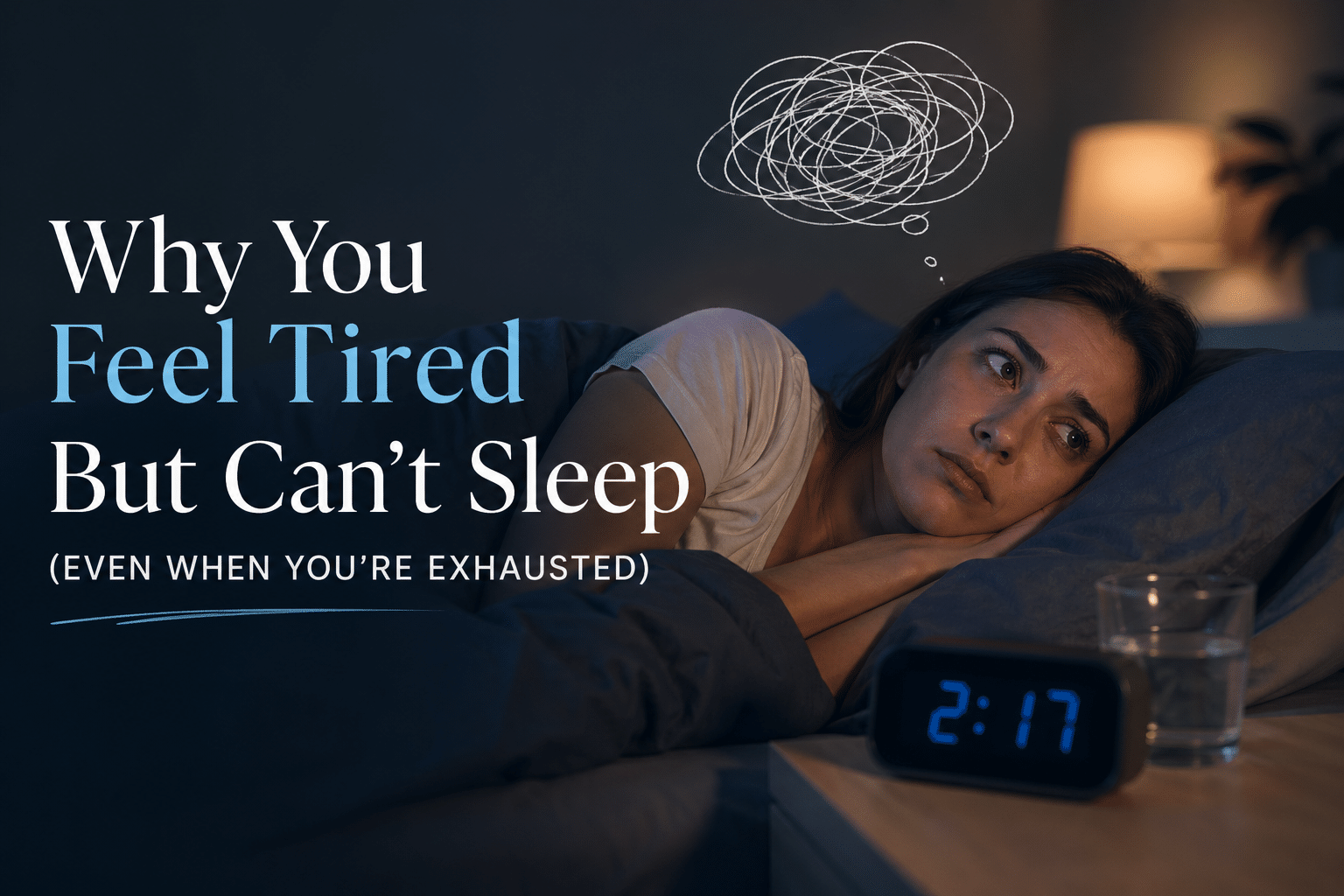
Do you feel exhausted all day, but the moment you lie down, your mind won’t stop?
Your body is tired, but your brain stays active. You might notice this when you feel exhausted, but your mind keeps replaying thoughts the moment you try to sleep. This usually happens when your nervous system is still in a stress response, making it hard to fall asleep even when you need it most.
You feel tired but can’t sleep because your nervous system remains activated, keeping your body in a stress state even when you are physically exhausted.
This often happens due to nervous system dysregulation.
Why do you feel tired but unable to sleep?
You feel tired but can’t sleep when your body is physically exhausted, but your nervous system remains alert.
This happens when:
- Your stress response stays active
- Your mind keeps processing thoughts
- Your body doesn’t fully relax
As a result, your body feels tired, but your system doesn’t feel safe enough to fall asleep.
What happens in your body at night?
At night, your body is supposed to shift into a calm state that supports rest and recovery.
But when your nervous system is activated:
- Your heart rate stays slightly elevated
- Your thoughts remain active
- Your body stays tense
- Your breathing becomes shallow
This prevents your body from entering deep, restorative sleep.
Why your body feels “wired but tired” at night
Your body feels “wired but tired” when your nervous system is stuck between stress and exhaustion.
This means:
- Your body is physically tired
- But your brain is still alert
- Your system is trying to rest and stay awake at the same time
This is one of the most common sleep problems linked to nervous system dysregulation.
Why your mind becomes more active at night?
Your mind often becomes more active at night because there are fewer distractions.
During the day, your attention is occupied. At night:
- Thoughts become louder
- Your brain processes unresolved stress
- Your mind starts analyzing situations
If your nervous system is already activated, this effect becomes stronger.
What triggers poor sleep and nighttime anxiety?
Sleep problems are often linked to nervous system activation.
Common triggers include:
- Stress and overthinking
- Too much screen time before bed
- Lack of a calming routine
- Mental overload during the day
- Irregular sleep schedule
These are common sleep problems connected to a heightened stress response.
Why your body doesn’t switch off at night?
Your body doesn’t switch off because your nervous system hasn’t received enough signals of safety.
Even if you are tired, your system may still feel alert.
This is why:
- You feel sleepy but can’t fall asleep
- You wake up easily
- Your sleep feels light or broken
These patterns are commonly discussed in nervous system and stress regulation approaches to sleep.
How to calm your nervous system before sleep
To sleep better, you need to calm your nervous system before bed, not just try to fall asleep.
Here are simple techniques that help:
1. Slow your breathing before bed
This is one of the most effective ways to calm your nervous system quickly.
Try:
- Inhale for 4 seconds
- Exhale for 6–8 seconds
- Repeat for a few minutes
2. Reduce stimulation at night
Your nervous system needs low input before sleep.
Try:
- Turning off screens 30–60 minutes before bed
- Lowering lights
- Avoiding heavy thinking or work
This helps your body prepare for rest.
3. Create a consistent nighttime routine
A routine helps your body recognize when it’s time to relax.
Examples:
- Drinking something warm
- Reading something light
- Sitting quietly
Consistency helps your nervous system settle.
4. Get out of your head and into your body
If your mind is racing, shift your focus to your body.
You can:
- Feel your body on the bed
- Relax each muscle slowly
- Focus on your breathing
This helps regulate your nervous system.
5. Accept wakefulness instead of forcing sleep
Trying to force sleep increases pressure and stress.
Instead:
- Allow yourself to rest
- Stop trying to “make” sleep happen
This reduces anxiety and helps your body relax naturally.
You need to calm your nervous system before your body can rest.
What to avoid before sleep?
Certain habits keep your nervous system activated.
Avoid:
- Using your phone right before bed
- Overthinking or problem-solving at night
- Drinking caffeine late in the day
- Forcing yourself to sleep
These make it harder to fall asleep.
How to reset your sleep cycle naturally
Resetting your sleep cycle requires consistency and nervous system support.
Start with:
- Going to bed and waking up at the same time daily
- Getting natural light in the morning
- Reducing stimulation at night
- Creating a calming routine
Over time, your body learns when to rest.
Why you feel more anxious at night?
You may feel more anxious at night because your brain has more space to process stress.
Without distractions:
- Thoughts become stronger
- Emotions surface
- Your mind becomes more active
If your nervous system is sensitive, this can feel intense.
What to do if sleep anxiety gets worse?
If sleep anxiety increases, focus on calming your body instead of forcing sleep.
Try:
- Slow breathing
- Grounding techniques
- Reminding yourself that you are safe
- Letting go of the pressure to sleep
This helps reduce anxiety around sleep.
What if you wake up in the middle of the night?
Waking up at night is often a sign of nervous system activation.
If this happens:
- Stay calm
- Avoid checking your phone
- Slow your breathing
- Focus on relaxing your body
This helps your system settle again.
How long does it take to improve sleep?
You may notice small improvements within days, but deeper sleep changes take time.
Learning how to fall asleep faster comes from consistent nervous system regulation.
FAQs
Why am I so tired but can’t sleep?
You may feel tired but unable to sleep because your nervous system is still in a stress response.
How do I calm my mind before bed?
Slow breathing, reducing stimulation, and creating a calm routine can help settle your mind.
Why does my brain not shut off at night?
Your brain stays active because your nervous system is still alert and processing stress.
Can anxiety cause sleep problems?
Yes, anxiety and nervous system activation can make it harder to fall asleep and stay asleep.
What is the fastest way to fall asleep?
The fastest way to fall asleep is to calm your nervous system through breathing and reducing stimulation.
How do I stop waking up at night?
Reducing stress, calming your nervous system, and maintaining a consistent routine can improve sleep continuity.