
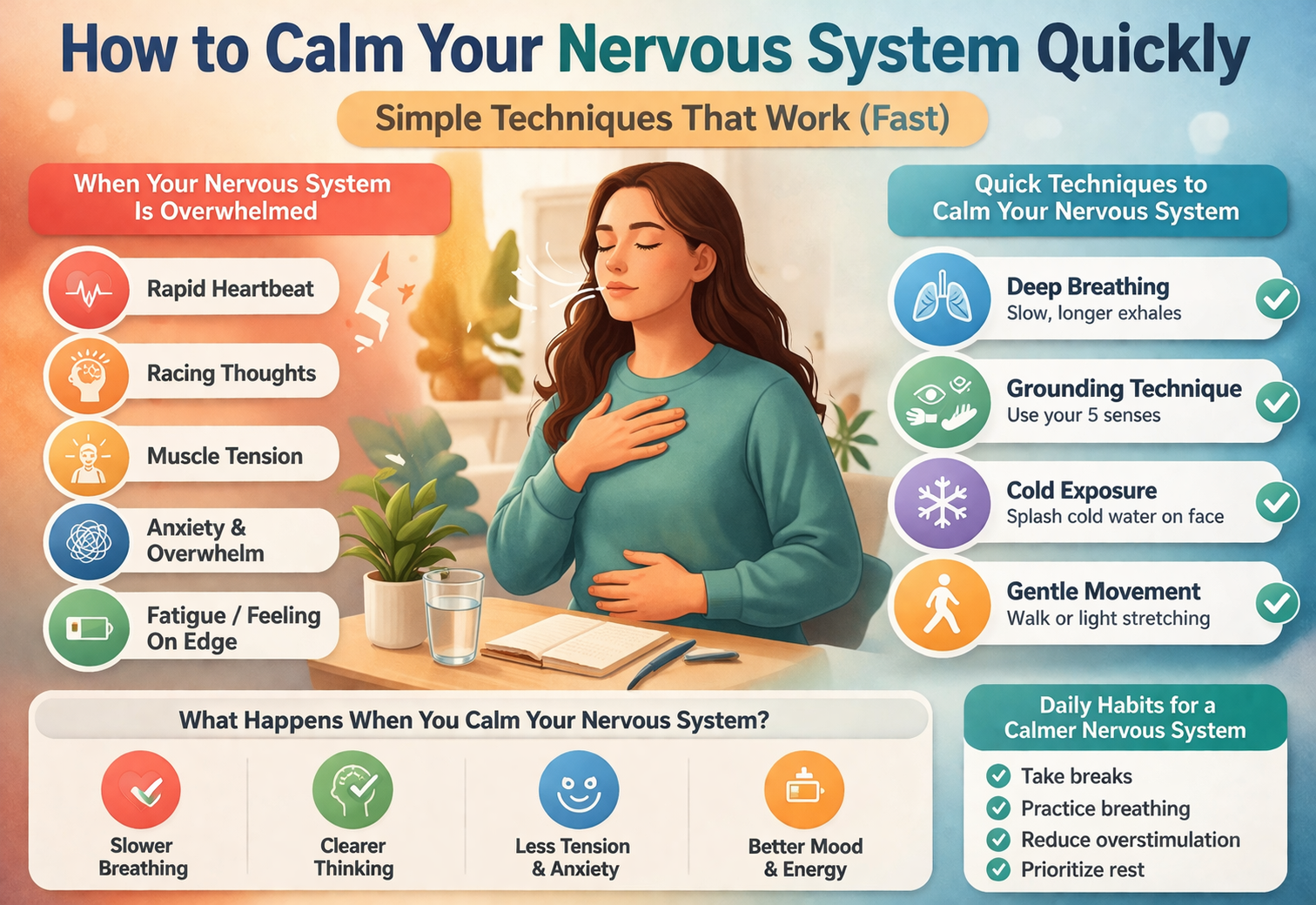
Calm nervous system fast techniques can help you feel more relaxed and balanced within minutes. You can calm your nervous system quickly by using techniques like deep breathing, grounding, and gentle movement. These help your body shift out of stress mode and into a calmer, more balanced state often within minutes.
If you feel anxious, overwhelmed, or constantly “on edge,” your body may be stuck in a stress response. The goal is not to force calm, it’s to help your body feel safe again.
What Happens When Your Nervous System Is Overwhelmed?
Your nervous system is designed to protect you.
When it detects stress, it activates the fight-or-flight response:
- Heart rate increases
- Breathing becomes shallow
- Stress hormones rise
This is helpful short-term, but harmful when constant.
What Are the Signs Your Nervous System Needs Calming?
Physical Signs
- Rapid heartbeat
- Muscle tension
- Shallow breathing
- Fatigue
Emotional Signs
- Anxiety
- Irritability
- Feeling overwhelmed
- Difficulty relaxing
Mental Signs
- Racing thoughts
- Poor focus
- Constant worry
These are signals your body needs support.
Why Does Your Body Stay in Stress Mode?
Your body may stay activated due to:
- Chronic stress
- Past experiences
- Lack of rest
- Overstimulation
Over time, this can feel like your normal state.
How Does Nervous System Regulation Work?
Your nervous system has two main states:
- Sympathetic → stress (fight or flight)
- Parasympathetic → calm (rest and digest)
Regulation means helping your body shift into the calm state.
Why Is It Hard to Calm Down?
If you struggle to relax, there’s a reason.
When your body doesn’t feel safe, it won’t easily switch off. This is why forcing calm often doesn’t work.
Your body needs signals of safety.
How to Calm Your Nervous System Quickly
These techniques work fast and effectively.
1. Deep Breathing
Inhale for 4 seconds, exhale for 6 seconds.
Repeat for 2–5 minutes.
2. Grounding Technique
Use your senses:
- 5 things you see
- 4 things you feel
- 3 things you hear
- 2 things you smell
- 1 thing you taste
3. Cold Exposure
- Splash cold water on your face
- Hold something cold
This helps reset your system.
4. Gentle Movement
- Walking
- Stretching
- Light yoga
Movement releases tension.
A Simple Nervous System Reset Routine
Immediate (1–5 minutes)
- Breathing
- Grounding
Short-Term (10–20 minutes)
- Walk
- Step away from stress
Daily Support
- Regular breathing
- Movement
- Rest
Consistency builds stability.
What Happens When Your Body Calms?
You may notice:
- Slower breathing
- Less tension
- Clearer thinking
- Better mood
These are signs of regulation.
Common Mistakes When Trying to Calm Down
- Forcing relaxation
- Expecting instant results
- Ignoring body signals
- Doing too much
Keep it simple and consistent.
Long-Term Nervous System Support
Focus on:
- Daily habits
- Better sleep
- Stress reduction
- Emotional awareness
This helps your body feel safe over time.
How Does This Affect Eating Habits?
When your nervous system is dysregulated:
- Emotional eating increases
- Cravings increase
- Hunger signals become unclear
As your system regulates, these patterns improve naturally.
When to Seek Support
If you feel:
- Constant anxiety
- Ongoing overwhelm
- Difficulty functioning
Support can help you feel more stable.
How Coaching Can Support You
With the right support, you can:
- Understand your stress patterns
- Learn regulation tools
- Build supportive habits
- Improve emotional and physical balance
Daily Habits to Keep Your Nervous System Calm
- Take breaks
- Practice breathing
- Reduce overstimulation
- Prioritize rest
Small actions make a big difference.
Final Thoughts
Your nervous system is not broken; it’s responding to stress.
With simple, consistent support, your body can return to a calmer, more balanced state.
FAQs
How can I calm my nervous system quickly?
Breathing, grounding, and gentle movement can help within minutes.
What causes nervous system dysregulation?
Chronic stress, past experiences, and lifestyle factors.
How long does it take to calm down?
Some techniques work quickly, but long-term balance takes consistency.
Can breathing reduce anxiety?
Yes, it activates your body’s calming response.
Why do I feel constantly on edge?
Your nervous system may be stuck in a stress response.