
Do you feel tense, overwhelmed, or unable to fully relax even when everything seems fine?
This often happens when your nervous system is dysregulated. You might notice yourself moving between feeling anxious, drained, or “wired but tired” throughout the day. Understanding the difference between a dysregulated and regulated nervous system can help you recognize what’s happening in your body and how to move toward feeling calm again.
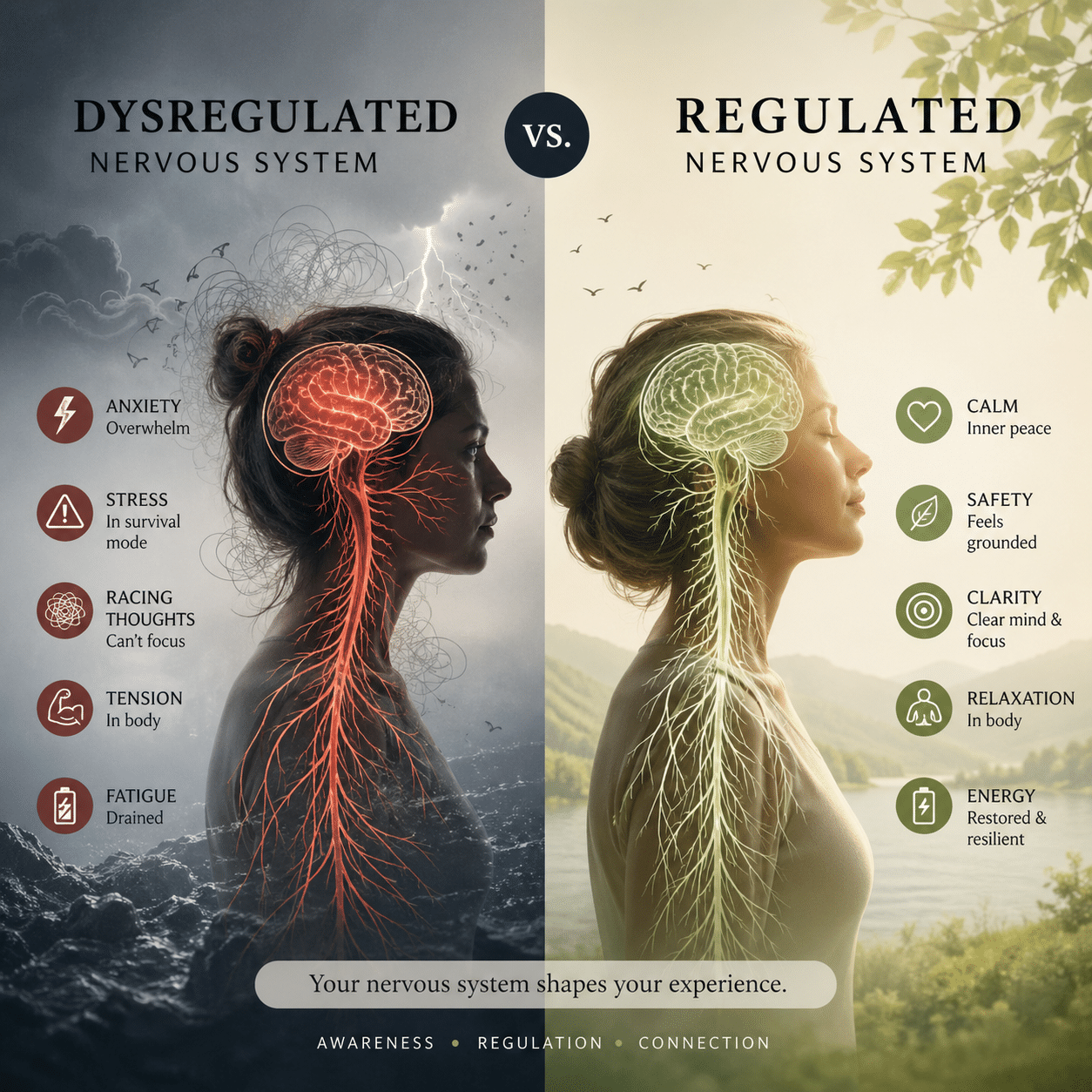
A dysregulated nervous system stays stuck in stress or shutdown, while a regulated nervous system can shift between stress and calm naturally, allowing your body to feel safe, stable, and balanced.
This can also relate to common burnout symptoms where your body stays in prolonged stress.
What is a dysregulated nervous system?
A dysregulated nervous system is when your body remains stuck in a stress response or struggles to return to a calm state.
Instead of moving smoothly between activation and relaxation, your system becomes fixed in one state.
This can look like:
- Constant anxiety or tension
- Feeling overwhelmed easily
- Difficulty relaxing
- Emotional ups and downs
- Feeling “wired but tired”
Your body is reacting as if danger is present even when you are safe.
What is a regulated nervous system?
A regulated nervous system is flexible, responsive, and balanced.
It allows your body to:
- Respond to stress when needed
- Return to calm after the stress passes
- Stay stable throughout daily activities
This flexibility creates a sense of safety and control in your body.
Signs Your Nervous System May Be Dysregulated
A dysregulated nervous system can affect both the body and mind in everyday life.
Common signs include:
- constant anxiety or tension
- feeling overwhelmed easily
- difficulty relaxing
- emotional numbness
- overthinking
- poor sleep
- feeling “wired but tired”
- exhaustion after small tasks
- increased sensitivity to stress or noise
These symptoms often happen when the body remains stuck in survival mode for long periods of time.
The core difference: flexibility vs stuckness
The biggest difference between a dysregulated and regulated nervous system is flexibility.
- A dysregulated system gets stuck
- A regulated system adapts and recovers
A healthy nervous system doesn’t avoid stress—it moves through it and returns to calm.
Key differences between a dysregulated and regulated nervous system
The difference becomes clearer when you compare both states side by side.
🔴 Dysregulated nervous system
- Feels constantly stressed or on edge
- Struggles to relax even during rest
- Overreacts to small triggers
- Experiences anxiety, tension, or numbness
- Takes a long time to recover after stress
- Feels internally unsafe or unsettled
🟢 Regulated nervous system
- Feels calm and stable most of the time
- Can relax without effort
- Responds appropriately to stress
- Recovers quickly after challenges
- Feels safe and grounded in the body
- Maintains emotional balance
What does a dysregulated nervous system feel like?
A dysregulated nervous system often feels uncomfortable, unpredictable, and exhausting.
You might:
- Feel anxious for no clear reason
- Struggle to calm down
- Feel overwhelmed by small things
- Experience constant physical tension
- Have difficulty focusing
- Notice sleep problems
This is a common sign of nervous system dysregulation.
What does a regulated nervous system feel like?
A regulated nervous system feels calm, steady, and balanced.
You may notice:
- A sense of ease in your body
- Clear and focused thinking
- Emotional stability
- Ability to handle stress without panic
- Faster recovery after challenges
This creates a feeling of safety and control.
Everyday Signs of a Dysregulated Nervous System
A dysregulated nervous system can affect ordinary moments throughout the day.
You may notice:
- feeling overwhelmed by simple tasks
- struggling to fully relax at night
- becoming emotionally reactive more easily
- needing constant distraction or stimulation
- feeling exhausted but mentally alert
- overthinking conversations or decisions
- feeling emotionally numb or disconnected
- becoming easily overstimulated by noise, people, or stress
Many people experience these patterns for months or years without realizing their nervous system is stuck in survival mode.
Why does the nervous system become dysregulated?
Your nervous system becomes dysregulated when it is exposed to repeated stress without enough recovery.
Research from the American Psychological Association shows that long-term stress impacts both mental and physical health.
Common causes include:
- Chronic stress or pressure
- Overthinking and mental overload
- Emotional suppression
- Lack of rest and recovery
- Constant stimulation (screens, noise, information)
Over time, your body adapts by staying in survival mode.
These patterns are commonly discussed in nervous system and stress regulation approaches.
The different states of a dysregulated nervous system
A dysregulated nervous system can show up in different states throughout the day.
1. Fight or flight (hyperactive state)
You may feel:
- Restless
- On edge
- Easily overwhelmed
- Unable to relax
2. Freeze (shutdown state)
You may feel:
- Numb
- Low energy
- Disconnected
- Unmotivated
3. Mixed state (“wired but tired”)
You may feel:
- Mentally active but physically exhausted
- Tired but unable to rest
- Stressed and drained at the same time
Understanding these states helps explain why your experience can change throughout the day.
Why a regulated nervous system feels so different
A regulated nervous system creates a sense of internal safety.
When your body feels safe:
- Your stress response turns off when it’s no longer needed
- Your mind becomes quieter
- Your body relaxes naturally
You don’t have to force calm—it happens automatically.
Can a dysregulated nervous system become regulated?
Yes, your nervous system can become more regulated over time.
Your body is adaptable, which means it can learn new patterns of safety and calm.
However, this change happens gradually, not instantly.
What Can Trigger Nervous System Dysregulation?
Many different experiences can contribute to nervous system dysregulation over time.
Common triggers include:
- chronic stress
- burnout
- emotional overwhelm
- unresolved trauma
- poor sleep
- constant pressure or overworking
- major life changes
- relationship stress
- overstimulation from busy environments or technology
When the body experiences stress for long periods without enough recovery, the nervous system may struggle to return to a calm and balanced state.
How to move from dysregulated to regulated
You don’t fix your nervous system by forcing calm. You support it by creating conditions where it can relax naturally.
Here are effective ways to begin:
1. Slow your breathing
Breathing with longer exhales signals safety to your nervous system.
Try:
- Inhale for 4 seconds
- Exhale for 6–8 seconds
2. Ground yourself in your body
Shifting attention to your body helps reduce overthinking.
You can:
- Feel your feet on the ground
- Notice your breathing
- Focus on physical sensations
3. Reduce overstimulation
Too much input keeps your system activated.
Try reducing:
- Screen time
- Noise
- Multitasking
4. Use gentle movement
Movement helps release stored tension.
Try:
- Walking
- Stretching
- Light exercise
5. Stay consistent
Consistency is what creates long-term regulation.
Small daily actions lead to lasting change.
Why regulation takes time?
Regulation takes time because your nervous system learns through repetition.
If your body has been in stress mode for a long time, it needs consistent signals of safety to change.
You may notice:
- Small improvements first
- Gradual reduction in symptoms
- Better recovery over time
What happens when your nervous system becomes more regulated?
As your nervous system becomes more regulated, you may notice:
- Less anxiety
- Better sleep
- Improved focus
- More emotional stability
- Increased energy
You begin to feel more in control of your body and mind.
Common mistakes when trying to regulate your nervous system
Some approaches can slow progress.
Avoid:
- Forcing yourself to relax
- Expecting instant results
- Ignoring your body’s signals
- Trying too many techniques at once
Simple and consistent approaches work best.
What if you feel stuck in a dysregulated state?
If you feel stuck, it usually means your nervous system has adapted to stress.
Instead of forcing change:
- Start small
- Be consistent
- Support your body gently
Your system can shift over time.
Can a Dysregulated Nervous System Become Regulated?
Yes. The nervous system is adaptable and capable of change.
With consistent support, the body can gradually move out of chronic stress patterns and begin feeling safer, calmer, and more balanced.
Helpful practices may include:
- breathing exercises
- grounding techniques
- better sleep habits
- stress reduction
- gentle movement
- emotional support
- reducing overstimulation
Regulation usually happens slowly through repetition and consistency rather than instant results.
Small Daily Habits That Support Nervous System Regulation
Small daily habits can help support a more regulated nervous system over time.
Helpful practices may include:
- deep breathing
- gentle movement
- spending time outdoors
- reducing overstimulation
- improving sleep routines
- mindfulness or grounding exercises
- taking breaks during stressful days
- creating moments of safety and rest
Consistency often matters more than perfection when supporting nervous system recovery.
Final Thought
Your nervous system is not broken.
It is adapting to what it has experienced.
When you understand the difference between dysregulation and regulation, you gain the ability to support your body in a new way.
With time, patience, and consistent support, your body can move from stress and tension toward calm, safety, and balance.
FAQs
What is the difference between dysregulated and regulated nervous system?
A dysregulated nervous system stays in stress, while a regulated nervous system can return to calm naturally.
Can you fix a dysregulated nervous system?
Yes, with consistent practices like breathing, grounding, and reducing stress, your nervous system can become more regulated.
How do I know if my nervous system is regulated?
If you feel calm, stable, and able to handle stress without becoming overwhelmed, your nervous system is likely more regulated.
Why does my nervous system stay in stress mode?
Your nervous system may stay in stress mode due to repeated exposure to stress without enough recovery.
How long does it take to regulate the nervous system?
It varies, but consistent practice over time leads to noticeable improvement.
What does a regulated nervous system feel like?
A regulated nervous system often feels calm, grounded, emotionally balanced, and able to recover from stress more easily.
Can stress dysregulate the nervous system?
Yes. Long-term stress can keep the nervous system stuck in survival mode, making it harder for the body to relax and recover.
What causes nervous system dysregulation?
Long-term stress, emotional overwhelm, burnout, trauma, poor sleep, and constant overstimulation can contribute to nervous system dysregulation.
Can nervous system dysregulation affect emotions?
Yes. Nervous system dysregulation can increase anxiety, emotional overwhelm, irritability, numbness, and difficulty handling stress.