
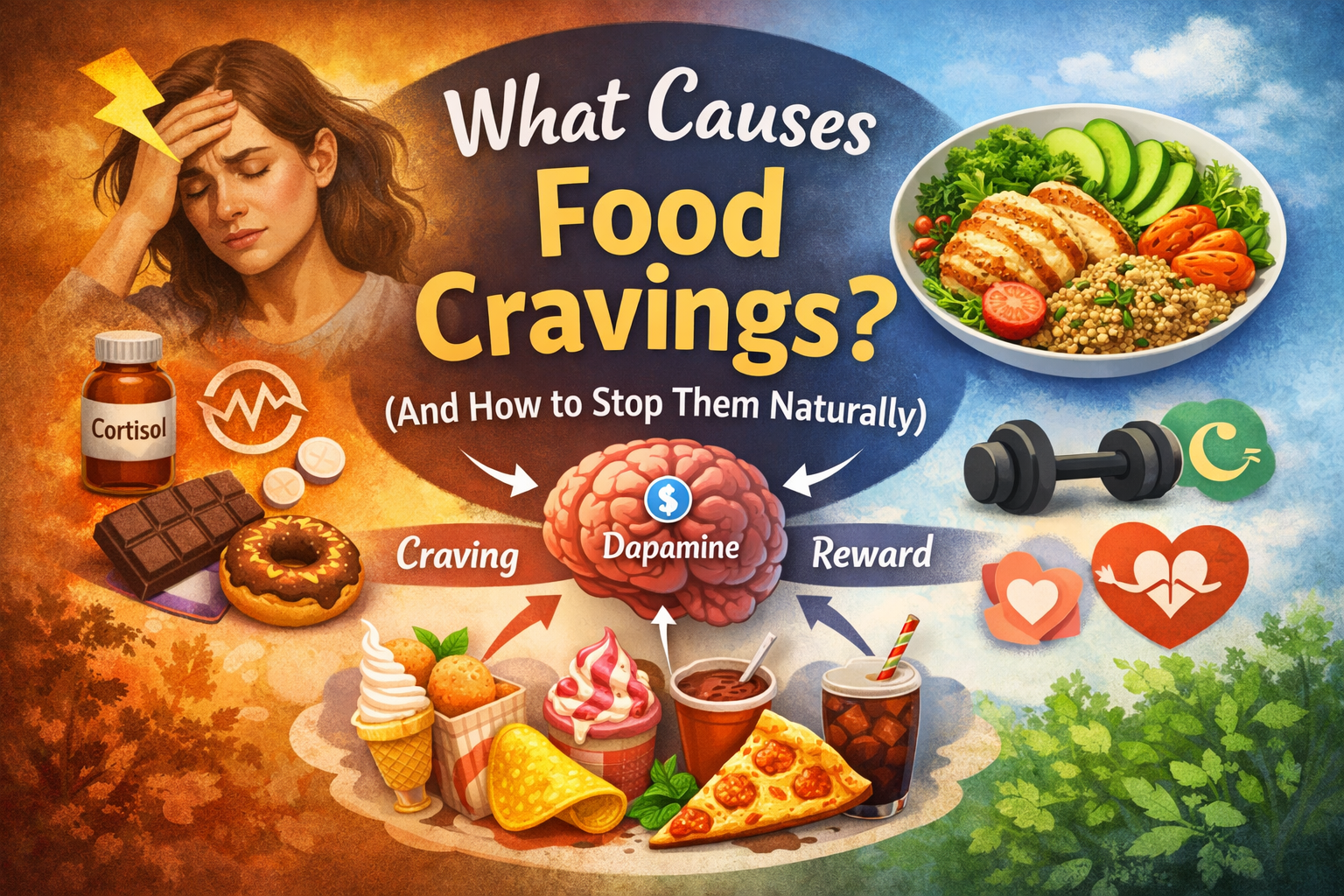
Food cravings are usually caused by stress, hormonal imbalance, emotional triggers, or blood sugar fluctuations, not a lack of willpower. If cravings feel sudden or intense, your body is likely trying to regulate energy or emotions.
These cravings are signals, not problems. When you understand them, you can respond in a more supportive and sustainable way.
What Are Food Cravings?
Food cravings are strong, specific urges to eat certain foods, even when you are not physically hungry.
Food cravings are intense desires for particular foods, often driven by physical or emotional needs.
Unlike hunger, cravings are:
- Sudden
- Specific (e.g., sugar or salty foods)
- Difficult to ignore
What Causes Food Cravings?
Cravings are influenced by multiple factors.
Stress and Emotional Triggers
Stress increases the need for comfort, leading to cravings.
Hormonal Imbalance
Hormones like cortisol, ghrelin, and leptin affect appetite and cravings.
Poor Nutrition
Low protein or nutrients can trigger cravings.
Habit Patterns
Your brain learns patterns:
Stress → food
Evening → snacks
What Happens in the Brain During Cravings?
Cravings are linked to your brain’s reward system.
Eating certain foods releases dopamine, creating temporary pleasure.
This creates a cycle:
Craving → Eating → Relief → Repeat
This is why cravings can feel automatic.
How Does Stress Increase Food Cravings?
When your body is stressed:
- Cortisol increases
- Energy demand rises
- Sugar cravings increase
This is your body trying to regulate itself.
What Is the Role of the Nervous System?
Your nervous system influences cravings.
When your body feels stressed:
- Cravings increase
- Emotional eating becomes more likely
Cravings are often a nervous system response.
Emotional Cravings vs Physical Hunger
Understanding the difference helps.
Emotional Cravings
- Sudden
- Specific
- Emotion-driven
- Often followed by guilt
Physical Hunger
- Gradual
- Flexible
- Stops when full
How Do You Know If Cravings Are Emotional?
You may notice:
- Cravings after eating
- Triggers linked to emotions
- Eating feels automatic
- Guilt after eating
These are signals of deeper needs.
Why Are Cravings Hard to Control?
Cravings are about regulation, not discipline.
When your body feels unstable, it seeks quick comfort through food.
Your body is trying to support you.
How to Stop Food Cravings Naturally
Support your body instead of fighting cravings.
1. Eat Balanced Meals
Include protein, fats, and fiber.
2. Don’t Skip Meals
Regular eating prevents energy crashes.
3. Improve Sleep
Sleep supports hormone balance.
4. Manage Stress
Stress reduction helps reduce cravings.
Practical Tips to Reduce Cravings
- Eat regularly
- Stay hydrated
- Avoid extreme restriction
- Reduce processed foods gradually
- Notice emotional triggers
How to Manage Emotional Cravings
- Pause before eating
- Ask: “What am I feeling?”
- Choose another support:
- Walking
- Journaling
- Rest
This helps break the cycle.
Daily Habits to Reduce Cravings
- Eat balanced meals
- Sleep well
- Manage stress
- Stay aware of emotions
Consistency supports long-term change.
When Cravings Feel Uncontrollable
If cravings feel constant, it may involve:
- Chronic stress
- Emotional eating
- Hormonal imbalance
- Nervous system dysregulation
Support can help.
How Coaching Can Support You
With the right support, you can:
- Understand your triggers
- Regulate your nervous system
- Improve eating habits
- Build sustainable patterns
Final Thoughts
Food cravings are not a weakness; they are a signal.
Your body may need energy, rest, or emotional support.
When you understand the cause, you can respond in a way that truly supports your body.
FAQs
What causes food cravings?
Stress, hormones, habits, and nutrition all influence cravings.
How do I stop cravings naturally?
Eat balanced meals, sleep well, and manage stress.
Are cravings normal?
Yes, but frequent cravings may signal an imbalance.
Why do I crave sugar when stressed?
Stress increases cortisol, which triggers sugar cravings.
Can emotional eating cause cravings?
Yes, emotional triggers are a common cause.