
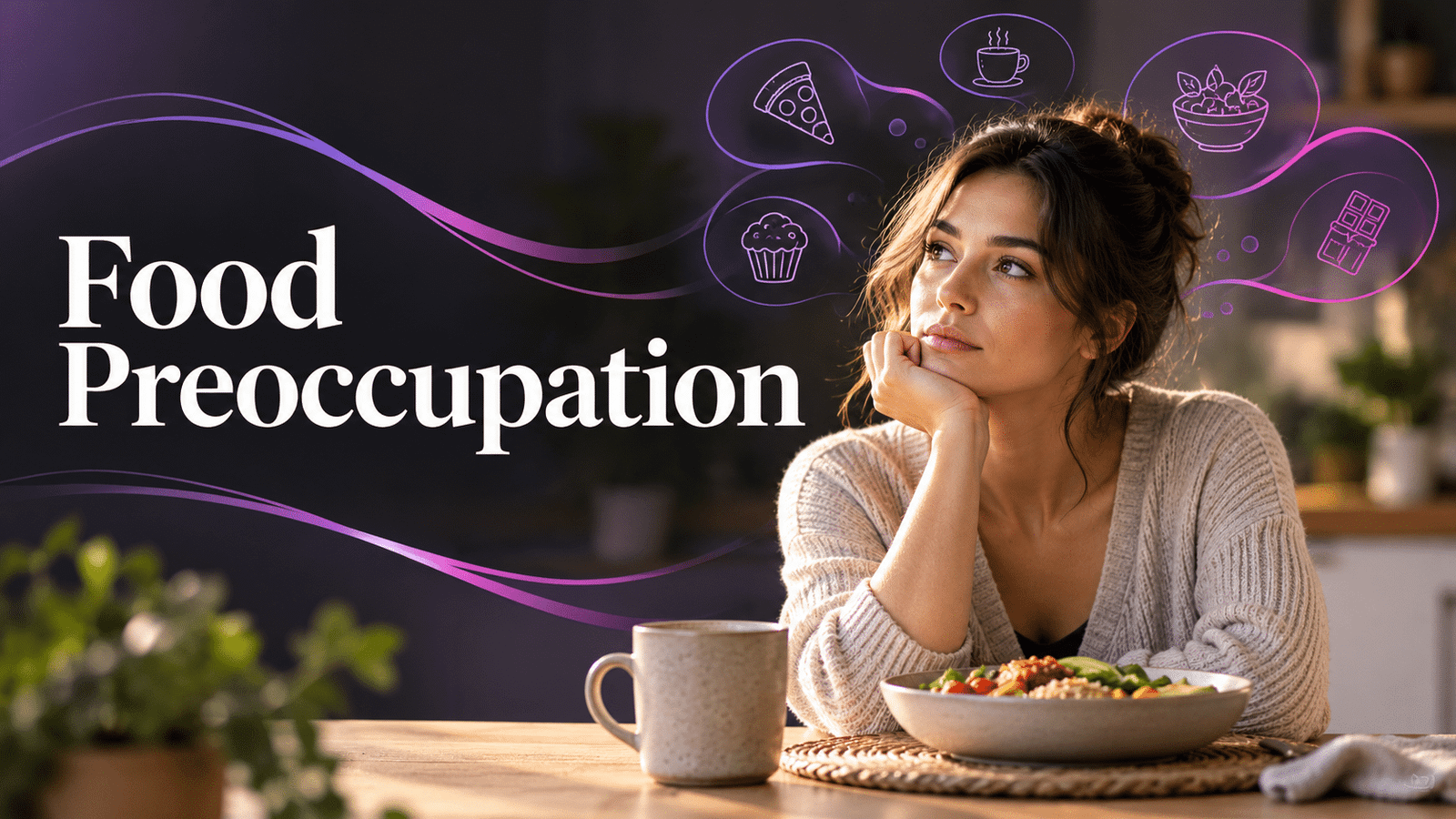
Food preoccupation describes a pattern in which thoughts about food, eating, cravings, meals, or food rules occupy more mental space than a person finds comfortable. You might spend much of the day planning your next meal, thinking about foods you are trying to avoid, replaying what you ate, or worrying about whether you have eaten too much.
Food preoccupation is not, by itself, a diagnosis. It can have different contributors, including hunger, restrictive eating patterns, emotional stress, food insecurity, and eating-related or mental health concerns. Understanding the context behind your food thoughts is a more useful starting point than assuming you need greater discipline.
For some people, food thoughts become closely tied to a cycle of restriction, overeating, and guilt. For others, the issue has a different explanation. Learning to recognize your own pattern can help you decide what kind of support may be useful.
What Is Food Preoccupation?
Food preoccupation is persistent or repetitive thinking about food that feels difficult to set aside or interferes with other parts of daily life.
It may involve thinking about what you will eat next, how much you have eaten, which foods are allowed, whether you should skip a meal, or how to compensate after eating something you consider unhealthy.
You might recognize some of these experiences:
- Thinking about your next meal while trying to focus on work or another activity.
- Spending considerable time planning what you will eat or avoid.
- Feeling anxious when your usual food routine changes.
- Repeatedly reviewing what you ate and judging whether it was acceptable.
- Finding that cravings or food-related thoughts are difficult to set aside.
- Feeling guilt or a strong urge to compensate after eating.
Having a thought about food does not automatically mean something is wrong. Food is a basic human need, and thinking about meals is a normal part of life. The issue is whether the thoughts feel distressing, rigid, or disruptive.
The term food noise is sometimes used informally to describe persistent thoughts about food. It is not a diagnosis in itself, and people may use it to describe somewhat different experiences.
Eating disorders can involve persistent preoccupation with food, weight, body shape, or controlling food intake. However, those thoughts alone cannot establish that an eating disorder is present. The National Institute of Mental Health’s eating disorder guidance explains that eating disorders involve broader disturbances in eating behaviors and may require professional assessment.
Why Am I Thinking About Food All the Time?
There is no single explanation for food preoccupation. Several factors can contribute, sometimes at the same time.
You May Not Be Getting Enough Nourishment
When you skip meals, eat less than your body needs, or go for long periods without eating, hunger may become more noticeable. Thoughts about food can become harder to ignore when your body needs nourishment.
Consider someone who regularly skips lunch to compensate for a larger breakfast. By late afternoon, food may become increasingly difficult to stop thinking about. That doesn’t necessarily indicate a failure of discipline; inadequate nourishment may be part of the situation.
A 2026 scoping review examining restrictive diets and binge eating found an association in many of the studies reviewed, although other studies reported different results. The evidence supports taking restrictive eating seriously as a possible contributor, not assuming that restriction explains everyone’s experience.
If this seems relevant to you, look at the overall pattern of nourishment rather than judging yourself for having food thoughts. A registered dietitian experienced in disordered eating can help assess your nutritional needs when appropriate.
Rigid Food Rules May Make Eating Feel More Complicated
Food preoccupation does not always come from physical hunger alone. Sometimes it develops around the rules a person feels they must follow.
You may tell yourself that you cannot eat dessert, that bread is forbidden, or that eating something outside your plan means you have failed. Even when the food is available, the rule can make it feel psychologically off-limits.
This can create a cycle in which you think more about the very foods you are trying to avoid. You may spend time debating whether you are allowed to eat them, planning how to resist them, or worrying about what will happen if you do.
Research has examined how food restriction and dieting can relate to food preoccupation and binge eating, but the effects vary between people. Not every food preference is a harmful rule, and medically necessary dietary restrictions should not be abandoned without appropriate guidance.
My guide on overcoming food rules without guilt explores the distinction between flexible preferences and rules driven by fear, shame, or rigid expectations.
Stress and Emotions May Influence Your Food Thoughts
Food can become connected with comfort, relief, pleasure, familiarity, or a break from difficult feelings. After a demanding day, an argument, or a period of emotional exhaustion, you might find yourself thinking about a particular food even when you are not sure what you need.
These experiences can overlap with emotional eating. They can also occur alongside ordinary hunger, tiredness, or a habit of eating at a familiar time.
The important question is not whether you should be allowed to eat when you experience an emotion. It is whether you understand the circumstances surrounding the urge and feel that you have meaningful choices.
You can explore this connection further in my guide to understanding and responding to emotional eating.
Scarcity and Uncertainty Can Keep Food on Your Mind
Food insecurity is another important consideration. When someone does not know whether they will have enough food, thinking frequently about meals, supplies, or future access to food can be a practical response to uncertainty.
That experience should not be reduced to a problem with mindset or self-control. Access to reliable nourishment may be the priority.
For someone whose food access is stable, a different type of uncertainty may be involved: anxiety about eating outside a rigid plan, fear of breaking food rules, or concern about what eating might mean for their body.
These situations can look similar from the outside but call for different responses. Understanding the actual source of concern matters.
Other Health or Psychological Factors May Be Involved
Persistent food thoughts can sometimes occur alongside eating disorders or other psychological concerns. Worries about weight, body shape, or controlling food intake may deserve particular attention when they affect behavior and emotional well-being.
Food preoccupation alone is not sufficient to diagnose a condition. If the thoughts are intrusive, highly distressing, or interfere with work, relationships, or eating, a healthcare professional can help explore what may be contributing to them.
It is also important not to assume that a person is experiencing an eating disorder simply because they think about food frequently. The context, associated behaviors, level of distress, and effects on daily life all matter.
When Does Food Preoccupation Become a Concern?
Food preoccupation deserves attention when it repeatedly causes distress, interferes with daily activities, or becomes connected with harmful eating patterns.
You may want to seek support if you notice that:
- Thoughts about food regularly interfere with work, sleep, relationships, or concentration.
- You frequently skip meals or restrict foods to compensate for previous eating.
- Eating leads to persistent guilt, fear, or self-criticism.
- You experience repeated episodes of eating that feel out of control.
- Food-related anxiety makes social events or ordinary meals difficult.
- Your eating patterns are affecting your physical or emotional well-being.
These are reasons to explore the situation, not a checklist for diagnosing yourself.
Binge-eating disorder involves more than frequently thinking about food. According to the National Institute of Diabetes and Digestive and Kidney Diseases, symptoms include episodes of eating unusually large amounts within a limited period and feeling unable to control the eating. Assessment by a suitably qualified professional is important when these experiences occur.
If your food thoughts are distressing or associated with eating behaviors that affect your health, you do not have to wait until the problem feels severe before discussing it with a professional.
How Can You Respond to Food Preoccupation?
The most useful next step depends on what is contributing to your experience. Rather than adopting another rigid set of rules, consider the following approaches.
Notice When the Thoughts Become Stronger
Start by observing the circumstances surrounding your food thoughts without criticizing yourself.
You might notice whether they become more persistent after skipping a meal, following a stressful interaction, breaking a food rule, or spending time worrying about what you should eat.
A few neutral observations may help you see a pattern. You do not need to count calories, monitor every bite, or turn the exercise into another system of control. If tracking itself increases distress or compulsive thinking, stop and discuss another approach with a qualified professional.
The purpose is to understand what is happening, not to build a case against yourself.
Consider Whether Your Eating Pattern Provides Enough Nourishment
If you regularly skip meals, delay eating despite hunger, or restrict portions to make up for previous eating, consider whether those patterns may be contributing to your preoccupation.
Regular, adequate nourishment may be an important part of addressing food-related distress for some people. However, individual nutritional needs vary, especially when medical conditions or an eating disorder are involved.
You do not have to respond to persistent food thoughts by eating less or creating stricter limits. When you are unsure what an appropriate eating pattern looks like for you, seek individualized guidance from a qualified nutrition professional.
Examine the Food Rules That Create the Most Pressure
Notice whether particular foods produce thoughts such as, “I’m not allowed to eat this,” “I’ve already ruined the day,” or “I’ll have to make up for eating that later.”
Ask yourself what makes the rule feel necessary and whether it is based on an actual medical need, a personal preference, fear, or guilt.
This is not an instruction to abandon a prescribed diet or force yourself to eat foods that cause significant distress. It is an invitation to distinguish flexible choices from rigid rules that may be making food more emotionally charged.
When rules feel difficult to change, eating-disorder-informed support may help you explore them at an appropriate pace.
Avoid Responding to Guilt With Punishment
After eating more than you intended, you might feel tempted to skip the next meal, restrict more heavily, or promise yourself that tomorrow will be different.
If this is a recurring pattern, notice whether the response is leaving the underlying concerns unresolved.
Trying to compensate for eating may perpetuate a restrictive pattern for some people. A more supportive response may be to return to your usual eating routine and explore what happened without treating the episode as a personal failure.
This is particularly important when food preoccupation overlaps with binge eating. NIDDK notes that unhealthy dieting practices, including skipping meals and not eating enough, may contribute to binge eating in some people.
Make Room for Emotions Without Treating Food as the Enemy
If stress, loneliness, frustration, or exhaustion often accompanies your food thoughts, consider what else might help you feel supported.
Depending on the situation, that might include talking with someone you trust, allowing yourself a break, addressing an ongoing source of stress, or learning emotional-regulation skills.
These options are not replacements for eating when you are hungry, and you do not have to eliminate emotional eating to have a healthier relationship with food.
The aim is to understand what you need in a particular moment and develop more flexibility in how you respond.
Give the Pattern Time to Be Understood
Food preoccupation may not change immediately, particularly when it has become tied to longstanding food rules, eating difficulties, anxiety, or other concerns.
There is no universal timeline for improvement. Progress should not be measured solely by whether you never think about food. Food thoughts are a normal part of life.
A more useful question is whether they are becoming less distressing, less disruptive, or less tied to rigid behaviors over time. If the problem persists or worsens, seek appropriate professional guidance rather than continually adding self-imposed rules.
Choose Support That Matches What You Are Experiencing
You might benefit from a registered dietitian experienced in eating disorders, a licensed mental health professional, a physician, or a combination of providers, depending on the circumstances.
If recurrent loss-of-control eating, significant food restriction, compensatory behaviors, or an eating disorder may be involved, clinical assessment should take priority. Evidence-based treatment for binge-eating disorder can include eating-disorder-focused psychological therapies, such as cognitive behavioral therapy or interpersonal psychotherapy.
General wellness coaching can be complementary in suitable circumstances, but it should not replace an eating-disorder assessment or treatment plan.
Food Preoccupation and the Binge-Restrict Cycle
For some people, food preoccupation is part of a recurring sequence: restricting food, thinking about it more intensely, eating in a way that feels difficult to control, feeling guilty, and trying to restrict again.
This is often called the binge-restrict cycle.
The pattern may look like this:
- Restriction or rigid food rules: Eating less, skipping meals, or avoiding certain foods.
- Increasing pressure around food: Hunger, cravings, or persistent food thoughts may intensify.
- Eating that feels difficult to control: The experience may be followed by guilt or self-criticism.
- Renewed restriction: Trying to compensate can contribute to the cycle continuing.
This is an illustrative pattern, not a diagnostic tool. Not everyone experiences this cycle, and restriction is not the sole cause of binge eating.
The cycle does not necessarily begin with restriction, and not everyone experiences every stage. Emotional distress, medical factors, food insecurity, and other circumstances may also contribute.
The important point is to look beyond the eating episode itself. What was happening before it? Was hunger being ignored? Were rigid rules involved? Did guilt lead to another round of restriction?
These questions may help identify relevant areas for support without turning the experience into another reason to blame yourself.
Read my related guide, The Binge-Restrict Cycle: How Restriction Can Contribute to Binge Eating, for a more detailed explanation.
When to Seek Professional Help for Food Preoccupation
Consider seeking professional support when thoughts about food become difficult to manage, cause significant distress, or are associated with recurring loss-of-control eating, restrictive behaviors, compensatory behaviors, or health concerns.
A good starting point may be your physician or a licensed mental health professional with relevant eating-disorder experience. A registered dietitian who specializes in disordered eating may also help you understand nutritional patterns and develop an appropriate eating plan as part of care.
If your primary concern is understanding recurring cravings, food guilt, or rigid food rules, wellness coaching may also be worth exploring when it is appropriate for your needs. Coaching should be coordinated with clinical care when necessary, not used as a substitute for it.
How Heather M. Hewett’s Coaching May Fit
Heather’s Binge Eating & Food Addiction Support Coaching is designed for adults who want to explore recurring eating patterns, persistent food thoughts, cravings, restriction, and food-related guilt.
Her website describes an approach that combines clinical nutrition, trauma-informed somatic practices, nervous system regulation, and personalized holistic coaching. Heather also publicly shares that her perspective is informed by more than 23 years of experience in holistic health and wellness and her own history with binge eating and significant weight cycling.
The focus is on understanding individual patterns rather than assuming one explanation fits everyone. Coaching is not a diagnostic service or a replacement for specialized eating-disorder treatment.
If this approach sounds relevant, you can learn more about Heather’s coaching service and arrange a conversation to discuss whether it fits your needs.
A More Supportive Way Forward
Food preoccupation can feel exhausting, particularly when thoughts about eating interfere with work, relationships, or the ability to enjoy everyday life. But persistent food thoughts do not automatically mean you have failed at managing your eating.
The next step is to understand the circumstances surrounding those thoughts. For some people, that means looking at inadequate nourishment or restrictive food rules. For others, it may involve emotional stress, food insecurity, or concerns that require clinical assessment.
You do not have to solve everything at once. Begin by noticing what is happening, avoid adding punishment or unnecessary restrictions, and seek the right support for your circumstances.
When food continues to take up more mental space than you want it to, compassionate, individualized support can be a useful place to start.
Explore Heather’s Binge Eating & Food Addiction Support Coaching to learn more about her approach and discuss whether the service may be appropriate for you.