
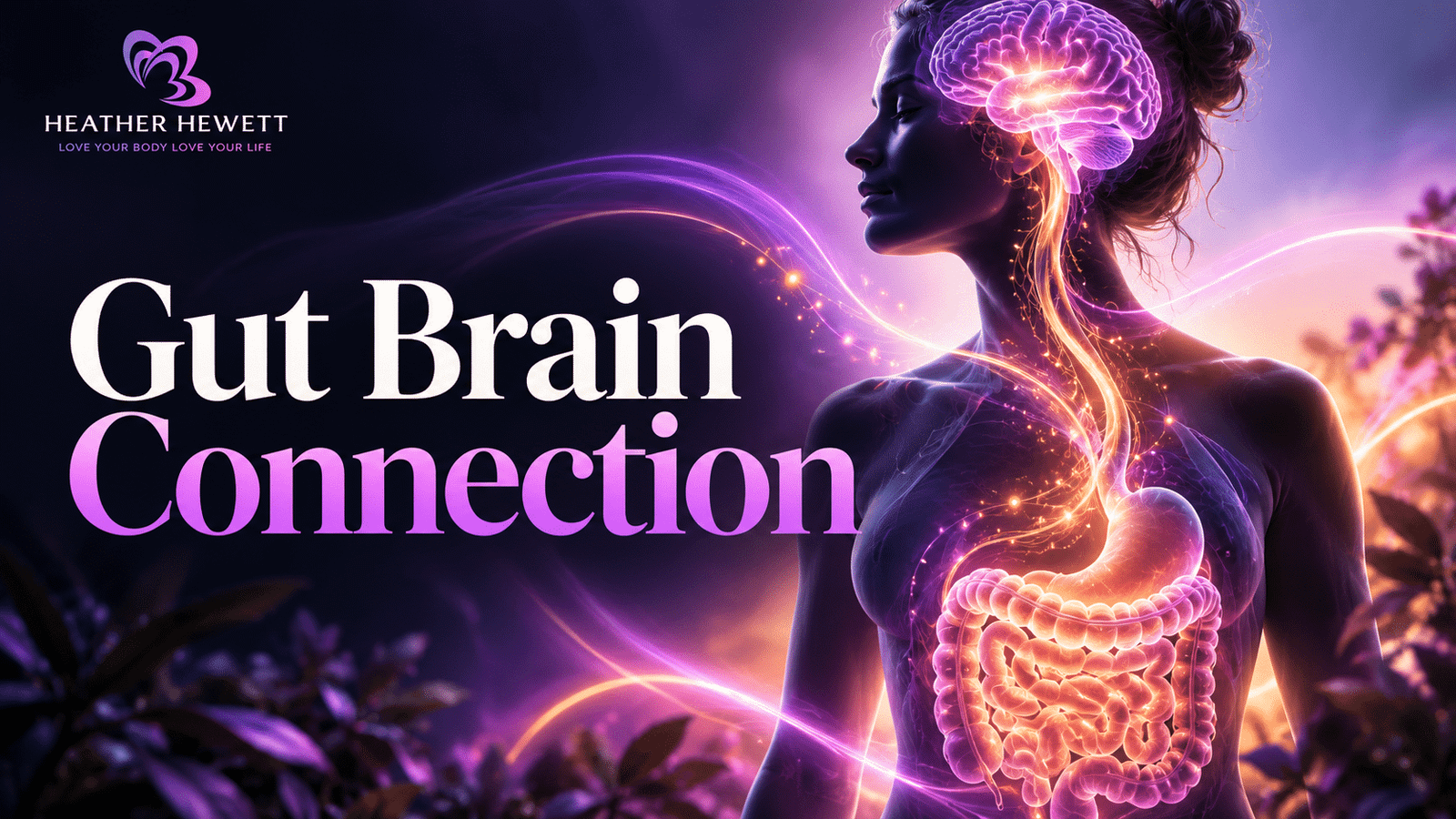
The gut-brain connection is the two-way communication system between your digestive system and your brain. Your gut and brain constantly exchange signals through the nervous system, hormones, immune pathways, and chemical messengers associated with the gut microbiome.
This connection helps explain why stress can affect digestion, why digestive discomfort can influence how you feel, and why experiences such as “butterflies” in your stomach can feel so physical.
The relationship works in both directions. Your brain can influence your gut, while signals from your gut can also influence your brain.
Understanding this relationship can give you a more complete way to think about digestion, stress, nutrition, emotions, cravings, and your relationship with food.
What Is the Gut-Brain Connection?
The gut-brain connection is the ongoing communication between your gastrointestinal system and your brain.
You may also hear it called the gut-brain axis or, when the microbiome is specifically included, the microbiota-gut-brain axis.
Several systems participate in this communication, including:
- The central nervous system
- The enteric nervous system
- The autonomic nervous system
- The vagus nerve
- The gut microbiome
- Hormonal signaling
- Immune signaling
- Microbial metabolites
The relationship is complex and bidirectional. The Cleveland Clinic describes the gut-brain connection as communication that travels both ways between the digestive system and central nervous system, with the enteric nervous system, vagus nerve, and gut microbiome among its important components.
This communication helps coordinate functions such as digestion, gut movement, appetite, and the way you experience sensations coming from your digestive system.
It also helps explain why emotional experiences can show up physically in your stomach.
Think about how your body might respond before an important presentation, difficult conversation, interview, or stressful event.
You might feel nauseated.
You might lose your appetite.
You might suddenly need to use the bathroom.
You might feel tension or discomfort in your abdomen.
Those sensations are real.
Your brain and digestive system are connected.
How Does the Gut-Brain Axis Work?
The gut-brain axis isn’t one single pathway. It is a network of communication routes working together.
The Vagus Nerve
The vagus nerve is one of the important neural pathways involved in communication between the brain and digestive tract.
It carries sensory information from the gut toward the brain and also participates in signaling in the opposite direction.
This allows the brain to receive information about what is happening in the digestive system while also influencing gastrointestinal activity.
The vagus nerve is only one part of the picture, though.
Gut-brain communication also involves the enteric nervous system, immune system, hormones, and substances produced by gut microorganisms.
The Enteric Nervous System
Your digestive tract contains an extensive network of neurons called the enteric nervous system.
It helps coordinate many processes involved in digestion, including movement through the gastrointestinal tract.
You may hear it described as the “second brain,” but that phrase is a simplified nickname rather than a literal description.
Your gut does not have a second human brain.
Instead, the digestive tract contains a sophisticated nervous system capable of coordinating many digestive functions while communicating continuously with the central nervous system.
The Gut Microbiome
Your digestive tract is home to a large community of microorganisms known collectively as the gut microbiome.
These microorganisms interact with the food and environment inside your digestive tract. They can produce metabolites and other compounds that participate in communication between the gut and the rest of the body.
Researchers are studying how these microbial signals may influence brain function, mood, metabolism, immune activity, and other processes.
The research is promising, but it is also important to recognize what we don’t yet know.
It would be an oversimplification to say that one particular gut bacterium directly causes a particular emotion or mental-health condition.
The gut microbiome is one component of a much larger biological system.
Immune and Chemical Signaling
The gut and brain also communicate through immune signals, hormones, and chemical messengers.
This matters because your digestive system is not isolated from the rest of your body.
Changes in the gut environment can influence immune signaling, while stress and other signals from the brain can influence gastrointestinal function.
That is why the gut-brain connection is better understood as a network rather than a single cause-and-effect pathway.
How Does Stress Affect the Gut?
Yes, stress can affect digestion.
Stress can influence gastrointestinal movement, digestive sensitivity, appetite, bowel habits, and eating patterns. Harvard Health describes the gut-brain connection as bidirectional and notes that emotional states can affect gastrointestinal function and symptoms.
You may notice:
- Changes in appetite
- Nausea
- Bloating
- Changes in bowel habits
- Abdominal discomfort
- Faster or slower digestion
- Increased awareness of digestive sensations
For some people, these changes are temporary.
For others, repeated stress may contribute to a cycle in which digestive symptoms and stress begin reinforcing one another.
The Stress-Digestion Feedback Loop
Imagine this pattern:
Stress → digestive symptoms → worry about the symptoms → more stress → stronger digestive sensations
That does not mean the symptoms are “all in your head.”
The brain’s interpretation of physical signals is part of how the body processes those signals. Stress can affect actual gastrointestinal physiology as well as how strongly some sensations are experienced.
Harvard Health specifically notes that functional gastrointestinal symptoms are not imaginary or simply “in your head.” Psychological and physical factors can interact to influence both gastrointestinal physiology and the experience of symptoms.
This is particularly relevant if you notice that your digestion changes during emotionally difficult or stressful periods.
The answer isn’t necessarily to blame stress for everything.
Digestive symptoms can have many causes, and persistent or unexplained symptoms deserve appropriate medical evaluation.
But stress is one piece of the picture that may be worth considering.
Can Gut Health Affect Mood and Anxiety?
The gut and brain influence one another, and research suggests that gut-related processes may contribute to mood and stress-related experiences. But the relationship is much more complicated than saying that an “unhealthy gut causes anxiety.”
Researchers are studying communication among the gut, microbiome, immune system, and brain, including the possible roles of microbial metabolites and inflammatory and neural pathways. Harvard Health has also highlighted growing research into how gut processes may relate to mood and brain function.
At the same time, anxiety and other emotional states can affect digestion.
So the relationship is bidirectional.
This distinction matters.
If you experience anxiety alongside digestive symptoms, supporting your gut health may be one part of supporting your overall wellbeing.
But gut-focused nutrition should not be presented as a replacement for appropriate mental-health or medical care.
The same principle applies in the other direction.
Managing stress may support digestion, but stress management alone is not a universal treatment for every digestive condition.
Your body is more complicated than one explanation.
What Does Nutrition Have to Do With the Gut-Brain Connection?
Food influences the environment in which your digestive system and gut microbiome function.
A varied, adequate eating pattern can provide fiber, protein, fats, vitamins, minerals, and other nutrients needed for normal physiological function.
Diet also influences the gut microbiome, although individual responses can vary.
Focus on Variety Rather Than a Perfect “Gut-Healing” Diet
One of the easiest traps in gut health is turning the subject into another restrictive diet.
You may see lists telling you to eliminate dozens of foods, avoid entire food groups, or follow a rigid protocol.
That approach isn’t automatically appropriate.
A more useful starting point may be asking:
- Am I eating enough?
- Are my meals reasonably varied?
- Am I getting enough fiber for my individual needs?
- Am I including a range of plant foods?
- Am I drinking enough fluids?
- Am I tolerating the foods I’m eating?
- Am I eating in a way I can realistically maintain?
- Is stress affecting my appetite or digestion?
There is no single “perfect” gut diet that works for everyone.
What About Fermented Foods?
Fermented foods are receiving attention because they can contain microorganisms and bioactive compounds that may interact with the gut microbiome.
Research into fermented foods and gut health continues to develop.
You don’t need to assume that one fermented food will transform your gut or mood.
Think of fermented foods as one possible part of a broader dietary pattern rather than a magic solution.
How to Support Your Gut-Brain Connection Naturally
There isn’t one exercise, supplement, food, or “reset” that fixes the gut-brain connection.
A more sustainable approach is to support the different systems involved.
1. Nourish Yourself Consistently
Your body needs adequate energy and nutrients to function.
Skipping meals repeatedly and then becoming extremely hungry later can make eating patterns harder to understand, particularly if stress or emotional eating is already part of the picture.
Instead of asking only:
“What food should I remove?”
also ask:
“What nourishment might my body be missing?”
2. Build Food Variety Gradually
A varied eating pattern can provide different types of fiber and a range of nutrients.
That does not mean forcing yourself to eat foods that clearly do not agree with you.
If you have digestive symptoms, food intolerances, allergies, or a medical condition, personalization matters.
The goal is not maximum restriction.
It is finding a sustainable way to nourish your body.
For practical nutrition ideas related to nervous-system support, Heather also explores foods that can support nervous system health as part of a broader, non-restrictive nutrition approach.
3. Pay Attention to Your Digestive Patterns
Instead of reacting to every digestive symptom by eliminating another food, start observing patterns.
You might track:
- What you ate
- Meal timing
- Stress levels
- Sleep
- Bowel patterns
- Bloating
- Appetite
- Emotional state
- Physical activity
Patterns can sometimes provide more useful information than focusing on a single meal.
4. Support Your Nervous System
Because the nervous system participates in gut-brain communication, supporting your ability to respond to stress and recover can be an important part of a whole-person approach.
Depending on the individual, that may include:
- Slow breathing
- Gentle movement
- Time outdoors
- Mindfulness
- Rest
- Reducing overstimulation
- Regular sleep
- Body awareness
- Supportive social connection
The goal isn’t to remain calm every second.
Healthy regulation is not the absence of stress.
It is developing the capacity to respond to stress and return toward a more settled state.
If you want to explore this area further, Heather’s Nervous System Regulation Coaching combines trauma-informed somatic work, nutrition awareness, and emotional regulation support.
5. Protect Your Sleep
Sleep affects many systems throughout the body, including stress regulation, immune function, metabolism, and overall wellbeing.
Poor sleep can also make eating patterns and emotional regulation more difficult.
Rather than treating sleep as an optional wellness extra, consider it part of the foundation.
6. Move Your Body Regularly
Regular physical activity supports overall health and may also influence the gut microbiome and other processes involved in health.
You don’t necessarily need an extreme exercise program.
Walking, strength training, mobility work, recreational movement, and other activities that fit your body and life can all have a place.
The most useful form of movement is often the one you can actually maintain.
Gut-Brain Connection and Emotional Eating
This is where the gut-brain connection becomes especially interesting.
Eating isn’t purely a nutritional behavior.
Your relationship with food can also be influenced by stress, emotions, habits, memories, restriction, environment, sleep, nourishment, and your body’s response to pressure.
If you regularly reach for food when you’re stressed, overwhelmed, exhausted, lonely, or emotionally activated, simply telling yourself to “have more willpower” may miss an important part of the picture.
You can ask:
What was happening in my body before I wanted to eat?
Was I physically hungry?
Was I emotionally overwhelmed?
Had I eaten enough earlier in the day?
Was I looking for comfort, stimulation, grounding, or relief?
What did I need in that moment?
These questions aren’t about proving that eating was “good” or “bad.”
They’re about gathering information.
Food can be one way people cope with difficult internal states. Understanding the pattern can create more choices without adding shame.
Heather’s guide to what emotional eating is and how it can develop explores how stress, emotions, habits, and learned associations can influence eating patterns.
Why Gut Health Isn’t Just About Food
If you’ve been struggling with digestion, you may already have tried changing your diet.
Maybe you removed gluten.
Maybe you cut dairy.
Maybe you tried supplements.
Maybe you followed a low-FODMAP approach.
Maybe you changed everything at once.
Sometimes targeted nutrition changes can be appropriate.
But more restriction isn’t automatically the answer.
Gut health exists within a larger system.
Your digestion is influenced by what you eat, but also by your nervous system, stress, sleep, food tolerance, eating patterns, health history, and other individual factors.
Heather’s Gut Health Nutritionist service takes this broader view, considering nourishment, digestion, microbiome support, nervous-system patterns, stress, sleep, cravings, and the relationship with food rather than automatically starting with a long list of foods to eliminate.
Her core philosophy is particularly relevant here:
“Understand first. Restrict only when there is a clear reason.”
That approach can be especially helpful for people who already feel anxious or overwhelmed by conflicting nutrition advice.
Gut Health, Stress, and the Nervous System
The gut-brain connection is also a useful reminder that nutrition doesn’t happen in isolation.
You can know exactly what foods are considered “healthy” and still find eating difficult when you’re stressed, exhausted, overwhelmed, or disconnected from your body’s signals.
Stress can influence digestion.
It can also influence appetite, cravings, meal timing, sleep, and eating behavior.
That doesn’t mean stress explains every symptom.
It means your nutrition and nervous system may deserve to be considered together.
Heather’s work reflects this whole-person perspective by bringing clinical nutrition, nervous-system awareness, emotional wellness, and relationship-with-food support into the same conversation.
For people who are dealing with emotional eating alongside stress and food cravings, Emotional Eating & Food Cravings Coaching offers personalized support focused on understanding triggers and building a calmer relationship with food without relying on restrictive dieting or shame.
When Should You Get Professional Help?
Not every digestive symptom is caused by stress or the gut-brain connection.
Persistent, severe, sudden, unexplained, or worsening digestive symptoms should be discussed with an appropriate healthcare professional.
Medical evaluation is particularly important when symptoms may indicate an underlying condition that requires diagnosis or treatment.
Nutrition and nervous-system support can complement appropriate healthcare, but they should not be used to replace medical assessment when it is needed.
For people whose main challenge involves recurring digestive discomfort, confusing food reactions, stress-related digestive changes, or difficulty knowing what to eat, personalized nutrition support may provide a more useful starting point than another generic diet.
The Bigger Picture
The gut-brain connection reminds us that the body doesn’t operate as a collection of isolated parts.
Digestion, nutrition, stress, emotions, sleep, the nervous system, and the microbiome interact in complicated ways.
That doesn’t mean every digestive symptom is caused by stress.
It doesn’t mean changing your diet will solve every emotional problem.
And it doesn’t mean you need another restrictive protocol.
It means there may be value in looking at the whole pattern.
For some people, that means improving nourishment.
For others, it may mean understanding digestive triggers, addressing food-related anxiety, supporting nervous-system regulation, or getting appropriate medical care for persistent symptoms.
A useful place to begin is with curiosity:
What is my body experiencing?
What patterns do I notice?
What support does my body actually need?
That’s a very different starting point from trying to force your body into compliance.
Sometimes, understanding the conversation between your gut and brain is the first step toward having a more compassionate conversation with your body.
A Note From Heather
My approach to gut health is not about giving you another list of foods to fear.
It’s about understanding the bigger picture: nourishment, digestion, the microbiome, stress, nervous-system patterns, and your relationship with food.
You don’t have to figure everything out at once.
If you’re tired of conflicting nutrition advice or unsure where to start, personalized support can help you understand what may be relevant to your situation and what isn’t.
Understand first. Restrict only when there is a clear reason.