
If you’re looking for the best foods for nervous system health, you’re not alone.
The foods you eat each day can play an important role in how supported and balanced your nervous system feels. While nutrition isn’t about fixing or treating anything, certain foods can support nervous system health by providing steady energy, key nutrients, and nourishment that helps the body respond to everyday stress more smoothly.
Looking for natural ways to calm your nervous system? The right foods can help reduce stress, support brain function, and naturally improve emotional balance.
This article offers an educational, non-clinical look at foods that may help support nervous system health, along with awareness-based insights you can apply in daily life.
Quick Answer
The best foods for nervous system health often include fatty fish, leafy greens, nuts, seeds, berries, whole grains, and other nutrient-rich foods that support balanced energy and overall brain function.
Understanding the Nervous System
Understanding this helps you choose the right foods for nervous system health more effectively.
The nervous system helps the body sense, respond to, and adapt to what’s happening internally and externally. It plays a role in focus, energy levels, emotional responses, and how stress is experienced throughout the day.
Daily inputs, such as food, hydration, sleep, and routine, can influence how supported the nervous system feels over time. That’s why nutrition education is often included in broader conversations around self-awareness and regulation.
Best Foods to Calm and Support Your Nervous System
Food doesn’t work in isolation, but consistent nourishment can support the nervous system by:
- Providing steady fuel for the brain and body
- Supporting communication between nerve cells
- Helping maintain balanced energy levels
- Reducing sharp blood sugar swings that can feel destabilizing
Rather than focusing on perfect eating, many people find it more helpful to focus on patterns, balance, and consistency.

Free Guide
Get the Nervous System Regulation Starter Guide
A simple, practical guide to understanding your nervous system, noticing signs of stress, and exploring supportive daily practices.
Key Nutrients That Play a Role in Nervous System Support
Before looking at specific foods, it helps to understand a few nutrient categories often discussed in nervous system education:
- Magnesium – commonly associated with relaxation and steady muscle function
- Omega-3 fats – important for nerve structure and communication
- B vitamins – involved in energy production and brain signaling
- Antioxidants – support overall cellular health
These are some of the best foods for nervous system health that can support your body naturally.
How Food Affects the Nervous System
Food affects more than hunger and energy levels. The nutrients you consume each day can influence how your body responds to stress, supports focus, and maintains emotional balance.
The nervous system relies on steady nourishment to help support communication between nerve cells, energy production, and overall brain function. When meals are inconsistent or heavily processed, some people notice increased fatigue, irritability, or difficulty concentrating.
Balanced meals that include protein, healthy fats, fiber, and nutrient-rich foods may help support:
- steadier energy throughout the day
- improved focus and concentration
- more balanced moods
- reduced energy crashes
- better overall resilience to daily stress
Rather than focusing on perfection, consistency and nourishment often make the biggest difference over time.
Top 10 Foods to Support Nervous System Health
Below are foods commonly included in nutrition education for nervous system support. These examples are shared for awareness, not as rules or prescriptions.
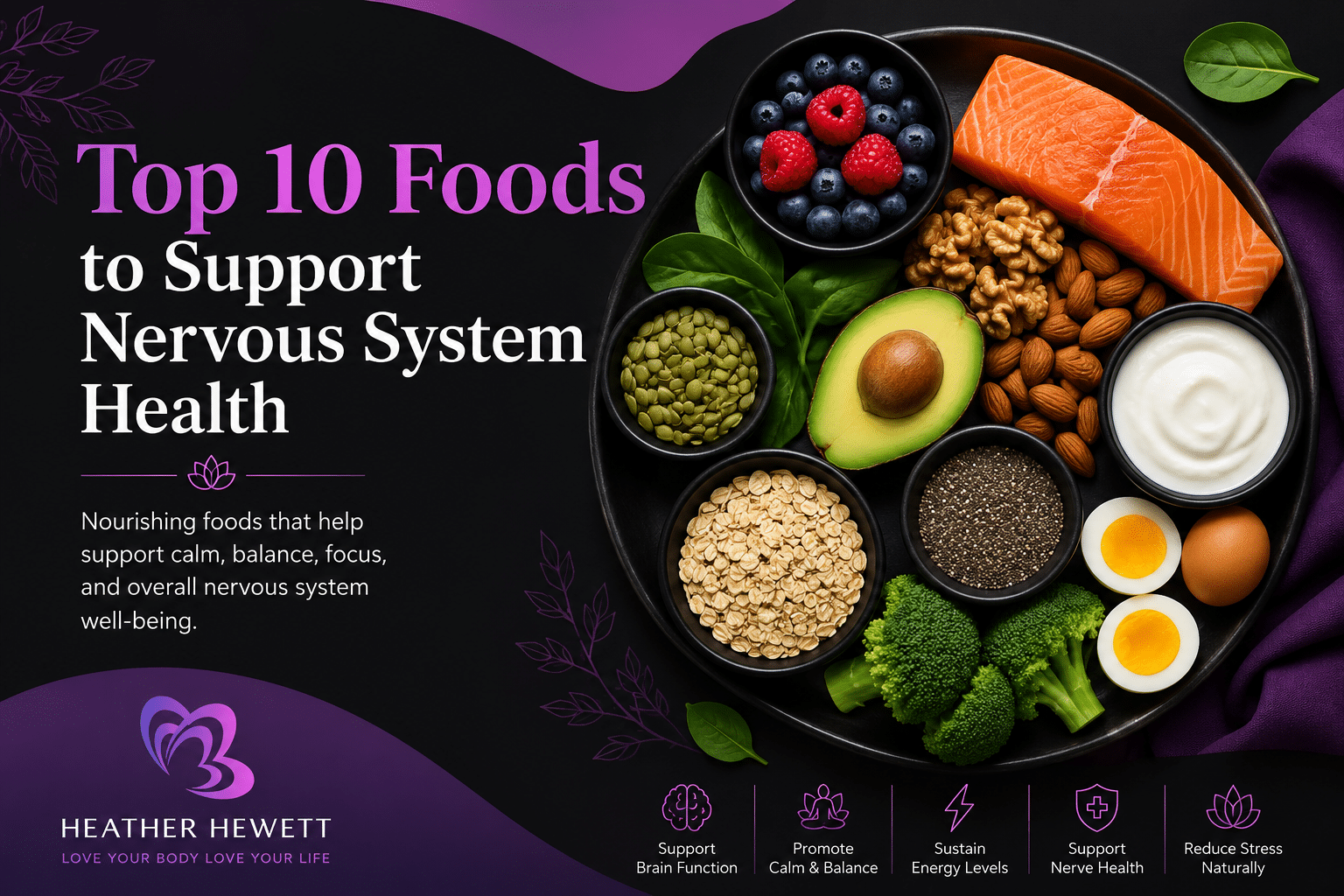
1. Fatty Fish (Salmon, Sardines)
Fatty fish such as salmon and sardines are rich in omega-3 fatty acids, nutrients commonly associated with brain and nerve health. These healthy fats help support communication between nerve cells and may contribute to a more balanced mood, focus, and cognitive function.
Many people also include fatty fish in nervous system-supportive diets because it provides steady nourishment without causing major energy crashes. Eating fatty fish a few times per week can be a simple way to support overall brain and nervous system function naturally.
2. Leafy Green Vegetables
Leafy greens like spinach, kale, and Swiss chard contain magnesium, folate, and antioxidants that are often discussed in nervous system health education. Magnesium plays a role in muscle relaxation and nerve signaling, while antioxidants help support overall cellular health.
Adding more greens to meals may also help support steadier energy levels and overall well-being. Simple options like salads, smoothies, or sautéed vegetables can make it easier to include them consistently.
3. Nuts and Seeds
Almonds, walnuts, pumpkin seeds, and sunflower seeds contain healthy fats, magnesium, and plant-based nutrients that support steady energy and overall nourishment. These foods are commonly included in discussions around nervous system balance because they provide long-lasting fuel for the body and brain.
Nuts and seeds are also easy to include in daily routines. Many people add them to yogurt, oatmeal, salads, or snacks to help support more balanced eating habits throughout the day.
4. Eggs
Eggs provide protein, B vitamins, and choline, nutrients involved in brain function and nerve communication. Protein can also help support more stable blood sugar levels, which may influence energy and mood throughout the day.
Because eggs are versatile and nutrient-dense, they are often included in balanced meals designed to support focus, nourishment, and steady energy. Pairing eggs with healthy fats and fiber-rich foods can create a more supportive meal overall.
5. Whole Grains
Whole grains such as oats, quinoa, brown rice, and whole wheat products provide slow-digesting carbohydrates that help maintain consistent energy levels. Unlike highly processed carbohydrates, whole grains may help reduce sudden energy crashes that can sometimes feel destabilizing.
They also contain fiber and B vitamins that support overall brain and body function. Including whole grains regularly may help create more balanced eating patterns and sustained energy throughout the day.
6. Fermented Foods
Foods like yogurt, kefir, kimchi, and sauerkraut are commonly discussed in conversations about gut health and nervous system awareness. Research often explores the connection between the gut and brain, sometimes referred to as the gut-brain connection.
Fermented foods may help support digestive balance and overall well-being when included as part of a balanced diet. Many people find that supporting digestion can also positively influence energy, mood, and daily comfort.
7. Berries
Berries such as blueberries, strawberries, and raspberries contain antioxidants and natural carbohydrates that can help support focus and steady energy. Antioxidants are often associated with protecting cells from everyday stress and supporting overall brain health.
Berries are also easy to add to meals and snacks. They pair well with yogurt, oatmeal, smoothies, or whole-grain breakfasts, making them a simple addition to a nervous system-supportive routine.
8. Avocados
Avocados provide healthy fats, fiber, and potassium, nutrients associated with overall nourishment and balance. Healthy fats help support brain function, while fiber may help maintain steadier energy levels throughout the day.
Many people enjoy avocados because they are satisfying and versatile. They can be added to toast, salads, grain bowls, or smoothies as part of a balanced, supportive eating pattern.
9. Legumes
Beans, lentils, and chickpeas provide plant-based protein, fiber, and B vitamins that support sustained energy and overall nourishment. Because they digest slowly, legumes may help support more stable blood sugar and energy levels.
They are also affordable and easy to include in soups, salads, grain bowls, and simple meals. Including legumes regularly can help create more balanced and consistent nutrition habits over time.
10. Dark Chocolate (In Mindful Amounts)
Dark chocolate contains magnesium and antioxidants and is often included in discussions around mindful enjoyment and balanced eating. Some people find that small amounts of dark chocolate can feel satisfying without leading to major energy crashes.
The key is moderation and awareness. Choosing darker chocolate varieties with less added sugar may better support balanced energy and overall well-being as part of a healthy lifestyle.
Simple Meal Ideas for Nervous System Support
Supporting your nervous system doesn’t require complicated meal plans or restrictive eating habits. In many cases, simple and balanced meals eaten consistently throughout the day can help support steadier energy, focus, and emotional balance.
Many people notice that skipping meals or relying heavily on processed foods can leave them feeling more drained, irritable, or overstimulated. Creating supportive meals doesn’t have to be perfect; small, sustainable habits often make the biggest difference over time.
Some simple meal ideas include:
Breakfast Ideas
- oatmeal with berries and pumpkin seeds
- eggs with avocado toast
- Greek yogurt with nuts and fruit
- smoothies with spinach, banana, and chia seeds
These meals combine protein, healthy fats, fiber, and nutrients that may help support steady energy throughout the morning.
Lunch and Dinner Ideas
- salmon with quinoa and leafy greens
- rice bowls with beans, vegetables, and avocado
- grilled chicken with sweet potatoes and broccoli
- lentil soup with whole grain bread
Balanced meals may help prevent large energy crashes and support more stable focus throughout the day.
Simple Snack Ideas
- almonds or walnuts
- hummus with vegetables
- dark chocolate with nuts
- berries and yogurt
- boiled eggs
The goal isn’t perfection or strict food rules. It’s building simple, nourishing routines that help your body feel more supported over time.
Foods and Habits to Be Mindful Of
Instead of labeling foods as “good” or “bad,” it can be more supportive to notice how certain habits affect your body:
- Skipping meals or eating irregularly
- Relying heavily on ultra-processed foods
- Excess caffeine without enough nourishment
- Eating while rushed, distracted, or under pressure
Awareness often leads to more sustainable choices than restriction.
Building Awareness Around Food and Nervous System Health
Supporting nervous system health isn’t only about what you eat; it’s also about how you eat.
Helpful awareness practices include:
- Noticing how meals affect your energy or focus
- Eating regularly to support blood sugar balance
- Paying attention to hunger and fullness cues
- Creating calmer, more consistent eating routines
These skills can be developed gradually and with support.
If you’d like to explore hunger and fullness cues in more detail, read this guide to understanding true hunger.
Looking Beyond Food for Nervous System Support?
Food can be one part of supporting your nervous system, but your daily stress patterns, routines, emotional responses, sleep, and recovery habits matter too. If you’d like to better understand your own patterns and explore practical nervous system regulation support, you can learn more about Heather’s coaching approach.
Explore Nervous System Coaching
Heather’s Personal Experience With Nervous System Support
There was a period when Heather noticed how strongly stress, irregular eating habits, poor sleep, and constant pressure were affecting both her energy and emotional balance. Even when life looked manageable on the outside, her body often felt tense, overstimulated, and mentally exhausted.
Over time, she realized nervous system support wasn’t about following perfect routines or restrictive wellness habits. Small daily practices like eating more consistently, slowing down during meals, improving recovery habits, and creating calmer routines gradually helped her feel more grounded and supported.
That experience shaped her belief that nervous system healing often begins with awareness, consistency, and small sustainable changes rather than pressure or perfection.
Daily Habits That Support Nervous System Health

Food is only one part of nervous system support. Daily habits, routines, and environmental factors can also influence how balanced and supported your body feels over time.
Small daily actions often have a bigger long-term impact than extreme changes that are difficult to maintain consistently.
Helpful habits may include:
Prioritizing Sleep
Sleep plays an important role in emotional regulation, energy recovery, and overall nervous system function. Consistent sleep routines may help the body recover more effectively from daily stress.
Staying Hydrated
Dehydration can sometimes contribute to fatigue, headaches, and difficulty concentrating. Drinking enough water throughout the day helps support overall body function and balance.
Reducing Overstimulation
Constant noise, screens, multitasking, and information overload may leave the nervous system feeling overwhelmed. Creating small moments of quiet and rest can help support recovery.
Gentle Movement
Walking, stretching, yoga, and light movement can help support circulation, reduce physical tension, and improve body awareness.
Slowing Down While Eating
Eating too quickly or while distracted may increase stress and discomfort for some people. Slower, more mindful eating habits can help create a calmer relationship with food and nourishment.
Taking Small Breaks Throughout the Day
Short pauses for breathing, stretching, or stepping outside may help reduce overwhelm and support emotional balance during stressful days.
These habits may seem simple, but practiced consistently, they can help create a stronger foundation for long-term nervous system support.
How Coaching and Education Can Support Nervous System Regulation

Food is just one part of a much bigger picture. Many people find that combining nutrition awareness with education and reflection helps them better understand their own nervous system patterns.
This is where nervous system regulation coaching can be supportive. Coaching focuses on education, self-awareness, and practical tools that help individuals understand how their nervous system responds to daily life, without clinical framing.
You can explore this approach here: nervous system regulation coaching support
A Gentle Next Step
If you’re curious about how food awareness, daily habits, and education can support nervous system regulation, you may find it helpful to explore a coaching-based approach.
You’re welcome to schedule a free exploratory call
Adding these foods for nervous system health into your daily routine can support long-term balance and well-being.
Small Daily Habits That Support Nervous System Health
Food is only one part of nervous system support. Daily habits also influence how safe, balanced, and regulated your body feels over time.
Helpful habits may include:
- staying hydrated
- getting consistent sleep
- reducing overstimulation
- taking movement breaks
- slowing down while eating
- spending time outdoors
- practicing mindful breathing
These small habits work best when practiced consistently rather than perfectly. Even small daily improvements can help support long-term well-being and emotional balance.
Signs Your Nervous System May Need More Support
Sometimes the body gives subtle signals that your nervous system may be under increased stress or pressure. While occasional stress is a normal part of life, ongoing overwhelm can affect energy, focus, mood, and overall well-being.
Some common signs may include:
- frequent fatigue
- difficulty relaxing
- feeling constantly overwhelmed
- poor sleep quality
- irritability or emotional reactivity
- brain fog or difficulty concentrating
- feeling tense most of the time
- energy crashes throughout the day
These experiences don’t automatically mean something is wrong, but they may be signs that your body could benefit from more support, rest, nourishment, and consistency.
Building awareness around these patterns can help you make small adjustments that better support your nervous system over time.
For a deeper look at common signs of nervous system dysregulation, read the guide on signs of nervous system dysregulation.
How to Support Your Nervous System Naturally
Supporting your nervous system doesn’t require complicated routines or restrictive eating habits. Small, consistent daily habits often make the biggest difference over time.
Here are a few simple ways to support nervous system health naturally:
1. Eat balanced meals consistently
Including protein, healthy fats, fiber, and nutrient-rich foods throughout the day may help support steadier energy and emotional balance.
2. Focus on nutrient-dense foods
Foods rich in magnesium, omega-3 fatty acids, antioxidants, and B vitamins are commonly associated with nervous system support.
3. Stay hydrated throughout the day
Hydration supports overall brain and body function and may help reduce fatigue and difficulty concentrating.
4. Reduce overstimulation when possible
Constant multitasking, excessive screen time, and information overload may leave the nervous system feeling overwhelmed. Small moments of rest can help support recovery.
5. Prioritize sleep and recovery
Consistent sleep habits play an important role in emotional regulation, focus, and stress recovery.
6. Practice consistency over perfection
Supportive habits work best when practiced regularly. Small daily improvements often create more sustainable long-term results than extreme routines.
Over time, these simple habits can help create a stronger foundation for nervous system balance and overall well-being.
FAQs
What foods calm the nervous system?
Foods rich in magnesium, omega-3 fatty acids, and antioxidants, such as leafy greens, fatty fish, and nuts, can help support nervous system balance and reduce stress.
Can diet improve anxiety and stress levels?
Yes, a balanced diet with whole foods can support stable energy levels and reduce stress responses, helping your body stay calm and focused.
Which vitamins are best for nervous system health?
B vitamins, magnesium, and omega-3 fatty acids are commonly associated with supporting nerve function and overall brain health.
What foods are good for stress and anxiety?
Whole foods rich in magnesium, omega-3 fats, and antioxidants may help support emotional balance and steady energy levels. Examples include leafy greens, salmon, berries, nuts, and whole grains.
Is magnesium good for the nervous system?
Magnesium is commonly discussed in nervous system education because it plays a role in muscle relaxation, nerve signaling, and energy production.
Can gut health affect the nervous system?
Research often explores the connection between gut health and the nervous system through the gut-brain connection. Balanced nutrition and fermented foods are commonly included in these discussions.
How long does it take to support nervous system health with food?
Some people notice energy or mood changes within days or weeks, while longer-term support often depends on consistency, overall lifestyle, stress levels, and sleep habits.
Can certain foods help calm the nervous system naturally?
Foods rich in magnesium, omega-3 fatty acids, healthy fats, and antioxidants are commonly associated with supporting nervous system balance. Examples include leafy greens, fatty fish, nuts, seeds, berries, and whole grains.
What daily habits support nervous system health?
Helpful daily habits may include balanced eating, staying hydrated, reducing overstimulation, improving sleep routines, practicing mindful breathing, gentle movement, and taking regular breaks throughout the day.
Free Guide
Get the Nervous System Regulation Starter Guide
A simple, practical guide to understanding your nervous system, noticing signs of stress, and exploring supportive daily practices.