
Living with ADHD can feel like your brain and body never fully relax.
Your thoughts race while your body feels exhausted. Small problems suddenly feel huge. Background noise becomes unbearable. A simple task can trigger anxiety, avoidance, or complete shutdown. Even when you desperately want to focus, calm down, or rest, your nervous system may feel stuck in overdrive.
For many people, ADHD feels less like an attention problem and more like a stress regulation problem.
That’s why nervous system regulation for ADHD matters so much.
The ADHD nervous system often processes stimulation, emotions, stress, and sensory input more intensely. Every day life can keep the body trapped in cycles of overwhelm, emotional dysregulation, hypervigilance, burnout, and exhaustion.
Over time, this can create a constant feeling of living in survival mode.
You may notice:
- Racing thoughts that never fully stop
- Emotional overwhelm from minor stressors
- Sensory overload in noisy environments
- Anxiety after social interaction
- ADHD shuts down after busy days
- Difficulty calming down once stressed
- Chronic fatigue from masking and overstimulation
These experiences are extremely common in neurodivergent adults.
And importantly, they are not signs of laziness, weakness, or failure.
They are nervous system responses.
The good news is that the nervous system is adaptable. With consistent support, the brain and body can learn to move out of chronic stress states more easily.
Small regulation practices can improve:
- Emotional regulation
- Focus
- Executive function
- Stress tolerance
- Sleep quality
- ADHD overwhelm
- Sensory sensitivity
- Burnout recovery
In this guide, you’ll learn:
- What nervous system dysregulation does ADHD actually mean
- Why ADHD makes stress regulation harder
- The neuroscience behind emotional overwhelm
- Practical calming techniques for ADHD adults
- ADHD-friendly nervous system reset strategies
- Daily regulation routines that genuinely help
This article is designed to be science-backed, emotionally validating, practical, and easy to follow, especially for overwhelmed ADHD brains.
What Is Nervous System Dysregulation in ADHD?
Nervous system dysregulation in ADHD happens when the brain and body struggle to smoothly shift between stress, focus, relaxation, and recovery states.
Instead of returning to calm after stress, the nervous system may stay activated for long periods.
This can make ordinary situations feel emotionally and physically overwhelming.
People with ADHD often experience:
- Emotional intensity
- Restlessness
- Anxiety
- Hypervigilance
- Sensory overload
- Executive dysfunction
- ADHD paralysis
- Burnout
- Shutdown states
Many ADHD adults describe feeling “on edge” even during normal daily life.
That chronic activation is closely connected to the autonomic nervous system.
The Autonomic Nervous System and ADHD
The autonomic nervous system controls automatic body processes like:
- Stress response
- Heart rate
- Breathing
- Digestion
- Energy regulation
- Relaxation
It has two major branches.
Sympathetic Nervous System
This activates the body’s stress response.
It prepares you for:
- Fight
- Flight
- Protection
- Fast reactions
When activated, you may experience:
- Racing thoughts
- Increased heart rate
- Irritability
- Anxiety
- Restlessness
- Emotional reactivity
Parasympathetic Nervous System
This helps the body:
- Recover
- Rest
- Feel safe
- Regulate emotions
- Relax
Healthy nervous systems move flexibly between activation and recovery.
But ADHD nervous systems often struggle to shift out of stress mode efficiently.
Fight, Flight, Freeze, and Shutdown in ADHD
ADHD nervous system dysregulation commonly appears through survival states.
Fight
This may look like:
- Irritability
- Snapping at people
- Emotional outbursts
- Defensiveness
- Frustration intolerance
Sometimes people with ADHD become angry not because they are aggressive, but because their nervous system feels overloaded.
Flight
Flight mode often looks socially acceptable, which is why many people miss it.
It can appear as:
- Overworking
- Constant busyness
- Anxiety
- Doom scrolling
- Hyperproductivity
- Inability to relax
The nervous system stays constantly activated to avoid discomfort.
Freeze
Freeze states are extremely common in ADHD.
This may look like:
- Executive dysfunction
- ADHD paralysis
- Feeling mentally stuck
- Avoidance
- Inability to start tasks
- Staring at tasks without acting
Many people mistakenly think this is laziness when it is often nervous system overwhelm.
Shutdown
Shutdown is a deeper nervous system exhaustion.
It may involve:
- Emotional numbness
- Fatigue
- Withdrawal
- Burnout
- Brain fog
- Feeling unable to function
This often happens after prolonged overstimulation or chronic stress.
Why ADHD Makes Nervous System Regulation Harder
ADHD affects far more than attention and focus.
It also affects:
- Dopamine regulation
- Emotional processing
- Executive functioning
- Sleep
- Sensory filtering
- Stress recovery
All of these influence nervous system regulation.
Dopamine Dysregulation
ADHD involves differences in dopamine signaling.
Dopamine helps regulate:
- Motivation
- Reward
- Attention
- Mood
- Emotional regulation
- Focus
Low dopamine states can create:
- Restlessness
- Stimulation-seeking
- Emotional instability
- Difficulty sustaining attention
This is one reason many ADHD adults unconsciously seek stimulation through:
- Phone scrolling
- Snacking
- Constant multitasking
- Loud music
- Novelty seeking
People with ADHD may also use food for stimulation, emotional soothing, or dopamine-seeking behaviors. If this sounds familiar, you may also relate to the connection between ADHD and overeating, and emotional dysregulation.
The brain is trying to self-regulate.
Chronic Overstimulation
Modern environments overload almost everyone’s nervous system.
But ADHD brains often have a harder time filtering unnecessary stimulation.
Common sources include:
- Notifications
- Background noise
- Clutter
- Social interaction
- Bright lights
- Information overload
- Multitasking
When the brain receives too much input, stress hormones like cortisol may remain elevated.
Over time, chronic overstimulation can contribute to:
- Anxiety
- Burnout
- Emotional dysregulation
- Fatigue
- Sleep problems
Rejection Sensitivity
Many people with ADHD experience rejection-sensitive dysphoria (RSD).
Even mild criticism may trigger:
- Shame spirals
- Emotional flooding
- Panic
- Rumination
- Fight-or-flight responses
The nervous system reacts as if emotional pain is an immediate danger.
This can make relationships, work feedback, and social interactions deeply exhausting.
Sleep Dysregulation
Sleep problems are extremely common in ADHD.
Many people struggle with:
- Delayed sleep schedules
- Racing thoughts at night
- Restlessness
- Difficulty waking
- Irregular routines
Poor sleep increases:
- Emotional reactivity
- Cortisol
- Anxiety
- Sensory sensitivity
- Executive dysfunction
This creates a frustrating cycle where dysregulation worsens sleep, and poor sleep worsens dysregulation.
ADHD Masking Exhaustion
Many neurodivergent adults spend years masking symptoms to appear “normal.”
Masking may include:
- Hiding overwhelm
- Suppressing stimming
- Over-monitoring behavior
- Forcing eye contact
- Constant self-correction
This requires enormous mental and nervous system energy.
Eventually, many people experience:
- ADHD burnout
- Emotional exhaustion
- Shutdowns
- Chronic fatigue
Signs Your Nervous System Is Dysregulated
Nervous system dysregulation, ADHD symptoms can be emotional, mental, physical, or behavioral.
Emotional Signs
- Irritability
- Anxiety
- Emotional outbursts
- Feeling emotionally overwhelmed
- Mood swings
- Panic
- Rejection sensitivity
Mental Signs
- Racing thoughts
- Brain fog
- Difficulty focusing
- Executive dysfunction
- Intrusive thoughts
- Feeling mentally stuck
Physical Signs
- Fatigue
- Muscle tension
- Headaches
- Restlessness
- Jaw clenching
- Shallow breathing
Behavioral Signs
- Doom scrolling
- Isolation
- Avoidance
- Emotional eating
- Overworking
- Task paralysis
Relatable ADHD Examples
You may be experiencing nervous system dysregulation if:
- One stressful email ruins your whole day
- You feel exhausted after social interaction
- Clutter makes you anxious
- Noise suddenly feels unbearable
- Small tasks feel impossible
- You crash after periods of hyperfocus
- You constantly feel “behind”
These are extremely common ADHD stress responses.
Dysregulated vs Regulated Nervous System
|
Dysregulated State |
Regulated State |
|
Racing thoughts |
Clear thinking |
|
Irritability |
Emotional flexibility |
|
Shutdown |
Focused engagement |
|
Sensory overwhelm |
Calm awareness |
|
Emotional reactivity |
Emotional balance |
|
Restlessness |
Stable energy |
15 Nervous System Regulation Techniques for ADHD
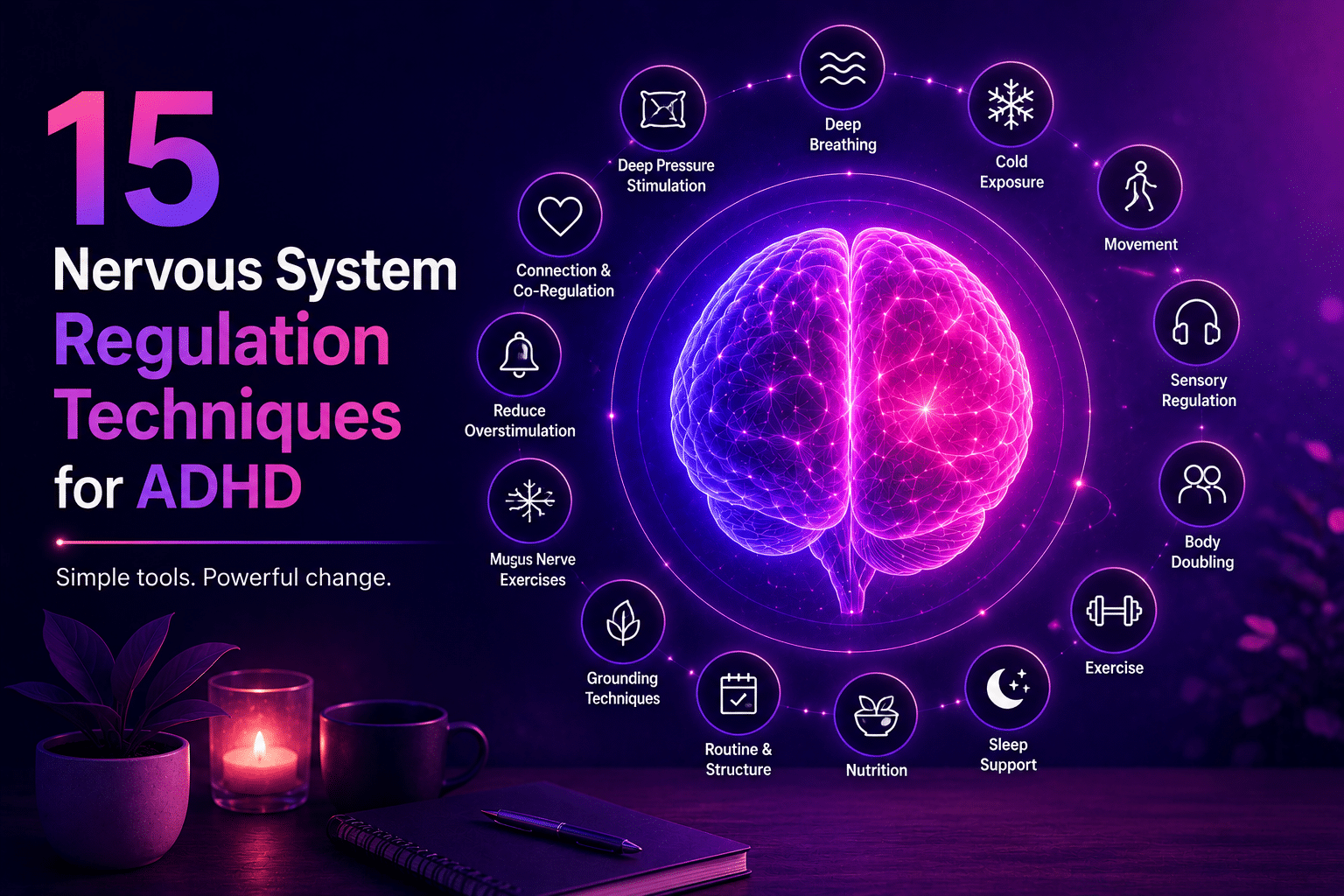
These ADHD calming techniques are designed to work with the nervous system instead of fighting against it.
You do not need to master all of them perfectly.
Even small moments of regulation matter.
1. Deep Pressure Stimulation
Weighted blankets, compression clothing, tight hugs, and firm physical pressure may help calm the nervous system and reduce sensory overwhelm.
Best for:
- Anxiety
- ADHD overstimulation
- Evening regulation
2. Box Breathing
Try:
- Inhale for 4
- Hold for 4
- Exhale for 4
- Hold for 4
Slow breathing helps activate the parasympathetic nervous system and reduce stress activation.
3. Cold Water Exposure
Cold water on the face or hands may interrupt panic and emotional spirals quickly.
This can help during:
- Anxiety spikes
- Emotional flooding
- Fight-or-flight activation
4. Walking and Movement
Movement helps regulate:
- Dopamine
- Cortisol
- Emotional activation
Many ADHD adults regulate better through movement than through stillness.
5. Sensory Regulation
Helpful tools include:
- Noise-canceling headphones
- Soft lighting
- Fidget tools
- Comfortable clothing
- Reduced clutter
Reducing sensory input lowers nervous system stress.
6. Body Doubling
Working near another person may improve:
- Task initiation
- Focus
- Emotional regulation
- Executive functioning
Co-regulation helps the nervous system feel safer.
7. ADHD-Friendly Exercise
Helpful exercise options:
- Strength training
- Cycling
- Walking
- Swimming
- Dancing
Exercise supports dopamine regulation and emotional balance.
8. Sleep Regulation
Helpful sleep supports:
- Consistent wake times
- Reduced nighttime stimulation
- Dim lighting
- White noise
- Gentle evening routines
Sleep is one of the strongest nervous system regulators.
9. Protein-Rich Meals
Protein supports:
- Stable energy
- Dopamine production
- Blood sugar regulation
Easy ADHD-friendly options include eggs, yogurt, protein shakes, and nuts.
10. Nervous System-Friendly Routines
ADHD routines work best when they are flexible and simple.
Helpful anchors may include:
- Morning sunlight
- Midday movement
- Evening decompression habits
11. Music and Sound Regulation
Many ADHD brains regulate better with intentional sound.
Helpful options:
- Brown noise
- Instrumental music
- Bilateral stimulation music
12. Vagus Nerve Exercises
Helpful vagus nerve exercises include:
- Humming
- Singing
- Slow exhaling
- Gargling
These activities may help activate calming parasympathetic responses.
Polyvagal Theory, developed by Stephen Porges, explores how safety signals affect the nervous system.
13. Somatic Grounding
Somatic grounding focuses on body awareness instead of forcing thoughts to stop.
Examples:
- Pressing feet into the floor
- Holding ice
- Stretching
- Naming physical sensations
14. Reducing Overstimulation
Helpful changes may include:
- Fewer notifications
- Reduced multitasking
- Quiet recovery time
- Lower screen exposure
Constant stimulation keeps the nervous system activated.
15. Co-Regulation With Safe People
Emotionally safe relationships can help calm the nervous system.
Helpful examples:
- Quiet companionship
- Therapy
- ADHD support groups
- Trusted friendships
Humans regulate through connection and safety.
The Best Daily Nervous System Regulation Routine for ADHD
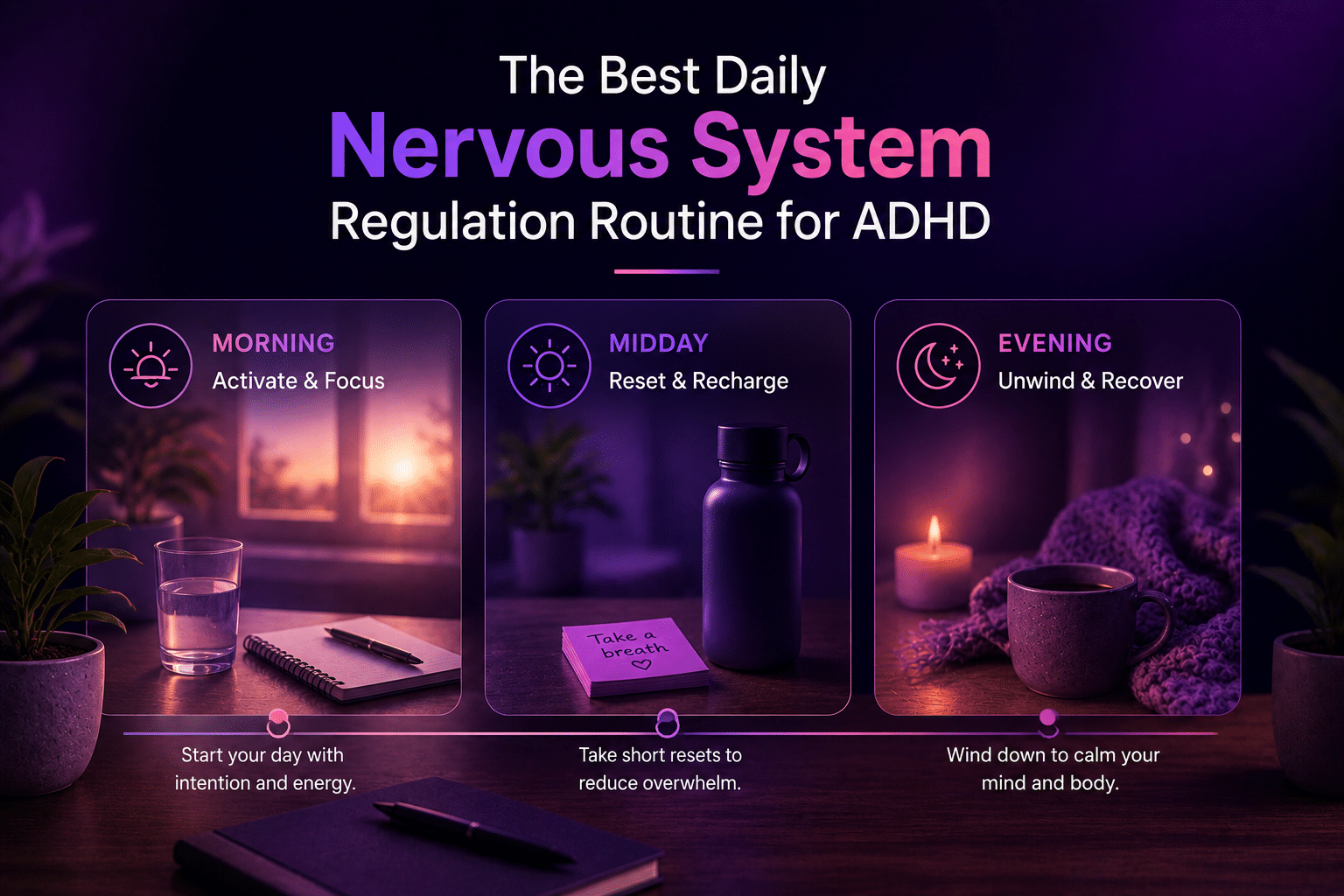
The best ADHD nervous system routine is realistic, flexible, and sustainable.
Perfection usually creates more stress.
Morning Regulation Routine
Helpful habits:
- Morning sunlight
- Hydration
- Protein-rich breakfast
- Gentle movement
- Avoiding immediate phone use
Starting the day calmly can reduce stress buildup later.
Midday Nervous System Reset
Helpful midday resets include:
- Short walks
- Stretching
- Hydration
- Deep breathing
- Quiet breaks
These small resets can prevent evening shutdowns.
Evening Decompression Routine
Helpful evening practices:
- Dim lighting
- Warm showers
- Calm music
- Reduced screens
- Weighted blankets
- Gentle stretching
The goal is to help the nervous system transition out of survival mode.
ADHD, Trauma, and the Nervous System
Not everyone with ADHD has trauma.
But many people experience chronic stress from:
- Emotional invalidation
- Overwhelm
- Masking
- Repeated criticism
- Feeling misunderstood
Over time, chronic stress can keep the nervous system hyper-alert.
This may contribute to:
- Anxiety
- Hypervigilance
- Emotional exhaustion
- Burnout
- Shutdown responses
Trauma-informed support may help some people, including:
- CBT
- Somatic therapy
- Occupational therapy
- Mindfulness
- ADHD-informed therapy
When to Seek Professional Support
Professional support may help if nervous system dysregulation severely affects daily life.
Helpful support options may include:
- ADHD therapists
- Somatic therapy
- Occupational therapy
- CBT
- ADHD coaching
- Medication discussions
A nervous system-informed approach can improve emotional regulation, overwhelm, and burnout recovery.
Final Thoughts
ADHD nervous system dysregulation is real, exhausting, and deeply misunderstood.
Many people spend years believing they are:
- Too sensitive
- Too emotional
- Too inconsistent
- Too overwhelmed
But often, the nervous system has simply been overloaded for too long.
The goal of nervous system regulation is not to become perfectly calm all the time.
The goal is to help your brain and body feel safe enough to:
- Focus
- Recover
- Rest
- Regulate emotions
- Move through life with less overwhelm
Small regulation practices repeated consistently can create meaningful change over time.
And you deserve support that works with your nervous system, not against it.
Frequently Asked Questions
Can ADHD cause nervous system dysregulation?
Yes. ADHD can affect emotional regulation, stress response, and sensory processing, which can lead to nervous system dysregulation.
Why do people with ADHD get overwhelmed easily?
People with ADHD often experience stronger emotional reactions, sensory overload, and chronic mental stimulation, which can overwhelm the nervous system quickly.
What calms an ADHD nervous system fast?
Deep breathing, cold water, movement, grounding exercises, and reducing sensory input can calm an ADHD nervous system quickly.
Is ADHD connected to fight-or-flight mode?
Yes. Many people with ADHD experience chronic stress activation and frequent fight-or-flight responses.
Can nervous system regulation improve ADHD symptoms?
Yes. Nervous system regulation may improve focus, emotional balance, stress tolerance, and executive functioning.
What are the best grounding techniques for ADHD?
Deep breathing, walking, weighted blankets, stretching, and sensory grounding exercises work well for many people with ADHD.
How does sensory overload affect ADHD?
Sensory overload can increase anxiety, irritability, emotional dysregulation, and difficulty focusing.
Does ADHD affect the vagus nerve?
ADHD does not damage the vagus nerve, but vagus nerve exercises may help improve calmness and emotional regulation.
Can poor sleep worsen ADHD dysregulation?
Yes. Poor sleep can worsen emotional regulation, focus, stress response, and sensory sensitivity.
What is the fastest way to calm an ADHD nervous system?
Slow breathing, cold water exposure, movement, and reducing stimulation are some of the fastest calming techniques.