
If you constantly feel anxious, emotionally overwhelmed, mentally exhausted, or stuck in “survival mode,” your nervous system may be under chronic stress.
Nervous system regulation is the process of helping your body and mind feel safer, calmer, and more balanced again. When your nervous system becomes dysregulated, even small stressors can feel overwhelming. You may struggle with tension, burnout, poor sleep, emotional reactivity, brain fog, or difficulty relaxing.
Many people think they simply need to “manage stress better,” but nervous system dysregulation often goes much deeper. Chronic stress, emotional overwhelm, trauma, burnout, overstimulation, and long-term pressure can train the body to stay stuck in protection and survival responses.
The good news is that nervous system healing is possible.
With consistent support, emotional awareness, recovery habits, and nervous system regulation practices, your body can gradually learn how to feel safer and more balanced again.
In this complete guide, you’ll learn:
- What nervous system regulation means
- Signs of nervous system dysregulation
- Why the body gets stuck in survival mode
- How chronic stress affects the nervous system
- Practical ways to regulate your nervous system naturally
- Foods and habits that may support recovery
- How long nervous system healing can take
- How emotional resilience and regulation are connected
What Is Nervous System Regulation?
Nervous system regulation refers to your body’s ability to respond to stress, recover from overwhelm, and return to a more balanced state.
Your nervous system constantly monitors your environment for signs of safety or danger. When it feels safe and supported, you may feel calmer, more emotionally balanced, and better able to think clearly. When it feels threatened or overloaded, stress responses can become stronger and harder to control.
A regulated nervous system often supports:
- Emotional balance
- Stress recovery
- Calm reactions
- Better sleep
- Clearer thinking
- Stable energy
- Feeling safer in your body
A dysregulated nervous system, on the other hand, may keep your body stuck in survival responses for long periods of time.
This can affect both physical and emotional well-being.
Nervous system regulation does not mean feeling calm all the time. Stress is a normal part of life. Regulation simply means your body can respond to stress and eventually recover instead of staying trapped in overwhelm or survival mode.
What Does a Dysregulated Nervous System Feel Like?
A dysregulated nervous system can affect your emotions, body, thoughts, and daily functioning.
Many people experience symptoms without realizing they may be connected to chronic stress or nervous system overload.
Emotional symptoms may include:
- Anxiety
- Emotional overwhelm
- Irritability
- Feeling emotionally reactive
- Mood swings
- Emotional numbness
- Panic or fear
- Feeling constantly “on edge”
Physical symptoms may include:
- Muscle tension
- Headaches
- Fatigue
- Poor sleep
- Digestive discomfort
- Rapid heartbeat
- Shallow breathing
- Jaw tension
- Dizziness
- Low energy
Mental and cognitive symptoms may include:
- Brain fog
- Overthinking
- Racing thoughts
- Poor focus
- Memory issues
- Feeling mentally exhausted
- Difficulty concentrating
Many people also describe feeling:
- Stuck in survival mode
- Unable to fully relax
- Hyperaware of stress
- Emotionally drained
- Unsafe even during calm moments
Over time, chronic stress can reduce the body’s ability to recover efficiently, making even small stressors feel emotionally or physically overwhelming.
You may also notice deeper physical and emotional symptoms that are common in people with a dysregulated nervous system.
Can Nervous System Dysregulation Affect Relationships?
A dysregulated nervous system can affect the way people communicate, respond emotionally, and handle stress in relationships.
When the body feels overwhelmed or unsafe, emotional reactions may become stronger and harder to manage.
Some people may notice:
- Becoming emotionally reactive
- Withdrawing from others
- Feeling easily irritated
- Difficulty trusting people
- Shutting down during conflict
- Feeling emotionally disconnected
- Struggling with emotional intimacy
Chronic stress can reduce emotional capacity, making even supportive relationships feel exhausting at times.
Many people living in survival mode also become highly sensitive to criticism, pressure, or emotional tension.
As nervous system regulation improves, emotional communication, patience, and connection often become easier and more stable over time.
Why the Nervous System Gets Stuck in Survival Mode
Your nervous system is designed to protect you.
When your brain perceives stress or danger, the body activates survival responses like fight, flight, freeze, or shutdown. These responses are meant to help you survive difficult situations temporarily.
The problem happens when stress becomes chronic.
Long-term stress can teach the nervous system that the world is constantly unsafe, even when immediate danger is no longer present.
Common causes of nervous system dysregulation include:
- Chronic stress
- Burnout
- Emotional overwhelm
- Trauma
- Constant pressure
- Poor sleep
- Overworking
- Emotional suppression
- Overstimulation
- Lack of recovery time
Over time, the body may remain stuck in stress responses even during normal daily situations.
This can make relaxation feel difficult or unfamiliar.
Some people become stuck in fight-or-flight responses, which may look like:
- Anxiety
- Panic
- Hypervigilance
- Restlessness
- Overthinking
Others may experience freeze or shutdown responses, including:
- Emotional numbness
- Exhaustion
- Low motivation
- Disconnection
- Feeling emotionally “stuck”
A dysregulated nervous system is not a personal failure or weakness. It is often the result of long-term stress adaptation.
How Chronic Stress Changes the Nervous System Over Time
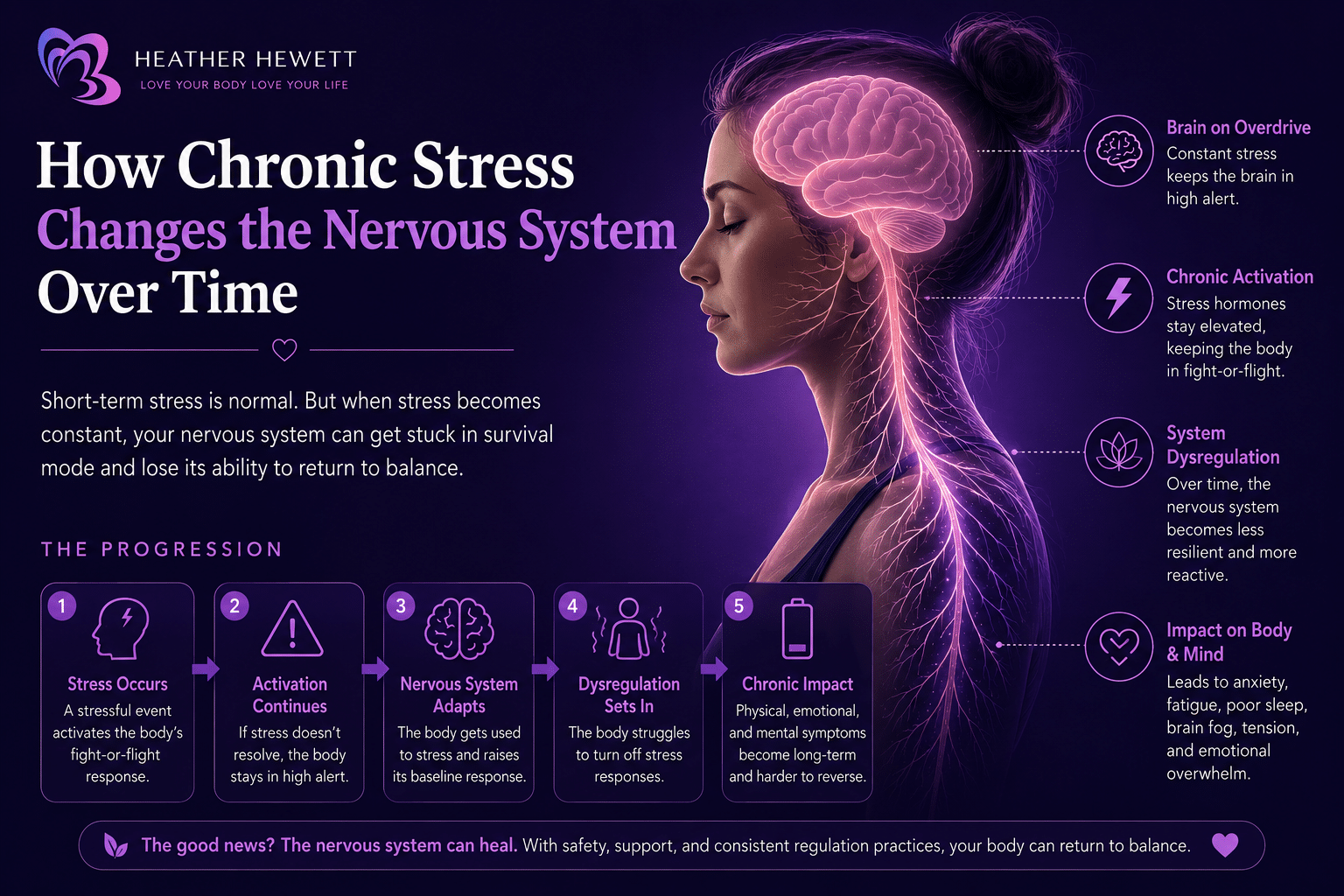
The nervous system is designed to handle short periods of stress and then return to balance afterward.
But when stress becomes constant, the body may stop fully returning to a calm and regulated state.
Over time, chronic stress can change the way the nervous system responds to daily life.
Instead of responding only to real danger, the body may begin reacting to:
- Pressure
- Conflict
- Overstimulation
- Uncertainty
- Emotional tension
- Work stress
- Lack of rest
This can keep stress hormones elevated for long periods and make the nervous system more sensitive overall.
Many people eventually begin experiencing:
- Emotional exhaustion
- Constant tension
- Anxiety
- Irritability
- Fatigue
- Sleep struggles
- Difficulty relaxing
Long-term stress may also reduce the body’s ability to recover efficiently after stressful situations.
This is why nervous system healing often focuses on helping the body experience more consistency, safety, rest, and recovery over time.
The Difference Between Stress and Nervous System Dysregulation
Stress and nervous system dysregulation are closely connected, but they are not exactly the same thing.
Stress is a normal human response to challenges, pressure, or difficult situations.
In many cases, stress is temporary.
A regulated nervous system can experience stress and eventually return to balance afterward.
Nervous system dysregulation happens when the body struggles to fully recover from stress.
Instead of returning to a calm baseline, the nervous system may remain activated or stuck in survival responses for long periods.
Many people experience nervous system dysregulation without fully understanding why they feel anxious, tense, or emotionally overwhelmed.
This is why some people continue feeling:
- Anxious
- Tense
- Emotionally reactive
- Overwhelmed
- Exhausted
- Hyperaware
even when life appears calm externally.
Many people try to manage symptoms without realizing the nervous system itself may need support.
Understanding this difference can help people approach healing more gently and realistically.
Signs Your Nervous System Needs Support
Your body often gives signals when your nervous system is overwhelmed or overloaded.
Some common signs include:
- Feeling constantly stressed
- Difficulty relaxing
- Waking up tired
- Emotional exhaustion
- Feeling emotionally reactive
- Brain fog
- Digestive discomfort
- Feeling anxious for no clear reason
- Sleep struggles
- Burnout symptoms
- Tension in the body
- Feeling unsafe during calm moments
- Trouble slowing down
- Overstimulation from noise or social interaction
- Feeling emotionally disconnected
Many people ignore these signals for long periods because they become “normal.”
But these symptoms often indicate that the nervous system needs more support, recovery, and regulation.
How Nervous System Dysregulation Affects the Body and Mind
Nervous system dysregulation can affect nearly every area of well-being.
Emotional Effects
When the nervous system feels unsafe or overloaded, emotional regulation often becomes more difficult.
You may notice:
- Emotional overwhelm
- Anxiety
- Panic
- Irritability
- Feeling emotionally unstable
- Low stress tolerance
- Increased sensitivity
- Emotional shutdown
Stress responses may feel stronger and harder to manage.
Physical Effects
Chronic nervous system activation can also affect the body physically.
Some common physical effects include:
- Fatigue
- Headaches
- Digestive discomfort
- Muscle tightness
- Shallow breathing
- Poor sleep
- Low energy
- Chronic tension
The body may remain stuck in stress chemistry for long periods, which can increase exhaustion over time.
Cognitive Effects
Stress can also affect mental clarity and focus.
Many people experience:
- Brain fog
- Racing thoughts
- Poor concentration
- Memory issues
- Overthinking
- Mental exhaustion
When the nervous system feels overwhelmed, the brain often prioritizes survival instead of rest, recovery, and clear thinking.
What Does a Regulated Nervous System Feel Like?
Many people become so used to stress and survival mode that calmness can feel unfamiliar at first.
A more regulated nervous system may support:
- Calmer emotional responses
- Improved stress recovery
- Feeling safer in your body
- Better sleep
- More stable energy
- Clearer thinking
- Reduced overwhelm
- Easier emotional recovery
- Improved focus
- Feeling more grounded
Regulation does not mean life becomes stress-free.
It means your body becomes better able to recover from stress instead of remaining trapped in overwhelm for long periods.
Many people also notice that small daily stressors begin to feel less emotionally consuming as regulation improves.
Why Overstimulation Affects the Nervous System
Modern life exposes the nervous system to constant stimulation.
Many people spend large parts of the day around:
- Screens
- Notifications
- Multitasking
- Loud environments
- Fast-paced schedules
- Social pressure
- Information overload
Over time, constant stimulation may leave the nervous system feeling overloaded and unable to fully recover.
Some people notice symptoms like:
- Mental exhaustion
- Irritability
- Anxiety
- Difficulty concentrating
- Emotional overwhelm
- Trouble sleeping
Creating quieter and slower moments throughout the day can help support nervous system recovery.
Even small changes may help, including:
- Taking screen breaks
- Reducing multitasking
- Spending time outdoors
- Creating calmer evening routines
- Stepping away from constant noise
The nervous system often responds positively to simplicity, predictability, and rest.
How to Regulate Your Nervous System Naturally
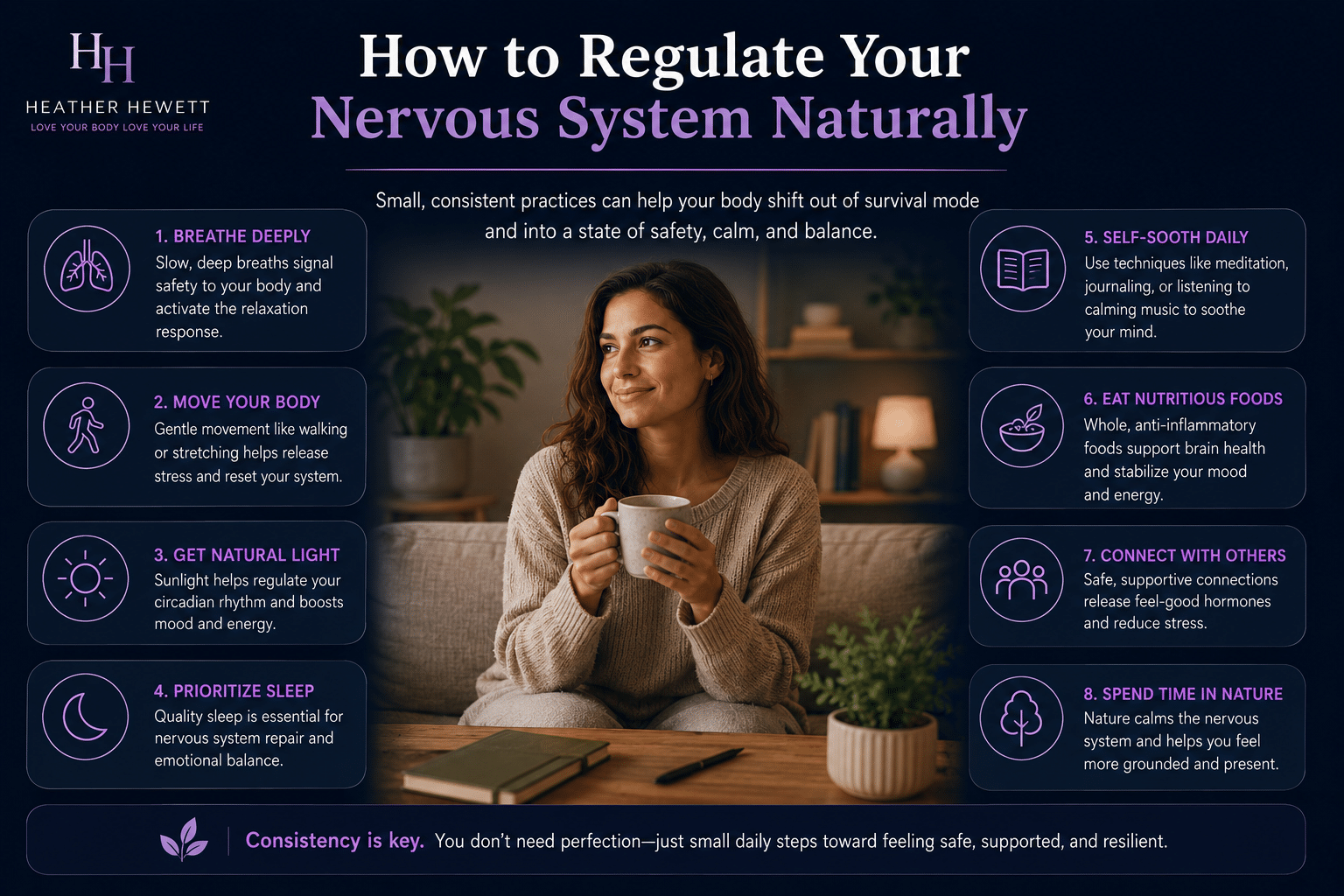
Nervous system healing often happens through small, consistent daily practices rather than extreme changes.
The goal is not perfection. The goal is helping your body gradually experience more safety, balance, and recovery.
Breathing Techniques
Slow breathing can help signal safety to the nervous system.
Helpful breathing practices may include:
- Deep belly breathing
- Slow exhaling
- Box breathing
- Paced breathing
- Gentle breath awareness
Even a few minutes of slower breathing may help reduce stress activation.
Grounding Exercises
Grounding practices help bring attention back to the present moment.
Examples include:
- Noticing physical sensations
- Walking barefoot outside
- Touching textured objects
- Observing your environment
- Listening to calming sounds
Grounding may help reduce overwhelm and increase feelings of stability.
Sleep and Recovery
Sleep is one of the most important parts of nervous system healing.
Quality sleep is one of the most important parts of nervous system recovery and emotional regulation.
Helpful sleep-supportive habits may include:
- Consistent sleep schedules
- Reducing screen exposure before bed
- Creating calming evening routines
- Limiting overstimulation at night
- Allowing time for rest
Recovery matters just as much as productivity.
Gentle Movement
Movement may help release stress stored in the body.
Helpful options include:
- Walking
- Stretching
- Mobility exercises
- Gentle strength training
- Dancing
- Spending time outdoors
The goal is supportive movement, not punishment or intensity.
Reducing Overstimulation
Modern life often overwhelms the nervous system.
Reducing overstimulation may include:
- Taking breaks from screens
- Spending time in quiet spaces
- Limiting constant multitasking
- Reducing excessive noise
- Creating calmer routines
Small changes can help the body feel less overloaded.
Emotional Awareness
Ignoring emotions often increases nervous system stress over time.
Emotional awareness may involve:
- Journaling
- Emotional check-ins
- Noticing triggers
- Naming emotions without judgment
- Practicing self-compassion
Emotions are signals, not failures.
Rest Without Guilt
Many people struggle to rest because they feel pressure to stay productive constantly.
But nervous system healing often requires intentional rest.
Rest may include:
- Quiet time
- Slowing down
- Taking breaks
- Saying no when necessary
- Creating space for recovery
Healing usually improves through consistency, not pressure.
Creating Safer Daily Routines
Predictable and supportive routines can help the nervous system feel safer.
Helpful routines may include:
- Regular meals
- Hydration
- Movement
- Sleep consistency
- Stress reduction habits
- Smotional support practices
Small routines repeated consistently can create long-term nervous system stability.
Simple Nervous System Practices You Can Start Today
Nervous system healing often improves through small, repeatable daily actions rather than extreme wellness routines.
Simple practices may include:
- Stepping outside for fresh air
- Slowing your breathing
- Saking breaks between tasks
- Reducing screen overstimulation
- Listening to calming music
- Stretching your body
- Resting without guilt
- Drinking enough water
- Eating consistently
- Reducing multitasking
- Spending time in quiet environments
Small supportive habits practiced consistently can help the nervous system feel safer and more balanced over time.
Foods That Support Nervous System Regulation
Nutrition can also play a role in nervous system support.
While food alone does not “fix” nervous system dysregulation, balanced nutrition may help support stress recovery, energy, and emotional stability.
Some nutrients commonly associated with nervous system support include:
- Magnesium
- Omega-3 fatty acids
- Protein
- B vitamins
- Bntioxidants
Foods often included in nervous system support discussions include:
- Leafy greens
- Salmon
- Nuts
- Seeds
- Berries
- Whole grains
- Avocados
- Yogurt
- Eggs
Hydration and blood sugar balance may also affect energy and stress responses.
Many people find that eating consistently and reducing extreme dieting patterns helps support more stable energy and mood throughout the day.
You can also explore more foods for nervous system health that may support recovery and emotional balance naturally.
The Connection Between Burnout and Nervous System Regulation
Burnout is not only mental exhaustion.
It also affects the nervous system physically and emotionally.
When stress continues for long periods without enough recovery, the body may eventually struggle to maintain balance.
Many people experiencing burnout also notice symptoms such as:
- Emotional numbness
- Exhaustion
- Low motivation
- Increased anxiety
- Irritability
- Sleep problems
- Difficulty concentrating
- Feeling emotionally disconnected
Burnout often develops gradually.
Many people spend months or years pushing through stress without realizing how much pressure the nervous system is carrying.
Recovery from burnout usually requires more than simply taking a short break.
The body often needs:
- Consistent recovery
- Emotional support
- Better boundaries
- Improved sleep
- Reduced pressure
- Nervous system regulation practices
Healing often improves when the body feels supported instead of constantly pushed beyond its limits.
How Long Does Nervous System Healing Take?
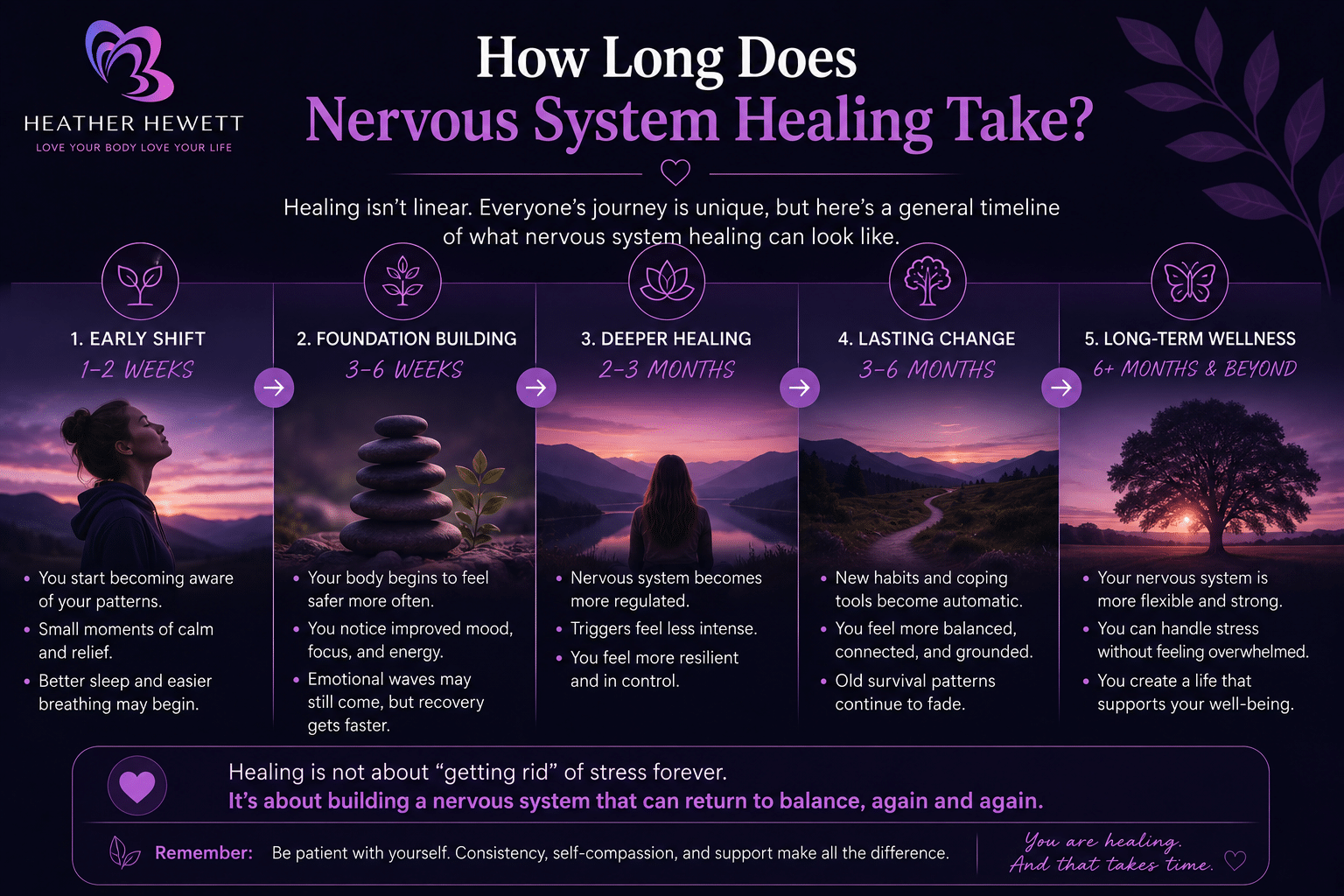
Nervous system healing is usually gradual rather than immediate.
Many people expect quick results, but regulation often takes time because the body needs repeated experiences of safety and recovery.
Recovery timelines can vary depending on stress levels, lifestyle habits, emotional health, and nervous system support.
Healing timelines vary depending on factors like:
- Stress levels
- Burnout severity
- Sleep quality
- Emotional support
- Lifestyle habits
- Consistency
- Nervous system sensitivity
Some people notice small improvements within weeks, while deeper healing may take months or longer.
Progress is rarely perfectly linear.
You may experience:
- Good days
- Setbacks
- Periods of exhaustion
- Emotional ups and downs
This is normal.
The nervous system learns through repetition and consistency.
Small daily practices often create more sustainable healing than trying to force rapid change.
Many people also wonder how long to regulate your nervous system during recovery because healing can feel unpredictable at times.
The most important thing is consistency, patience, and reducing pressure around “fixing” yourself quickly.
Why Safety Is So Important for Nervous System Healing
One of the most important parts of nervous system regulation is helping the body feel safe again.
The nervous system constantly scans the environment for danger, stress, pressure, or uncertainty.
When the body feels unsafe, stress responses naturally increase.
This can happen even when there is no immediate physical danger.
Emotional stress, overwhelm, criticism, conflict, instability, and chronic pressure can all affect the nervous system deeply.
Creating more safety may involve:
- Supportive relationships
- Emotional boundaries
- Calmer routines
- Reducing overstimulation
- Slowing down
- Rest
- Emotional support
- Self-compassion
Safety does not mean avoiding all stress.
It means helping the nervous system feel supported enough to recover instead of staying trapped in survival mode continuously.
Understanding the Mind-Body Connection in Nervous System Regulation
The nervous system affects both the mind and body continuously.
Many people think stress only affects emotions, but nervous system dysregulation can also influence physical sensations, energy levels, digestion, sleep, focus, and overall well-being.
This is sometimes referred to as the mind-body connection.
When the nervous system feels overwhelmed or unsafe, the body may respond with symptoms such as:
- Muscle tension
- Headaches
- Fatigue
- Digestive discomfort
- Rapid heartbeat
- Shallow breathing
- Dizziness
- Low energy
At the same time, emotional symptoms may also increase, including:
- Anxiety
- Irritability
- Emotional overwhelm
- Panic
- Brain fog
- Emotional exhaustion
This is why nervous system healing often requires supporting both emotional and physical well-being together.
Helpful mind-body support practices may include:
- Gentle movement
- Deep breathing
- Sleep support
- Balanced nutrition
- Stress reduction
- Emotional awareness
- Mindfulness
- Creating calmer routines
Over time, helping the body feel physically supported may also improve emotional regulation and stress recovery.
Emotional Resilience and Nervous System Regulation
Emotional resilience and nervous system regulation are deeply connected.
When the nervous system feels safer and more balanced, emotional recovery often becomes easier.
Building emotional resilience may help improve stress recovery and emotional regulation over time.
Emotional resilience may support:
- Stress recovery
- Emotional flexibility
- Calmer reactions
- Self-awareness
- Emotional stability
A dysregulated nervous system can make emotions feel more intense or harder to manage.
Over time, supportive regulation practices may help improve emotional resilience naturally.
Helpful resilience-building habits may include:
- Emotional awareness
- Self-compassion
- Boundaries
- Rest
- Stress reduction
- Supportive relationships
- Recovery routines
Emotional resilience is not about avoiding emotions. It’s about learning how to move through difficult emotions with more support and stability.
Why Self-Compassion Supports Nervous System Healing
Many people approach healing with pressure, self-criticism, or unrealistic expectations.
But constant pressure can sometimes increase nervous system stress even more.
Self-compassion can play an important role in regulation because it helps reduce internal stress responses.
Self-compassion may involve:
- Speaking to yourself more gently
- Allowing rest without guilt
- Accepting that healing takes time
- Reducing perfectionism
- Recognizing emotional overwhelm without judgment
- Creating realistic expectations
For many people, healing improves more through patience and consistency than harsh self-pressure.
Nervous system regulation is not about becoming perfect.
It is about helping the body feel supported enough to recover gradually over time.
Daily Habits That Support Nervous System Health
Small daily habits often create the biggest long-term improvements.
Helpful nervous system support habits may include:
- Maintaining a consistent sleep routine
- Eating regularly
- Staying hydrated
- Reducing overstimulation
- Taking breaks during the day
- Spending time outdoors
- Slowing down during meals
- Gentle movement
- Emotional check-ins
- Creating quieter routines
- Reducing chronic stress exposure
- Practicing boundaries
- Making time for recovery
Supportive habits work best when practiced consistently over time.
Perfection is not necessary for healing.
The Importance of Slowing Down During Recovery
Many people living in chronic stress become used to moving quickly all the time.
Over time, constant rushing, multitasking, pressure, and overstimulation can make it difficult for the nervous system to fully relax.
Slowing down may help create more opportunities for recovery throughout the day.
This can include:
- Taking slower breaths
- Eating without rushing
- Ereating quieter evenings
- Reducing unnecessary multitasking
- Spending time away from screens
- Allowing breaks between responsibilities
- Creating moments of stillness
Slowing down does not mean becoming unproductive.
In many cases, slowing down helps the nervous system recover more efficiently, which may improve emotional balance, focus, and energy over time.
Many people notice that small moments of calm, practiced consistently can help reduce feelings of overwhelm significantly.
Why Consistency Matters More Than Perfection
Many people approach healing by trying to change everything at once.
But nervous system regulation usually improves more through consistency than intensity.
Trying to force healing quickly can sometimes increase stress and overwhelm even more.
Supportive healing often looks like:
- Repeating small habits daily
- Creating realistic routines
- Reducing pressure
- Allowing recovery time
- Practicing emotional awareness
- Slowing down gradually
The nervous system learns safety through repetition.
Small habits repeated consistently often create more lasting regulation than short periods of extreme effort.
Creating a Nervous System-Friendly Lifestyle
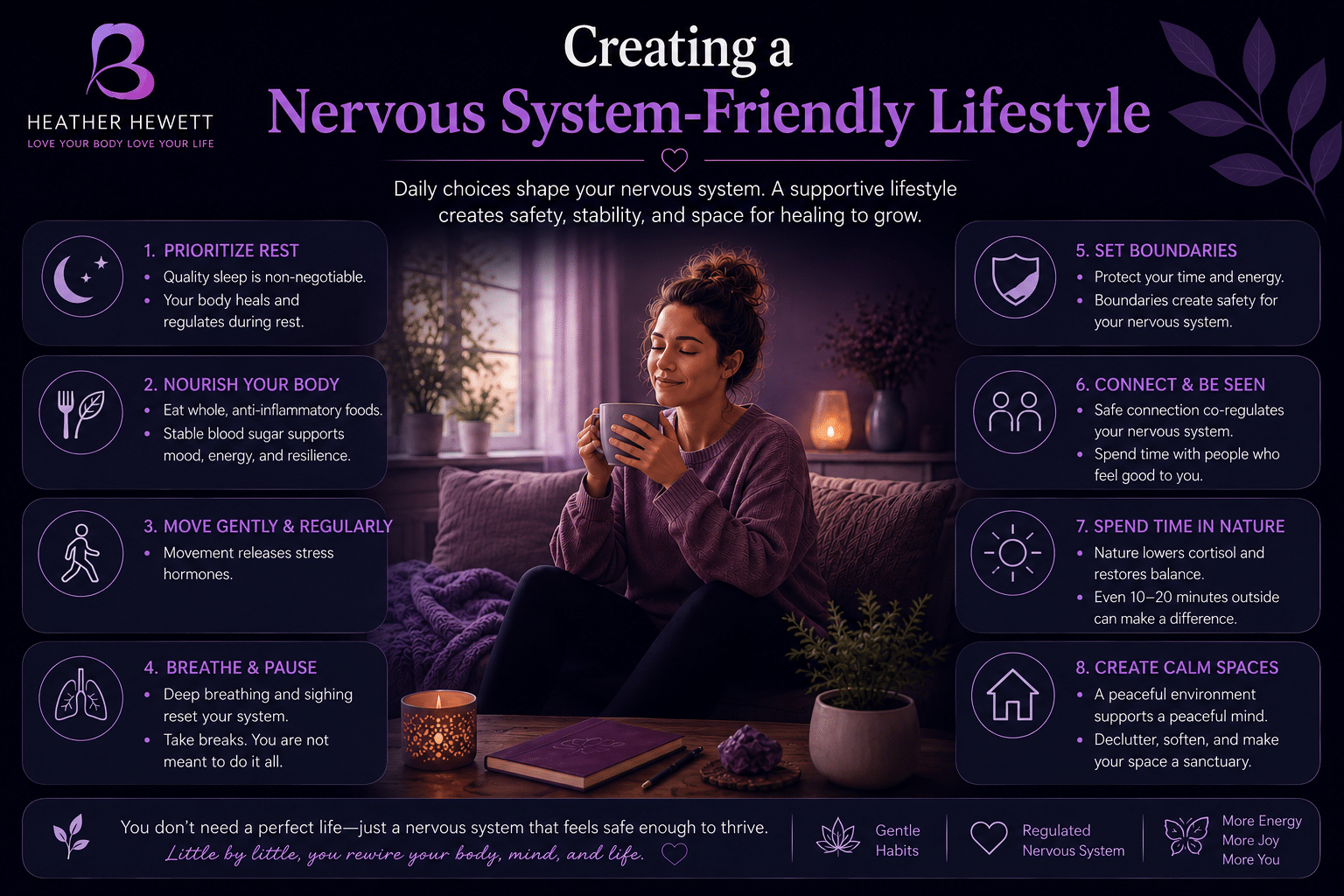
Nervous system regulation is not usually built through one single habit.
Instead, healing often improves when supportive habits work together consistently over time.
A nervous system-friendly lifestyle may include:
- Consistent sleep habits
- Balanced meals
- Hydration
- Emotional boundaries
- Recovery time
- Movement
- Stress reduction practices
- Emotional awareness
- Supportive relationships
- Reduced overstimulation
The goal is not creating a “perfect” lifestyle.
The goal is creating an environment that helps the body feel safer, calmer, and more supported overall.
Even small improvements in daily routines can positively affect nervous system balance over time.
What Can Make Nervous System Dysregulation Worse?
Certain lifestyle patterns may increase stress activation and make recovery more difficult.
Common contributors include:
- Chronic stress
- Vverworking
- Emotional suppression
- Poor sleep
- Burnout
- Overstimulation
- Perfectionism
- Lack of boundaries
- Constant pressure
- Lack of recovery time
When the nervous system stays under pressure for too long, the body may struggle to return to a balanced state.
This is why recovery habits and emotional support matter so much.
Why Nervous System Healing Can Feel Slow
Many people become discouraged when healing does not happen quickly.
But nervous system recovery often takes time because the body has spent months or years adapting to stress.
Healing may feel slow because the nervous system needs repeated experiences of safety, consistency, and recovery before it begins responding differently.
Progress is rarely perfectly linear.
You may experience:
- Good days
- Emotional setbacks
- Periods of exhaustion
- Temporary stress spikes
- Emotional ups and downs
This does not mean healing is failing.
In many cases, gradual progress is completely normal.
Nervous System Healing Looks Different for Everyone
There is no single “perfect” healing timeline.
Every nervous system responds differently depending on factors such as:
- Stress history
- Trauma exposure
- Emotional support
- Lifestyle habits
- Sleep quality
- Burnout levels
- Overall health
- Consistency of recovery practices
Some people may notice improvement relatively quickly.
Others may need more time and support.
This does not mean healing is impossible.
In many cases, slower healing simply reflects how long the body has been adapting to stress.
Comparing healing journeys can sometimes increase frustration and pressure unnecessarily.
Nervous system regulation is often most effective when approached gently, patiently, and consistently.
Small Signs Your Nervous System Is Healing
Healing does not always look dramatic.
In many cases, nervous system improvement appears through small but meaningful changes over time.
Some signs of healing may include:
- Recovering faster after stress
- Feeling calmer more often
- Sleeping more deeply
- Noticing emotions without becoming overwhelmed
- Reduced muscle tension
- Less emotional reactivity
- Feeling more grounded
- Improved focus
- Feeling safer in your body
- Experiencing fewer energy crashes
These small changes often reflect increasing nervous system flexibility and recovery capacity.
Progress may happen gradually, but small improvements still matter.
When to Seek Additional Support
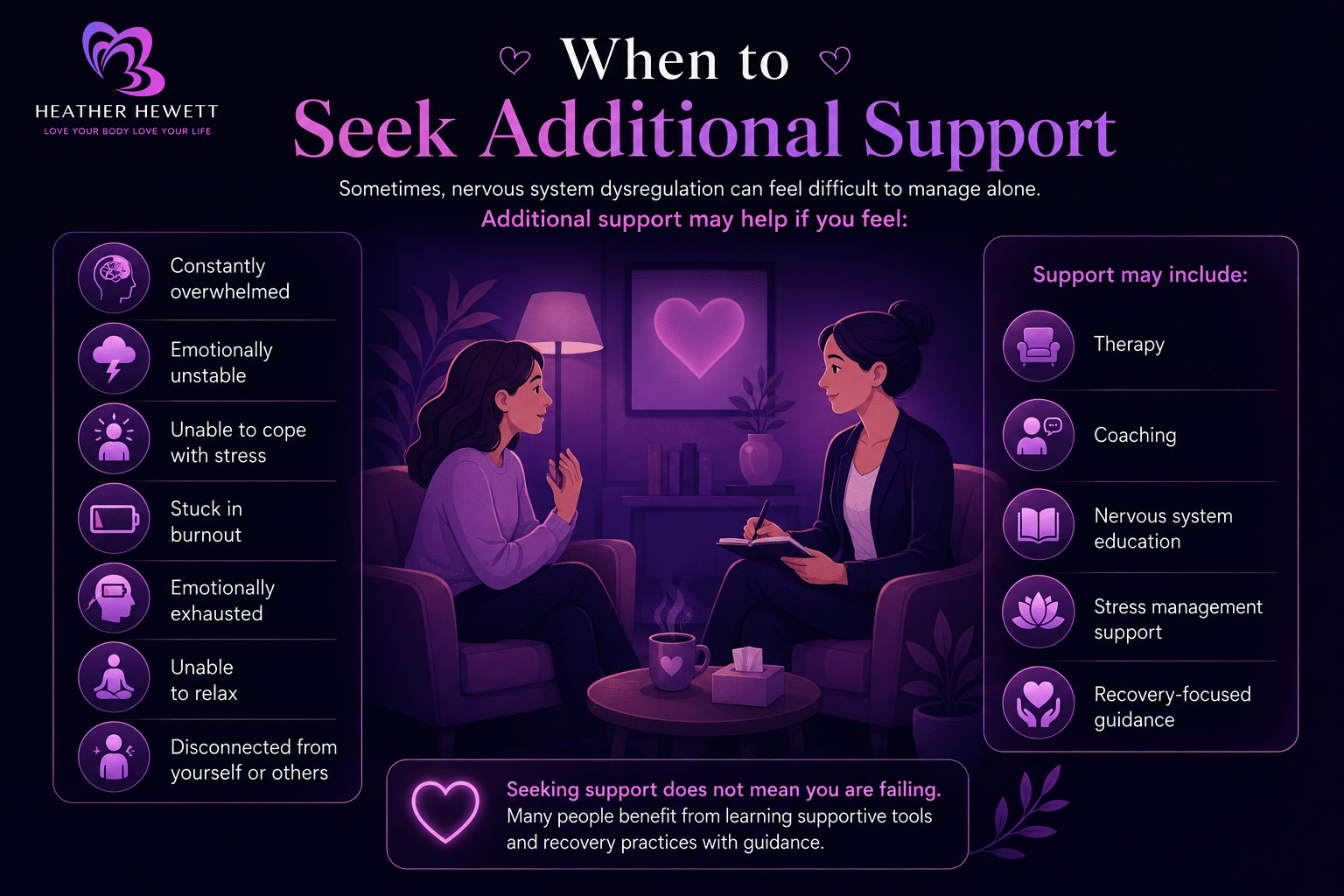
Sometimes, nervous system dysregulation can feel difficult to manage alone.
Additional support may help if you feel:
- Constantly overwhelmed
- Emotionally unstable
- Unable to cope with stress
- Stuck in burnout
- Emotionally exhausted
- Unable to relax
- Disconnected from yourself or others
Support may include:
- Therapy
- Coaching
- Nervous system education
- Stress management support
- Recovery-focused guidance
Seeking support does not mean you are failing. Many people benefit from learning supportive tools and recovery practices with guidance.
Heather’s Personal Experience With Nervous System Healing
There was a period when Heather constantly felt emotionally overwhelmed, mentally exhausted, and physically tense, even during quiet moments. Like many people living under chronic stress, she spent years trying to push through burnout, emotional overwhelm, and exhaustion without fully understanding how deeply stress was affecting her nervous system.
At first, she believed healing meant trying harder, staying productive, or forcing herself to remain positive. Over time, she realized nervous system regulation was not about perfection or “fixing” herself quickly. It was about creating small moments of safety, rest, emotional awareness, and consistency that gradually helped her body feel more supported again.
Simple changes like slowing down, improving recovery habits, eating more consistently, reducing overstimulation, and creating calmer routines slowly made a meaningful difference.
That experience shaped her understanding that nervous system healing is often gradual, gentle, and deeply connected to how safe and supported the body feels over time.
Nervous System Healing Is About Support, Not Perfection
Many people believe healing means becoming calm all the time or never struggling emotionally again.
In reality, nervous system regulation is about creating more stability, awareness, recovery, and support over time.
Some stress will always exist.
But healing can help stressful situations feel less overwhelming and easier to recover from.
Small supportive changes often create meaningful long-term improvements.
You do not need to heal perfectly to make progress.
Why Healing Often Happens in Small Steps
Many people expect nervous system healing to feel dramatic or immediate.
But in reality, recovery often happens gradually through small changes repeated consistently.
Healing may begin with:
- Sleeping slightly better
- Feeling calmer after stress
- Noticing fewer emotional reactions
- Recovering faster from overwhelm
- Feeling more present
- Experiencing less tension in the body
These small improvements may seem subtle at first, but over time they often build into meaningful long-term changes.
Nervous system regulation is usually less about one major breakthrough and more about creating repeated experiences of safety, support, and recovery.
Little progress is still real progress.
Final Thoughts
Nervous system regulation is not about eliminating stress completely. It’s about helping your body and mind recover more effectively from overwhelm, pressure, and chronic stress.
Healing often happens gradually through consistency, emotional awareness, supportive habits, rest, and recovery.
Some days may still feel difficult.
But over time, small supportive practices can help your nervous system feel calmer, safer, and more balanced again.
Progress matters more than perfection.
FAQs
What is nervous system regulation?
Nervous system regulation is your body’s ability to respond to stress, recover from overwhelm, and return to a more balanced state.
What causes nervous system dysregulation?
Common causes include chronic stress, burnout, trauma, emotional overwhelm, poor sleep, overstimulation, and long-term pressure.
Can a dysregulated nervous system heal?
Yes. With consistent support, recovery habits, emotional awareness, and stress reduction, the nervous system can gradually become more regulated over time.
What are signs of nervous system overload?
Common signs include anxiety, fatigue, emotional overwhelm, brain fog, irritability, poor sleep, muscle tension, and feeling stuck in survival mode.
How do I calm my nervous system quickly?
Helpful practices may include slow breathing, grounding exercises, reducing overstimulation, resting, and creating calmer routines.
How long does it take to regulate your nervous system?
Healing timelines vary. Some people notice small improvements within weeks, while deeper healing may take months or longer, depending on stress levels and consistency.
Can stress damage the nervous system?
Chronic stress can strongly affect nervous system functioning and increase emotional, physical, and mental symptoms over time.
What foods help support the nervous system?
Foods rich in magnesium, omega-3 fatty acids, protein, antioxidants, and B vitamins are commonly associated with nervous system support.
Why do I feel stuck in survival mode?
Long-term stress and overwhelm can train the nervous system to stay in protection responses even when immediate danger is no longer present.
Can sleep improve nervous system regulation?
Yes. Sleep and recovery are extremely important for nervous system healing, emotional balance, and stress recovery.