
There is no single timeline for nervous system regulation. Some people may notice short-term changes in how they feel within minutes or days, while longer-term changes can take weeks or months. Progress can vary based on stress history, consistency, daily circumstances, and the type of support available.
What matters is not reaching a fixed “healing” deadline, but noticing whether you are becoming more aware of stress patterns, recovering more easily, and building regulation skills that fit your everyday life.
In this guide, you’ll learn:
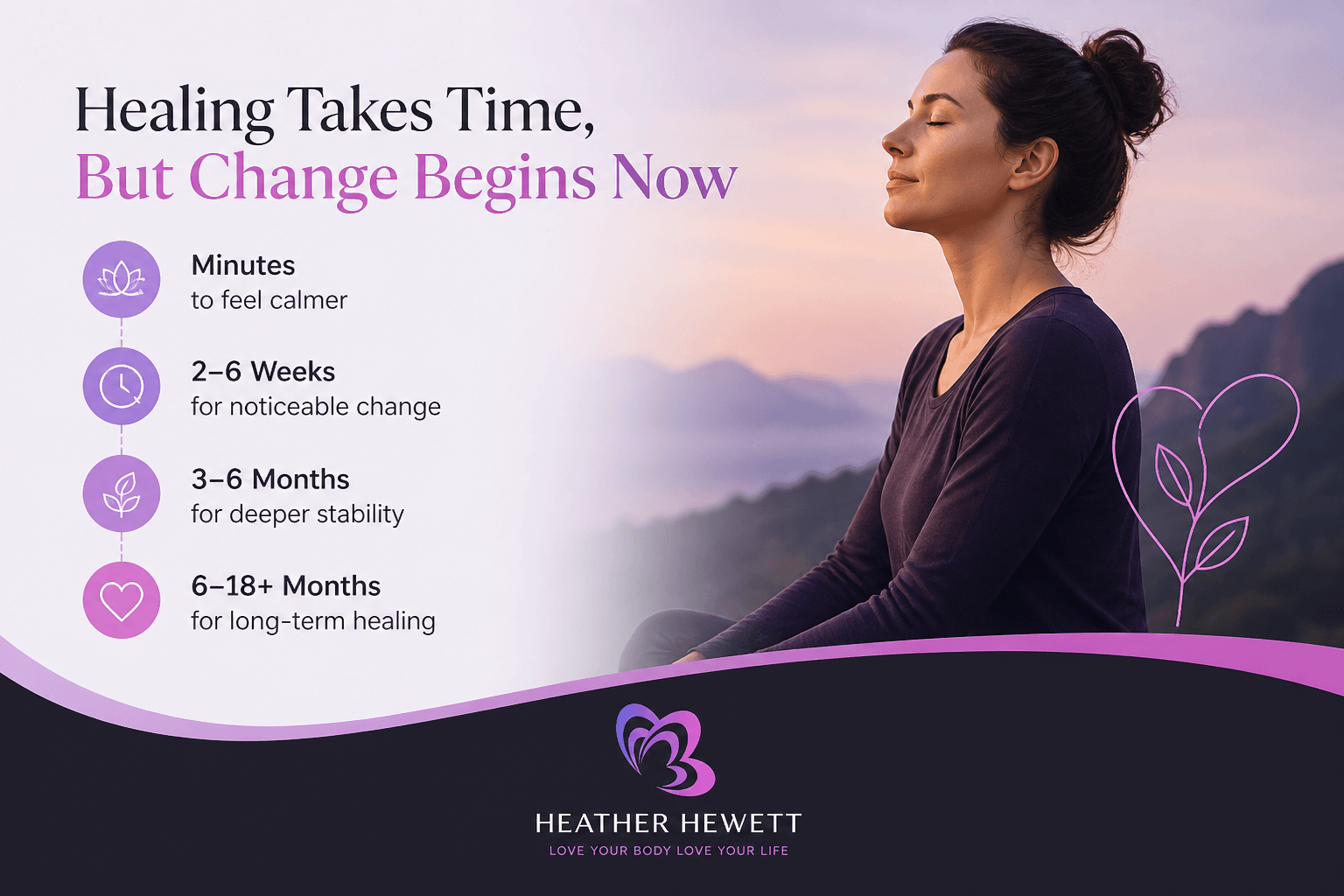
- Minutes to feel calmer
- 2–6 weeks for noticeable change
- 3–6 months for deeper stability
- 6–18+ months for long-term healing
The exact timeline depends on your stress history, consistency, and the support you have.
You’ll also learn what affects your healing speed, what realistic progress looks like, and how to move forward without pressure or quick-fix expectations.
What Is Nervous System Regulation?
Nervous system regulation is your body’s ability to move in and out of stress without getting stuck.
A regulated nervous system can activate when needed and then return to a state of calm, safety, and connection.
It’s not about eliminating stress.
It’s about helping your body feel safe enough to come back to balance.
Nervous System Regulation vs. Stress Management
Stress management helps you cope in the moment.
Nervous system regulation goes deeper; it works on the root cause of why your body stays in survival mode even when nothing is wrong.
Instead of temporary relief, it builds long-term emotional resilience and stability.
Sympathetic vs. Parasympathetic Nervous System
Your sympathetic nervous system drives fight, flight, or freeze. Your parasympathetic nervous system supports rest, digestion, healing, and emotional balance. Regulation is not about eliminating stress; it’s about restoring balance between these systems.
Polyvagal Theory Explained Simply
Polyvagal theory helps explain why you can logically know you’re safe yet still feel anxious or shut down. Your nervous system constantly scans for safety. When it doesn’t feel safe, calming techniques alone may fail unless the body is involved.
What Causes Nervous System Dysregulation?
Nervous system dysregulation doesn’t happen overnight. It builds over time.
How Stress Affects the Nervous System Over Time
Chronic stress keeps your system in high alert. Eventually, your body forgets how to relax. This is common in caregivers, high achievers, and those who have spent years “pushing through.”
How Trauma Affects the Nervous System
Trauma, whether obvious or subtle, teaches the body that the world isn’t safe. Even resolved events can leave the nervous system stuck in survival patterns.
Modern Contributors to Dysregulation
- Burnout and overworking
- People pleasing and perfectionism
- Chronic dieting or food restriction
- Emotional suppression
- Lack of boundaries
Many people experiencing anxiety, binge eating, or chronic fatigue are actually dealing with an overworked nervous system rather than a lack of willpower.
Why Your Nervous System Stays Stuck in Survival Mode
Your nervous system isn’t trying to work against you; it’s trying to protect you.
When your body experiences repeated stress, overwhelm, or emotional pressure, it learns to stay in a state of alert. Over time, this becomes your “normal,” even when your environment is safe.
This is why you might:
- Feel anxious without a clear reason
- Struggle to relax even when nothing is wrong
- Overthink or stay on edge
- Feel stuck in shutdown or exhaustion
Your body is not broken. It has simply adapted to protect you.
Regulation is the process of teaching your nervous system that it’s safe to come out of survival mode.
Heather’s Personal Experience With Nervous System Healing
There was a period when Heather constantly felt physically exhausted, emotionally overwhelmed, and unable to fully relax, even during quiet moments. Like many people living under chronic stress, she spent years trying to “push through” fatigue, tension, and emotional overwhelm without realizing how deeply her nervous system had adapted to survival mode.
At first, she expected healing to happen quickly. But over time, she realized nervous system regulation wasn’t about forcing calm or fixing herself overnight. It was about creating small moments of safety, consistency, rest, and support that slowly helped her body feel more regulated again.
That experience shaped her understanding that nervous system healing is rarely instant. It usually happens gradually through patience, body awareness, and gentle daily practices that help the system feel safe enough to recover.
Signs of Nervous System Dysregulation
Understanding the signs helps you recognize what your body needs.
Physical Symptoms
- Poor sleep or waking exhausted
- Digestive issues or inflammation
- Chronic pain or muscle tension
For a deeper breakdown, see the full guide on signs of nervous system dysregulation.
Emotional and Behavioral Signs
- Anxiety, irritability, or overwhelm
- Emotional numbness or shutdown
- Compulsive behaviors like binge eating
These are not character flaws; they are protective responses.
How Long Does It Take to Regulate Your Nervous System?
Here’s a realistic breakdown of how long nervous system regulation takes:
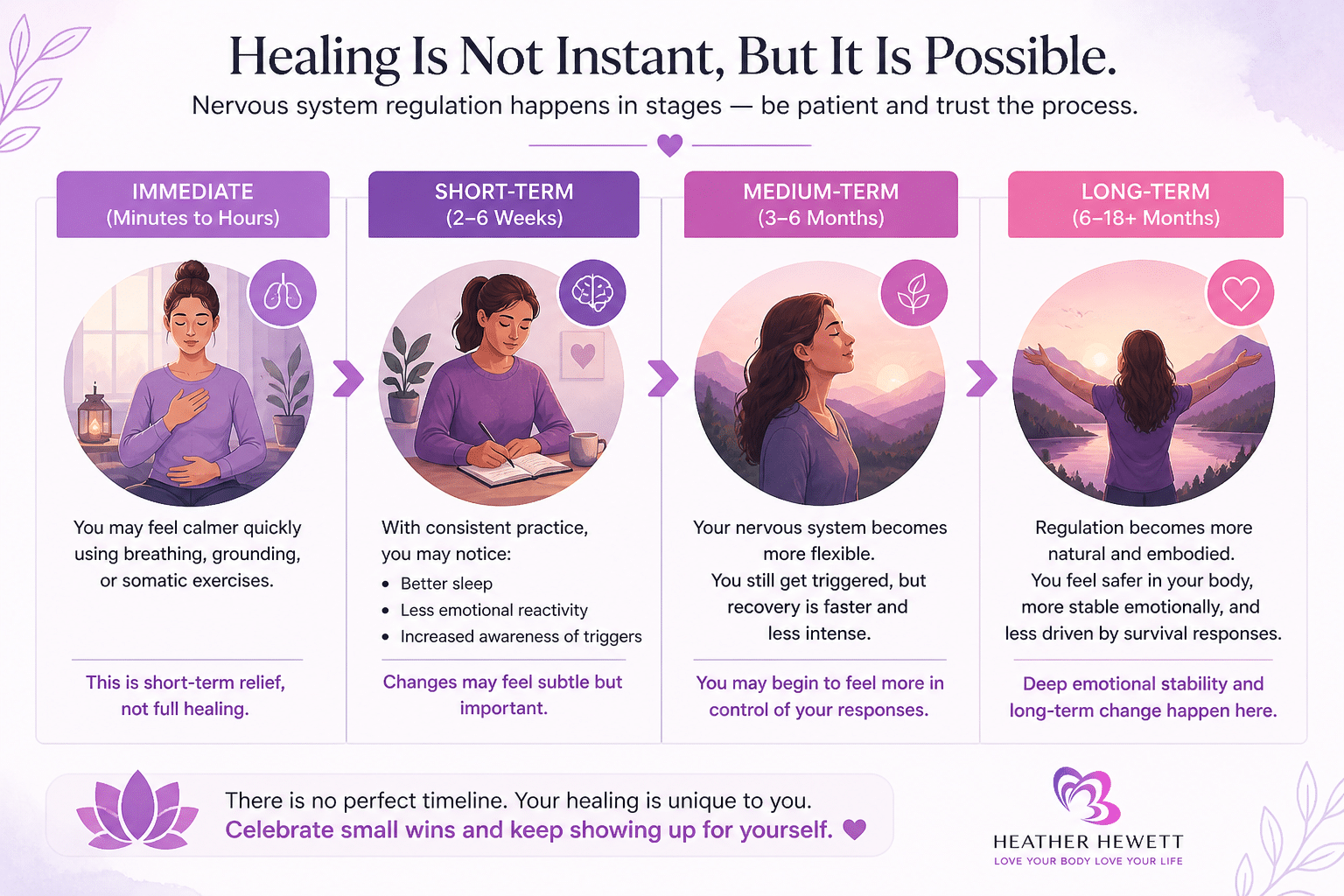
Immediate (Minutes to Hours)
You may feel calmer quickly using breathing, grounding, or somatic exercises.
This is short-term relief, not full healing.
Short-Term (2–6 Weeks)
With consistent practice, you may notice:
- Better sleep
- Less emotional reactivity
- Increased awareness of triggers
At this stage, changes may feel subtle but important. You might still get triggered, but you start noticing what’s happening in your body instead of feeling completely overwhelmed. This awareness is a key part of healing.
Medium-Term (3–6 Months)
Your nervous system becomes more flexible.
You still get triggered, but recovery is faster and less intense.
You may begin to feel more in control of your responses. Stress doesn’t disappear, but it no longer takes over your entire system. Many people describe this phase as feeling “more like themselves again.”
Long-Term (6–18+ Months)
Regulation becomes more natural and embodied.
You feel safer in your body, more stable emotionally, and less driven by survival responses.
Regulation becomes more natural and less effortful. You don’t have to think about calming yourself; your body begins to do it automatically. This is where deeper emotional stability and long-term change happen.
Simple Daily Nervous System Regulation Routine
You don’t need hours of practice to support your nervous system. Small, consistent actions throughout the day can create powerful change.
Morning (5–10 minutes)
Start your day gently before stress builds:
- Light stretching or movement
- Slow breathing (long exhales)
- Sitting quietly without your phone
This helps your body feel safe before the day begins.
Midday Reset (2–5 minutes)
Pause during your day to prevent overwhelm:
- Step outside or look around your space
- Take a few slow breaths
- Notice physical sensations in your body
These small resets stop stress from building up.
Evening Wind-Down (10 minutes)
Help your body shift out of stress before sleep:
- Reduce screen time
- Gentle movement or stretching
- Calm breathing or quiet reflection
Consistent evenings help your nervous system learn how to relax again.
Realistic Nervous System Healing Examples
Every healing journey looks different. Here are a few realistic examples to help you understand what progress can look like:
Mild Stress or Recent Overwhelm
If your dysregulation is recent (work stress, life changes), you may start feeling more balanced within 2–6 weeks of consistent support. Your body responds quickly because it hasn’t been stuck in survival mode for long.
Burnout or Chronic Stress
If you’ve been pushing through for months or years, healing usually takes 3–6 months. You may notice gradual improvements like better sleep, less reactivity, and more emotional awareness over time.
Trauma or Long-Term Dysregulation
If your nervous system has been shaped by long-term stress or trauma, healing may take 6–18 months or longer. Progress is still very possible; it just requires patience, consistency, and support.
No matter where you’re starting, your nervous system is capable of change.
What Affects How Fast You Heal?
There is no one-size-fits-all timeline. Your progress depends on:
Trauma History & Chronic Stress
Long-term stress usually means a longer healing process, but it is absolutely possible.
Consistency of Practice
Small, daily practices matter more than doing a lot occasionally.
Lifestyle Factors
Sleep, nutrition, and inflammation directly impact your nervous system.
Support System
Healing often happens faster when you feel supported, guided, and safe.
Signs Your Nervous System Is Regulating
Healing doesn’t always look dramatic. Often, it shows up in small but meaningful ways:
- You recover faster after stress
- You feel less reactive to triggers
- Your body feels calmer more often
- You notice your emotions without feeling overwhelmed
- You feel more present and grounded
- You sleep better and feel more rested
- You start trusting yourself again
These are signs your nervous system is becoming more flexible and resilient, even if everything isn’t “perfect” yet.
Need more personalized support? You can explore [personalized nervous system regulation coaching] to learn more about how individualized support may fit your goals and situation.
Personalized Nervous System Regulation Coaching
Nervous System Healing Stages
Stage 1 – Awareness and Safety
You begin noticing triggers without judgment. Safety, not forcing calm, is the priority.
Stage 2 – Stabilization and Capacity Building
Your tolerance for stress increases. You can stay present without shutting down or panicking.
Stage 3 – Integration and Resilience
You bounce back faster, trust your body, and experience emotional regulation naturally. These are clear signs your nervous system is healing.
What Affects How Fast Your Nervous System Heals?
There is no universal timeline.
Trauma History and Chronic Stress Load
Longer exposure usually means a longer healing curve, but not a hopeless one.
Consistency of Regulation Practices
Gentle, daily practices matter more than intensity.
Nutrition, Sleep, and Lifestyle Support
Blood sugar instability, poor sleep, and inflammation all slow regulation.
Emotional Safety and Support
Healing happens faster when you feel supported rather than doing everything alone.
How to Regulate Your Nervous System Naturally
How long to regulate your nervous system varies from person to person, but most people experience short-term relief quickly and deeper healing over time.
Natural regulation focuses on the body first, not just the mind.
The most effective approach focuses on the body, not just the mind.
Somatic Practices
- Body scanning
- Gentle movement
- Noticing sensations without fixing
Breathing Techniques
Slow, controlled exhales help activate the parasympathetic (calming) response.
Grounding Exercises
Connecting with your surroundings helps bring your body out of survival mode.
What Actually Helps Nervous System Healing (And What Doesn’t)
There’s a lot of advice online — but not all of it works for the nervous system.
What helps:
- Gentle, consistent practices (not intense routines)
- Body-based approaches (not just mindset work)
- Creating safety before pushing change
- Moving at a pace your system can handle
What doesn’t help:
- Forcing yourself to “just relax”
- Ignoring your body’s signals
- Jumping between too many techniques
- Expecting instant results
Healing happens when your body feels safe, not when it feels pressured.
Nervous System Regulation Techniques
Somatic Exercises for the Nervous System
- Body scanning
- Gentle movement
- Noticing sensation without fixing
These teach your nervous system that it’s safe to feel.
Nervous System Regulation Breathing Exercises
Slow exhales stimulate the vagus nerve and reduce stress responses.
Grounding and Body Awareness Practices
Orienting to your surroundings helps pull your system out of survival mode.
You can explore additional approaches in this guide on how to regulate your nervous system naturally.
Nervous System Regulation for Specific Needs
Regulation looks different depending on your life context.
- Anxiety and panic: focus on safety, not control
- Burnout: prioritize rest before productivity
- Trauma and PTSD: go slowly; pacing is essential
- High achievers and entrepreneurs: learn to downshift without guilt
- Emotional eating: regulate first, then address behavior
Daily Nervous System Regulation Practices
Morning Routine
Set your nervous system tone before stress begins, with gentle movement, breath, and grounding.
Midday Reset
Short check-ins prevent stress accumulation.
Bedtime Routine
Regulation before sleep improves rest and overnight healing.
Common Nervous System Regulation Myths and Mistakes
- Trying to “calm down” instead of creating safety
- Forcing relaxation
- Ignoring the body’s signals
- Expecting linear progress
Healing is not a straight line.
Why Nervous System Healing Takes Time
It’s natural to want quick results, especially when you’re feeling overwhelmed.
But nervous system healing is not about fixing something overnight. It’s about gradually building safety, trust, and stability in your body.
Your system has likely spent months or years adapting to stress. For Heather, one of the biggest shifts came from realizing healing improved more through consistency and safety than pressure or perfection. It makes sense that it takes time to relearn a new pattern.
The goal isn’t perfection.
The goal is to create small, consistent shifts that build over time.
Nervous System Regulation vs. Stress Management
Stress management helps you cope. Nervous system regulation changes your baseline, so stress no longer runs your life.
Can Nervous System Dysregulation Be Healed Long-Term?
Yes. The nervous system is plastic and adaptive. With consistent support, it can relearn safety, connection, and resilience even after years of stress or trauma.
When to Call a Professional?
Consider professional support if:
- Anxiety or shutdown feels unmanageable
- You have a trauma history
- Chronic illness or burnout persists
- You feel stuck despite trying everything
Guided support often shortens the healing timeline and prevents overwhelm.
Cost and Value of Nervous System Regulation Coaching
Coaching is an investment in long-term health. Rather than chasing symptoms, you address the root cause, often reducing the need for ongoing interventions later.
Why Choose Heather Hewett for Nervous System Regulation Coaching?
With over 23 years of experience, trauma-informed training, and lived understanding of chronic stress and illness, Heather offers compassionate, body-based support that integrates nutrition, somatic work, and emotional resilience. Her approach is practical, personalized, and grounded in real-life healing, not theory alone.
Ready for Personalized Nervous System Support?
Understanding nervous system regulation is a helpful first step. If you’re looking for personalized support to understand your patterns and build practical regulation skills, you can explore working with Heather.
Explore Nervous System Coaching
When You Might Need Extra Support
Sometimes, self-guided practices aren’t enough, and that’s okay.
You may benefit from additional support if:
- You feel stuck despite trying different techniques
- Your anxiety or shutdown feels overwhelming
- You have a history of trauma
- You feel disconnected from your body
- You’re unsure where to start
Guided support can help you move forward in a way that feels safer, more structured, and less overwhelming.
What Slows Down Nervous System Regulation?
Even with the right tools, some habits can slow your progress without you realizing it.
Inconsistency
Doing practices occasionally won’t create lasting change. Your nervous system responds best to small, regular support.
Overloading Yourself
Trying too many techniques at once can overwhelm your system. Simplicity works better than intensity.
Ignoring Your Body’s Signals
Pushing through exhaustion, stress, or emotional discomfort keeps your system in survival mode.
Lack of Rest and Recovery
Without proper sleep and downtime, your nervous system doesn’t have the chance to reset.
Expecting Fast Results
Healing takes time. Frustration or pressure can actually slow down the process.
The key is consistency, patience, and creating a sense of safety, not forcing progress.
How to Support Nervous System Regulation Daily
Nervous system healing happens through small, consistent daily actions rather than intense or overwhelming routines.
Here are a few simple ways to support nervous system regulation each day:
1. Start your mornings slowly
Gentle movement, slow breathing, or sitting quietly for a few minutes may help your body feel safer before stress builds.
2. Take short regulation breaks during the day
Pausing to breathe, stretch, or step outside can help prevent stress from building up in the body.
3. Reduce overstimulation
Constant multitasking, screen time, and information overload may keep the nervous system activated. Creating quieter moments supports recovery.
4. Prioritize sleep and recovery
Consistent sleep routines help the nervous system repair, regulate emotions, and recover from stress more effectively.
5. Practice body awareness
Paying attention to physical sensations, tension, breathing, and emotional responses helps you better understand your nervous system patterns.
6. Focus on consistency over perfection
Small daily practices often work better than trying to force fast results or doing too much at once.
Over time, these supportive habits can help your body feel safer, calmer, and more resilient.
Start Your Nervous System Healing Journey
So, how long does it take to regulate your nervous system?
It can begin within minutes, but lasting change happens over time through consistency and support.
You don’t need to force yourself to feel calm.
You need to create the conditions where your body feels safe enough to relax.
This is a process of rebuilding trust in yourself one step at a time.
And no matter where you’re starting, change is possible.
Frequently Asked Questions
What are signs your nervous system is healing?
Common signs include feeling calmer more often, recovering faster after stress, sleeping better, feeling less emotionally reactive, and noticing increased emotional awareness and resilience over time.
Can nervous system regulation improve naturally over time?
Yes, the nervous system is adaptable and capable of change. Consistent supportive habits, emotional safety, body-based practices, sleep, and stress recovery can all help improve nervous system regulation over time.
How long does it take to regulate your nervous system from anxiety?
It can start within minutes using calming techniques, but lasting change usually takes weeks to months, depending on consistency and support.
Can you speed up nervous system regulation?
Yes, consistent daily practices, good sleep, and emotional support can help your nervous system regulate faster.
Why is my nervous system not calming down?
If your body doesn’t feel safe, it will stay in survival mode. Regulation requires creating safety in the body, not just trying to think differently.
Is nervous system healing permanent?
Your nervous system is always adapting. With consistent practice, regulation becomes more natural and long-lasting.
What is the fastest way to calm the nervous system?
Slow breathing, grounding exercises, and gentle body-based practices can help calm your system quickly.