
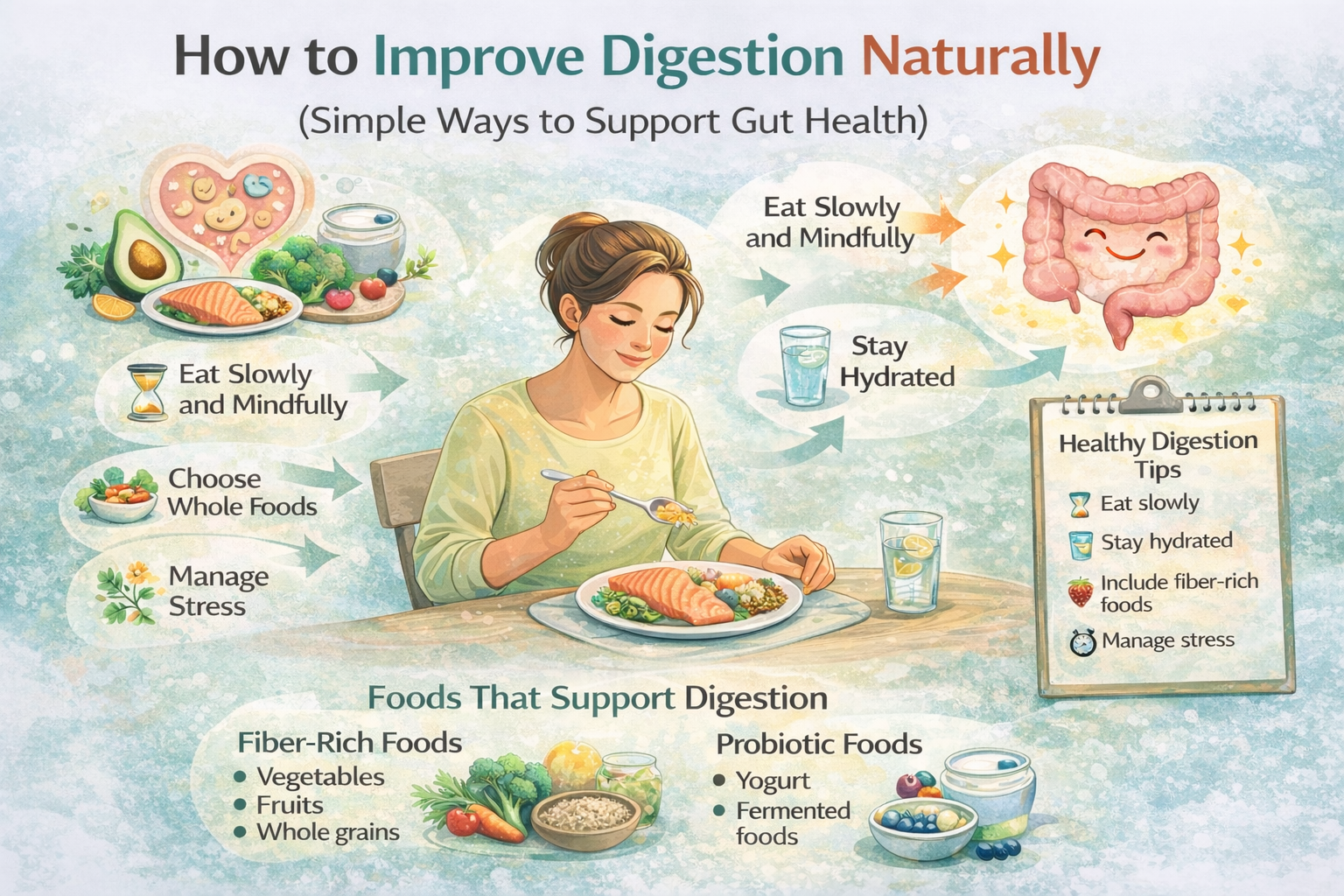
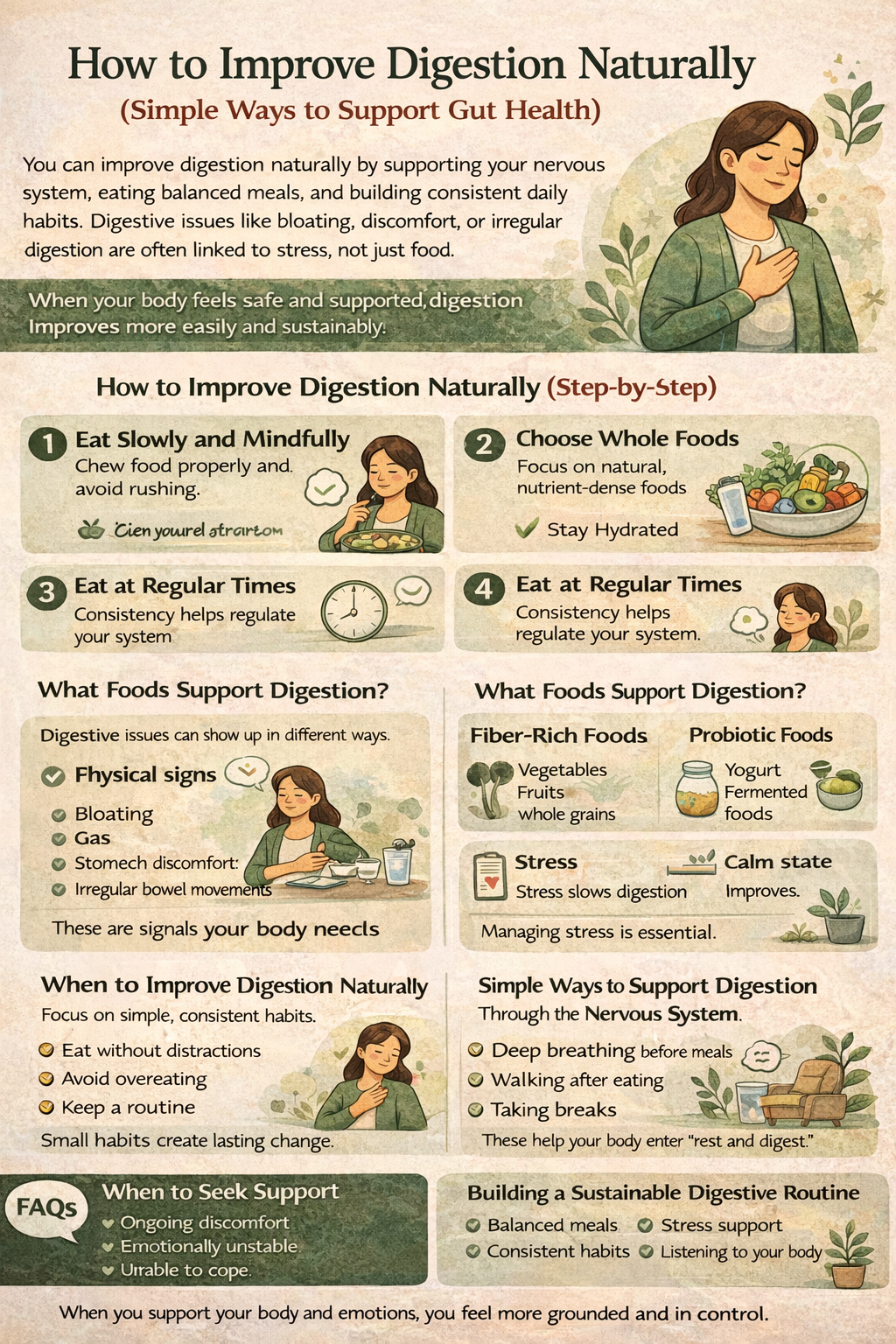
You can improve digestion naturally by supporting your nervous system, eating balanced meals, and building consistent daily habits. Digestive issues like bloating, discomfort, or irregular digestion are often linked to stress, not just food.
When your body feels safe and supported, digestion improves more easily and sustainably.
What Is Digestion and Why Is It Important?
Digestion is how your body breaks down food into nutrients for energy and repair.
Digestion is the process your body uses to absorb nutrients and maintain overall health.
When digestion works well:
- Nutrients are absorbed properly
- Energy feels stable
- Your body feels balanced
What Are the Signs of Poor Digestion?
Digestive issues can show up in different ways.
Physical Signs
- Bloating
- Gas
- Stomach discomfort
- Irregular bowel movements
- Fatigue after eating
Less Obvious Signs
- Low energy
- Brain fog
- Mood changes
- Food sensitivities
These are signals your body needs support.
What Causes Digestive Problems?
Several factors affect digestion.
Poor Diet
Highly processed foods and low fiber disrupt gut health.
Stress
Stress slows digestion and reduces nutrient absorption.
Eating Habits
Eating too quickly or while distracted affects digestion.
How Does the Gut-Brain Connection Affect Digestion?
Your gut and brain are connected.
When you feel stressed:
- Digestion slows
- Discomfort increases
- Absorption decreases
This is why emotional and physical health are linked.
What Is the Role of the Nervous System in Digestion?
Your nervous system controls digestion.
- Stress state → digestion slows
- Calm state → digestion improves
Your body needs to feel safe to digest properly.
Why Does Digestion Feel Inconsistent?
Digestion can feel unpredictable when:
- Stress levels change
- Eating habits vary
- Routines are inconsistent
This is not failure, it’s your body responding to imbalance.
How to Improve Digestion Naturally (Step-by-Step)
Focus on simple, consistent habits.
1. Eat Slowly and Mindfully
Chew food properly and avoid rushing.
2. Choose Whole Foods
Focus on natural, nutrient-dense foods.
3. Stay Hydrated
Water supports digestion and absorption.
4. Eat at Regular Times
Consistency helps regulate your system.
What Foods Support Digestion?
Fiber-Rich Foods
- Vegetables
- Fruits
- Whole grains
Probiotic Foods
- Yogurt
- Fermented foods
Whole Foods
Support overall gut health.
Daily Habits for Better Digestion
- Eat without distractions
- Avoid overeating
- Relax after meals
- Keep a routine
Small habits create lasting change.
How Does Stress Affect Digestion?
Stress is one of the biggest causes of digestive issues.
When stressed:
- Digestion slows
- Bloating increases
- Nutrient absorption decreases
Managing stress is essential.
Simple Ways to Support Digestion Through the Nervous System
- Deep breathing before meals
- Walking after eating
- Taking breaks
- Creating moments of calm
These help your body enter “rest and digest.”
When Should You Seek Support?
If you experience:
- Ongoing discomfort
- Persistent bloating
- Irregular digestion
Support can help you understand the root cause.
How Coaching Can Support Gut Health
With the right support, you can:
- Understand root causes
- Regulate your nervous system
- Build supportive habits
- Improve body awareness
Building a Sustainable Digestive Routine
Focus on:
- Balanced meals
- Consistent habits
- Stress support
- Listening to your body
Final Thoughts
Your digestion is not just about food; it’s about how your body feels.
When your body feels safe and supported, digestion improves naturally.
FAQs
How can I improve digestion naturally?
Eat whole foods, stay hydrated, and manage stress.
What causes digestive problems?
Diet, stress, and eating habits are common causes.
Can stress affect digestion?
Yes, it slows digestion and causes discomfort.
What foods help digestion?
Fiber-rich and probiotic foods support gut health.
How long does it take to improve digestion?
With consistent habits, improvement happens over time.