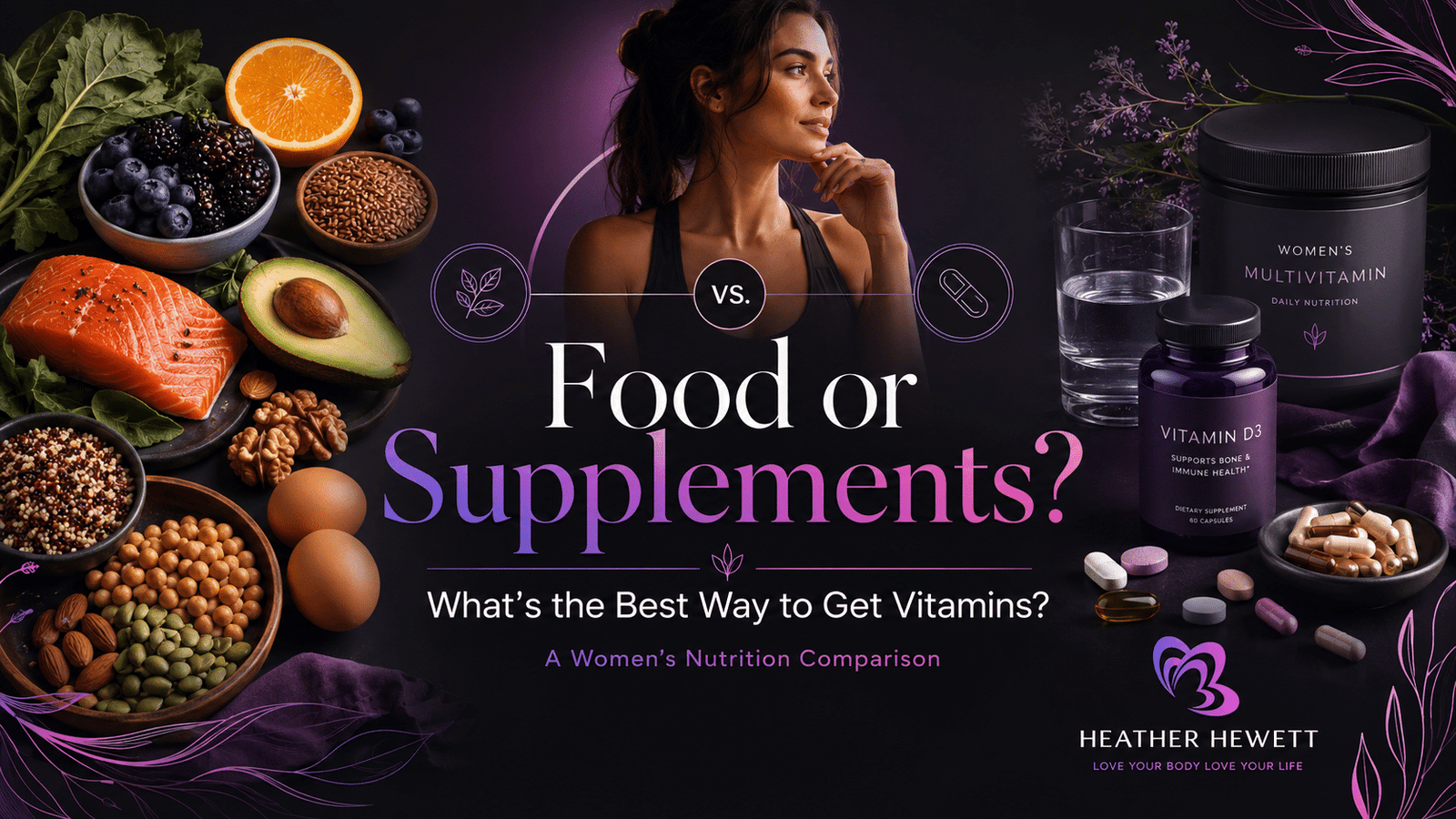
For most women, food is the best foundation for getting vitamins, minerals, and other essential nutrients. Whole foods provide more than isolated vitamins. They can also contribute protein, carbohydrates, fats, fiber, and other food components as part of an overall eating pattern. Supplements can still be useful, and in some circumstances medically important, when food alone does not meet a particular nutritional need.
So, is it better to get vitamins from food or supplements?
In general, start with food when possible and use supplements purposefully when your dietary intake, life stage, nutritional needs, health history, laboratory findings, or professional medical guidance suggest they may be appropriate.
The NIH Office of Dietary Supplements explains that multivitamin and mineral supplements cannot replace the variety of foods important to a healthy diet because foods provide vitamins and minerals along with fiber and other components. NIH Office of Dietary Supplements guidance on multivitamins and food
I prefer to think of this as a food-first approach rather than a food-only approach.
That distinction matters because nutrition is rarely as simple as choosing between a plate of food and a vitamin bottle.
Vitamins From Food vs Supplements at a Glance
| Factor | Vitamins and Nutrients From Food | Vitamin Supplements |
| Nutritional variety | Can provide vitamins, minerals, protein, carbohydrates, fats and other food components together | Usually provide selected nutrients in more concentrated amounts |
| Fiber | Many fruits, vegetables, legumes, nuts, seeds and whole grains provide fiber | Vitamin and mineral supplements generally do not replace dietary fiber |
| Absorption | Varies according to the nutrient, food source, meal composition and individual factors | Also varies according to nutrient form, dose and individual factors |
| Dose | Nutrients are consumed as part of foods and meals | Can contain concentrated amounts of individual or multiple nutrients |
| Convenience | Requires regular access to and intake of appropriate foods | Can be convenient when a specific nutrient is difficult to obtain through food |
| Specific nutrient gaps | Food changes may sometimes improve inadequate intake | Targeted supplementation may be appropriate in some circumstances |
| Dietary restrictions | Thoughtful food choices may meet many needs | Certain restrictions may make particular nutrients harder to obtain |
| Life-stage needs | Remains the nutritional foundation | Particular life stages may involve specific supplement recommendations |
| Safety considerations | Excessive intake is less likely for many nutrients from ordinary food alone | High intake, duplication and medication interactions can become concerns |
| Best role | Foundation of everyday nutrition | Targeted addition when there is a clear reason for it |
Food and supplements are therefore not completely interchangeable.
The better question is often:
What does my body actually need, what am I currently getting from food, and is there a meaningful reason to add a supplement?
Why Is Food Usually the Preferred Source of Vitamins?
Food is generally the preferred nutritional foundation because we do not eat vitamins in isolation.
Consider a meal with salmon, vegetables, brown rice and beans.
You are not receiving only vitamin D, folate or iron. The meal can provide combinations of protein, carbohydrates, fats, vitamins, minerals, fiber and other naturally occurring food components.
The NIH Office of Dietary Supplements makes a similar distinction when explaining that foods provide more than vitamins and minerals alone.
This is one reason I usually begin with the bigger nutritional picture before focusing on supplements.
I want to understand questions such as:
- What are you actually eating?
- How much food variety do you have?
- Are your meals consistent enough to support your nutritional needs?
- Are entire food groups missing?
- Have you removed foods because of dieting, food rules, allergies, intolerances or personal preferences?
- Has your appetite or eating pattern changed?
- Are you regularly under-eating?
- Are there nutrients that are realistically difficult for you to obtain through your current diet?
If years of dieting or rigid nutrition advice have made food more complicated, my guide to overcoming restrictive food rules may also help you think about nourishment without creating another set of rigid rules.
Food can provide fiber that vitamin pills cannot replace
Many plant foods provide dietary fiber alongside micronutrients.
A vitamin tablet cannot reproduce those characteristics of the foods themselves.
That is why correcting a specific nutrient gap and replacing a healthy eating pattern are two different goals.
A supplement may provide a particular vitamin or mineral.
It cannot replace the broader role that food plays in nutrition.
Are Vitamins From Food Better Absorbed Than Supplements?
Not always. The absorption and bioavailability of a nutrient depend on the nutrient itself, its chemical form, the food or supplement source, what it is consumed with, and individual digestive and physiological factors.
This is where overly simple “food vs supplements” advice can become misleading.
Some nutrients are very effectively obtained from foods.
The absorption of other nutrients can vary depending on meal composition.
Individual circumstances can matter too. Digestion, gastrointestinal health, medications and certain health conditions may influence how nutrients are absorbed or used.
If digestive concerns are affecting what you can eat or how comfortable eating feels, my Gut Health Nutritionist support looks at food intake, eating patterns, digestion, food tolerance, stress and health history together rather than treating digestion as an isolated problem.
There are also situations where a fortified or supplemental form of a nutrient can be useful.
That does not mean supplements are generally nutritionally superior.
It means the statement “vitamins from food are always absorbed better” is too broad.
A more accurate approach is:
Use food as the foundation, but consider absorption nutrient by nutrient rather than assuming that one source always wins.
Can You Get All the Vitamins You Need From Food?
Many women can obtain most of their vitamin and mineral needs from an adequate and varied diet, but food alone may not be sufficient or practical in every circumstance.
Whether your diet meets your needs depends on more than whether you describe yourself as a healthy eater.
Nutritional adequacy can be influenced by food quantity, food variety, dietary restrictions, appetite, digestion, life stage, pregnancy, health history, medications, eating patterns and other individual circumstances.
This is why personalized nutrition matters.
Two women can follow eating patterns that look similar on the surface while having very different nutritional needs.
The U.S. Office on Women’s Health explains that all vitamins and minerals are important and that women’s nutritional needs can differ across life stages. It also emphasizes obtaining vitamins and minerals from a variety of foods. Office on Women’s Health guidance on vitamins and minerals for women
If you want help understanding whether your overall eating pattern appears nutritionally adequate, you can learn more about my personalized Women’s Health Nutrition Support. My approach looks at nutritional adequacy alongside your life stage, eating patterns, digestion, appetite, dietary history and other relevant circumstances.
When Might Vitamin Supplements Be Appropriate?
Supplements may be appropriate when there is a specific nutritional reason for using them.
The goal is not to assume that everybody needs supplements.
It is also not to assume that anyone who needs a supplement has somehow failed at eating well.
When dietary intake is consistently inadequate
If someone regularly obtains too little of a particular nutrient and food changes are not sufficient or practical, supplementation may deserve consideration.
That does not require labeling every imperfect eating pattern as deficient.
The useful question is what the person consistently eats over time.
When nutrient inadequacy or deficiency has been identified
If laboratory testing or an appropriate medical assessment identifies a nutritional concern, a healthcare professional may recommend supplementation.
The appropriate supplement, amount and duration depend on the individual situation.
A symptom alone should not be used to diagnose a vitamin deficiency.
When dietary restrictions make certain nutrients harder to obtain
Vegetarian, vegan, allergy-related, culturally restricted and medically restricted eating patterns can change which nutrient sources are available.
That does not automatically make a restricted diet nutritionally inadequate.
It does mean that certain nutrients may need closer attention.
When digestion or absorption may be affected
Certain gastrointestinal conditions, procedures, medications or other medical circumstances can affect nutrient absorption.
This is one reason simply eating more of a nutrient-rich food may not always address the issue.
Medical concerns involving digestion or nutrient absorption should be discussed with an appropriate healthcare professional.
When nutritional needs change with life stage
Women’s nutritional needs can change throughout life.
Food remains the foundation, but certain life stages may involve additional nutritional considerations or specific professional recommendations.
When overall food intake becomes very limited
Poor appetite, prolonged restriction, highly repetitive eating or major dietary exclusions can reduce nutritional variety.
In that situation, the first question should not automatically be:
“What multivitamin should I buy?”
A better starting point is:
Why has intake become limited, what might be missing, and what is the safest and most realistic way to address it?
For women who want a broader individualized look at nutrition rather than generic food or supplement rules, my Clinical Nutrition Coaching provides another route for personalized support.
Do Women Need to Take Vitamin Supplements?
No. Being a woman does not automatically mean you need a daily multivitamin or a collection of individual supplements.
Women do, however, move through life stages that can change nutritional priorities.
The Office on Women’s Health highlights several nutrients that can be particularly relevant for women at different stages of life, including iron, folate, calcium and vitamin D. This does not mean every woman needs to supplement all of them.
During the reproductive years
Menstruating women may need to pay particular attention to iron intake.
That does not mean every menstruating woman should automatically take an iron supplement.
Iron needs and iron status can be influenced by dietary intake, menstrual blood loss, food sources, absorption and other health factors.
Concerns about possible iron deficiency should be assessed appropriately rather than treated through guesswork.
Before and during pregnancy
Pregnancy is one of the situations where supplement guidance becomes more specific.
Nutritional needs change during pregnancy, and prenatal care can include recommendations for particular nutrients.
If you are pregnant, planning a pregnancy or could become pregnant, speak with an appropriate healthcare professional about nutrition and supplementation rather than relying on a generic women’s multivitamin.
During midlife and menopause
Midlife can be a useful time to review overall nutrition.
Depending on the individual, that review may include protein, fiber, calcium, vitamin D, dietary variety and general nutritional adequacy.
Again, menopause does not create an automatic need for multiple supplements.
Food intake, health history, bone-health considerations, laboratory findings, medications and other factors can influence what is appropriate.
With vegetarian, vegan or other restrictive eating patterns
A thoughtfully planned vegetarian or vegan diet can provide strong nutrition.
At the same time, removing certain food categories can make some nutrients harder to obtain.
The goal should be to identify which nutrients are actually affected rather than assigning the same supplement routine to everyone who follows a particular diet.
Are Supplements as Good as Getting Nutrients From Food?
Supplements can be effective ways to provide specific nutrients, but they are not nutritionally interchangeable with food.
It helps to separate two questions.
Can a supplement provide a vitamin or mineral?
Yes.
Can a vitamin or mineral supplement replace a balanced and varied eating pattern?
No.
NIH specifically notes that multivitamin and mineral supplements cannot replace eating a variety of foods because foods provide fiber and other components beyond vitamins and minerals.
A vitamin pill also does not provide the energy, protein, fats, carbohydrates, texture, satisfaction and eating experience associated with food.
Supplements are therefore better understood as tools for particular nutritional purposes, not substitutes for nourishment.
Can Taking Too Many Vitamins Be Harmful?
Yes. More vitamins do not automatically mean better nutrition.
Supplements make it possible to consume concentrated amounts of nutrients, and people sometimes receive the same nutrient from several sources.
For example, someone might take a multivitamin, a separate vitamin product and another specialty supplement while also consuming fortified foods.
This can create unnecessary duplication.
The FDA advises people to discuss dietary supplement use with a healthcare professional. It notes that some supplements can cause problems when consumed in high amounts, taken for long periods, or combined with certain medications or foods. The FDA also cautions that “natural” does not automatically mean safe. FDA guidance for dietary supplement consumers
If a doctor or another qualified healthcare professional has prescribed or recommended a supplement for you, do not stop taking it simply because you want to follow a food-first approach.
Food-first nutrition and appropriate medical care can exist together.
Five Questions to Ask Before Taking a Vitamin Supplement
Instead of beginning with a product, I prefer beginning with context.
1. What does my current diet actually provide?
Look beyond one meal or one unusually healthy day.
Consider your usual food variety, meal consistency, portions, food groups and dietary restrictions.
You may find that the most useful change is not adding a supplement but improving the overall pattern.
2. Why do I think I need this nutrient?
A social media post, symptom checklist or supplement advertisement cannot establish that you have a nutrient deficiency.
If you are worried about a possible deficiency, appropriate professional or medical assessment may be more useful than guessing.
3. Could food realistically meet this need?
Sometimes the answer is yes.
Practical changes to meals may improve nutrient intake considerably.
In other situations, dietary restrictions, life stage, health circumstances or absorption issues may make supplementation worth discussing.
4. Am I already getting this nutrient somewhere else?
Check multivitamins, individual supplements, fortified foods and combination products.
It is easy to overlook duplicate sources.
5. Is this a situation where professional guidance would help?
Pregnancy, diagnosed nutrient deficiencies, abnormal laboratory findings, medications, gastrointestinal conditions and significant dietary restrictions are examples of circumstances where individualized guidance becomes particularly important.
If you are tired of trying to piece together conflicting nutrition advice on your own, my article on how personalized nutritional counseling works explains why looking at food, lifestyle, digestion, stress and individual circumstances can be more useful than following another generic plan.
A Food-First Approach Does Not Mean “Never Take Supplements”
This distinction is central to how I approach nutrition.
I do not assume that every woman needs supplements.
I also do not assume that every person should be able to meet every nutritional need through food in every circumstance.
Both positions are too rigid.
Instead, I look at the larger picture.
That can include:
- your current dietary intake
- food variety
- life stage
- digestion
- dietary restrictions
- appetite
- eating patterns
- previous dieting or restriction
- health history
- medications where relevant
- laboratory findings where appropriate
- what is practical and sustainable in your life
Sometimes the most appropriate next step is improving the nutritional quality, variety or consistency of meals.
Sometimes fortified foods may help.
Sometimes targeted supplementation deserves discussion.
Sometimes a medical assessment should come first.
Food first means beginning with nourishment and context. It does not mean ignoring situations where supplements have a legitimate role.
That personalized, whole-person perspective also guides my wider women’s nutrition work.
Not Sure Whether Your Diet Is Meeting Your Nutritional Needs?
If you are wondering whether you need more vitamins, a multivitamin, different foods or a completely different approach to nutrition, the answer often becomes clearer when we look beyond the supplement bottle.
Together, we can look at your current food intake, nutritional variety, eating patterns, dietary restrictions, life stage, digestion and other relevant circumstances.
My personalized Women’s Health Nutrition Support is designed for women who want individualized nutrition guidance without another one-size-fits-all plan.
If your nutrition concerns are broader, you can also explore my Clinical Nutrition Coaching.
You can learn more about my professional background, credentials and approach on my About Heather page.
If you would like to talk through what type of support may fit your needs, you can book a free consultation.
Frequently Asked Questions
Is it better to get vitamins from food or supplements?
Food is generally the preferred foundation because it supplies nutrients as part of a broader eating pattern. Supplements may be useful when food alone does not meet a particular nutritional need.
Are vitamins from food better absorbed than supplements?
Not always. Absorption depends on the specific nutrient, its form, what it is consumed with and individual digestive and physiological factors. Food should still form the nutritional foundation for most people.
Can you get all the vitamins you need from food?
Many people can obtain most vitamin and mineral needs through an adequate, varied diet. Dietary restrictions, life stage, limited intake, absorption concerns and specific medical circumstances can make supplementation appropriate for some people.
What are the advantages of getting nutrients from food?
Whole foods can provide vitamins and minerals together with protein, carbohydrates, fats, fiber and other dietary components. Eating a variety of foods also supports a broader nutritional pattern that supplements cannot reproduce.
When are vitamin supplements necessary?
Supplements may be recommended when dietary intake is inadequate, a nutrient deficiency has been identified, absorption is affected, requirements change during a particular life stage, or professional guidance identifies another specific need.
Do women need to take vitamin supplements?
Not all women do. Supplement needs depend on dietary intake, age, life stage, pregnancy status, health history and other individual factors.
What vitamins do women need most?
Women need all essential vitamins and minerals. Certain nutrients, including iron, folate, calcium and vitamin D, may deserve additional attention at different life stages, but that does not mean every woman needs supplements containing them.
Are multivitamins necessary if you eat a healthy diet?
Not necessarily. NIH notes that multivitamins cannot replace a varied diet, and people who already meet their nutritional needs may not benefit from automatically adding more nutrients. Individual circumstances can still make supplementation appropriate.
Is it better to take a multivitamin or individual vitamins?
Neither approach is universally better. A multivitamin provides several nutrients, while an individual supplement targets a specific nutrient. The appropriate choice depends on why supplementation is being considered.
Can taking too many vitamins be harmful?
Yes. Excessive intake of certain vitamins and minerals can cause problems, and supplements may interact with medications or other products. FDA recommends discussing supplement use with an appropriate healthcare professional.
Who may need dietary supplements?
People with inadequate nutrient intake, restrictive diets, altered absorption, increased requirements during particular life stages, identified nutrient inadequacies or specific medical recommendations may need supplementation.
Can supplements replace a balanced diet?
No. Supplements can provide particular nutrients, but they cannot reproduce the full nutritional characteristics of a varied eating pattern.
What should you consider before taking a vitamin supplement?
Consider your current diet, why you think the supplement is needed, other supplements or fortified foods you consume, medications, life stage, health history and whether professional assessment would be appropriate.
Final Takeaway
For most women, the choice between vitamins from food vs supplements should not be framed as food good, supplements bad.
Food is generally the nutritional foundation because it provides nutrients as part of a much broader dietary pattern.
Supplements have a different role.
They can help address specific nutritional needs when there is a clear reason to use them.
The goal is not to take as few supplements as possible or as many as possible.
The goal is to understand what your body actually needs and choose the most appropriate way to meet those needs.
My approach is to start with food, understand the whole nutritional picture, and bring supplements into the conversation when the individual context supports doing so.
This article is for educational purposes and does not diagnose nutrient deficiencies or provide individualized medical treatment. If you have concerns about a possible deficiency, pregnancy, a medical condition, medications, or supplement interactions, speak with an appropriately qualified healthcare professional.