
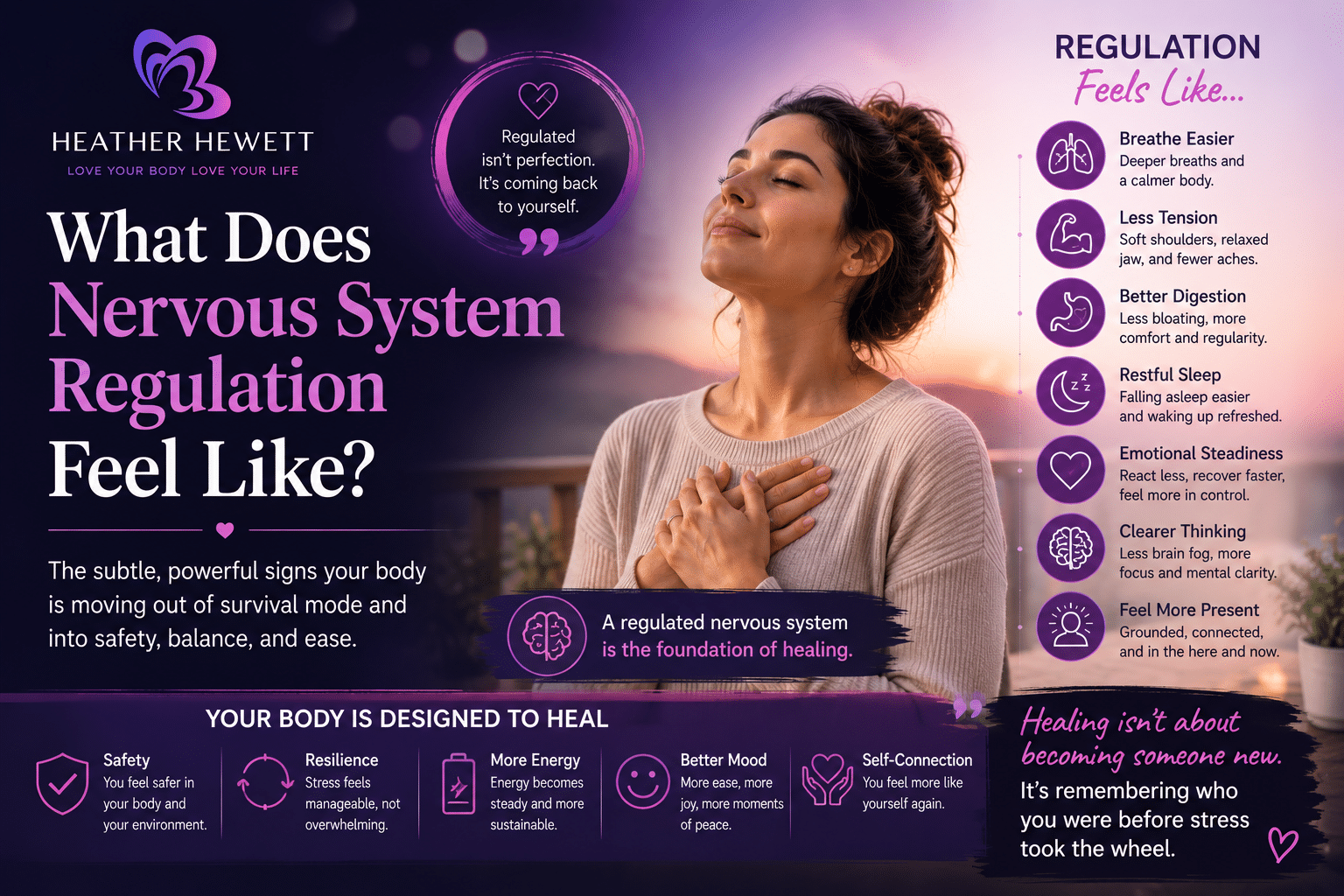
Many people expect nervous system healing to feel dramatic or instant. In reality, it often feels subtle, steady, and deeply grounding. A regulated nervous system can feel like breathing more easily, reacting less intensely, sleeping better, thinking more clearly, and finally feeling safe in your own body again.
Nervous system regulation feels like your body moving out of survival mode and into a state of safety and balance. Common signs include calmer breathing, reduced muscle tension, emotional steadiness, clearer thinking, better sleep, improved digestion, and feeling more present instead of constantly anxious or overwhelmed.
For people living with chronic stress, anxiety symptoms, burnout, or trauma recovery, these changes can feel surprisingly emotional. Many people notice they are no longer bracing for danger all the time.
What Is Nervous System Regulation?
Nervous system regulation is your body’s ability to move flexibly between stress and relaxation without getting stuck in survival mode.
Your autonomic nervous system controls automatic body functions like breathing, heart rate, digestion, and stress responses. It includes two major branches:
- The sympathetic nervous system, which activates the fight or flight response
- The parasympathetic nervous system, which supports rest, recovery, digestion, and healing
When your nervous system becomes dysregulated from chronic stress, trauma, burnout, or ongoing anxiety, your body may stay in a prolonged state of alertness. This can lead to hypervigilance, exhaustion, irritability, digestive issues, sleep problems, and emotional overwhelm.
A regulated nervous system does not mean feeling calm every second. It means your body can return to balance after stress.
According to polyvagal theory, developed by Stephen Porges, feelings of safety strongly influence nervous system states. When your brain and body perceive safety, the vagus nerve helps activate restorative processes associated with the parasympathetic nervous system.
It can feel like your body is finally realizing it no longer has to stay on high alert.
What Does Nervous System Regulation Feel Like Physically?
Physical signs of nervous system regulation often feel gentle rather than dramatic. Many people describe it as a gradual sense of ease returning to the body.
Common physical sensations include:
- Deeper breathing
- Relaxed shoulders and jaw
- Better digestion
- More energy stability
- Improved sleep
- Warmth in the hands or chest
- Reduced muscle tension
- Feeling grounded instead of restless
Breathing Becomes Slower and Easier
One of the earliest signs your nervous system is healing is a change in breathing patterns.
When the body is stuck in stress response mode, breathing often becomes shallow, rapid, or tight. As regulation improves, breathing naturally deepens without forcing it.
You may notice:
- Less chest tightness
- Fewer stress sighs
- Reduced breath-holding
- A calmer resting state
Many people notice they stop “forgetting to breathe.”
Your Muscles Feel Less Guarded
Chronic stress can keep the body physically braced for danger.
A regulated nervous system often feels like:
- Unclenching your jaw without realizing it
- Relaxed shoulders
- Less stomach tightness
- Reduced headaches
- Fewer stress-related aches
It can feel unfamiliar at first because your body may have normalized tension for years.
Digestion Improves
The parasympathetic nervous system supports digestion and restoration.
Signs of parasympathetic activation may include:
- Reduced nausea from anxiety
- Less bloating
- Better appetite regulation
- More regular digestion
Many people are surprised to discover how strongly nervous system healing affects the gut.
Sleep Starts Feeling More Restful
When the nervous system feels safer, sleep often becomes deeper and less fragmented.
You may notice:
- Falling asleep faster
- Fewer nighttime awakenings
- Waking up less panicked
- Feeling more rested in the morning
This is especially common during burnout recovery and trauma recovery.
Your Body Feels More Grounded
A regulated nervous system often feels physically “settled.”
People describe sensations such as:
- Feeling heavier in a comforting way
- More connected to the present moment
- Less internal buzzing
- Reduced restlessness
- Feeling steady instead of scattered
For someone accustomed to hypervigilance, this grounded feeling can feel emotional at first.
Emotional Signs of a Regulated Nervous System
What does being regulated feel like emotionally?
Emotional regulation does not mean never feeling upset. It means emotions become easier to experience without feeling consumed by them.
Common emotional signs of nervous system healing include:
- Greater patience
- Reduced emotional reactivity
- Feeling safer around people
- Increased resilience
- Emotional flexibility
- More self-compassion
You React Less Intensely
When the nervous system is dysregulated, even small stressors can feel threatening.
As healing progresses, you may notice:
- Fewer emotional spirals
- Less snapping at others
- Reduced panic reactions
- Faster recovery after stress
The situation itself may not change, but your body no longer interprets everything as danger.
Calm Feels More Accessible
A calm nervous system often feels quieter internally.
Instead of constant urgency, many people experience:
- More emotional space
- Fewer racing feelings
- Less dread
- Increased emotional steadiness
You may still feel stress, but it no longer controls your entire nervous system.
You Feel Safer in Relationships
The nervous system is deeply connected to social safety.
Signs your body is coming out of fight or flight can include:
- Making eye contact more comfortably
- Feeling less defensive
- Tolerating closeness better
- Feeling less socially exhausted
This is a major part of nervous system regulation and emotional healing.
Mental signs of nervous system regulation
Nervous system healing often changes how your mind feels just as much as your body.
Common mental signs include:
- Clearer thinking
- Reduced overthinking
- Better focus
- Feeling more present
- Improved concentration
- Less catastrophic thinking
Your Thoughts Feel Less Chaotic
When the amygdala perceives constant danger, the brain prioritizes survival over clarity.
As regulation improves, many people notice:
- Fewer looping thoughts
- Reduced mental noise
- Less urgency
- More cognitive flexibility
It can feel like your brain finally has room to breathe.
Anxiety Becomes Less Consuming
Nervous system regulation for anxiety often feels like a reduction in intensity rather than a complete disappearance.
You may still experience stress, but:
- Your body recovers faster
- Anxiety feels less overwhelming
- You feel less trapped in panic
- Fear no longer dominates your attention
You Feel More Present
One overlooked sign of nervous system healing is the ability to stay connected to the current moment.
You may notice:
- Improved body awareness
- More enjoyment in simple activities
- Greater emotional presence
- Less dissociation
Many people describe this as “coming back into their life.”
Regulated vs dysregulated nervous system
| Dysregulated Nervous System | Regulated Nervous System |
| Constant tension | Relaxed baseline |
| Hypervigilance | Sense of safety |
| Racing thoughts | Clearer thinking |
| Emotional overwhelm | Emotional flexibility |
| Poor sleep | Restful sleep |
| Digestive discomfort | Improved digestion |
| Chronic fatigue | Stable energy |
| Feeling disconnected | Feeling grounded |
| Fight or flight activation | Parasympathetic balance |
How Long Does Nervous System Regulation Take?
There is no universal timeline for nervous system healing.
For some people, small changes appear within days or weeks. For others recovering from chronic stress or trauma response patterns, healing may take longer.
Factors that influence healing include:
- Stress levels
- Sleep quality
- Trauma history
- Social support
- Physical health
- Consistency of regulation practices
Healing is rarely linear.
Many people experience periods of progress followed by temporary setbacks. That does not mean failure. The nervous system learns through repetition, safety, and consistency.
Over time, the body becomes more flexible and resilient within its window of tolerance.
Practices That Help Regulate the Nervous System
How to regulate your nervous system naturally
Healthy regulation usually comes from repeated signals of safety rather than quick fixes.
Breathwork
Slow breathing patterns can help calm the stress response and support vagus nerve activation.
Many people benefit from:
- Longer exhales
- Gentle diaphragmatic breathing
- Rhythmic breathing exercises
Grounding Techniques
Grounding helps reconnect the body to the present moment.
Examples include:
- Feeling your feet on the floor
- Holding a cold object
- Naming sensory details around you
- Walking outdoors
These practices can reduce anxiety symptoms and hypervigilance.
Sleep and Recovery
The nervous system repairs during rest.
Improving sleep hygiene can support:
- Cortisol regulation
- Emotional resilience
- Energy stability
- Cognitive recovery
Movement
Gentle movement can help release stored stress activation from the body.
Many people notice improvement from:
- Walking
- Stretching
- Mobility exercises
- Low-intensity strength training
Mindfulness and Meditation
Mindfulness supports body awareness and emotional regulation by helping the brain recognize safety in the present moment.
Even a few minutes daily may improve:
- Stress recovery
- Emotional flexibility
- Nervous system healing
Therapy and Somatic Support
Somatic therapy approaches, such as Somatic Experiencing, focus on how stress and trauma live in the body.
Professional support can help people safely process:
- Trauma response patterns
- Chronic stress
- Emotional dysregulation
- Persistent anxiety
Social Connection
Safe relationships strongly influence nervous system balance.
Supportive connection can help the body feel:
- Seen
- Safe
- Regulated
- Less alone
Human connection is one of the most powerful nervous system safety cues.
When to Seek Professional Help
Nervous system dysregulation can sometimes become overwhelming or difficult to manage alone.
Consider professional support if you experience:
- Severe anxiety symptoms
- Panic attacks
- Persistent insomnia
- Trauma symptoms
- Chronic emotional overwhelm
- Dissociation
- Burnout that affects daily functioning
A trauma-informed therapist, healthcare provider, or somatic practitioner can help create a personalized healing approach.
Seeking support is not a weakness. It is often an important part of nervous system recovery.
Conclusion
What does nervous system regulation feel like?
For many people, it feels like finally coming out of survival mode.
It can feel like taking a full breath after years of tension. Sleeping more deeply. Feeling emotions without drowning in them. Thinking clearly again. Feeling safe enough to rest.
Nervous system healing is often subtle before it becomes obvious. Small moments of calm, presence, connection, and ease are meaningful signs your body is learning that it no longer has to stay in constant protection mode.
And perhaps most importantly, regulation does not require perfection.
A regulated nervous system is not a permanently calm one. It is a flexible, resilient system that can move through stress and return to safety again.
Frequently Asked Questions
How do I know if my nervous system is regulated?
Signs of a regulated nervous system include calm breathing, emotional steadiness, better sleep, reduced anxiety, improved digestion, and feeling more present instead of constantly stressed or hypervigilant.
What are the signs your nervous system is healing?
Signs your nervous system is healing may include deeper sleep, less muscle tension, emotional resilience, reduced overthinking, better focus, and faster recovery from stress.
Can you feel your nervous system calming down?
Yes. Many people notice slower breathing, warmth in the body, reduced tension, mental quietness, and a greater sense of safety as their nervous system calms down.
What does a calm nervous system feel like?
A calm nervous system often feels grounded, steady, emotionally balanced, and physically relaxed. It may feel easier to think clearly, rest, and connect with others.
Can anxiety dysregulate the nervous system?
Yes. Chronic anxiety can keep the body in prolonged fight or flight activation, leading to nervous system dysregulation over time.
What happens when your nervous system regulates?
When the nervous system regulates, the body shifts toward recovery and balance. Digestion, sleep, emotional regulation, focus, and stress resilience often improve.
What does healing from chronic stress feel like?
Healing from chronic stress can feel like having more emotional space, less urgency, better energy stability, deeper rest, and a growing sense of safety in the body.
What are the physical signs of nervous system regulation?
Physical signs include relaxed muscles, deeper breathing, lower heart rate, improved digestion, better sleep, and reduced fatigue.
What helps regulate the nervous system naturally?
Helpful practices include breathwork, grounding techniques, quality sleep, movement, mindfulness, therapy, emotional support, and consistent stress recovery habits.
Is the nervous system healing linearly?
No. Healing often includes progress, setbacks, and fluctuations. Temporary stress responses do not mean you are failing or starting over.