
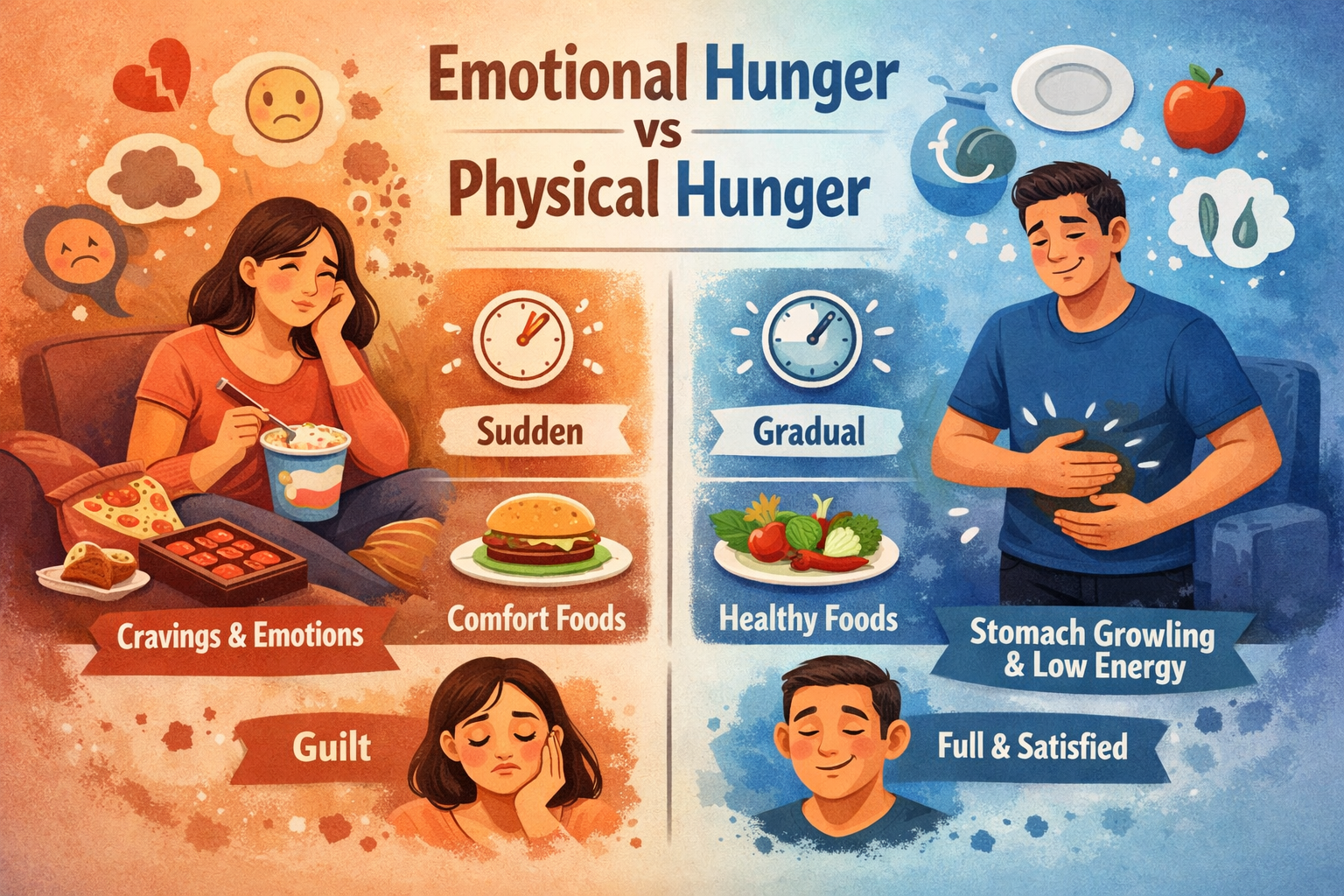
Emotional hunger vs physical hunger can feel confusing, especially if you often eat when stressed, bored, anxious, tired, or overwhelmed. Physical hunger is your body’s natural need for energy. Emotional hunger is the urge to eat because of feelings, stress, habits, or a need for comfort.
Physical hunger usually builds gradually and can be satisfied with different foods. Emotional hunger often feels sudden, urgent, and focused on a specific comfort food.
If you struggle to tell the difference, it does not mean something is wrong with you. It means your hunger cues may need more awareness, consistency, and support.
In this article, you will learn the key differences between emotional and physical hunger, why emotional hunger can feel so strong, and practical ways to respond without guilt or restriction.
Medical note: This article is for educational and wellness purposes only. It does not replace medical, mental health, or eating disorder treatment. If eating feels out of control, secretive, distressing, or followed by restriction, purging, or intense shame, please speak with a qualified healthcare provider. You can also read the health and coaching disclaimer for more information.
What Is Physical Hunger?
Physical hunger is your body’s natural signal that it needs energy.
It often develops gradually and is connected to your body’s need for fuel. You may notice body-based signs such as an empty stomach, low energy, stomach growling, lightheadedness, or difficulty focusing.
Physical hunger is usually flexible. You may have preferences, but you can often feel satisfied by different types of food. Once you eat enough, the hunger usually decreases.
Common signs of physical hunger include:
Stomach growling
Low energy
Difficulty focusing
Mild irritability
Feeling empty in the stomach
Hunger that builds over time
Feeling satisfied after eating
Physical hunger is not something to ignore or fight. It is a normal body signal.
What Is Emotional Hunger?
Emotional hunger is the urge to eat when your body may not physically need food. It is often driven by emotions, stress, habit, boredom, or a need for comfort.
Emotional hunger can feel sudden and urgent. It may focus on a specific food, such as chocolate, chips, ice cream, bread, or other comfort foods. It may also continue even after you feel physically full.
Cleveland Clinic explains that emotional eating often happens when people eat in response to feelings such as stress, boredom, or anxiety rather than physical hunger. You can read more in their guide to emotional eating.
Common signs of emotional hunger include:
Sudden cravings
Eating without physical hunger
Wanting one specific food
Eating to feel comforted
Eating after feeling full
Feeling guilty or frustrated afterward
Using food to avoid or soothe emotions
Emotional hunger is not a failure. It is information. It may be showing you that something emotional, physical, or nervous-system-related needs attention.
For a deeper explanation, this guide on what emotional eating is may help you understand why eating can become a coping tool.
Emotional Hunger vs Physical Hunger: Key Differences
The easiest way to understand emotional hunger vs physical hunger is to compare how each one feels.
| Difference | Physical Hunger | Emotional Hunger |
| Timing | Builds gradually | Comes on suddenly |
| Food choice | Flexible | Often wants a specific food |
| Body signals | Empty stomach, low energy, growling | Urgency, craving, emotional discomfort |
| Satisfaction | Usually stops when full | May continue after fullness |
| Trigger | Time since last meal or low energy | Stress, boredom, anxiety, sadness, habit |
| Emotional response | Usually neutral | Often followed by guilt or frustration |
Both types of hunger are real. The difference is what they are asking for.
Physical hunger asks for nourishment. Emotional hunger often asks for comfort, rest, relief, connection, safety, or emotional support.
Why Does Emotional Hunger Feel So Strong?
Emotional hunger can feel strong because food can provide temporary relief.
When you eat something comforting, your brain may experience pleasure, reward, or a short sense of calm. This can make food feel like a quick solution when emotions are uncomfortable.
Harvard Health explains that stress can influence appetite and may increase the desire for foods high in fat or sugar. You can read more about why stress can cause people to overeat.
This can create a cycle:
Emotion or stress
Craving
Eating
Temporary relief
Guilt or discomfort
The urge returns
The relief is real, but it may not last long if the deeper need is not addressed.
That is why emotional hunger is not solved by shame. It is better understood through awareness, nervous system support, and practical coping tools.
What Is the Role of the Nervous System?
Your nervous system plays an important role in emotional hunger.
When your body feels calm and regulated, it is easier to notice hunger, fullness, and choice. When your body feels stressed, overwhelmed, or unsafe, it may look for quick comfort.
Food can become a fast regulation tool because it is familiar, accessible, and soothing.
You may notice stronger emotional hunger when you are:
Stressed
Overstimulated
Exhausted
Anxious
Lonely
Under pressure
Disconnected from your body
Trying to calm down quickly
This is why emotional eating can feel automatic. It is not always a logical decision. Sometimes it is a nervous system response.
If this pattern feels familiar, learning about nervous system regulation may help you understand why stress and body signals affect eating habits.
Signs You Are Experiencing Emotional Hunger
Emotional hunger can show up in different ways.
You may be experiencing emotional hunger if:
The urge to eat comes suddenly
You want one specific comfort food
You are not physically hungry
You recently ate but still want food
You feel stressed, bored, anxious, or sad
Eating feels urgent or automatic
You continue eating after fullness
You feel guilt or regret afterward
You use food to cope with emotions
These signs are not something to judge. They are clues that help you understand your eating patterns.
This article on emotional eating triggers may also help you identify what usually starts the urge to eat.
Why Is It Hard to Tell the Difference?
It can be hard to tell emotional hunger from physical hunger when your body cues are unclear.
This can happen because of:
Chronic stress
Past dieting
Skipping meals
Poor sleep
Food guilt
Busy schedules
Emotional overwhelm
Eating while distracted
Long-term restriction
Ignoring hunger cues for years
If you have ignored hunger or fullness signals for a long time, it may take practice to reconnect with them.
This is normal. Rebuilding body awareness takes time.
How to Identify Your Hunger Type
Before eating, try a simple check-in.
Step 1: Pause for a Moment
Take 30 to 60 seconds before eating. The goal is not to stop yourself. The goal is to notice what is happening.
Ask yourself:
Am I physically hungry?
When did I last eat?
What am I feeling right now?
Did something trigger this urge?
Would a balanced meal sound good, or only one specific food?
Step 2: Check Your Body
Look for physical hunger signs.
Do you feel an empty stomach?
Is your energy low?
Are you having trouble focusing?
Is your hunger building gradually?
Would different foods feel satisfying?
If yes, it may be physical hunger.
Step 3: Check Your Emotions
Look for emotional hunger signs.
Did the craving come on suddenly?
Do you want one specific food?
Are you stressed, bored, sad, or anxious?
Are you looking for comfort or distraction?
Would eating help the feeling only for a short time?
If yes, it may be emotional hunger.
Step 4: Choose a Supportive Response
Once you identify the hunger type, you can respond more clearly.
If it is physical hunger, eat a satisfying meal or snack.
If it is emotional hunger, pause and ask what support you need.
If it is both, you may need food and emotional support.
Sometimes hunger is mixed. That is okay. You do not need a perfect answer.
Practical Tools to Manage Emotional Hunger
Emotional hunger does not need to be suppressed. It needs to be understood.
Try Grounding
Grounding helps bring your attention back to the present moment.
Try naming:
5 things you see
4 things you feel
3 things you hear
2 things you smell
1 thing you taste
This can create space between the urge and the action.
Try Slow Breathing
Slow breathing can help calm the body before reacting.
Try:
Inhale for 4 seconds
Exhale for 6 seconds
Repeat for 2 to 5 minutes
This can be helpful when emotional hunger is connected to stress or anxiety.
Name the Emotion
Ask yourself:
Am I sad?
Am I angry?
Am I lonely?
Am I tired?
Am I overwhelmed?
Am I looking for comfort?
Naming the emotion helps reduce the automatic feeling of the urge.
Use a Hunger Scale
A hunger scale can help you reconnect with body cues.
Try rating hunger from 1 to 10:
1 means extremely hungry
5 means neutral
10 means overly full
Before eating, ask where you are on the scale. After eating, check again. This builds awareness over time.
How to Respond to Emotional Hunger
The goal is not to never eat emotionally. Emotional eating happens, and it does not make you wrong.
The goal is to have more than one way to respond.
If you notice emotional hunger, try this:
Acknowledge the feeling
Pause without judgment
Ask what you need
Choose one supportive action
Eat if you still choose to eat
Supportive actions may include:
Taking a walk
Journaling
Texting someone
Drinking water or tea
Resting for 10 minutes
Stepping away from a stressful task
Doing a grounding exercise
Listening to calming music
Sitting outside
Taking slow breaths
Food can still be part of your life. The goal is not restriction. The goal is choice.
For gentle tools related to cravings, emotional eating, and body awareness, you can explore these free wellness resources.
How to Build Awareness Around Hunger
Awareness grows through practice. You do not need to do everything perfectly.
Helpful habits include:
Eat without distractions when possible
Pause before eating
Check hunger before and after meals
Notice what emotions trigger cravings
Eat regular meals
Avoid extreme restriction
Sleep enough
Manage stress in small ways
Notice guilt without feeding it
Practice compassion
Mayo Clinic also suggests identifying triggers and finding healthier ways to manage stress as part of emotional eating support. Their article on emotional eating and weight control includes practical guidance for recognizing patterns.
Daily Habits for Balanced Eating
Daily habits can make hunger cues easier to understand.
Try to:
Eat regularly
Include protein, fiber, and healthy fats
Stay hydrated
Prioritize sleep
Take breaks during the day
Reduce eating while distracted
Practice stress regulation
Avoid labeling foods as bad
Notice emotional patterns
Give yourself permission to eat enough
When your body is nourished and less stressed, it becomes easier to tell whether hunger is physical, emotional, or both.
When Emotional Hunger Becomes a Pattern
Emotional hunger is normal. But when it becomes frequent or distressing, it may affect your relationship with food.
It may lead to:
Overeating
Food guilt
Eating in secret
Feeling out of control
Ignoring fullness cues
Avoiding emotions
Using food as the only coping tool
Disconnecting from your body
This does not mean you have failed. It means support may be helpful.
If emotional hunger feels frequent or difficult to manage on your own, emotional eating support can help you understand triggers, cravings, and food guilt without adding more shame.
When to Seek Support
Consider speaking with a qualified professional if emotional eating feels:
Frequent
Intense
Secretive
Distressing
Hard to control
Connected to shame
Followed by restriction
Linked to eating large amounts in a short time
Connected to anxiety, trauma, or depression
You do not have to wait until things feel severe. Support can help you understand the pattern earlier and respond more safely.
Final Thoughts
Emotional hunger and physical hunger are different, but both are important signals.
Physical hunger tells you your body needs nourishment. Emotional hunger may tell you that you need comfort, rest, relief, connection, safety, or emotional support.
You do not need to shame yourself for either one. The goal is to listen more closely.
Start with simple awareness. Pause before eating. Check your body. Name your emotion. Ask what you need. Over time, these small steps can help you build a calmer and more trusting relationship with food.
If you are ready to better understand your eating patterns and explore support options, you can visit the Start Here page.
FAQs
What is emotional hunger?
Emotional hunger is the urge to eat because of feelings, stress, boredom, or a need for comfort rather than physical hunger.
What is physical hunger?
Physical hunger is your body’s natural signal that it needs food for energy.
How can I tell if I am emotionally eating?
You may be emotionally eating if the urge feels sudden, specific, urgent, and connected to stress or emotions.
Does emotional hunger go away after eating?
Usually, emotional hunger may return because food gives temporary relief but may not meet the deeper emotional need.
Is emotional hunger normal?
Yes. Emotional hunger is common, but frequent or distressing patterns may need more support.
What is the biggest difference between emotional and physical hunger?
Physical hunger builds gradually. Emotional hunger often comes suddenly and wants a specific comfort food.
Can stress cause emotional hunger?
Yes. Stress can increase cravings and make food feel like a quick source of relief.
Can emotional hunger and physical hunger happen together?
Yes. You can feel physically hungry and emotionally triggered at the same time.
How do I manage emotional hunger?
Pause, name the emotion, check your body, use a calming tool, and choose a supportive response.
When should I get help for emotional eating?
Get support if emotional eating feels frequent, secretive, distressing, hard to control, or followed by guilt or restriction.