
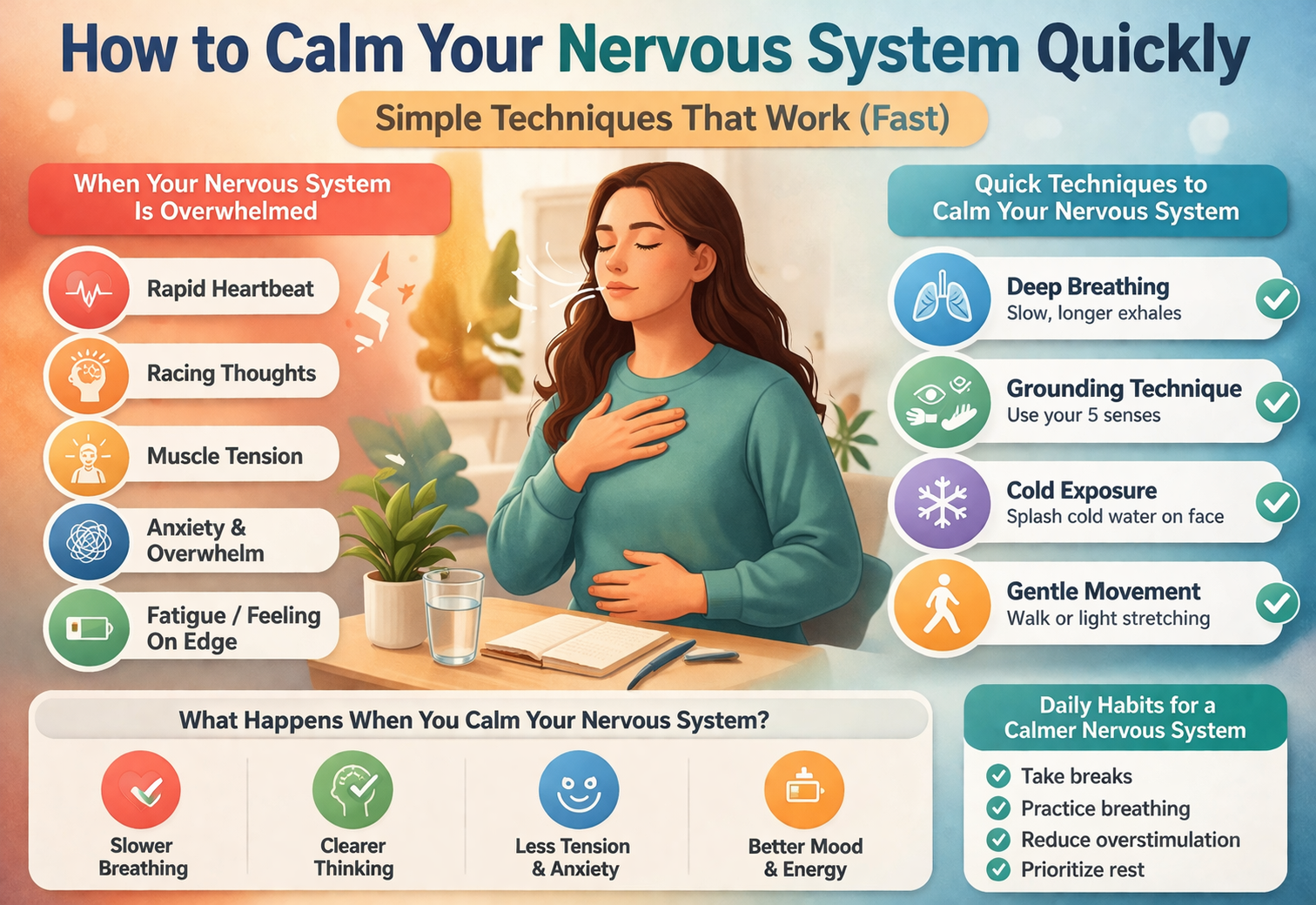
If you feel anxious, overwhelmed, tense, or constantly “on edge,” your nervous system may be stuck in a stress response. In those moments, it can feel hard to think clearly, breathe deeply, relax your body, or feel present.
The good news is that you can calm your nervous system quickly with simple techniques such as slow breathing, grounding, cold water, gentle movement, and supportive touch. These tools help send signals of safety to your body so it can begin shifting out of stress mode.
The goal is not to force yourself to calm down. The goal is to help your body feel safe enough to settle.
In this article, you will learn what happens when your nervous system is overwhelmed, common signs your body needs calming, and simple techniques you can use within minutes.
Medical note: This article is for educational and wellness purposes only. It does not replace medical or mental health care. If you experience severe anxiety, panic attacks, trauma symptoms, chest pain, fainting, or difficulty functioning, please speak with a qualified healthcare provider. You can also read the health and coaching disclaimer for more information.
What Happens When Your Nervous System Is Overwhelmed?
Your nervous system is designed to protect you. When it senses stress, pressure, danger, or emotional overwhelm, it can activate your body’s fight-or-flight response.
This response is linked to the sympathetic nervous system. Cleveland Clinic explains that the sympathetic nervous system helps activate the body during stress or danger and can increase heart rate, breathing, and alertness. You can read more in this overview of the autonomic nervous system.
When your nervous system is activated, you may notice:
Faster heartbeat
Shallow breathing
Muscle tension
Sweating
Racing thoughts
Tight chest
Restlessness
Digestive changes
Difficulty focusing
This response can be helpful in short bursts. It helps you react quickly when something needs your attention. But when stress becomes constant, your body may stay activated even when there is no immediate danger.
That is when you may feel wired, anxious, irritable, tense, exhausted, or unable to relax.
If you want a deeper explanation of this process, this guide on what nervous system regulation means can help you understand how the body moves between stress and calm.
What Are the Signs Your Nervous System Needs Calming?
Your body often gives signs before stress becomes too much. These signs can be physical, emotional, and mental.
Physical Signs
You may notice:
Rapid heartbeat
Shallow breathing
Tight shoulders
Jaw tension
Headaches
Fatigue
Stomach discomfort
Restlessness
Poor sleep
Emotional Signs
You may feel:
Anxious
Irritable
Overwhelmed
Easily triggered
Emotionally sensitive
Unable to relax
Disconnected or shut down
Mental Signs
You may experience:
Racing thoughts
Constant worry
Poor focus
Feeling scattered
Overthinking
Difficulty making decisions
These signs do not mean your body is broken. They may mean your nervous system needs support, safety, and regulation.
If you are unsure whether your body is stuck in a stress pattern, this article on signs of nervous system dysregulation may help you recognize common warning signs.
Why Does Your Body Stay in Stress Mode?
Your body may stay in stress mode when stress becomes frequent, intense, or unresolved.
Common reasons include:
Chronic stress
Poor sleep
Emotional overload
Overstimulation
Past stressful experiences
Too much caffeine
Long work hours
Lack of rest
Constant screen use
Unprocessed emotions
Over time, stress can start to feel normal. You may not realize how tense your body is until you finally pause.
This is why nervous system regulation is important. It helps your body practice returning to a calmer state instead of staying activated all day.
How Does Nervous System Regulation Work?
Nervous system regulation means helping your body move between stress and calm in a healthy way.
Two important parts of the autonomic nervous system are the sympathetic and parasympathetic systems.
Sympathetic Nervous System
This system is connected to action, alertness, and the fight-or-flight response. It helps your body respond to stress.
Parasympathetic Nervous System
This system is connected to rest, digestion, recovery, and calm. Cleveland Clinic describes the parasympathetic nervous system as helping the body with “rest-and-digest” processes.
You do not need to eliminate stress completely. That is not realistic. The goal is to help your body return to calm after stress instead of staying activated all day.
For a broader explanation, this article on nervous system regulation vs stress management explains how regulation is different from simply trying to manage stress.
Why Is It Hard to Calm Down?
If you struggle to relax, there is a reason.
When your body does not feel safe, it will not easily switch off. You may tell yourself, “Just calm down,” but your body may still feel tense, alert, or threatened.
This is why forcing calm often does not work. Your nervous system responds better to signals of safety than pressure.
Helpful safety signals include:
Slow breathing
Grounding through the senses
Gentle movement
Warmth
Supportive touch
A calm environment
Reduced stimulation
Rest
Calming down is not about controlling your body. It is about communicating safety to your body.
How to Calm Your Nervous System Quickly
These techniques can help you calm your nervous system fast. Some may work within minutes, while others become more effective with regular practice.
1. Try Slow Exhale Breathing
Breathing is one of the quickest ways to influence your stress response. Harvard Health describes breath focus as a relaxation technique that uses slow, deep breathing to reduce stress. You can read more in their guide to relaxation techniques for stress.
Try this simple pattern:
Inhale for 4 seconds
Exhale for 6 seconds
Repeat for 2 to 5 minutes
The longer exhale can help your body shift toward calm. Do not force your breath. Keep it gentle and comfortable.
If counting feels stressful, simply focus on making your exhale slightly longer than your inhale.
2. Use the 5-4-3-2-1 Grounding Technique
Grounding helps bring your attention back to the present moment. It is especially helpful when your mind is racing or you feel disconnected from your body.
Try this:
Name 5 things you can see
Name 4 things you can feel
Name 3 things you can hear
Name 2 things you can smell
Name 1 thing you can taste
The University of Rochester Medical Center describes the 5-4-3-2-1 grounding technique as a helpful tool during anxiety or panic because it uses the senses to ground you in the present moment.
This technique works best when you go slowly and actually notice each detail.
3. Splash Cold Water on Your Face
Cold water can help interrupt a stress spiral and bring your attention back to your body.
Try one of these:
Splash cold water on your face
Hold a cold cloth on your cheeks
Hold an ice pack wrapped in a towel
Run cool water over your hands
Keep it brief and comfortable. This should not feel extreme or unsafe.
If you have a heart condition, fainting history, or medical concerns, speak with a healthcare provider before using intense cold exposure.
4. Do Gentle Movement
Stress often creates physical tension. Gentle movement can help your body release some of that energy.
Try:
Walking slowly
Stretching your neck and shoulders
Shaking out your hands
Rolling your shoulders
Doing gentle yoga
Standing up and changing position
Movement tells your body that it is not trapped. It helps complete some of the stress energy that builds during fight or flight.
For more long-term ideas, this guide on how to regulate your nervous system naturally includes daily practices that can support a more stable stress response.
5. Relax Your Jaw and Shoulders
When your nervous system is activated, your jaw, shoulders, chest, and hands may tighten without you noticing.
Try this quick body check:
Unclench your jaw
Drop your shoulders
Relax your hands
Soften your stomach
Place both feet on the floor
Take one slow breath
This may seem simple, but it can send a small signal of safety to the body.
6. Use Supportive Touch
Supportive touch can help the body feel more grounded.
Try:
Place one hand on your chest
Place one hand on your belly
Hug yourself gently
Wrap yourself in a blanket
Hold a warm mug
Notice the pressure, warmth, or contact. This can help bring your attention out of racing thoughts and back into the body.
7. Try a Gentle Tapping Practice
Some people find gentle tapping helpful when stress feels intense. EFT tapping combines light tapping on specific points with awareness of thoughts, feelings, or body sensations.
It is not a replacement for medical or mental health care, but it may be used as a calming self-support practice. If you are curious, this guide on EFT tapping for nervous system regulation explains the basics in a gentle way.
A Simple Nervous System Reset Routine
You do not need a long routine to begin calming your body. Start simple.
Immediate Reset: 1 to 5 Minutes
Use this when you need fast support.
Take three slow breaths
Lengthen your exhale
Name five things you see
Relax your jaw and shoulders
Place your feet on the floor
Short Reset: 10 to 20 Minutes
Use this when you have a little more time.
Take a short walk
Step away from your screen
Stretch gently
Drink water
Sit somewhere quiet
Write down what you are feeling
Daily Support
Use these habits to build long-term stability.
Practice breathing daily
Move your body gently
Take breaks before you crash
Limit overstimulation
Prioritize sleep
Eat regular meals
Create quiet time
Notice emotional triggers
Consistency matters more than intensity.
What Happens When Your Body Calms?
When your nervous system begins to regulate, you may notice small changes.
These can include:
Slower breathing
Lower muscle tension
Clearer thinking
Less urgency
Better focus
Improved mood
More steady energy
Better digestion
Feeling more present
You may not feel completely calm right away, and that is okay. Even a small shift matters.
A realistic goal is not instant peace. A realistic goal is moving from a 9 out of 10 stress level to a 6 or 7. That is still progress.
Common Mistakes When Trying to Calm Down
Many people try to calm themselves in ways that create more pressure. These mistakes are common.
Forcing Relaxation
Telling yourself to “just calm down” can increase frustration. Try offering your body support instead of pressure.
Expecting Instant Results
Some techniques work quickly, but long-term regulation takes practice. Your body may need repetition to trust the process.
Ignoring Body Signals
If your body is tired, hungry, overstimulated, or emotionally overwhelmed, one breathing exercise may not fix everything. Listen to what your body needs.
Doing Too Much
Trying too many techniques at once can feel overwhelming. Choose one simple tool and repeat it.
Long-Term Nervous System Support
Quick techniques are helpful, but long-term support comes from daily habits.
Focus on:
Better sleep
Regular meals
Gentle movement
Stress reduction
Emotional awareness
Healthy boundaries
Less screen overstimulation
Time outdoors
Supportive relationships
Your nervous system learns through repetition. The more often you give your body cues of safety, the easier it may become to return to calm.
For simple tools related to stress, cravings, emotional eating, and body awareness, you can explore these free wellness resources.
How Nervous System Dysregulation Can Affect Eating Habits
When your nervous system is dysregulated, eating patterns can change.
You may notice:
More emotional eating
Stronger cravings
Mindless snacking
Eating when not hungry
Difficulty noticing fullness
More desire for comfort foods
Skipping meals during stress
Overeating later in the day
This happens because food can become a fast way to calm, distract, or comfort the body.
As your nervous system becomes more regulated, hunger and fullness cues may become easier to notice. Emotional eating and cravings may also feel less intense over time.
If stress and emotional eating feel connected for you, emotional eating support may help you better understand triggers and build calmer coping tools.
When to Seek Support
It is normal to feel stressed sometimes. But ongoing nervous system overwhelm may need extra support.
Consider speaking with a qualified professional if you experience:
Constant anxiety
Frequent panic attacks
Difficulty sleeping
Feeling unsafe in your body
Ongoing emotional overwhelm
Trouble functioning at work or home
Trauma symptoms
Eating patterns that feel distressing
Stress that does not improve with basic tools
Support can help you understand what is happening and build safer, more personalized regulation practices.
If stress, anxiety, or body-based overwhelm feels frequent, nervous system regulation support may be a helpful next step.
Daily Habits to Keep Your Nervous System Calm
Small habits can make a big difference over time.
Try to:
Take short breaks
Breathe slowly once or twice a day
Reduce screen overload
Spend time outside
Move gently
Eat regularly
Drink enough water
Create a calming bedtime routine
Notice stress before it builds
Practice saying no when needed
You do not need to do everything perfectly. Choose one habit and practice it consistently.
Final Thoughts
Your nervous system is not broken. It is responding to stress.
When you feel anxious, tense, overwhelmed, or constantly on edge, your body may need signals of safety. Simple tools like breathing, grounding, cold water, gentle movement, supportive touch, and gentle tapping can help your body begin to settle.
Start small. Take one slow breath. Relax your shoulders. Notice your surroundings. Give your body a moment to feel safe again.
If stress feels constant or difficult to manage alone, you can visit the Start Here page to explore gentle support options.
FAQs
How can I calm my nervous system quickly?
Use slow breathing, grounding, cold water, gentle movement, or supportive touch. These can help your body shift out of stress mode.
What is the fastest way to calm the nervous system?
Slow exhale breathing is often one of the fastest tools. Try inhaling for 4 seconds and exhaling for 6 seconds.
What causes nervous system dysregulation?
Common causes include chronic stress, poor sleep, overstimulation, emotional overload, trauma, and lack of rest.
How long does it take to calm down?
Some techniques may help within minutes. Long-term nervous system balance usually takes consistent practice.
Can breathing reduce anxiety?
Yes. Slow breathing can help activate the body’s calming response and reduce stress.
Why do I feel constantly on edge?
You may be stuck in a stress response due to chronic stress, poor sleep, emotional overwhelm, or overstimulation.
Does grounding help anxiety?
Yes. Grounding can bring your attention back to the present moment and help reduce racing thoughts.
Can nervous system regulation help emotional eating?
Yes. When the body feels calmer, cravings and emotional eating patterns may become easier to understand and manage.
What should I avoid when trying to calm down?
Avoid forcing relaxation, judging yourself, doing too many techniques at once, or ignoring basic needs like sleep, food, and rest.
When should I get professional support?
Get support if stress, anxiety, panic, trauma symptoms, or emotional overwhelm interfere with daily life.