EFT tapping for nervous system regulation is a gentle mind-body practice that combines light tapping on specific points with attention to a stressful feeling, thought, or body sensation. Some people use it as a self-regulation tool when they feel anxious, emotionally overwhelmed, hyper-alert, shut down, disconnected from their body, or unable to switch off.
EFT tapping may help some people pause, notice their stress response, and reduce the felt intensity of overwhelm in the moment. It is not about forcing yourself to be calm, ignoring difficult emotions, or fixing yourself. It can offer a small pause in which you feel more present, supported, and steady.
Important: EFT tapping can be a supportive self-help practice, but it is not a replacement for medical care, mental-health treatment, trauma therapy, or professional support where needed.
What Is EFT Tapping?
EFT stands for Emotional Freedom Techniques. It is commonly known as EFT tapping or simply tapping.
The practice combines focused attention, self-awareness, and gentle tapping on points on the face, hands, and upper body. While tapping, you may bring your attention to a current emotion, body sensation, stressful thought, craving, or difficult situation.
Many people use EFT tapping for anxiety, stress relief, emotional regulation, emotional overwhelm, grounding, and cravings. The purpose is not to make feelings disappear immediately. Instead, EFT tapping can create a structured moment to notice what is happening without reacting automatically, distracting yourself, or pushing through.
EFT is sometimes described as acupoint tapping because it uses points commonly associated with acupressure. You do not need to understand acupuncture or perform the sequence perfectly for tapping to become a useful grounding practice.
For a broader introduction, read what nervous system regulation means.
How EFT Tapping for Nervous System Regulation May Help
Stress can show up in many ways. You may feel tense, restless, emotionally reactive, mentally busy, disconnected, or exhausted. EFT tapping may help some people slow down, notice their current experience, use supportive language, and reconnect with the present moment.
Potential Benefits of Tapping During Stress
Some people find EFT tapping useful because it gives them a short pause to:
- Notice sensations in the body
- Put simple words to an emotion
- Slow down before reacting automatically
- Reduce the felt intensity of stress
- Feel more grounded and present
- Create a moment of self-compassion
- Make a little more space around an overwhelming thought or urge
Individual experiences vary. One person may feel calmer after a single round of tapping, while someone else may notice only a small shift or prefer a different grounding practice. The aim is not instant transformation. Even a small change, such as moving from an eight out of ten stress level to a seven, can be meaningful.
What the Research Says About EFT Tapping
Research into EFT tapping is still developing. The National Center for Complementary and Integrative Health states that EFT, also called acupoint tapping, involves tapping specific points while repeating a word or phrase. It notes that some evidence suggests possible benefits for anxiety, while more research is needed.
A systematic review and meta-analysis published in the Journal of Nervous and Mental Disease reported potential anxiety-related benefits from EFT in the included studies. However, research quality, participant groups, and methods vary. EFT should be viewed as a supportive practice, not a replacement for medical care, therapy, or trauma-informed treatment.
For additional support around anxiety, explore how to regulate your nervous system naturally.
What Does Nervous System Dysregulation Feel Like?
Nervous system dysregulation can feel different for everyone. Sometimes it feels like racing thoughts, tension, irritability, and a sense that you cannot relax. At other times, it may feel like emotional numbness, exhaustion, brain fog, or difficulty thinking clearly.
Common Signs of Nervous System Overload
You may notice that your nervous system feels overloaded when you experience:
- Feeling constantly tense or on edge
- Racing thoughts or persistent overthinking
- Difficulty relaxing, even during rest
- Feeling emotionally reactive or easily overwhelmed
- Feeling wired but tired
- Trouble sleeping after stressful days
- Feeling numb, shut down, or disconnected
- Feeling stuck in survival mode
- Feeling hyper-alert or unable to switch off
- Finding ordinary tasks unexpectedly difficult
- Difficulty concentrating or making decisions
- Feeling disconnected from your body or emotions
These experiences do not mean that you are failing or broken. They may be signs that your body has been carrying more stress than it can comfortably process.
You can learn more about how long nervous system regulation can take and why progress often involves small, consistent practices rather than quick fixes.
EFT Tapping Points for Nervous System Regulation
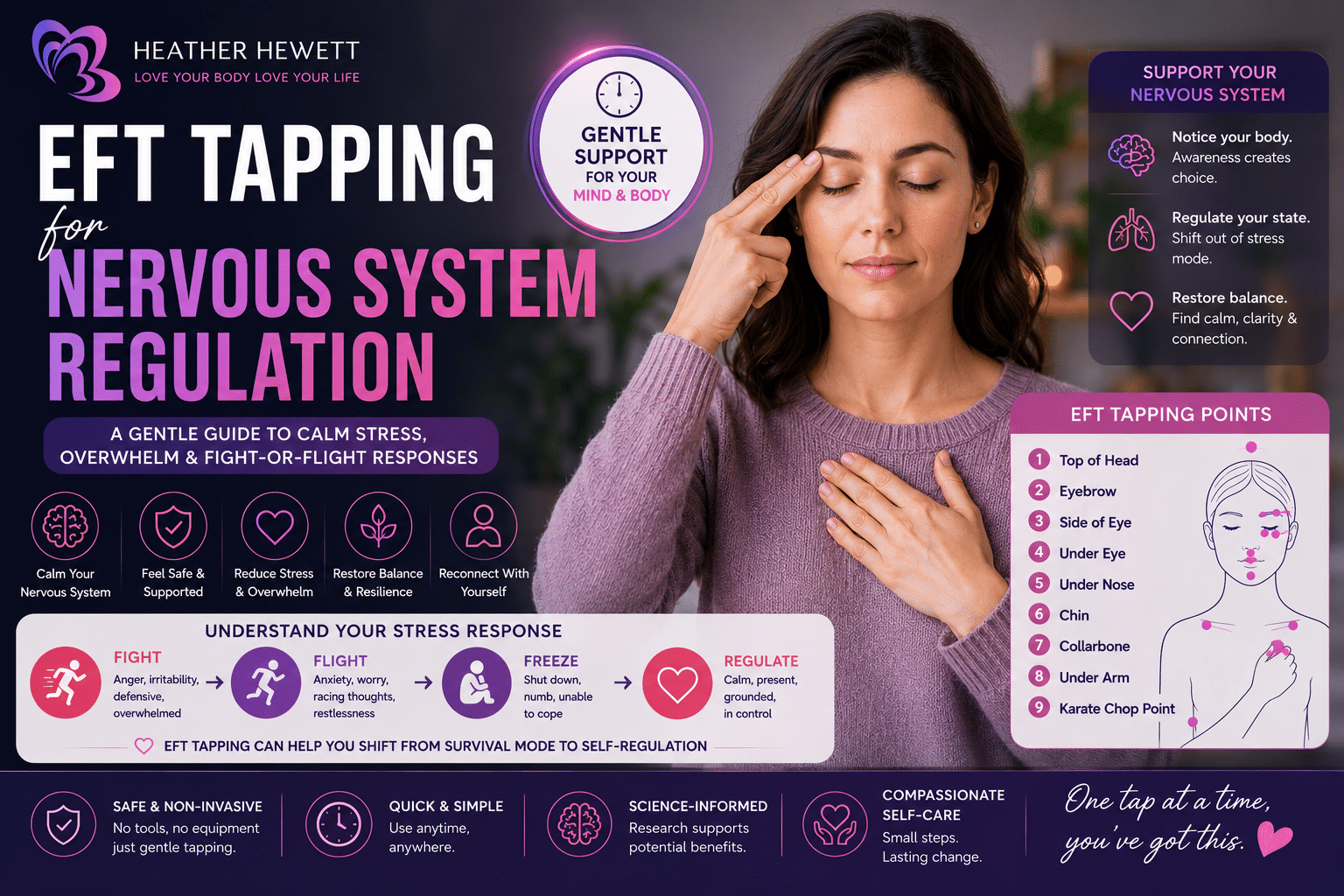
A standard EFT tapping sequence includes the following points. Use two or three fingertips and tap gently around five to seven times on each point.
- Karate chop point
The outside edge of the hand, below the little finger. - Eyebrow point
The beginning of the eyebrow, near the bridge of the nose. - Side of the eye
On the bone beside the outer corner of the eye. - Under the eye
On the bone directly below the eye. - Under the nose
Between the nose and upper lip. - Chin point
In the crease between the lower lip and chin. - Collarbone point
Just below the collarbone on the upper chest. - Under the arm
A few inches below the armpit, along the side of the body. - Top of the head
At the centre of the crown of the head.
You can follow the full sequence or use only the points that feel comfortable. Tapping should be gentle and should never be painful.
A Gentle 5-Minute EFT Tapping Routine for Stress and Overwhelm
This beginner EFT tapping routine may be useful when you feel stressed, emotionally overwhelmed, restless, tense, or unable to settle. For another practical, stress-focused tapping routine, see this guide to EFT tapping for stress.
Step 1: Notice What You Are Feeling
Pause for a moment and ask yourself:
- What am I feeling right now?
- Where do I notice this in my body?
- Does my body feel tight, heavy, numb, restless, tired, or on alert?
- What feels most difficult at this moment?
You do not need to find perfect words. Saying, “Something feels hard right now,” is enough.
Step 2: Rate the Intensity
Give your current stress or discomfort a number from 0 to 10.
- 0 means calm or neutral.
- 10 means the feeling is extremely intense.
For example, you might say, “This stress feels like a seven out of ten.”
This is not a test. It simply gives you a way to notice whether anything changes after tapping.
Step 3: Use a Gentle Setup Statement
While tapping the karate chop point, repeat the following phrase three times:
“Even though my body feels overwhelmed right now, I am open to feeling a little safer and steadier.”
You can adapt the phrase to match your experience:
“Even though I feel like I cannot switch off, I can give myself one small moment of support.”
“Even though this feels like a lot, I do not have to solve everything right now.”
Step 4: Tap Through the Points
Tap gently through the points while using simple reminder phrases.
Eyebrow: “This stress in my body.”
Side of the eye: “I feel like I cannot switch off.”
Under the eye: “My body is on high alert.”
Under the nose: “This feeling is a lot right now.”
Chin: “I do not have to solve everything today.”
Collarbone: “I can slow down one moment at a time.”
Under the arm: “I am allowed to feel more grounded.”
Top of the head: “I can offer my body a little more safety.”
You do not need to fully believe every phrase. The purpose is to offer yourself a compassionate possibility instead of demanding immediate calm.
Step 5: Pause, Breathe, and Reassess
When you finish, place your feet on the floor or rest one hand on your chest.
Take one comfortable, slow breath. Then ask yourself:
- Has the number changed at all?
- Does my body feel the same, slightly softer, or more settled?
- What would feel supportive next?
The goal is not to force calm or remove emotions completely. The goal is to create a little more awareness, space, and steadiness.
For additional everyday practices, read ways to calm your nervous system naturally.
EFT Tapping Script for Fight-or-Flight Feelings
This script may be helpful when you feel anxious, overstimulated, restless, hyper-alert, or unable to settle.
Setup Phrase
Start by tapping the karate chop point and repeat this three times:
“Even though my body feels on high alert right now, I am open to feeling a little more grounded and supported.”
One Round of Reminder Phrases
Eyebrow: “My body feels on edge.”
Side of the eye: “There is so much to manage.”
Under the eye: “I feel restless and tense.”
Under the nose: “Part of me wants to stay alert.”
Chin: “This is a lot for my body right now.”
Collarbone: “I can slow down one small moment at a time.”
Under the arm: “I do not need to solve everything immediately.”
Top of the head: “I can notice where I am and what is safe right now.”
Grounding Close
Look around the room and name three neutral things you can see. Feel your feet against the floor and remind yourself:
“I am here. I can take one steady breath. I can move at a manageable pace.”
EFT Tapping Script for Freeze, Shutdown, or Feeling Numb
Freeze or shutdown can feel different from anxiety. You may feel flat, disconnected, exhausted, blank, distant from yourself, or unable to think clearly.
When this happens, keep tapping briefly and gently. Avoid pressuring yourself to feel more than you do.
Setup Phrase
Begin at the karate chop point and repeat this three times:
“Even though part of me feels shut down right now, I do not need to force myself to feel anything.”
One Round of Reminder Phrases
Eyebrow: “Part of me feels shut down right now.”
Side of the eye: “I may not have words for this.”
Under the eye: “My body feels tired or disconnected.”
Under the nose: “It is okay to take this slowly.”
Chin: “I do not need to push myself.”
Collarbone: “I can come back to my body one small step at a time.”
Under the arm: “I can give myself permission to rest.”
Top of the head: “I can offer myself patience and gentleness.”
Grounding Close
Finish by noticing one neutral physical sensation, such as your feet on the floor, your hands resting together, or the chair beneath you.
Do not force yourself to revisit traumatic memories while using self-guided tapping. If difficult memories or intense distress arise, pause and seek trauma-informed professional support.
EFT Tapping for Emotional Eating and Cravings
EFT tapping may also be used as a short pause when a craving or stress-eating urge feels urgent. It is not a treatment for binge eating or eating disorders, but it may help some people create more space before responding automatically.
Gentle Tapping Prompt for Cravings
While tapping, try this phrase:
“This urge feels strong right now. I do not need to fight it or shame myself. I can pause, notice what I need, and choose one supportive next step.”
For more information, explore can EFT help cravings? and emotional eating solutions.
Can EFT Tapping Bring Up Emotions?
Yes. Some people feel calmer after tapping, while others may notice emotions, memories, thoughts, or body sensations that they had been pushing aside.
This does not automatically mean that something has gone wrong. Sometimes, slowing down can make it easier to notice what was already present.
However, self-guided tapping should feel manageable. Stop the practice if you begin to feel increasingly distressed, emotionally flooded, unsafe, disconnected from your surroundings, or unable to settle afterwards.
What to Do if Tapping Feels Too Intense
Return to simple grounding practices instead of pushing through. You might:
- Look around the room and name what you can see
- Feel your feet on the floor
- Hold a cool object
- Take a sip of water
- Move gently or stretch
- Contact someone supportive
- Seek support from a qualified professional
It is okay to stop. You do not have to process difficult emotions alone.
Is EFT Tapping Safe for Trauma, Anxiety, and Stress?
EFT tapping can be a gentle self-regulation practice for some people. However, it is not appropriate to treat every emotional experience as something you should work through alone.
People with trauma histories, severe anxiety, panic symptoms, depression, ongoing emotional distress, or burnout may benefit from working with a qualified mental-health professional or trauma-informed practitioner.
A Safer Self-Guided Approach
A trauma-aware EFT tapping approach includes:
- Starting with present-moment sensations rather than traumatic memories
- Keeping sessions short
- Using gentle and realistic phrases
- Stopping when distress grows
- Avoiding pressure to release or explain emotions
- Seeking professional support when symptoms persist or intensify
The National Institute of Mental Health provides evidence-based information about anxiety disorders, symptoms, treatments, and how to find help.
When to Seek Professional Support
Self-help tools can be useful, but they are not meant to carry everything.
Consider seeking qualified professional support when you experience:
- Persistent panic or severe anxiety
- Trauma flashbacks or distressing trauma symptoms
- Emotional distress that becomes stronger while tapping
- Difficulty functioning at work, school, home, or in relationships
- Severe or ongoing low mood
- Ongoing sleep disruption related to stress
- Feeling unable to stay safe
- Feeling overwhelmed by emotions, memories, or body sensations
Reaching out for professional support is not a failure of self-regulation. It is a form of care.
How Often Should You Use EFT Tapping for Nervous System Regulation?
Short, regular practices may be more sustainable than long or intense sessions.
You might begin with two to five minutes of tapping:
- When stress starts building
- Before a difficult conversation
- After an emotionally demanding day
- Before bed
- When you notice racing thoughts
- When you feel emotionally overwhelmed
- When a craving feels urgent
- When you want to reconnect with your body
EFT tapping can be one supportive tool alongside sleep, nourishing meals, gentle movement, mindfulness, grounding, therapy, supportive relationships, and healthy boundaries.
For a more structured approach, explore Heather’s nervous system healing roadmap.
EFT Tapping Is One Tool, Not the Whole Plan
Nervous system regulation is not about becoming calm all the time. Stress is a normal part of life. The goal is to develop a wider capacity to notice stress, respond with care, and gradually return to a steadier state.
EFT tapping may support this process by offering a simple pause during difficult moments. However, lasting wellbeing often includes more than one practice, including rest, nourishment, body awareness, movement, emotional resilience skills, boundaries, therapy where needed, and supportive relationships.
Final Thoughts
EFT tapping for nervous system regulation may offer a gentle pause when life feels intense. For some people, it can make stress feel less consuming, create more awareness of body sensations, and support a more compassionate response in the moment.
You do not need to force calm, revisit trauma alone, or perform tapping perfectly. Start gently. Let the practice be optional. Stop if something feels too intense. Seek support where needed.
If you feel stuck in chronic stress, emotional overwhelm, shutdown, or stress-driven patterns, personalized nervous system regulation coaching may help you build practical, body-aware tools that fit your life.
Disclaimer
This article is for general educational purposes only. It is not medical, psychological, or therapeutic advice. It does not replace care from a physician, therapist, mental-health professional, or other qualified healthcare provider.
Frequently Asked Questions
What is EFT tapping for nervous system regulation?
EFT tapping for nervous system regulation is a mind-body practice that pairs gentle tapping on specific points with attention to a current feeling, thought, or sensation. Some people use it to pause during stress and feel more grounded. It is a supportive self-help tool, not medical or psychological treatment.
Can EFT tapping help when I feel stuck in fight-or-flight mode?
EFT tapping may help some people pause when they feel anxious, restless, or highly alert. It cannot guarantee that fight-or-flight feelings will disappear, and it is not a replacement for treatment. Seek professional support when anxiety is severe, persistent, or regularly affects sleep, work, relationships, or daily functioning.
What are the main EFT tapping points for stress and anxiety?
The usual EFT tapping sequence includes the karate chop point, eyebrow, side of the eye, under the eye, under the nose, chin, collarbone, under the arm, and top of the head. Tap gently with two or three fingers. Comfort and present-moment awareness matter more than exact placement.
How long should an EFT tapping session last?
A short EFT tapping session can last two to five minutes, while a guided practice may last ten to twenty minutes. Start briefly and reassess how you feel. Longer is not always better, particularly during overwhelm. Stop, ground yourself, or seek support if the exercise feels increasingly distressing.
What should I say while tapping to overwhelm?
Use plain, truthful phrases that match your experience, such as, “This feels like a lot right now,” “My body is on high alert,” or “I do not have to solve everything today.” End with a realistic statement, such as, “I can take one steady breath and choose one supportive next step.”
Can EFT tapping bring up emotions?
Yes. Some people feel calmer after tapping, while others notice emotions, memories, or body sensations that had been outside awareness. This is a signal to slow down rather than push through. Stop tapping if you feel emotionally flooded, unsafe, or increasingly distressed, and seek appropriate professional support.
Is EFT tapping safe for trauma or PTSD?
EFT tapping may be a gentle self-regulation option for some people, but self-guided tapping is not a treatment for trauma or post-traumatic stress disorder. Do not deliberately revisit traumatic memories alone. A licensed mental-health professional or trauma-informed practitioner can help you work at a safer, individual pace.
Is EFT tapping the same as therapy or EMDR?
No. EFT tapping is a self-help or practitioner-led technique, while therapy and EMDR are structured clinical approaches delivered by appropriately qualified professionals. Tapping may complement day-to-day coping for some people, but it does not offer diagnosis, trauma treatment, or the individualised care provided through therapy.
How often can I use EFT tapping for stress relief?
Many people use brief tapping when stress begins building, before a challenging conversation, after a demanding day, or before sleep. Two to five minutes can be a practical starting point. Let your response guide you. Reduce or stop the practice if it feels activating rather than supportive.
Can EFT tapping help with emotional eating or cravings?
Some people use EFT tapping to create space between a craving and a habitual response, particularly when stress or emotion is involved. It may support awareness and self-compassion, but it is not a guaranteed treatment for cravings, binge eating, eating disorders, or persistent food-related distress.
What should I do if tapping does not make me feel calmer?
You have not failed if tapping does not make you feel calmer. Try another grounding tool, such as noticing your surroundings, gentle movement, hydration, or speaking with someone supportive. If distress persists, gets stronger, or interferes with everyday life, seek advice from a qualified healthcare or mental-health professional.
When should I seek professional support instead of using self-help tools?
Seek professional support when anxiety, panic, low mood, shutdown, sleep disruption, or emotional distress is persistent, worsening, or interfering with daily life. Stop self-guided tapping if you feel overwhelmed or unsafe. A qualified clinician can assess your needs and recommend care that is appropriate for your circumstances.