
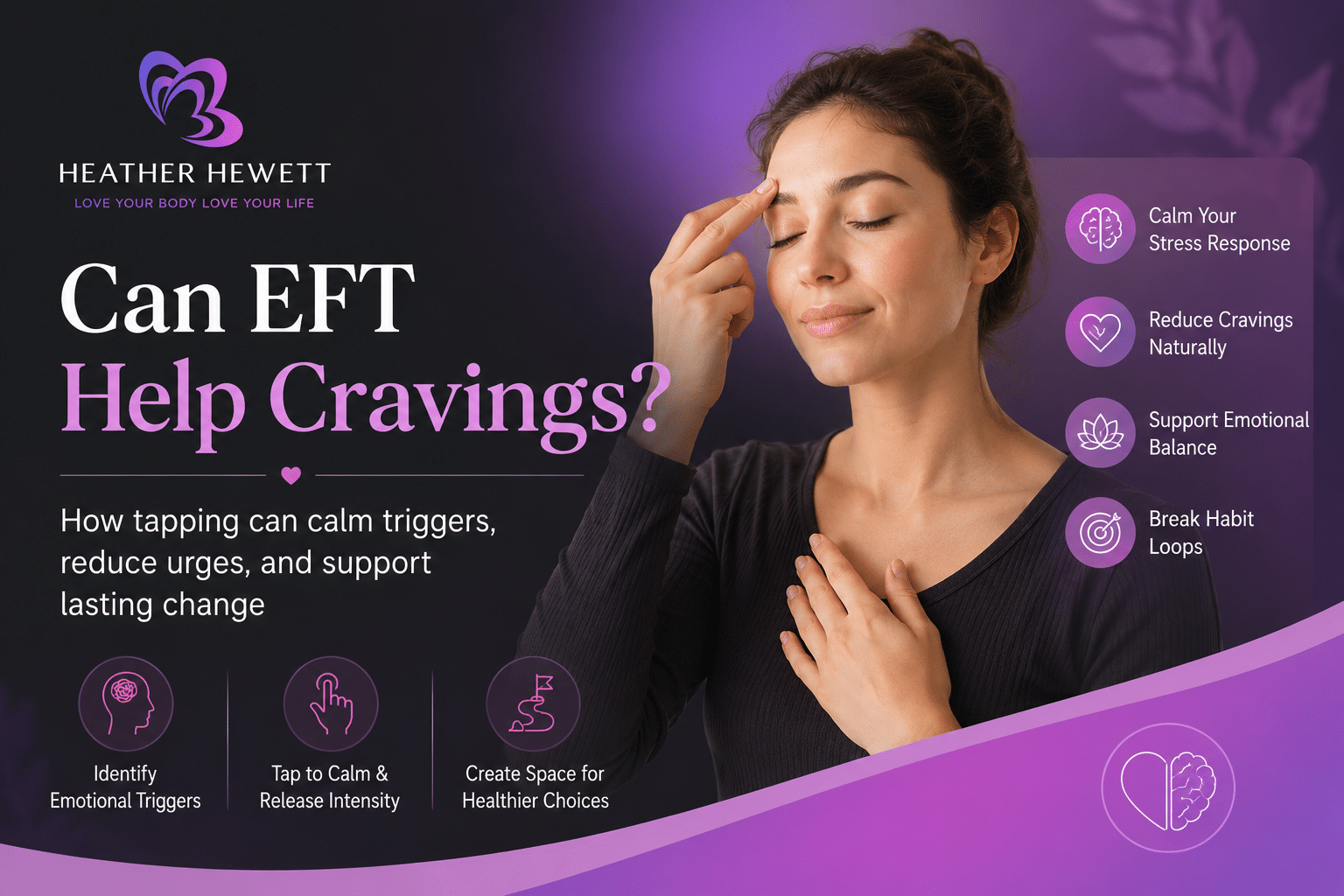
Yes, EFT (Emotional Freedom Techniques), often called EFT tapping, may help reduce cravings by targeting emotional triggers, stress responses, and habitual behavior patterns. Some research suggests EFT tapping can support craving management for emotional eating, sugar cravings, stress eating, and even nicotine cravings by helping regulate the nervous system and emotional intensity.
Cravings are rarely just about willpower. In many cases, they are connected to anxiety, stress hormones, emotional regulation challenges, habit loops, or dopamine-driven reward patterns. EFT tapping combines elements of mindfulness, exposure therapy, and somatic stimulation, which may help lower emotional distress and reduce the urge to engage in compulsive behaviors.
While EFT is not a cure or replacement for medical care, many people use it as a practical self-help tool alongside therapy, nutrition support, stress reduction practices, and behavioral change strategies.
What Is EFT Tapping?
EFT tapping, short for Emotional Freedom Techniques, is a mind-body practice that combines:
- Gentle tapping on acupressure points
- Focused attention on thoughts or emotions
- Verbal acknowledgment of distress or cravings
- Elements of cognitive reframing and mindfulness
The practice is often called “tapping therapy” because users tap with their fingertips on specific points on the face and upper body while repeating phrases related to emotional discomfort, cravings, anxiety, or stress.
Common EFT tapping points include:
- Side of the hand
- Eyebrow
- Side of the eye
- Under the eye
- Under the nose
- Chin
- Collarbone
- Under the arm
- Top of the head
The goal is not to suppress emotions but to reduce their intensity and help the nervous system feel safer and more regulated.
Many practitioners believe EFT works by calming the stress response, decreasing emotional reactivity, and interrupting automatic behavioral habits connected to cravings.
Can EFT Really Help Cravings?
EFT may help cravings for some people, especially when cravings are emotionally driven or linked to stress, anxiety, boredom, or habitual coping behaviors.
Research and clinical observations suggest EFT tapping may support:
- Food cravings
- Emotional eating
- Sugar cravings
- Stress eating
- Smoking urges
- Anxiety-related cravings
- Habit-based compulsive behaviors
One reason EFT may be helpful is that cravings are often connected to emotional regulation rather than physical hunger alone. When people feel stressed, lonely, overwhelmed, or anxious, the brain may seek comfort through food, nicotine, alcohol, or other rewarding behaviors.
EFT attempts to interrupt that emotional cycle.
Instead of fighting the craving with pure willpower, tapping encourages individuals to:
- Acknowledge the urge
- Identify emotional triggers
- Calm the nervous system
- Reduce emotional intensity
- Create psychological distance from the craving
For some users, this can make cravings feel less overwhelming and easier to manage.
However, results vary. EFT is not universally effective, and it tends to work best as part of a broader wellness or behavioral support plan.
What Does Research Say About EFT and Cravings?
The scientific evidence for EFT tapping is still developing, but several studies suggest it may help reduce cravings and emotional distress in certain populations.
Research has explored EFT for:
- Food cravings
- Weight management
- Anxiety
- Stress reduction
- PTSD
- Addictive behaviors
- Emotional eating
Some studies have found that participants using EFT reported:
- Reduced the intensity of food cravings
- Lower emotional eating tendencies
- Improvements in stress and anxiety symptoms
- Better self-control around trigger foods
- Reduced binge eating behaviors
Researchers have proposed several possible mechanisms.
1. Stress Reduction and Cortisol Regulation
Stress is strongly linked to cravings.
When cortisol and other stress hormones rise, people may crave high-calorie foods, sugar, nicotine, or alcohol for temporary emotional relief.
Some studies suggest EFT may help lower physiological stress markers and calm the amygdala, the brain region involved in fear and emotional processing.
2. Emotional Regulation
Cravings often intensify when emotions feel overwhelming.
EFT may help individuals process uncomfortable emotions without automatically turning to food or addictive behaviors for relief.
This is especially relevant for:
- Emotional eating
- Stress eating
- Anxiety-related cravings
- Habitual comfort behaviors
3. Disrupting Habit Loops
Cravings are frequently tied to learned behavioral patterns.
For example:
- Stress → sugar craving
- Anxiety → smoking urge
- Loneliness → binge eating
EFT may help weaken these automatic associations by introducing mindful awareness and nervous system regulation during triggering moments.
4. Cognitive and Somatic Components
EFT includes both mental focus and physical tapping.
Some experts believe the combination of exposure-style emotional processing and somatic stimulation may explain why some users experience reduced urge intensity.
Important Research Limitations
Despite promising findings, EFT research still has limitations:
- Some studies are small
- More long-term trials are needed
- Results can vary between individuals
- Placebo effects may play a role
- Mechanisms are still debated
For this reason, EFT should be viewed as a supportive wellness technique rather than a guaranteed medical intervention.
Why People Experience Cravings
Understanding cravings helps explain why EFT tapping may sometimes work.
Cravings are influenced by multiple systems in the body and brain, including:
- Dopamine reward pathways
- Emotional triggers
- Stress response activation
- Habit conditioning
- Blood sugar fluctuations
- Sleep deprivation
- Anxiety and nervous system dysregulation
Emotional Triggers
Many cravings are emotional rather than physical.
Common emotional triggers include:
- Stress
- Boredom
- Loneliness
- Anxiety
- Shame
- Frustration
- Overwhelm
This is why emotional eating and compulsive eating are often difficult to stop through willpower alone.
The Brain’s Reward System
Highly processed foods, nicotine, and alcohol can activate dopamine pathways linked to pleasure and reward.
Over time, the brain may begin associating certain emotions or situations with instant relief.
This creates habit loops that become increasingly automatic.
Stress and the Nervous System
Chronic stress can dysregulate the nervous system and increase emotional reactivity.
When the body remains in a prolonged stress state, cravings may intensify as the brain searches for comfort, distraction, or temporary soothing.
This is one reason stress reduction practices, mindfulness techniques, CBT techniques, and nervous system regulation strategies are often recommended alongside craving management approaches.
How to Use EFT for Cravings (Step-by-Step)
One of the biggest advantages of EFT tapping is that it is simple, accessible, and beginner-friendly.
Here is a practical EFT tapping method for cravings.
Step 1: Identify the Craving
Be specific.
Ask yourself:
- What am I craving?
- How strong is the urge?
- What emotion am I feeling?
Examples:
- “I’m craving chocolate because I feel stressed.”
- “I want cigarettes after an argument.”
- “I feel anxious and want sugar.”
Rate the craving intensity from 0–10.
Step 2: Create a Setup Statement
The setup statement acknowledges the craving while encouraging self-acceptance.
Example:
“Even though I have this intense craving for sugar, I deeply and completely accept myself.”
Another example:
“Even though I feel stressed and want to binge eat, I choose to stay calm and present.”
Repeat the statement three times while tapping the side of the hand.
Step 3: Tap Through the EFT Points
Tap gently on each point about 5–7 times while repeating a reminder phrase.
Example reminder phrases:
- “This sugar craving”
- “This stress eating urge”
- “This anxiety in my body”
- “This nicotine craving”
EFT Tapping Sequence
- Eyebrow
- Side of the eye
- Under eye
- Under nose
- Chin
- Collarbone
- Under arm
- Top of head
Step 4: Pause and Reassess
After one tapping round:
- Take a deep breath
- Notice emotional changes
- Rate the craving again from 0–10
Sometimes intensity drops quickly. Other times, multiple rounds are needed.
Step 5: Address the Emotional Root
Many cravings are linked to deeper emotions.
You might continue with phrases like:
- “I feel overwhelmed.”
- “I’m afraid I can’t cope without food.”
- “I feel anxious after work.”
- “I learned to use sugar for comfort.”
This deeper emotional work is often where EFT becomes more powerful.
Sample EFT Script for Emotional Eating
Set up statement:
“Even though I feel emotionally drained and want to eat to feel better, I accept how I feel right now.”
Reminder phrases during tapping:
- “This emotional eating urge”
- “This heaviness in my chest”
- “This stress in my body”
- “Wanting comfort”
- “Trying to soothe myself”
- “Maybe I can feel safe without overeating”
Stress-Triggered Craving Example
Set up statement:
“Even though my stress is making me crave sugar, I choose to calm my nervous system.”
Reminder phrases:
- “This stress response”
- “My body feels overwhelmed”
- “I want relief”
- “This urge to eat”
- “Calming my body”
- “Allowing this feeling to pass”
EFT for Different Types of Cravings
Sugar Cravings
Sugar cravings are commonly linked to:
- Stress
- Blood sugar instability
- Emotional comfort-seeking
- Dopamine reward patterns
- Sleep deprivation
EFT tapping may help reduce the emotional urgency behind sugar cravings, especially when stress or anxiety is involved.
Many people use EFT before entering triggering environments, such as late-night snacking situations or emotionally difficult moments.
Emotional Eating
Emotional eating is one of the most common reasons people try EFT.
Food often becomes a coping strategy for:
- Anxiety
- Loneliness
- Sadness
- Emotional overwhelm
- Chronic stress
Because EFT focuses on emotional regulation and nervous system calming, it may help people pause before automatically turning to food.
Smoking Cravings
Nicotine cravings are influenced by both physical dependence and psychological habit loops.
EFT may help reduce:
- Stress-triggered smoking urges
- Anxiety around quitting
- Emotional dependence patterns
- Habitual behavioral cues
However, severe nicotine addiction often requires additional support, including medical guidance or smoking cessation programs.
Alcohol Cravings
Some people use EFT to manage alcohol-related urges connected to emotional distress or stress relief patterns.
Potential benefits may include:
- Increased awareness of triggers
- Improved emotional coping
- Reduced anxiety intensity
- Better stress management
Still, alcohol dependence can be medically serious. EFT should never replace professional addiction treatment.
Stress Eating
Stress eating is strongly connected to cortisol, nervous system dysregulation, and emotional overload.
Because EFT is commonly used as a stress reduction technique, some individuals find it helpful during high-pressure situations.
Combining EFT with:
- mindfulness techniques
- meditation
- sleep support
- CBT techniques
- balanced nutrition
may improve overall craving management.
Benefits and Limitations of EFT
Potential Benefits
EFT tapping may offer several advantages:
- Easy to learn
- Free and accessible
- Portable self-help technique
- Supports emotional awareness
- Encourages mindfulness
- May calm the stress response
- Can complement therapy or coaching
- May reduce urge intensity
For many people, EFT creates a helpful “pause” between craving and behavior.
Limitations of EFT
EFT is not a magic solution.
It may not fully address:
- Clinical addiction
- Trauma disorders
- Severe eating disorders
- Substance dependence
- Underlying mental health conditions
Some people simply do not respond strongly to tapping.
Others may need:
- psychotherapy
- cognitive behavioral therapy
- medical treatment
- nutritional counseling
- addiction recovery support
EFT should be viewed as one possible tool within a broader health strategy.
When to Seek Professional Help
Professional support is important if cravings are causing significant emotional, physical, or behavioral harm.
Seek help if you experience:
- Frequent binge eating
- Loss of control around food
- Severe nicotine or alcohol dependence
- Depression or anxiety symptoms
- Self-harm thoughts
- Trauma-related symptoms
- Intense compulsive behaviors
A licensed healthcare provider, therapist, dietitian, or addiction specialist can help identify the root causes and create a safe treatment plan.
EFT may still be used alongside professional care, but it should not replace evidence-based treatment for serious medical or psychological conditions.
Final Thoughts
EFT tapping may help cravings by calming the stress response, improving emotional regulation, and disrupting automatic habit loops tied to food, nicotine, alcohol, or stress-related behaviors.
For many people, cravings are deeply connected to emotional states rather than a simple lack of discipline. EFT offers a structured way to slow down, acknowledge emotional discomfort, and reduce the intensity of urges without relying solely on willpower.
At the same time, it is important to maintain realistic expectations. EFT is not a miracle cure, and the scientific evidence is still developing. Some individuals experience meaningful benefits, while others may need additional approaches such as cognitive behavioral therapy, mindfulness techniques, nutrition counseling, nervous system regulation practices, or professional addiction treatment.
Used thoughtfully and consistently, EFT can become a helpful tool within a balanced, evidence-informed approach to emotional wellness and craving management.
FAQs
Does EFT tapping reduce food cravings?
EFT tapping may help reduce food cravings by lowering stress, improving emotional regulation, and interrupting habitual craving patterns. Some studies suggest EFT can decrease the intensity of emotional eating urges and compulsive food thoughts, especially when cravings are stress-related.
How long does EFT take to work for cravings?
Some people notice reduced craving intensity after one EFT session, while others need consistent practice over several days or weeks. Results vary depending on emotional triggers, habit strength, stress levels, and underlying psychological factors.
Can EFT help emotional eating?
Yes, EFT may help emotional eating by addressing stress, anxiety, overwhelm, and emotional coping patterns linked to food. Many people use tapping to create awareness and reduce impulsive eating behaviors during emotionally difficult moments.
What do you say during EFT tapping for cravings?
During EFT tapping, people usually acknowledge the craving while expressing self-acceptance. Example: “Even though I’m craving sugar right now, I deeply and completely accept myself.” Reminder phrases are then repeated during tapping rounds.
Is EFT scientifically proven?
EFT has some supportive research, particularly for stress, anxiety, and food cravings, but the evidence is still evolving. While some clinical studies show promising results, more large-scale and long-term research is needed.
Can EFT help sugar cravings?
EFT may help sugar cravings when stress, emotional eating, or habit loops contribute to the urge. Tapping may support nervous system regulation and reduce emotional intensity associated with comfort eating behaviors.
Does tapping help with nicotine cravings?
Some individuals report reduced nicotine cravings and stress-related smoking urges with EFT tapping. However, nicotine addiction often involves physical dependence, so EFT works best as part of a broader smoking cessation plan.
Are there side effects to EFT?
EFT is generally considered low risk for most people. However, emotional discomfort can sometimes surface during tapping sessions, especially when discussing stressful memories or trauma-related emotions.
How often should you use EFT for cravings?
Many practitioners recommend using EFT daily or whenever cravings appear. Consistency may improve emotional awareness and help weaken habitual craving responses over time.
Can EFT replace therapy or medical treatment?
No. EFT should not replace medical care, psychotherapy, addiction treatment, or professional mental health support. It is best used as a complementary self-help technique within a broader treatment approach.