
Modern mental health conversations can feel overwhelming. One person says therapy changed their life. Another says medication finally gave them relief. Someone else talks about nervous system regulation, somatic healing, or vagus nerve exercises.
If you’re struggling with anxiety, burnout, panic attacks, trauma, or chronic stress, it’s normal to wonder:
Which approach actually works?
Can nervous system regulation replace therapy?
Is medication necessary?
Should these approaches work together?
The truth is that nervous system regulation, therapy, and medication each support healing in different ways. They are not automatically interchangeable, and for many people, the best results come from combining them thoughtfully.
This guide breaks down the science, psychology, and practical realities behind each approach so you can better understand what may help you feel safer, calmer, and more emotionally resilient.
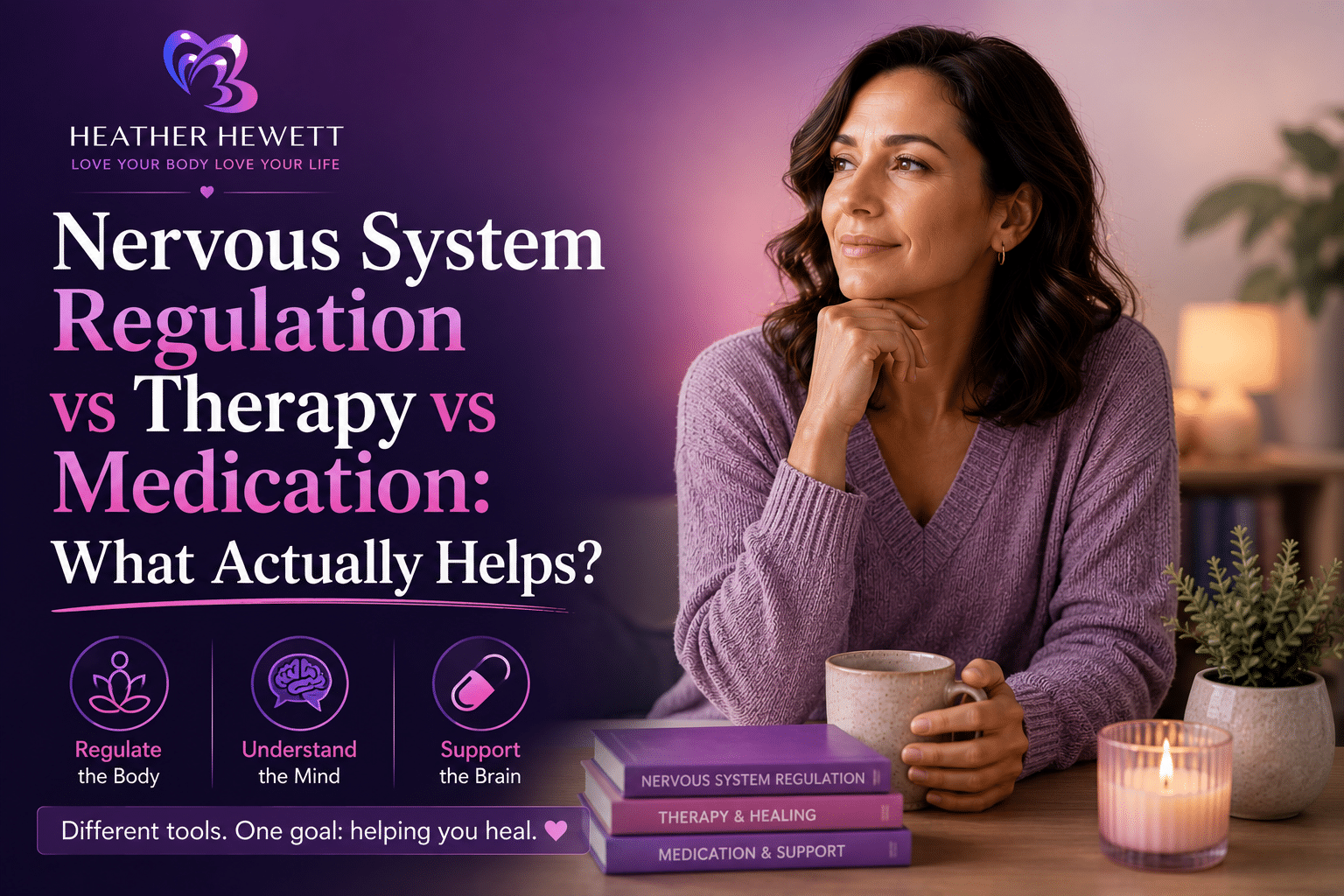
Nervous system regulation helps calm the body’s stress response and improve emotional resilience. Therapy helps process emotions, trauma, behaviors, and thought patterns. Medication helps manage symptoms by affecting brain chemistry and nervous system activity.
For anxiety, trauma, panic attacks, chronic stress, and burnout, these approaches often work best together rather than competing against each other.
What Is Nervous System Regulation?
Nervous system regulation refers to practices that help the body move out of chronic stress states and return to greater balance, flexibility, and safety.
This usually involves supporting the autonomic nervous system, which controls automatic body functions like heart rate, breathing, digestion, stress response, and arousal.
The autonomic nervous system has two major branches:
- Sympathetic nervous system: activates fight or flight
- Parasympathetic nervous system: supports rest, recovery, digestion, and calm
When someone experiences chronic stress, trauma, emotional overwhelm, or long-term anxiety, the nervous system can become dysregulated.
That may look like:
- Constant tension
- Hypervigilance
- Panic attacks
- Emotional numbness
- Irritability
- Exhaustion
- Sleep problems
- Difficulty relaxing
- Freeze response or shutdown
Many people live in survival mode without realizing it.
How Nervous System Dysregulation Happens
The human nervous system is designed to protect us from danger. Stress hormones like cortisol and adrenaline prepare the body to respond quickly during a threat.
But when stress becomes chronic, the body may stay stuck in defensive states even when danger is no longer present.
This is why someone may:
- Feel anxious during normal situations
- Experience panic without obvious danger
- Struggle to calm down after stress
- Feel emotionally reactive
- Become exhausted after prolonged stress exposure
Trauma can intensify this process. PTSD, chronic anxiety, burnout, and emotional overwhelm are often deeply connected to nervous system activation.
The Role of the Vagus Nerve
The vagus nerve plays a major role in nervous system regulation.
It helps connect the brain and body and influences:
- Heart rate
- Breathing
- Digestion
- Emotional regulation
- Social connection
- Relaxation response
Research connected to Polyvagal Theory, developed by Stephen Porges, helped increase awareness of how nervous system states affect emotional and physical well-being.
Common Nervous System Regulation Techniques
Nervous system healing often involves body-based practices that signal safety to the brain and body.
Examples include:
- Slow breathing exercises
- Breathwork
- Grounding techniques
- Walking
- Gentle movement
- Mindfulness
- Sleep consistency
- Reducing overstimulation
- Nature exposure
- Cold exposure
- Emotional awareness practices
- Social connection
- Relaxation techniques
These practices are not magic cures. They are tools that help the body gradually develop more flexibility and resilience.
Practical Example
Imagine someone who experiences panic attacks during work meetings.
Therapy may help them understand underlying fears and thought patterns. Medication may reduce symptom intensity. Nervous system regulation techniques may help calm the body before and during stressful situations.
Each approach targets a different layer of the problem.
Nervous system regulation focuses on calming the body’s stress response and improving emotional resilience through body-based practices like breathing, grounding, sleep, movement, and mindfulness. It supports recovery from anxiety, trauma, chronic stress, and burnout by helping the autonomic nervous system return to balance.
What Does Therapy Help With?
Therapy helps people understand, process, and change emotional patterns, behaviors, relationships, and psychological responses.
Unlike nervous system regulation alone, therapy focuses heavily on emotional meaning, cognition, trauma processing, and psychological insight.
A trained therapist can help someone:
- Process trauma
- Understand triggers
- Build coping skills
- Improve relationships
- Challenge distorted thinking
- Increase emotional regulation
- Reduce anxiety and depression
- Improve self-awareness
Therapy is not just “talking about feelings.” Modern psychotherapy includes evidence-based approaches supported by neuroscience and clinical research.
Cognitive Behavioral Therapy (CBT)
Cognitive Behavioral Therapy is one of the most researched therapies for anxiety disorders, depression, panic attacks, and stress-related conditions.
CBT helps people identify:
- Unhelpful thought patterns
- Catastrophic thinking
- Avoidance behaviors
- Anxiety cycles
Then it teaches practical skills to shift those patterns.
For example:
A person with chronic anxiety may automatically assume the worst-case scenario in social situations. CBT helps interrupt that cycle and build healthier interpretations.
EMDR Therapy
Eye Movement Desensitization and Reprocessing is commonly used for trauma and PTSD.
EMDR helps people process traumatic memories that may remain “stuck” in the nervous system and brain.
Many trauma survivors find EMDR helpful because it addresses both emotional and physiological responses connected to trauma memories.
Somatic Therapy
Somatic therapy focuses on the mind-body connection and how trauma affects the nervous system physically.
Rather than focusing only on thoughts, somatic therapy may explore:
- Body sensations
- Tension patterns
- Stress activation
- Emotional states
- Physical survival responses
This is one reason somatic healing became closely connected to nervous system regulation discussions.
Trauma-Informed Therapy
Trauma-informed care recognizes that many emotional struggles are connected to survival responses, chronic stress, and nervous system activation rather than personal weakness.
A trauma-informed therapist aims to create emotional safety while helping clients process difficult experiences gradually.
What Therapy Cannot Always Do Alone?
Some people intellectually understand their trauma or anxiety, but still feel physically activated.
They may say:
- “I know I’m safe, but my body doesn’t.”
- “I understand my triggers, but I still panic.”
- “Talking helps, but I still feel overwhelmed.”
This is where nervous system-focused approaches may complement therapy.
Therapy helps people process emotions, trauma, thought patterns, behaviors, and relationships. Evidence-based approaches like CBT, EMDR, somatic therapy, and trauma-informed therapy can support anxiety treatment, trauma healing, emotional regulation, and long-term mental health recovery.
How Medication Works
Medication can help regulate symptoms related to anxiety, depression, panic attacks, and other mental health conditions by affecting brain chemistry and nervous system activity.
For some people, medication is life-changing. For others, it may provide temporary support while deeper healing work happens through therapy and lifestyle changes.
SSRIs and Antidepressants
Selective Serotonin Reuptake Inhibitors are among the most commonly prescribed medications for anxiety disorders and depression.
SSRIs work by affecting serotonin signaling in the brain.
Other medications may influence:
- Dopamine
- Norepinephrine
- GABA
- Stress response pathways
Medication does not erase trauma memories or automatically solve life stressors. Instead, it may reduce symptom intensity enough for someone to function more effectively.
What Medication May Help With
Medication may support people experiencing:
- Severe anxiety
- Panic attacks
- Depression
- PTSD symptoms
- Insomnia related to anxiety
- Emotional instability
- Inability to function normally
For some individuals, medication creates enough stability to participate more effectively in therapy and nervous system healing practices.
Benefits of Medication
Potential benefits include:
- Reduced panic attack intensity
- Improved sleep
- Better emotional stability
- Reduced intrusive thoughts
- Improved daily functioning
- Lower anxiety symptoms
Limitations of Medication
Medication is not a complete solution for every person.
Potential limitations include:
- Side effects
- Emotional blunting
- Trial-and-error prescribing
- Withdrawal symptoms
- Incomplete symptom relief
- Lack of trauma processing
Some people benefit greatly from medication long-term. Others use it temporarily during difficult periods.
Mental health treatment should always be individualized and guided by qualified healthcare professionals.
Medication helps manage symptoms of anxiety, depression, panic attacks, and stress-related conditions by influencing neurotransmitters and nervous system activity. SSRIs and antidepressants can improve stability and functioning, but they often work best alongside therapy and healthy nervous system support strategies.
Nervous System Regulation vs Therapy
| Factor | Nervous System Regulation | Therapy |
| Main Focus | Calming physiological stress responses | Emotional and psychological healing |
| Targets | Autonomic nervous system | Thoughts, emotions, behaviors |
| Common Methods | Breathwork, grounding, mindfulness, movement | CBT, EMDR, psychotherapy, somatic therapy |
| Helps With | Stress response, fight or flight, emotional overwhelm | Trauma, anxiety, depression, relationships |
| Trauma Support | Helps regulate activation states | Helps process traumatic experiences |
| Emotional Healing | Indirect support through body regulation | Direct emotional processing |
| Symptom Relief | Often immediate but gradual over time | Gradual psychological improvement |
| Long-Term Resilience | Builds nervous system flexibility | Builds coping skills and insight |
| Accessibility | Many low-cost self-help tools available | Often requires professional support |
| Cost | Can be low-cost or free | Can be expensive depending on access |
| Timeline | Consistent daily practice matters | Depends on therapeutic process |
Key Difference
Nervous system regulation primarily works through the body. Therapy primarily works through emotional and psychological processing.
They overlap, but they are not identical.
Nervous System Regulation vs Medication
Medication and nervous system regulation both influence how people feel, but they work very differently.
Nervous System Regulation Focuses on Adaptation
Nervous system support practices aim to improve the body’s ability to tolerate stress and return to safety after activation.
This may improve:
- Emotional resilience
- Stress recovery
- Panic management
- Emotional flexibility
- Burnout recovery
Medication Focuses on Symptom Reduction
Medication often works more directly on brain chemistry and nervous system signaling to reduce symptoms.
This may help with:
- Severe panic attacks
- Major depression
- Persistent anxiety
- Sleep disruption
- Emotional instability
Root Cause vs Symptom Management
This conversation can become oversimplified online.
Some people incorrectly claim that medication only “masks symptoms.” That is not always true. For many individuals, medication meaningfully improves functioning and quality of life.
At the same time, medication alone may not fully address:
- Trauma physiology
- Chronic stress patterns
- Emotional processing
- Behavioral patterns
- Nervous system resilience
Immediate Relief vs Long-Term Change
Medication may provide faster symptom relief.
Nervous system regulation usually requires consistent practice over time.
However, nervous system healing skills may continue supporting emotional resilience even after stressful periods end.
Dependency Concerns
Some medications may involve dependence risks or withdrawal concerns, depending on the type and duration of use.
That does not mean medication is bad. It means treatment decisions should be made carefully with medical guidance.
Can You Combine All Three?
Yes, and many mental health professionals believe integrated healing approaches are often the most effective.
Anxiety, trauma, burnout, and chronic stress are complex. They affect:
- Brain chemistry
- Thought patterns
- Emotional memory
- Relationships
- Sleep
- Physical stress systems
- Nervous system activation
No single tool fixes every layer.
Example of an Integrated Approach
Someone recovering from trauma may use:
- Therapy to process experiences
- Nervous system exercises to reduce chronic activation
- Medication to stabilize severe panic attacks
Another person with burnout may benefit from:
- Sleep regulation
- Stress management
- Therapy for perfectionism
- Mindfulness practices
- Temporary medication support
Healing is not one-size-fits-all.
Why Combined Approaches Often Work Best
Integrated support may help people:
- Feel safer physically
- Think more clearly
- Process emotions effectively
- Improve daily functioning
- Build long-term resilience
Rather than asking which method is “best,” a better question may be:
“What combination supports my needs right now?”
Nervous system regulation, therapy, and medication are not mutually exclusive. Many people benefit most from combining body-based regulation techniques, psychotherapy, and medical support, depending on symptom severity, trauma history, and personal needs.
Which Approach Works Best for Anxiety, Trauma, Burnout, and Stress?
Anxiety
For mild to moderate anxiety:
- Therapy for anxiety can be highly effective
- CBT is strongly evidence-based
- Nervous system regulation techniques may reduce stress activation
For severe anxiety or panic disorder:
- Medication may help stabilize symptoms
- Therapy plus nervous system support often works well together
Trauma
Trauma often affects both the brain and body.
Many trauma survivors benefit from:
- EMDR
- Somatic therapy
- Trauma-informed therapy
- Nervous system regulation practices
Trauma healing usually requires both emotional and physiological support.
Panic Attacks
Panic attacks involve intense nervous system activation.
Helpful approaches may include:
- Breathwork
- Grounding exercises
- Therapy for panic patterns
- Medication when attacks become debilitating
Chronic Stress
Chronic stress can dysregulate the autonomic nervous system over time.
Supportive strategies include:
- Stress management
- Sleep consistency
- Movement
- Therapy
- Reducing overstimulation
- Emotional boundaries
Burnout
Burnout recovery often requires more than “self-care.”
People may need:
- Rest
- Nervous system calming
- Lifestyle changes
- Therapy
- Reduced workload
- Emotional recovery support
Depression
Depression may involve:
- Emotional exhaustion
- Low nervous system energy
- Stress overload
- Brain chemistry factors
Treatment may include:
- Therapy
- Medication
- Behavioral activation
- Sleep improvement
- Nervous system support
Why Therapy Alone Sometimes Feels Incomplete
Some people leave therapy sessions with insight but still feel physically dysregulated.
That can happen because trauma and chronic stress are not only cognitive experiences. They are also physiological experiences.
The body may remain stuck in survival states long after danger has passed.
Examples include:
- Racing heart
- Muscle tension
- Startle responses
- Freeze response
- Emotional shutdown
- Chronic hypervigilance
This does not mean therapy failed.
It may simply mean the nervous system also needs direct support.
The growing interest in somatic healing reflects increased awareness of trauma physiology and the mind-body connection.
Why Nervous System Regulation Became So Popular
Several cultural shifts increased interest in nervous system healing.
Chronic Stress and Burnout
Modern life exposes people to:
- Constant stimulation
- Work pressure
- Financial stress
- Information overload
- Sleep disruption
Many people feel chronically overwhelmed.
Trauma Awareness
Public conversations about PTSD, childhood trauma, emotional neglect, and stress physiology became more common.
People began recognizing that emotional struggles often involve survival responses rather than weakness.
Neuroscience Education
Social media popularized terms like:
- Fight or flight
- Freeze response
- Polyvagal Theory
- Vagus nerve
- Nervous system dysregulation
Some online information is oversimplified, but increased awareness helped many people better understand stress responses.
Interest in Body-Based Healing
People increasingly noticed that insight alone did not always calm their bodies.
That increased interest in:
- Somatic therapy
- Grounding techniques
- Breathwork
- Mindfulness
- Nervous system exercises
Daily Nervous System Regulation Habits
Small daily habits can help support nervous system resilience over time.
Breathwork
Slow exhale breathing may help activate parasympathetic nervous system responses.
Examples include:
- Box breathing
- Physiological sigh breathing
- Slow diaphragmatic breathing
Grounding Techniques
Grounding helps reconnect attention to the present moment.
Examples:
- Naming objects in the room
- Feeling feet on the floor
- Touch-based sensory awareness
Movement
Gentle movement can help discharge stress activation.
Examples:
- Walking
- Stretching
- Light exercise
- Mobility work
Sleep Consistency
Poor sleep increases stress sensitivity and emotional reactivity.
Consistent sleep schedules support nervous system recovery.
Reducing Overstimulation
Constant notifications, noise, multitasking, and screen exposure may increase nervous system overload.
Creating quieter recovery periods can help.
Nature Exposure
Spending time outdoors may reduce stress activation and improve emotional regulation.
Social Connection
Safe social connections play a major role in nervous system regulation.
Supportive relationships can increase emotional safety and resilience.
Emotional Awareness
Learning to notice emotional states without judgment can improve self-regulation over time.
Signs You May Need Professional Help
Self-help strategies are not always enough.
Professional support may be important if you experience:
- Severe anxiety
- Frequent panic attacks
- Depression
- Suicidal thoughts
- Trauma symptoms
- Inability to function daily
- Severe burnout
- Chronic insomnia
- Emotional numbness
- Substance misuse
- Persistent emotional overwhelm
A licensed mental health professional or healthcare provider can help assess appropriate treatment options.
Important Medical Disclaimer
This article is educational and should not replace medical advice, diagnosis, or treatment. Always consult qualified healthcare professionals regarding mental health concerns, medications, or severe symptoms.
Conclusion
Healing is rarely as simple as choosing between nervous system regulation, therapy, or medication.
Human beings are complex. Anxiety, trauma, burnout, panic attacks, and chronic stress affect both the mind and body. That means recovery often requires layered support.
Nervous system regulation can help the body feel safer. Therapy can help process emotions, trauma, and patterns. Medication can provide meaningful symptom relief and stability when needed.
None of these approaches makes someone weak. None of them is a failure.
The most effective healing path is often the one that helps you feel more supported, functional, emotionally safe, and connected to your life again.
You do not have to earn help by suffering longer.
And you do not have to heal perfectly to deserve support.
FAQs
What is the difference between nervous system regulation and therapy?
Nervous system regulation focuses on calming physiological stress responses through body-based techniques. Therapy focuses on emotional processing, thought patterns, behaviors, and psychological healing.
Can nervous system regulation replace therapy?
For some people, nervous system support practices help significantly. However, therapy may still be important for trauma processing, anxiety disorders, depression, relationship issues, or deeper emotional healing.
Is medication better than nervous system regulation for anxiety?
Neither approach is universally better. Medication may help reduce severe symptoms quickly, while nervous system regulation builds long-term emotional resilience and stress recovery capacity.
Can therapy regulate the nervous system?
Yes. Many therapies, especially somatic therapy and trauma-informed therapy, can positively affect nervous system regulation alongside emotional healing.
What are the best nervous system regulation techniques?
Helpful techniques may include breathwork, grounding exercises, mindfulness, movement, sleep consistency, stress reduction, and safe social connection.
Should I combine therapy, medication, and nervous system work?
Many people benefit from combining approaches, especially for trauma, chronic anxiety, panic attacks, or burnout recovery.
How do I know if my nervous system is dysregulated?
Signs may include chronic anxiety, emotional overwhelm, panic attacks, hypervigilance, sleep problems, irritability, exhaustion, or difficulty relaxing.
Does trauma affect the nervous system?
Yes. Trauma can alter stress responses and contribute to nervous system dysregulation, hyperarousal, freeze responses, and emotional reactivity.
Can nervous system regulation help panic attacks?
Nervous system techniques like grounding and breathing exercises may help reduce panic intensity and improve recovery from stress activation.
Is somatic therapy the same as nervous system regulation?
Not exactly. Somatic therapy is a professional therapeutic approach that often includes nervous system-focused work, while nervous system regulation can also include independent self-help practices.