
Many people spend years living in survival mode without realizing it. Anxiety, tension, overthinking, exhaustion, and emotional overwhelm can become so familiar that true calm feels almost foreign.
So, what does a regulated nervous system feel like?
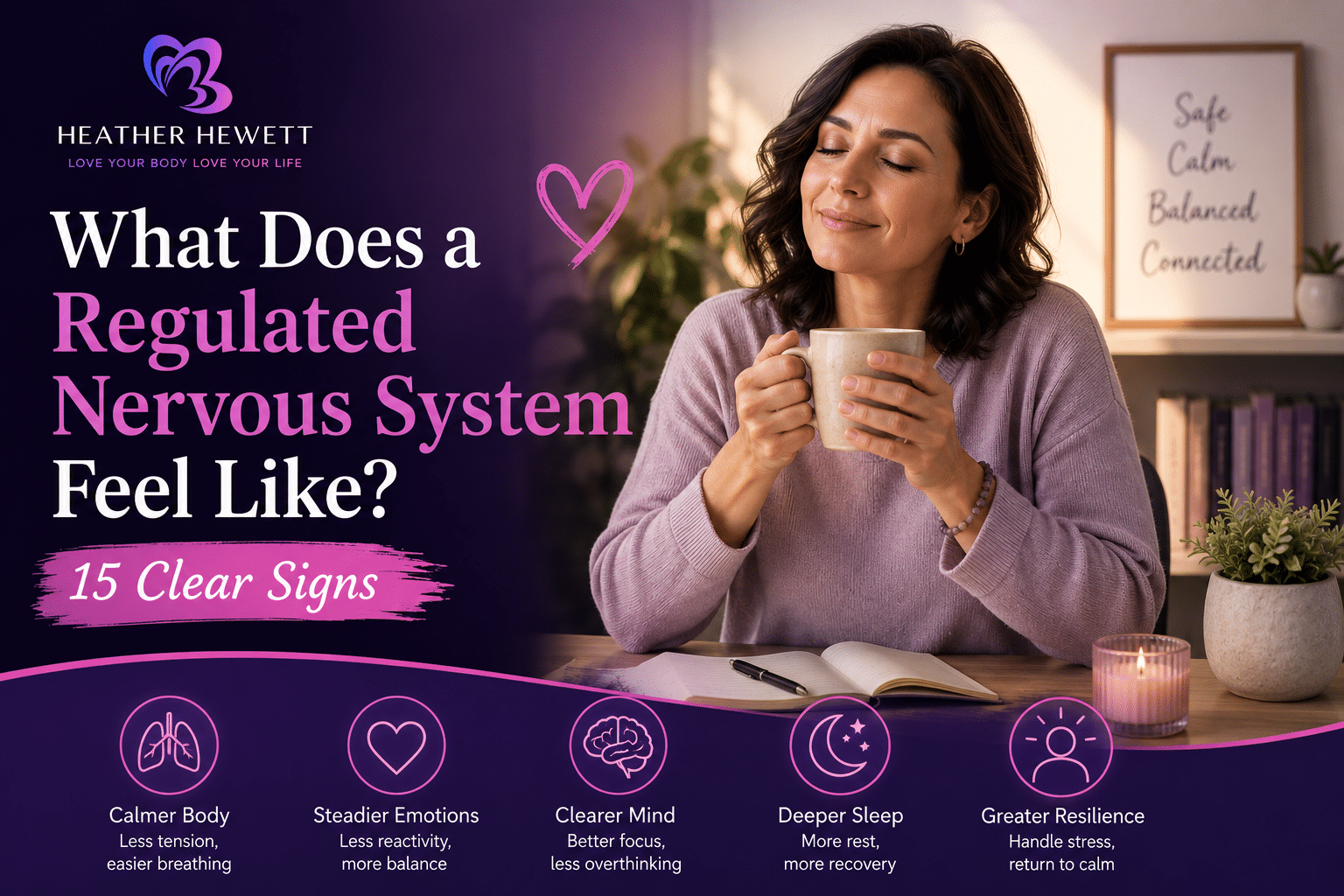
A regulated nervous system often feels like safety in your body. You may notice calmer breathing, less tension, steadier emotions, clearer thinking, deeper sleep, and a greater ability to handle stress without feeling overwhelmed. It does not mean feeling happy or calm all the time. It means your body can move through stress and return to balance more easily.
If you’ve been stuck in chronic stress, burnout, hypervigilance, or emotional exhaustion, understanding the signs of nervous system healing can help you recognize that your body is beginning to feel safe again.
This article explores what nervous system regulation feels like physically, emotionally, and mentally in a way that’s simple, validating, and grounded in neuroscience.
This article is for educational purposes and not medical advice.
Table of Contents
- What Is a Regulated Nervous System?
- What Does a Regulated Nervous System Feel Like?
- Regulated vs Dysregulated Nervous System
- Why Calm Can Feel Uncomfortable at First
- How to Support Nervous System Regulation
- FAQs
- Conclusion
What Is a Regulated Nervous System?
A regulated nervous system is a nervous system that can respond to stress appropriately and then return to a balanced state afterward.
Your autonomic nervous system controls automatic body functions like breathing, heart rate, digestion, and stress responses. It has two major branches:
Sympathetic Nervous System
This is your body’s “fight-or-flight” system.
It activates when your brain senses danger or pressure. Your heart rate may rise, muscles tighten, thoughts race, and stress hormones like cortisol increase.
This response is not bad. It helps humans survive.
The problem happens when the body stays stuck there for too long.
Many people experiencing anxiety, trauma, emotional burnout, or chronic stress symptoms remain in a near-constant state of activation without realizing it.
Parasympathetic Nervous System
This is your body’s “rest-and-recover” system.
It supports:
- digestion
- relaxation
- emotional regulation
- healing
- restorative sleep
- social connection
The vagus nerve plays a major role here. According to concepts from Polyvagal Theory, feeling emotionally and physically safe helps the nervous system shift out of survival mode.
Regulation Does Not Mean Constant Calm
One of the biggest misconceptions about nervous system healing is the idea that regulated people never feel stressed.
That is not true.
A regulated nervous system still experiences stress, sadness, frustration, and fear. The difference is resilience.
Instead of staying trapped in overwhelm, the body can recover more quickly.
Many people describe regulation as feeling more flexible emotionally, instead of emotionally numb or reactive.
What Does a Regulated Nervous System Feel Like?
The signs of a regulated nervous system are often subtle at first.
For people used to chronic stress or hypervigilance symptoms, regulation may initially feel unfamiliar, quiet, or even emotional.
Here are 15 clear signs your body may be leaving survival mode.
1. Calm Without Feeling Numb
A calm nervous system does not feel emotionally shut down.
Instead, it feels steady.
You can still feel emotions, but they no longer completely take over your body.
Many people describe it as:
- “I can breathe again.”
- “My emotions move through me instead of drowning me.”
- “I feel softer inside.”
2. Deeper, Easier Breathing
One of the clearest physical signs of relaxation is natural breathing.
When the nervous system regulates:
- breathing becomes slower
- chest tightness decreases
- sighing reduces
- the body stops bracing unconsciously
You may notice your stomach expanding naturally when you breathe instead of only your chest moving.
3. Reduced Body Tension
Stress often lives in the body.
People stuck in fight or flight symptoms commonly experience:
- clenched jaws
- tight shoulders
- headaches
- stiff neck muscles
- stomach tension
As nervous system recovery happens, the body gradually loosens.
Some notice their shoulders dropping for the first time in years.
4. Feeling Safe in Your Body
This is one of the most important nervous system healing signs.
A regulated nervous system often creates an internal feeling of:
- groundedness
- stability
- emotional safety
- physical ease
You no longer feel like you constantly need to prepare for danger.
5. Less Hypervigilance
Hypervigilance symptoms can make the world feel exhausting.
When the body is stuck in survival mode, you may constantly scan for:
- conflict
- rejection
- noise
- danger
- emotional threats
As regulation improves, your nervous system stops treating everything like an emergency.
You feel more present instead of constantly “on alert.”
6. Improved Digestion
The gut and nervous system are deeply connected.
When the sympathetic nervous system dominates for too long, digestion often suffers.
A regulated nervous system may support:
- improved appetite
- reduced nausea
- fewer stress-related stomach issues
- better digestion after meals
Many people notice they can finally eat without feeling physically tense.
7. More Emotional Balance
Emotional regulation symptoms often include:
- fewer emotional extremes
- less reactivity
- greater patience
- easier recovery after difficult moments
This does not mean suppressing emotions.
It means emotions feel manageable instead of consuming.
8. Restorative Sleep
A dysregulated nervous system often struggles to fully rest.
You may feel:
- tired but wired
- mentally restless
- physically exhausted but unable to sleep
As the nervous system heals, sleep tends to feel deeper and more restorative.
You wake up feeling more recovered instead of immediately overwhelmed.
9. Easier Focus and Clearer Thinking
Chronic stress affects concentration.
When cortisol and nervous system overload remain high for long periods, the brain often struggles with:
- racing thoughts
- forgetfulness
- mental exhaustion symptoms
- brain fog
A regulated nervous system often feels mentally quieter.
Thoughts become clearer and less chaotic.
10. Stable Energy Instead of Emotional Crashes
People living with nervous system fatigue often swing between:
- overstimulation
- exhaustion
- anxiety spikes
- shutdown
Regulation creates steadier energy throughout the day.
Instead of constantly crashing, your body feels more sustainable.
11. Faster Recovery After Stress
Stress still happens.
But a regulated nervous system returns to baseline more easily.
You may still feel upset after conflict or pressure, but you no longer stay dysregulated for days.
This is one of the strongest emotional resilience signs.
12. Reduced Overthinking
When the body feels unsafe, the mind often tries to predict every possible outcome.
Overthinking becomes a survival strategy.
As the nervous system regulates:
- mental looping decreases
- intrusive worry softens
- decision-making feels easier
Your mind no longer feels trapped in constant threat analysis.
13. Natural Moments of Joy
Many people healing from chronic stress notice small moments of pleasure returning.
You may suddenly:
- enjoy music again
- laugh more naturally
- feel emotionally present with loved ones
- appreciate quiet moments
These are meaningful signs of emotional healing.
14. Better Social Comfort
A dysregulated nervous system can make social interaction exhausting.
You may feel:
- guarded
- anxious
- emotionally disconnected
- overwhelmed around others
When the body feels safer, connection becomes easier.
Conversation feels less draining and more genuine.
15. A Grounded Feeling in the Body
Many people describe nervous system regulation as finally “landing” in their body.
It can feel like:
- warmth
- heaviness in a comforting way
- steadiness
- slower internal pacing
- physical presence
Instead of feeling disconnected or constantly rushed, you feel here.
Regulated vs Dysregulated Nervous System
Here’s a simple comparison of regulated nervous system symptoms versus symptoms of nervous system dysregulation.
| Area | Regulated Nervous System | Dysregulated Nervous System |
| Breathing | Slow and steady | Shallow or rapid |
| Emotions | Flexible and manageable | Reactive or numb |
| Sleep | Restful and restorative | Restless or interrupted |
| Digestion | More comfortable digestion | Stress-related stomach issues |
| Focus | Clearer thinking | Brain fog and racing thoughts |
| Body Tension | Relaxed muscles | Chronic tightness |
| Thoughts | Less overthinking | Constant worry |
| Energy | Stable energy | Exhaustion and crashes |
| Stress Recovery | Faster recovery | Stuck in overwhelm |
| Social Comfort | Safer connection | Hypervigilance or withdrawal |
This section is especially important for people wondering how to know if their nervous system is healing.
Why Calm Can Feel Uncomfortable at First
One of the most confusing parts of nervous system healing is that calm can initially feel unsafe.
If your body has adapted to chronic stress symptoms for years, stillness may feel unfamiliar.
Many people living in survival mode become unintentionally dependent on stress hormones like cortisol and adrenaline.
The nervous system learns to expect:
- urgency
- tension
- hypervigilance
- emotional intensity
When the body finally slows down, the absence of stress can feel uncomfortable.
Some people even mistake calm for boredom, emptiness, or danger.
This is extremely common in trauma recovery and emotional burnout recovery.
Healing does not always feel instantly peaceful.
Sometimes it feels unfamiliar before it feels safe.
That does not mean you are doing something wrong.
It often means your nervous system is learning a new baseline.
How to Support Nervous System Regulation
Healing an overstimulated nervous system usually happens through small, repeated experiences of safety.
Here are supportive nervous system regulation techniques that many people find helpful.
Breathing Exercises
Slow, intentional breathing can help signal safety to the body.
Try:
- longer exhales
- gentle paced breathing
- diaphragmatic breathing
Grounding Techniques
Grounding helps reconnect the brain and body connection.
Simple grounding exercises include:
- noticing physical sensations
- touching textured objects
- placing feet firmly on the floor
- observing your environment slowly
Gentle Movement and Stretching
The body often stores stress physically.
Gentle movement can help release body tension, anxiety, and somatic stress symptoms.
Mindfulness
Mindfulness for anxiety can help reduce overstimulation by bringing attention back to the present moment.
Even short moments of awareness can support emotional regulation.
Prioritizing Sleep
Sleep is essential for nervous system recovery.
Consistent rest helps the body process stress more effectively.
Hydration and Nutrition
Chronic stress can dysregulate appetite, digestion, and energy.
Supporting the body physically can help stabilize the stress response system.
Reducing Overstimulation
Constant noise, notifications, multitasking, and emotional overload can keep the nervous system activated.
Creating small moments of quiet can help the body reset.
Emotional Safety and Support
Healing often happens in safe relationships.
Therapy, somatic therapy, trusted friendships, and supportive environments can all help the nervous system feel less alone.
Social Connection
Safe human connection can strongly support parasympathetic nervous system activation.
Even small moments of genuine connection matter.
FAQ
Can you feel when your nervous system is regulated?
Yes. Many people notice physical and emotional signs like deeper breathing, less body tension, emotional steadiness, improved sleep, and a stronger sense of safety in their body.
Why does calm feel uncomfortable?
If your body has spent years in survival mode, calm may initially feel unfamiliar. Chronic stress can train the nervous system to expect tension and urgency.
How long does nervous system regulation take?
Nervous system healing is different for everyone. Factors like stress levels, trauma history, lifestyle, and emotional support all affect recovery timelines.
Can anxiety dysregulate the nervous system?
Yes. Chronic anxiety can keep the sympathetic nervous system activated, increasing stress response symptoms, muscle tension, overthinking, and nervous system fatigue.
Conclusion
A regulated nervous system does not mean becoming perfectly calm or emotionally unaffected.
It means your body no longer feels trapped in constant survival mode.
You may notice softer breathing, steadier emotions, clearer thinking, improved sleep, less hypervigilance, and a growing sense of safety inside yourself.
For many people, nervous system healing feels less like becoming a different person and more like finally being able to rest inside their own body.
And sometimes, the earliest signs are very quiet.
A deeper breath.
A relaxed jaw.
A moment of peace that lasts a little longer than it used to.
Those moments matter.