
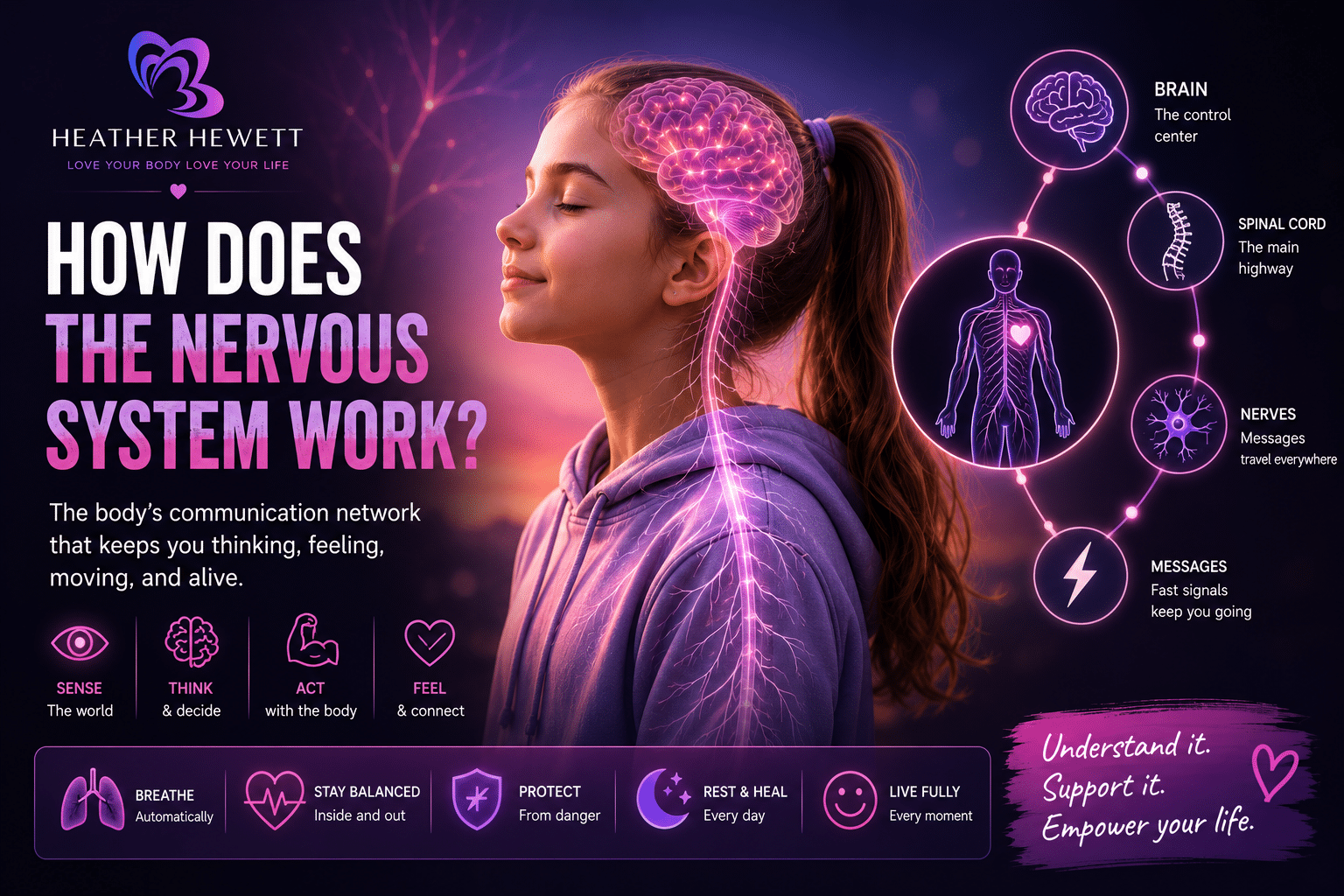
The nervous system works by sending electrical and chemical signals between the brain, spinal cord, and nerves throughout the body. These signals help control movement, thinking, breathing, heartbeat, sensation, memory, and automatic body functions. The nervous system acts as the body’s communication network, allowing different organs and tissues to work together efficiently.
The human body constantly receives information from the environment. You feel heat, hear sounds, move your muscles, remember experiences, and react to danger within seconds. All of these actions happen because of the nervous system.
The human nervous system is one of the most important biological systems in the body. It controls communication between the brain and the rest of the body using specialized nerve cells called neurons. Without it, the body could not respond to changes, maintain balance, or perform everyday activities.
Understanding how the nervous system works helps explain everything from reflex actions to emotions and memory. This guide provides a beginner-friendly explanation of nervous system function, its parts, how neurons communicate, and why this system is essential for survival.
What Is the Nervous System?
The nervous system is a complex network of nerve cells, tissues, and organs that sends messages between the brain and body.
Its main role is to:
- Collect sensory information
- Process information in the brain and spinal cord
- Send instructions to muscles and organs
- Coordinate body functions
- Help the body respond quickly to changes
The nervous system controls both voluntary actions, such as walking, and involuntary actions, such as breathing and heartbeat.
Quick Facts About the Nervous System
| Fact | Explanation |
| Main control center | Brain |
| Main communication cells | Neurons |
| Fastest nerve signals | Up to 120 meters per second |
| Main divisions | Central and peripheral nervous systems |
| Main job | Communication and body coordination |
The nervous system works alongside other systems, including the endocrine system, to maintain balance inside the body.
Main Parts of the Nervous System
The nervous system has two major divisions:
| Nervous System Part | Main Function |
| Central Nervous System (CNS) | Processes and interprets information |
| Peripheral Nervous System (PNS) | Sends signals between body and CNS |
Central Nervous System
The central nervous system includes:
- The brain
- The spinal cord
The brain acts as the body’s control center. It processes thoughts, emotions, memory, and sensory information.
The spinal cord acts like a communication highway. It carries nerve impulses between the brain and the rest of the body.
Functions of the Central Nervous System
- Interprets sensory information
- Controls movement
- Stores memories
- Regulates emotions
- Coordinates body responses
Brain Communication
Different parts of the brain specialize in different tasks:
- Frontal lobe: thinking and decision-making
- Parietal lobe: touch and sensory information
- Temporal lobe: hearing and memory
- Occipital lobe: vision
- Cerebellum: balance and coordination
Peripheral Nervous System
The peripheral nervous system includes all nerves outside the brain and spinal cord.
It connects the CNS to:
- Muscles
- Skin
- Organs
- Limbs
The PNS contains:
- Sensory nerves
- Motor nerves
- Spinal nerves
Peripheral Nervous System Functions
- Carries sensory information to the brain
- Sends movement instructions to muscles
- Controls organ activity
- Supports reflex action
The peripheral nervous system is further divided into:
- Somatic nervous system
- Autonomic nervous system
How Does the Nervous System Work?
The nervous system works through a process of communication using electrical signals and chemical signals.
Here’s a simple step-by-step explanation of how the brain communicates with the body:
- Sensory receptors detect changes
- Sensory nerves send information to the brain or spinal cord
- The CNS processes the information
- Motor nerves send instructions back
- The body responds
For example, if you touch a hot stove:
- Sensory receptors in your skin detect heat
- Sensory nerves send danger signals
- The spinal cord processes the information
- Motor nerves tell muscles to pull your hand away
This happens extremely fast, often before you consciously realize it.
Electrical Signals in the Nervous System
Neurons communicate through electrical impulses called action potentials.
These nerve impulses travel along nerve fibers like electrical wiring.
How Electrical Signals Move
- A neuron becomes stimulated
- Electrical charges move across the neuron membrane
- The signal travels down the axon
- The signal reaches the synapse
- Neurotransmitters carry the message to the next cell
This process is known as nerve transmission.
Chemical Signaling and Neurotransmitters
Neurons do not physically touch each other. Tiny gaps called synapses separate them.
At the synapse, neurons use chemicals called neurotransmitters to send messages.
Common Neurotransmitters
| Neurotransmitter | Main Role |
| Dopamine | Movement and reward |
| Serotonin | Mood and sleep |
| Acetylcholine | Muscle movement |
| Norepinephrine | Alertness and stress response |
These neurotransmitters help regulate brain communication and body coordination.
How Do Neurons Send Signals?
Neurons are specialized nerve cells designed for rapid communication.
A typical neuron has three main parts:
| Neuron Part | Function |
| Dendrites | Receive signals |
| Cell body | Processes information |
| Axon | Sends signals |
Step-by-Step Signal Pathway
1. Receiving Information
Dendrites receive incoming signals from nearby neurons or sensory receptors.
2. Creating an Electrical Impulse
If the signal is strong enough, the neuron generates an electrical impulse.
3. Signal Travels Down the Axon
The impulse moves rapidly along the axon.
Some axons are covered with myelin, a fatty insulating layer that speeds up signal transmission.
4. Neurotransmitters Cross the Synapse
At the end of the axon, neurotransmitters are released into the synapse.
5. Next Neuron Receives the Message
The next neuron detects the neurotransmitters and continues the signal.
This communication network forms complex neural pathways throughout the body.
Types of Nervous System Functions
The nervous system performs three major functions.
1. Sensory Functions
Sensory nerves collect information from the environment.
Examples include:
- Feeling temperature
- Detecting pain
- Seeing light
- Hearing sound
Sensory information travels to the CNS for processing.
2. Motor Functions
Motor nerves carry instructions from the brain to muscles.
Examples include:
- Walking
- Writing
- Smiling
- Throwing a ball
The motor system allows coordinated body movement.
3. Automatic Functions
Some body functions happen automatically without conscious control.
These include:
- Breathing
- Digestion
- Heartbeat
- Blood pressure regulation
These activities are controlled mainly by the autonomic nervous system.
What Is the Autonomic Nervous System?
The autonomic nervous system controls involuntary body functions.
It has two major divisions:
| Division | Main Role |
| Sympathetic nervous system | Activates “fight or flight” response |
| Parasympathetic nervous system | Promotes rest and recovery |
Sympathetic Nervous System
This system prepares the body for emergencies.
Effects include:
- Faster heartbeat
- Increased breathing
- Dilated pupils
- Higher alertness
For example, when facing danger, the sympathetic system helps the body react quickly.
Parasympathetic Nervous System
This system calms the body after stress.
Functions include:
- Slowing heart rate
- Supporting digestion
- Conserving energy
- Promoting relaxation
The two systems work together to maintain balance.
Real-Life Examples of the Nervous System Working
Understanding nervous system function becomes easier with everyday examples.
Touching a Hot Stove
This is a classic reflex action.
The spinal cord quickly triggers muscle movement before the brain fully processes the pain.
Playing Sports
Sports require constant nervous system coordination.
The brain processes visual information, balance, movement, and muscle control simultaneously.
Reacting to Danger
If you suddenly hear a loud noise:
- Sensory nerves detect the sound
- The brain analyzes danger
- The autonomic nervous system increases alertness
- Muscles prepare to react
Feeling Pain
Pain signals travel through sensory nerves to the brain.
The brain interprets the signal and creates awareness of injury.
Reflex Actions Explained
A reflex is an automatic, rapid response to a stimulus.
Reflexes help protect the body from harm.
Reflex Pathway
- Sensory receptor detects danger
- Sensory neuron sends signal
- Spinal cord processes response
- Motor neuron activates muscle
- Muscle reacts immediately
Reflex actions happen faster than conscious decisions because the spinal cord handles the response directly.
Common Nervous System Disorders
Problems in the nervous system can affect movement, memory, sensation, or coordination.
Parkinson’s Disease
Parkinson’s disease affects movement and coordination due to dopamine-related neuron damage.
Common symptoms:
- Tremors
- Muscle stiffness
- Slowed movement
Alzheimer’s Disease
Alzheimer’s disease damages brain cells involved in memory and thinking.
Symptoms include:
- Memory loss
- Confusion
- Difficulty learning
Epilepsy
Epilepsy causes abnormal electrical activity in the brain, leading to seizures.
Multiple Sclerosis
Multiple sclerosis damages myelin, slowing nerve transmission.
Symptoms may include:
- Muscle weakness
- Vision problems
- Poor coordination
Organizations such as the National Institute of Neurological Disorders and Stroke, Mayo Clinic, Cleveland Clinic, and National Institutes of Health provide trusted medical information about neurological disorders.
How Fast Do Nerve Signals Travel?
Nerve signals can travel extremely fast.
Some nerve impulses move at speeds of up to 120 meters per second (around 268 miles per hour).
Speed depends on:
- Myelin insulation
- Axon size
- Neuron type
Fast signal transmission allows quick reflexes and coordinated movement.
How to Keep Your Nervous System Healthy
Healthy habits support brain communication and nerve function.
Prioritize Sleep
Sleep helps the brain process information and repair neural pathways.
Adults generally need 7–9 hours of quality sleep.
Exercise Regularly
Physical activity improves blood flow to the brain and supports nerve health.
Examples include:
- Walking
- Cycling
- Swimming
- Strength training
Eat a Nutrient-Rich Diet
Important nutrients include:
- Omega-3 fatty acids
- Vitamin B12
- Magnesium
- Antioxidants
Foods that support brain health include:
- Fish
- Nuts
- Leafy vegetables
- Eggs
- Berries
Manage Stress
Long-term stress can negatively affect brain communication and nervous system function.
Helpful stress-management methods include:
- Deep breathing
- Time management
- Social connection
- Relaxation techniques
Protect Your Brain and Spinal Cord
- Wear helmets during sports
- Use seat belts
- Avoid smoking
- Limit excessive alcohol use
These habits help reduce nervous system injury risk.
Quick Summary: How the Nervous System Works
| Process | What Happens |
| Sensory input | Detects changes |
| Signal transmission | Neurons send electrical impulses |
| Brain processing | CNS interprets information |
| Response output | Muscles or organs react |
| Coordination | Body systems work together |
Final Thoughts
So, how does the nervous system work?
The nervous system works by sending electrical and chemical signals throughout the body using neurons and neural pathways. The brain, spinal cord, and peripheral nerves constantly communicate to control movement, sensation, memory, reflexes, and automatic body functions.
From touching a hot object to solving a math problem, the nervous system manages nearly everything the body does. Understanding how neurons communicate, how nerve impulses travel, and how the central nervous system coordinates the body helps explain one of the most fascinating systems in human anatomy.
By maintaining healthy lifestyle habits, protecting the brain and spinal cord, and understanding nervous system function, people can better support long-term brain and nerve health.
FAQ
What is the main function of the nervous system?
The main function of the nervous system is to send and process information throughout the body. It controls movement, sensation, thinking, organ function, and automatic body processes.
How does the nervous system send messages?
The nervous system sends messages using electrical signals inside neurons and chemical neurotransmitters across synapses.
What is the difference between sensory and motor nerves?
Sensory nerves carry information to the brain, while motor nerves send instructions from the brain to muscles and organs.
How fast do nerve signals travel?
Some nerve signals travel up to 120 meters per second, depending on the neuron type and myelin insulation.
What happens if the nervous system is damaged?
Damage can affect movement, memory, sensation, speech, coordination, or organ function, depending on the area involved.