
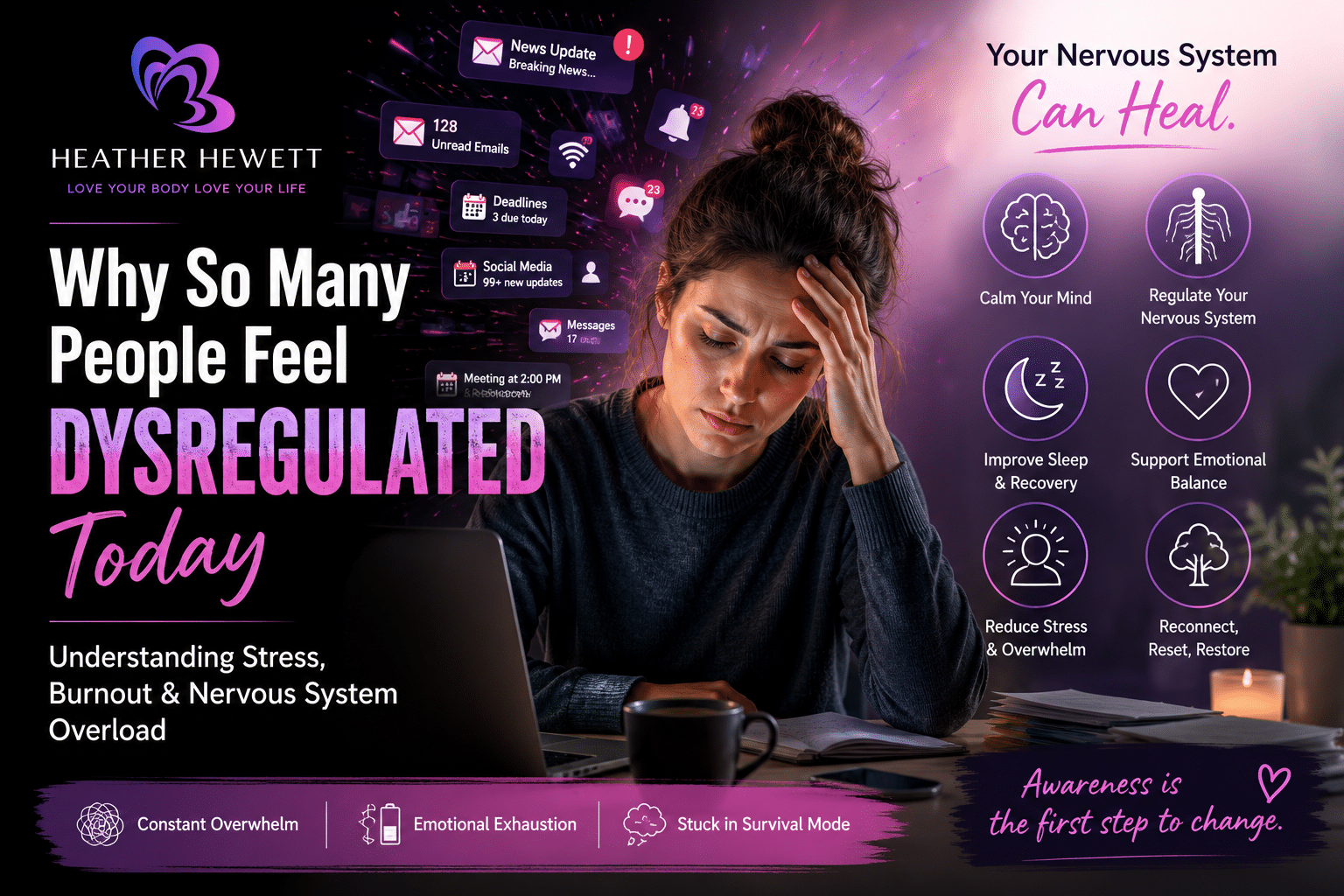
Many people today feel emotionally overwhelmed, mentally exhausted, anxious, numb, or constantly on edge because their nervous systems are overloaded. Dysregulation refers to difficulty managing emotional, mental, or physical responses to stress. Chronic stress, burnout, overstimulation, poor sleep, trauma, and nonstop digital exposure can keep the body stuck in survival mode.
If you’ve been feeling emotionally reactive, emotionally shut down, constantly tired, overstimulated, or unable to fully relax, you are not alone. Modern life places enormous pressure on the nervous system, and more people than ever are experiencing symptoms of nervous system dysregulation without realizing what’s happening.
This article explains why so many people feel dysregulated today, how chronic stress affects the nervous system, and what can help restore emotional balance and mental well-being.
What Does It Mean to Feel Dysregulated?
Feeling dysregulated means the nervous system is struggling to respond to stress in a balanced and healthy way. Instead of returning to calm after stress passes, the body stays stuck in heightened alertness, emotional overwhelm, exhaustion, or shutdown.
A dysregulated nervous system can affect emotions, thinking patterns, physical health, sleep, relationships, and daily functioning.
Common experiences include:
- anxiety
- panic
- emotional overwhelm
- irritability
- brain fog
- emotional numbness
- hypervigilance
- fatigue
- insomnia
- emotional reactivity
Nervous System Dysregulation Explained
The nervous system is designed to help humans survive danger. When stress appears, the body activates protective responses such as fight, flight, or freeze.
These responses are helpful during short-term threats.
The problem begins when stress becomes constant.
According to Polyvagal Theory, developed by Stephen Porges, the nervous system continuously scans for signs of safety or danger. When the brain perceives ongoing stress, the body may remain in survival mode even when immediate danger is no longer present.
This creates chronic nervous system activation.
Emotional Dysregulation and Chronic Stress
Emotional dysregulation happens when emotions become difficult to process, manage, or recover from.
Some people become highly reactive and anxious. Others emotionally shut down and feel disconnected.
Chronic stress can overwhelm the body’s stress response system and increase cortisol levels over time. Eventually, the nervous system struggles to fully rest and recover.
This can contribute to:
- emotional burnout
- nervous exhaustion
- chronic anxiety
- mental fatigue
- emotional instability
- stress overload
Why So Many People Feel Dysregulated Today
Modern life places extraordinary demands on the nervous system. Many people are exposed to constant stimulation, pressure, uncertainty, and emotional stress without enough recovery.
Chronic Stress Never Stops
For many people, stress no longer comes in temporary waves.
It feels nonstop.
Financial pressure, relationship stress, caregiving responsibilities, work deadlines, health concerns, and uncertainty create continuous nervous system activation.
The body was not designed to remain stressed all day, every day.
Over time, chronic stress may contribute to:
- anxiety symptoms
- emotional fatigue
- nervous system imbalance
- burnout symptoms
- emotional reactivity
- panic
- exhaustion
Even during downtime, many people still feel internally tense.
Social Media and Digital Overstimulation
Digital overstimulation is one of the biggest modern causes of nervous system dysregulation.
Social media constantly exposes people to:
- alarming news
- conflict
- comparison
- unrealistic expectations
- emotional intensity
- endless information
Doomscrolling trains the brain to stay alert for danger and stimulation.
Smartphones also reduce quiet recovery time. The brain rarely gets moments without notifications, updates, or distractions.
Over time, digital overload can increase:
- emotional overwhelm
- mental exhaustion
- anxiety and burnout
- sleep disruption
- cognitive overload
- emotional numbness
Burnout Has Become Normalized
Many people are functioning while deeply exhausted.
Burnout often looks like:
- emotional fatigue
- irritability
- brain fog
- low motivation
- chronic tiredness
- emotional shutdown
- feeling detached
- difficulty coping
Modern culture often praises overworking while ignoring emotional health and nervous system recovery.
As a result, people push through stress until the body begins breaking down physically or emotionally.
Many People Are Stuck in Survival Mode
Survival mode happens when the nervous system prioritizes protection over rest, healing, connection, and emotional balance.
People stuck in survival mode may feel:
- constantly anxious
- emotionally reactive
- hypervigilant
- emotionally numb
- disconnected
- exhausted
- unable to relax
This is especially common after long-term stress or trauma.
Trauma expert Bessel van der Kolk explains that trauma can reshape how the body experiences safety and stress.
The nervous system may continue acting as though danger is still present long after stressful experiences end.
Sleep Deprivation and Mental Exhaustion
Sleep plays a critical role in emotional regulation and nervous system healing.
Unfortunately, many people are both overstimulated and sleep-deprived.
Poor sleep increases:
- cortisol
- emotional reactivity
- stress sensitivity
- anxiety symptoms
- mental fatigue
- nervous system exhaustion
Late-night screen exposure, stress, work pressure, and constant phone use can severely disrupt recovery.
Information Overload and Decision Fatigue
The modern brain processes enormous amounts of information every day.
People constantly make decisions about:
- work
- communication
- finances
- schedules
- social media
- news
- purchases
- responsibilities
This cognitive overload drains mental energy.
Decision fatigue can create:
- irritability
- emotional exhaustion
- brain fog
- nervous exhaustion
- reduced focus
The nervous system becomes depleted when it never gets enough recovery time.
Work Stress and Hustle Culture
Always-on work culture keeps many nervous systems chronically activated.
Many people feel pressure to:
- stay productive constantly
- answer messages immediately
- work beyond healthy limits
- optimize every moment
- remain available all the time
This prolonged stress activation can contribute to emotional burnout and nervous system dysregulation.
Pandemic Stress and Collective Anxiety
The pandemic created long-term stress and collective anxiety for millions of people.
Many individuals experienced:
- uncertainty
- grief
- isolation
- financial stress
- health fears
- emotional trauma
Even years later, many nervous systems are still carrying unresolved stress from that period.
Trauma and Emotional Suppression
Unprocessed trauma can deeply affect emotional regulation and nervous system balance.
Emotional suppression also increases dysregulation.
When people constantly ignore, avoid, or minimize their emotions, the nervous system continues carrying stress internally.
Trauma-informed therapy often focuses on helping people safely reconnect with emotions, safety, and emotional regulation skills.
Constant Notifications and Dopamine Overload
Notifications constantly interrupt attention and increase mental stimulation.
The brain becomes conditioned to seek frequent dopamine rewards from:
- social media
- texting
- scrolling
- entertainment
- notifications
This constant stimulation reduces the nervous system’s opportunity to fully calm down and recover.
Common Signs of Nervous System Dysregulation
Symptoms of nervous system dysregulation can affect emotional, physical, cognitive, and behavioral health.
Emotional Symptoms
- Anxiety
- Emotional overwhelm
- Mood swings
- Irritability
- Panic
- Emotional numbness
- Emotional shutdown
- Increased sensitivity
- Emotional reactivity
Physical Symptoms
- Chronic fatigue
- Exhaustion
- Muscle tension
- Digestive issues
- Headaches
- Sleep problems
- Restlessness
- Shallow breathing
- Nervous exhaustion
Cognitive Symptoms
- Brain fog
- Racing thoughts
- Difficulty concentrating
- Mental fatigue
- Cognitive overload
- Memory problems
- Decision fatigue
Behavioral Symptoms
- Doomscrolling
- Social withdrawal
- Overworking
- Emotional avoidance
- Hypervigilance
- Difficulty relaxing
- Increased screen time
How Modern Life Dysregulates the Nervous System
Modern environments expose the nervous system to levels of stimulation humans were never designed to process continuously.
Smartphone Culture and Constant Stimulation
Smartphones remove natural mental pauses.
The brain is constantly interrupted by:
- emails
- notifications
- social media
- news
- messages
- entertainment
Without enough quiet moments, the nervous system struggles to recover from stress.
Doomscrolling and Anxiety
Doomscrolling keeps the brain focused on danger and uncertainty.
The nervous system interprets emotionally intense content as potential threats, increasing stress hormones and emotional overload.
This can increase:
- anxiety
- hypervigilance
- panic symptoms
- emotional dysregulation
Multitasking and Cognitive Overload
The brain is not designed for nonstop multitasking.
Constantly switching attention between tasks increases cognitive fatigue and nervous system activation.
Over time, this contributes to:
- mental exhaustion
- reduced focus
- chronic stress
- emotional burnout
Productivity, Pressure, and Emotional Exhaustion
Many people struggle to rest without guilt.
Modern culture often links self-worth to productivity and achievement.
As a result, the nervous system may stay activated even during free time because the brain never truly feels safe enough to relax.
The Connection Between Trauma, Burnout, and Dysregulation
Trauma, burnout, and nervous system dysregulation are deeply connected.
Burnout is often more than simple tiredness. It can reflect long-term nervous system exhaustion.
Chronic Fight-or-Flight Activation
When the body remains stuck in fight-or-flight mode too long, the nervous system struggles to regulate emotions and stress effectively.
This can create:
- chronic anxiety
- irritability
- insomnia
- panic attacks
- hypervigilance
- emotional instability
Eventually, some people shift into emotional shutdown instead.
Freeze Response and Emotional Numbness
Not everyone responds to stress with visible anxiety.
Some people experience freeze responses, which may look like:
- emotional numbness
- exhaustion
- low motivation
- shutdown
- disconnection
- feeling emotionally detached
Many people incorrectly blame themselves when they are actually overwhelmed.
Trauma Changes the Nervous System
Trauma affects both the brain and body.
Research in neuroscience and trauma-informed therapy suggests unresolved trauma can alter stress responses, emotional regulation patterns, and perceptions of safety.
Healing often requires emotional support as well as nervous system recovery.
How to Regulate a Dysregulated Nervous System
Nervous system healing usually happens gradually through small, consistent changes that reduce overload and increase safety.
Prioritize Sleep Optimization
Sleep is essential for emotional recovery and nervous system regulation.
Helpful strategies include:
- reducing screen time before bed
- maintaining consistent sleep schedules
- limiting caffeine late in the day
- creating calming nighttime routines
- improving sleep environments
Practice Deep Breathing
Slow breathing may help activate the parasympathetic nervous system, which supports rest and recovery.
Simple breathing exercise:
- inhale slowly for 4 seconds
- exhale slowly for 6 seconds
- repeat for several minutes
This can help reduce stress activation and emotional overwhelm.
Use Grounding Techniques
Grounding techniques help reconnect the body to the present moment.
Examples include:
- focusing on physical sensations
- holding something cold
- noticing sounds nearby
- walking outside
- paying attention to breathing
Grounding can help calm overstimulation and emotional overload.
Reduce Digital Overstimulation
Reducing stimulation helps the nervous system recover.
Helpful steps include:
- taking breaks from social media
- limiting doomscrolling
- turning off unnecessary notifications
- creating phone-free periods
- reducing screen exposure at night
Move Your Body Regularly
Movement helps release stress energy stored in the body.
Helpful forms of movement include:
- walking
- stretching
- strength training
- swimming
- dancing
- light exercise
The goal is consistency, not perfection.
Spend Time Outside
Natural light and outdoor environments can support nervous system balance and emotional well-being.
Even short periods outdoors may help reduce stress overload and mental fatigue.
Build Emotional Boundaries
Many dysregulated people are emotionally overstretched.
Healthy boundaries help reduce nervous system strain.
This may involve:
- saying no more often
- reducing people-pleasing
- protecting recovery time
- limiting emotionally draining situations
Consider Therapy or Counseling
Therapy may help address:
- trauma responses
- chronic anxiety
- emotional dysregulation
- burnout recovery
- emotional overwhelm
- nervous system healing
Trauma-informed therapy approaches can be especially supportive for people experiencing long-term survival mode symptoms.
Practice Self-Compassion
Many people blame themselves for struggling emotionally.
But nervous system dysregulation is not weakness.
Often, it is the body’s response to prolonged stress and overload.
Self-compassion can reduce internal pressure and support emotional recovery.
When to Seek Professional Help
Professional support may help when symptoms begin interfering with:
- relationships
- work
- sleep
- emotional wellbeing
- daily functioning
- physical health
Support options may include:
- therapy
- counseling
- medical care
- stress management support
- trauma-informed treatment
- mental health guidance
Medical Disclaimer: This article is for informational purposes only and should not replace professional medical or mental health advice.
Final Thoughts
If you feel emotionally overwhelmed, anxious, exhausted, numb, overstimulated, or unable to relax, your nervous system may be carrying more stress than it can comfortably manage.
Modern life exposes people to constant pressure, emotional overload, digital stimulation, and chronic stress in ways that deeply affect mental and emotional health.
You are not weak for struggling.
Many people today are dealing with nervous system dysregulation without understanding what’s happening inside their bodies.
Healing is possible.
With rest, support, emotional awareness, healthy boundaries, reduced overstimulation, and consistent care, the nervous system can gradually become more balanced again.
Recovery may take time, but improvement is absolutely possible.
Frequently Asked Questions
What does dysregulated mean?
Dysregulated means the nervous system has difficulty managing emotional, mental, or physical stress responses effectively.
Why do I feel emotionally overwhelmed all the time?
Chronic stress, burnout, trauma, overstimulation, poor sleep, and constant digital exposure can overwhelm the nervous system.
Can stress dysregulate the nervous system?
Yes. Long-term stress can keep the body stuck in fight-or-flight activation and increase nervous system dysregulation.
What are the signs of nervous system dysregulation?
Common signs include anxiety, fatigue, brain fog, emotional reactivity, insomnia, panic, irritability, hypervigilance, and emotional numbness.
How long does it take to regulate the nervous system?
Recovery time varies depending on stress levels, lifestyle factors, trauma history, sleep quality, and emotional support systems.
Can burnout affect emotional regulation?
Yes. Burnout can reduce emotional resilience and increase emotional exhaustion, irritability, and mental fatigue.
Is social media causing emotional dysregulation?
Excessive social media use may contribute to overstimulation, anxiety, comparison stress, sleep disruption, and emotional overwhelm.
What happens when the nervous system is overwhelmed?
The body may become stuck in fight, flight, freeze, or shutdown states, affecting emotions, cognition, sleep, and physical health.
How do you calm an overstimulated nervous system?
Helpful strategies include deep breathing, grounding techniques, reducing screen time, sleep optimization, movement, therapy, and emotional boundaries.
Can trauma dysregulate emotions?
Yes. Trauma can affect how the nervous system processes safety, stress, and emotional experiences.
Why is everyone emotionally exhausted today?
Many people are experiencing chronic stress, digital overload, burnout, poor work-life balance, emotional fatigue, and information overload simultaneously.
Can poor sleep worsen anxiety and dysregulation?
Yes. Sleep deprivation increases stress hormones, emotional reactivity, and nervous system exhaustion.
What is survival mode?
Survival mode is a prolonged stress state where the nervous system prioritizes protection over rest, healing, and emotional balance.
Does doomscrolling affect mental health?
Yes. Constant exposure to stressful online content may increase anxiety, hypervigilance, and emotional overload.
Can nervous system regulation improve emotional resilience?
Yes. Consistent stress recovery and emotional regulation practices may improve emotional resilience and overall well-being.