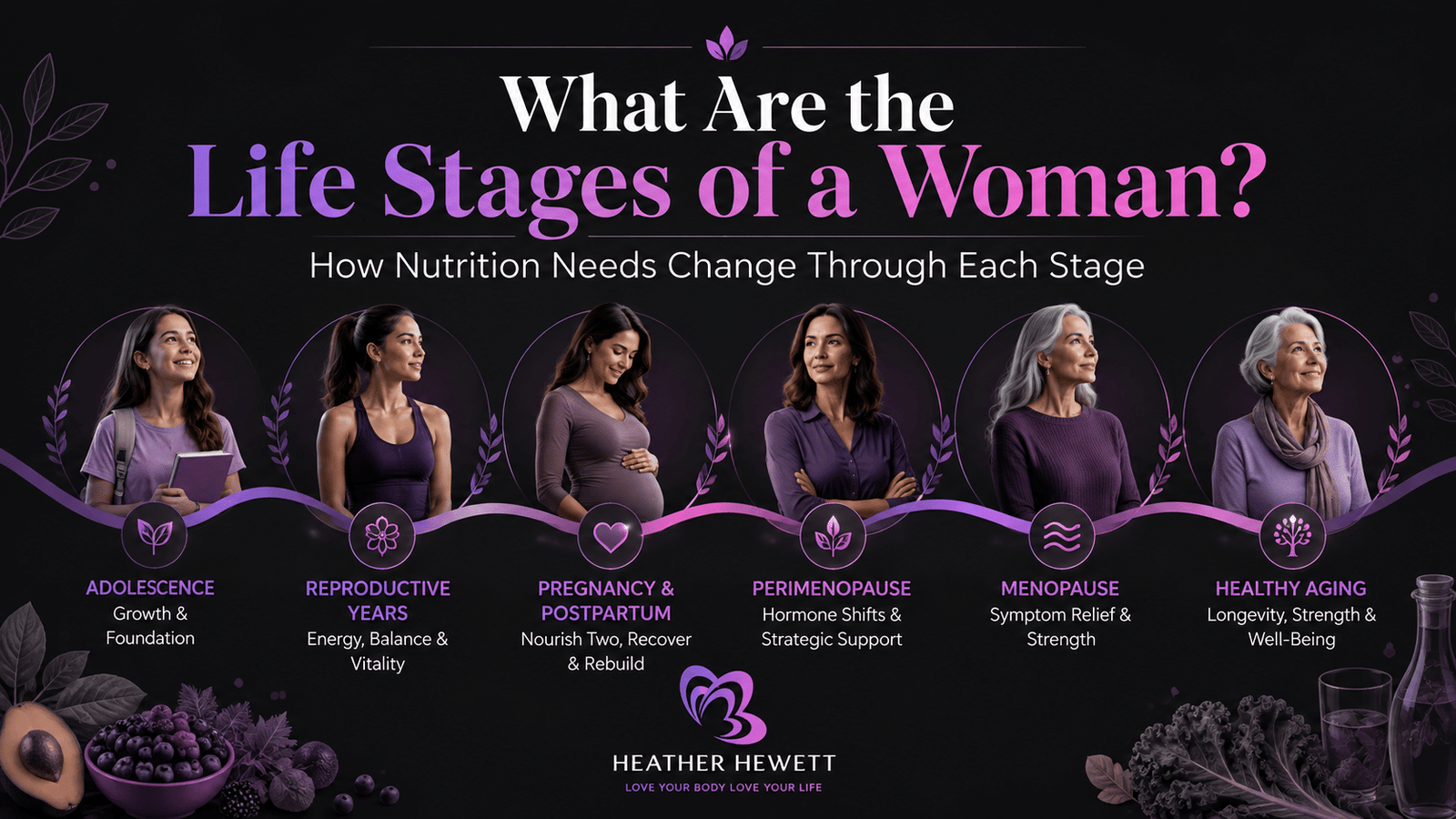
What are the life stages of a woman? There is no single universal classification, but from a women’s health and nutrition perspective, the major stages can be understood as adolescence and puberty, the reproductive years, pregnancy and postpartum when applicable, perimenopause, menopause and postmenopause, followed by later adulthood and healthy aging.
Each stage can change the context in which we think about nutrition. Iron may deserve more attention during menstruating years. Pregnancy creates its own nutritional considerations. Midlife can bring new priorities related to adequate protein, fiber, bone-supportive nutrients, eating patterns, and overall nourishment.
The U.S. Office on Women’s Health also recognizes that women’s nutritional needs can change throughout different stages of life, including pregnancy, breastfeeding, and after menopause. Office on Women’s Health guidance on healthy eating and women
But life stage is only part of the picture.
Two women of the same age can have very different nutritional needs depending on what they currently eat, their activity, digestion, appetite, health history, previous dieting, stress, food preferences, medications, and individual circumstances.
That distinction matters because nutrition through different life stages should provide useful context, not another set of rigid food rules.
What Are the Major Life Stages of a Woman?
A practical way to understand the stages of a woman’s life is:
- Adolescence and puberty
- Reproductive years
- Pregnancy, postpartum, and breastfeeding, when applicable
- Perimenopause
- Menopause and postmenopause
- Later adulthood and healthy aging
These stages are not perfectly separated by age.
A woman may enter perimenopause earlier or later than someone else. Pregnancy is not a stage every woman experiences. Medical history, surgery, medications, reproductive history, and individual physiology can also influence how someone moves through these stages.
This is why I find it more useful to think in terms of life stage plus individual context rather than treating womanhood as a fixed age chart.
Women’s Life Stages and Nutrition at a Glance
| Life Stage | What May Be Changing | Nutrition Priorities That May Deserve Attention |
| Adolescence | Growth, puberty, beginning menstruation | Overall nourishment, protein, iron, calcium, dietary variety |
| Reproductive years | Menstruation, changing routines, possible pregnancy planning | Iron, protein, fiber, meal consistency, overall nutritional adequacy |
| Pregnancy and postpartum | Increased nutritional requirements, recovery, possible breastfeeding | Individual pregnancy and postpartum nutrition with appropriate healthcare guidance |
| Perimenopause | Menstrual changes and the transition toward menopause | Adequate nourishment, protein, fiber, calcium, vitamin D, sustainable eating patterns |
| Menopause and postmenopause | Menstruation ends and bone-health considerations become increasingly relevant | Bone-supportive nutrition, protein, fiber, food variety, adequate nutrients |
| Healthy aging | Changes in appetite, activity, muscle, bone, digestion, or food access may occur | Protein adequacy, hydration, fiber, calcium, vitamin D, nutrient-dense foods, regular meals |
This table is a starting point, not a prescription.
You do not automatically need a supplement, restrictive diet, or completely different way of eating simply because you reach a particular birthday.
Why Do Women’s Nutritional Needs Change Through Life?
Women’s nutritional needs can change because physiology, reproductive status, activity, lifestyle, food intake, and health circumstances can change over time.
Some nutrient recommendations change directly with life stage. Iron is a good example.
Other priorities depend far more on the individual.
Your nutrition needs may also be influenced by:
- how much food you currently eat
- protein intake
- carbohydrate and fat intake
- fruit and vegetable variety
- fiber
- hydration
- digestion
- appetite
- activity
- stress
- sleep
- previous dieting or food restriction
- food preferences
- medications
- health history
- access to food
- your relationship with eating
This is why I do not assume every woman at the same age needs the same nutrition plan.
Life stage helps us understand what may deserve attention. Individual assessment helps determine what actually matters for you.
Adolescence and the Transition Into Adulthood
Adolescence is a period of significant growth and development. It also commonly includes the beginning of menstruation.
That makes adequate energy and nutrient intake especially important.
Protein contributes to normal growth and tissue maintenance, while calcium and vitamin D are important for bone development. Iron becomes increasingly relevant after menstruation begins.
The Office on Women’s Health identifies calcium, vitamin D, and iron among important nutritional considerations during the teenage years.
The goal during this stage should not be creating unnecessary food rules.
A stronger nutritional foundation usually comes from eating enough food, getting a reasonable variety of nutrients, and developing eating habits that can continue into adulthood.
Although this article is primarily written for adult women, adolescence still matters because our nutrition history does not disappear when adulthood begins.
Years of restrictive dieting, inconsistent eating, or anxiety around food can continue to influence eating patterns later in life.
Nutrition During the Reproductive Years
The reproductive years include a wide span of adulthood.
For some women, these years include predictable menstrual cycles. Others may have different menstrual experiences or reproductive circumstances.
Iron Deserves Attention During the Menstruating Years
Iron is needed to make hemoglobin, a protein in red blood cells that helps carry oxygen throughout the body.
The NIH Office of Dietary Supplements lists higher recommended iron intake for adult women ages 19 to 50 than for adults over 50 and identifies teen girls, pregnant women, and women with heavy menstrual periods among groups more likely to have difficulty getting enough iron. NIH Office of Dietary Supplements iron guidance
That does not mean every menstruating woman should automatically take an iron supplement.
Iron supplementation should have an appropriate reason behind it, particularly because too much iron can also be harmful.
Food sources of iron can include meat, seafood, poultry, beans, lentils, fortified foods, nuts, and some vegetables.
Overall Nourishment Still Matters More Than Chasing One Nutrient
Iron receives significant attention during the reproductive years, but good nutrition cannot be reduced to one mineral.
We also need adequate:
- protein
- carbohydrates
- dietary fats
- fiber
- vitamins and minerals
- fluids
- total food intake
Meal consistency can matter too.
For example, a woman who eats very little during the day and experiences strong hunger or cravings in the evening may not need a stricter diet.
It may be more useful to look at whether she is adequately nourished earlier in the day.
This is one reason my approach to nutrition looks at patterns rather than isolated nutrients.
Pregnancy, Postpartum, and Breastfeeding, When Applicable
Pregnancy, postpartum recovery, and breastfeeding can substantially change nutritional requirements, but they are not stages every woman experiences.
Pregnancy involves additional nutritional considerations, including adequate intake of nutrients such as folate, iron, protein, and other vitamins and minerals. The Office on Women’s Health also identifies pregnancy and breastfeeding as periods when nutritional needs may differ from other life stages.
Because pregnancy nutrition involves both maternal and fetal health, individualized medical and nutrition guidance is especially important.
The same principle applies postpartum.
Recovery, breastfeeding, appetite, sleep, meal access, health history, and the practical realities of caring for a newborn can all affect nutrition.
This is not a time to assume that a generic restrictive diet is appropriate.
If you are pregnant, breastfeeding, have recently given birth, or have medical concerns related to pregnancy or postpartum health, work with an appropriately qualified healthcare professional for individualized guidance.
How Does Nutrition Change During Perimenopause?
Nutrition during perimenopause should focus on supporting adequate nourishment and long-term health rather than creating a universal “perimenopause diet.”
Perimenopause is the transition leading up to menopause.
According to the U.S. Office on Women’s Health, perimenopause usually begins during the mid- to late 40s, although timing varies considerably. The transition can involve irregular menstrual cycles and other changes, and women can experience it very differently. Office on Women’s Health menopause and perimenopause guidance
Some women notice significant changes.
Others notice relatively little.
That variability matters.
Nutrition priorities during perimenopause may include reviewing:
- overall food intake
- protein
- fiber
- calcium
- vitamin D
- dietary variety
- hydration
- meal consistency
- appetite
- digestion
- alcohol intake
- eating patterns influenced by stress or sleep changes
The answer is rarely to remove more and more foods simply because perimenopause has begun.
If eating has already become restrictive, adding another long list of “foods to avoid” may make adequate nourishment more difficult rather than easier.
Nutrition During Menopause and Postmenopause
Menopause is reached after 12 consecutive months without a menstrual period when there is no other cause for the absence of menstruation.
After menopause, nutrition continues to support overall health, but several areas may deserve renewed attention.
Calcium and Vitamin D
Calcium is important for the structure of bones, while vitamin D supports calcium absorption.
Bone-health considerations become increasingly important around and after menopause. The Office on Women’s Health notes that women after menopause may need to pay additional attention to calcium and vitamin D as part of bone health.
Food sources of calcium can include dairy foods, fortified dairy alternatives, some fish with edible bones, calcium-set tofu, and certain vegetables.
Whether you need a calcium or vitamin D supplement is a separate question and should not be decided from age alone.
Dietary intake, medical history, medications, laboratory information when appropriate, and individual risk factors can all matter.
Protein and Muscle
Protein remains important throughout adulthood.
As we age, maintaining muscle, strength, mobility, and adequate total food intake becomes increasingly important. That makes protein adequacy worth reviewing, particularly when appetite or food intake has declined.
That does not mean every woman needs the same high-protein diet.
Appropriate intake can depend on body size, physical activity, total energy intake, health status, food preferences, and other individual factors.
Fiber and Dietary Variety
Vegetables, fruits, legumes, whole grains, nuts, seeds, and other fiber-containing foods can contribute to overall dietary quality and digestive health.
Rather than searching for a single “menopause superfood,” I prefer asking a more useful question:
Is your overall eating pattern giving you enough nourishment, variety, protein, fiber, vitamins, and minerals for this stage of your life?
Healthy Aging Nutrition for Women
Healthy aging nutrition is not about eating as little as possible.
In later adulthood, maintaining adequate nourishment can become just as important as thinking about food quality.
Changes in appetite, activity, chewing, digestion, medication use, mobility, food access, or cooking habits may influence what and how much someone eats.
A useful healthy-aging nutrition review may include questions such as:
- Am I eating enough overall?
- Do my meals regularly include protein?
- Am I eating a reasonable variety of foods?
- Are fiber-containing foods included regularly?
- Am I drinking enough fluid?
- Are calcium and vitamin D needs being considered?
- Has my appetite declined?
- Have meals become smaller or less frequent?
- Are digestive difficulties limiting what I eat?
- Have my food rules become increasingly restrictive?
These questions often tell us more than chronological age.
If digestion or food tolerance has become a significant part of your nutrition picture, more focused gut health nutrition support may help you look at food intake, digestive patterns, fiber, hydration, stress, and food restriction together.
At What Age Does a Woman’s Body Change the Most?
There is no single age when every woman’s body changes the most.
Major biological transitions commonly occur around puberty, pregnancy and postpartum for women who experience them, perimenopause, menopause, and later aging.
But the timing and magnitude of those changes vary.
A woman in her 40s may experience substantial perimenopausal changes, while another woman of the same age may experience very few.
Likewise, two women in their 60s can have very different activity levels, appetite, muscle mass, digestion, health histories, medications, and nutritional intake.
Age provides context.
It does not provide a complete nutrition assessment.
How Should Nutrition Change From One Life Stage to Another?
Instead of starting with an age-based diet, I prefer looking at the wider nutrition picture.
1. Start With Nutritional Adequacy
Before worrying about optimizing individual nutrients, ask whether you are eating enough and receiving a reasonable balance of protein, carbohydrates, fats, fiber, vitamins, minerals, and fluids.
Restriction can sometimes disguise itself as “healthy eating.”
A diet can look very disciplined and still leave important nutritional needs unmet.
2. Review Your Current Meal Pattern
Look at when and how you actually eat.
Are meals regularly skipped?
Do you go long periods without food?
Does appetite disappear during stressful days?
Do evenings become the only time you eat enough?
Meal patterns can change through life even when a particular nutrient requirement has not changed dramatically.
3. Add Your Life-Stage Context
Now consider which areas your current stage may make more relevant.
During menstruating years, iron may deserve closer attention.
During perimenopause and after menopause, bone-supportive nutrition may deserve greater attention.
With aging, protein and total nutritional adequacy can become increasingly important.
Life stage helps prioritize the questions.
It does not automatically provide the answers.
4. Look Beyond Individual Nutrients
Digestion, appetite, sleep, emotional eating, food cravings, previous dieting, and your relationship with food can all influence whether nutrition advice is realistic or helpful.
If emotional eating, food cravings, food guilt, or cycles of restriction are a major part of what you are experiencing, my Emotional Eating & Food Cravings Coaching provides more focused support in that area.
Stress can also influence appetite, eating patterns, cravings, and how manageable nutrition feels.
When nervous-system overwhelm or chronic stress is the primary concern, my Nervous System Regulation Coaching offers a more focused space to explore those patterns.
5. Separate Nutrition Questions From Medical Questions
Nutrition can support adequate nourishment and overall wellness.
It should not be used to diagnose unexplained symptoms or replace appropriate medical assessment.
Persistent fatigue, unusual bleeding, major unexplained changes in appetite or weight, significant digestive symptoms, or other concerning changes deserve discussion with an appropriate healthcare professional.
Nutrition support and medical care can complement each other.
They serve different purposes.
Why Two Women at the Same Life Stage May Need Different Nutrition Support
Imagine two women who are both 48 and entering perimenopause.
One eats regular meals, gets a varied diet, remains physically active, has no significant digestive concerns, and feels comfortable around food.
The other regularly skips meals, has dieted for years, avoids several food groups, has recurring digestive discomfort, struggles with evening cravings, and is unsure whether she is getting enough protein, calcium, or food overall.
Their chronological age is the same.
Their nutritional situation is not.
That is why age-based recommendations are most useful as context rather than a complete nutrition plan.
A more useful way to think about nutrition is:
Life stage + current nourishment + individual context = better nutrition decisions.
When Personalized Nutrition Support May Be Helpful
General nutrition education may be enough when you feel well, eat a varied diet, and understand how to adjust your eating as circumstances change.
Personalized nutrition support may become more useful when:
- nutrition advice feels increasingly confusing
- you are entering a new life stage
- your appetite or meal patterns have changed
- you are unsure whether you are eating enough
- you have spent years dieting or restricting foods
- digestion affects what you feel comfortable eating
- stress influences your appetite or cravings
- you are concerned about protein, iron, calcium, or overall nutritional adequacy
- generic age-based advice does not seem to fit your circumstances
When I work with women, I do not assume that reaching a certain age automatically means following a specific diet.
Through my personalized Women’s Health Nutrition Support, we can look at nutrition, life stage, digestion, appetite, eating patterns, stress, dieting history, food preferences, and your relationship with food when those factors are relevant.
For women whose needs require a broader whole-person nutrition assessment, you can also learn about my Clinical Nutrition approach.
The purpose is not to create more rules.
It is to understand which nutrition priorities actually apply to you.
Frequently Asked Questions
What are the life stages of a woman?
A useful health and nutrition framework includes adolescence, reproductive years, pregnancy and postpartum when applicable, perimenopause, menopause and postmenopause, and healthy aging. There is no single universally accepted classification, and individual timing varies.
What are the different stages of womanhood?
Stages of womanhood can be described biologically, socially, or according to age. For nutrition purposes, reproductive and menopausal transitions can be especially useful because they may change which nutritional factors deserve attention.
How do women’s nutritional needs change with age?
Some nutrient requirements change with age or reproductive status, while others depend more on food intake, activity, health, and individual circumstances. Iron, calcium, vitamin D, protein, fiber, and overall nutritional adequacy may deserve different attention at different stages.
What nutrients are important during reproductive years?
Iron can be particularly relevant during menstruating years. Adequate protein, carbohydrates, fats, fiber, vitamins, minerals, fluids, and total food intake are also important. Pregnancy planning or pregnancy introduces additional considerations that should be discussed with an appropriate healthcare professional.
Why is iron especially important for women?
Women who menstruate generally need more iron than after menopause because of menstrual blood loss. Heavy menstrual periods can further increase the likelihood of inadequate iron status. Iron supplementation should not automatically be started without an appropriate reason.
How does nutrition change during perimenopause?
Perimenopause can be a useful time to review overall nourishment, protein, fiber, calcium, vitamin D, dietary variety, meal patterns, hydration, digestion, and other individual needs. There is no single perimenopause diet that every woman needs.
What nutrients are important during menopause?
Protein, calcium, vitamin D, fiber, and overall nutritional adequacy are commonly important considerations around and after menopause. Individual priorities still depend on diet, health, activity, medications, and other circumstances.
Why are calcium and vitamin D important for women?
Calcium contributes to bone structure, while vitamin D supports calcium absorption. Bone health becomes an increasingly important consideration around and after menopause, but supplementation decisions should still be individualized.
Do women need more protein as they age?
Protein deserves continued attention as maintaining muscle and strength becomes increasingly important with age. That does not mean every older woman needs the same protein target. Appropriate intake depends on overall diet, activity, body size, health, and individual circumstances.
At what age does a woman’s body change the most?
There is no universal age. Puberty, pregnancy and postpartum when applicable, perimenopause, menopause, and later aging can all involve significant changes. Their timing and impact vary from woman to woman.
Does every woman need supplements as she gets older?
No. Age alone does not determine whether supplements are necessary. Food intake, medical history, medications, laboratory findings when appropriate, and individual nutrient requirements should help guide those decisions.
How can women support healthy aging through nutrition?
Start with adequate nourishment, regular protein-containing foods, dietary variety, fiber, fluids, and appropriate vitamins and minerals. Sustainable eating patterns and individualized guidance can become more valuable as health, appetite, activity, or nutritional needs change.
The Most Important Principle to Remember
Your nutritional needs can change as your life changes.
But your age is only one piece of information.
The most useful nutrition approach considers life stage alongside what you actually eat, appetite, digestion, activity, health history, stress, previous dieting, food preferences, and your relationship with food.
General life-stage guidance can help you understand what may deserve attention.
Personalized nutrition support can help determine what actually applies to you.
If general nutrition advice no longer feels specific enough for what you are experiencing, you can book a free consultation so we can talk about your concerns, goals, and whether personalized support feels like an appropriate next step.
My nutrition and wellness services are educational and supportive and are not substitutes for medical diagnosis or treatment.