
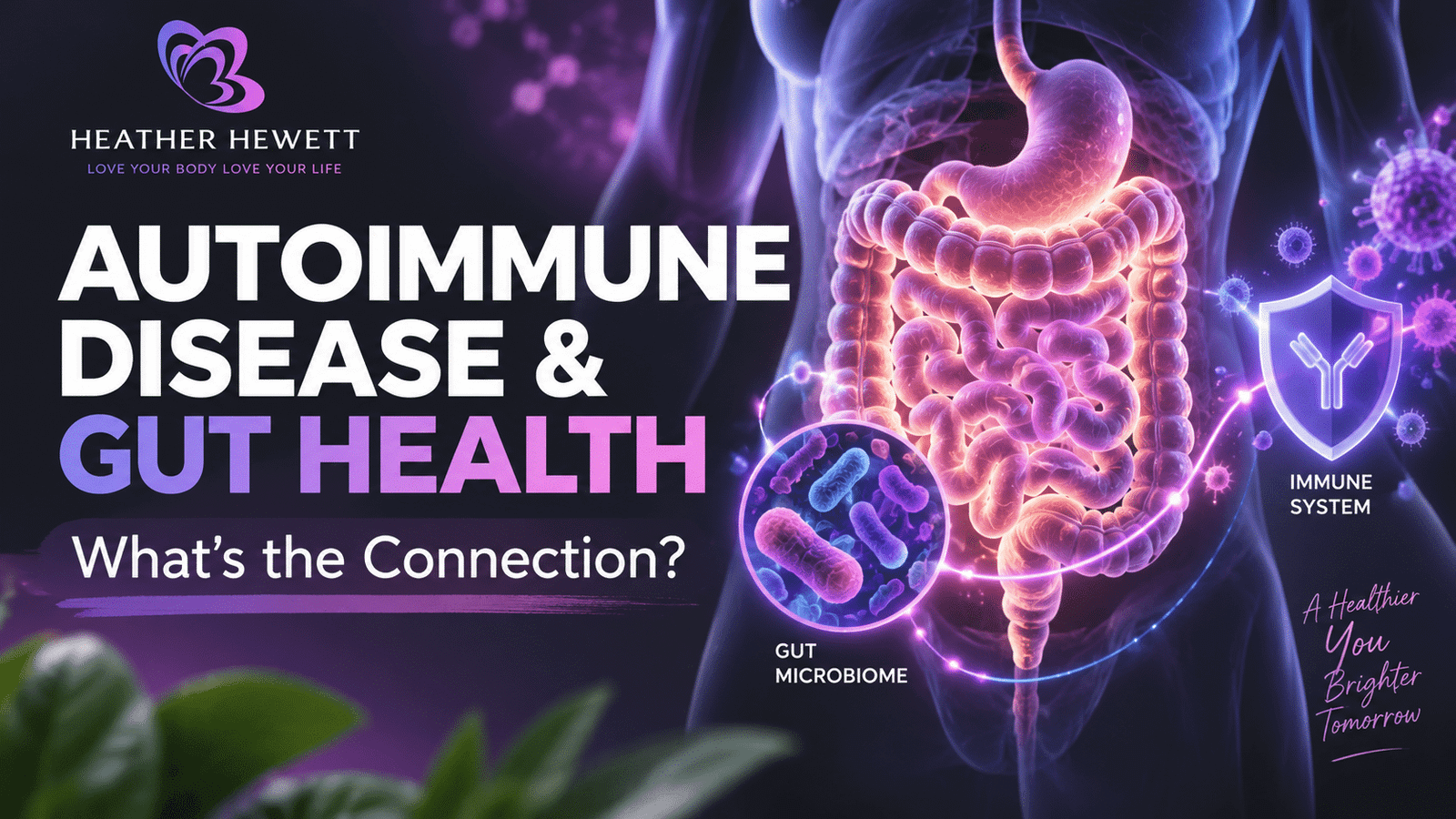
There is a real and growing scientific interest in the relationship between gut health, the gut microbiome, and autoimmune disease. But the connection is more complicated than many online health claims make it sound.
Research suggests that the gut microbiome interacts closely with the immune system and that changes in microbial communities are associated with several autoimmune conditions. Scientists are studying how these changes may influence immune regulation, inflammation, treatment response, and disease activity. A 2024 review in Immunological Reviews describes the gut microbiome as an important factor in the complex interaction between microbes, the immune system, and autoimmune disease.
What the research does not prove is that every autoimmune disease is caused by poor gut health or that “healing your gut” will cure an autoimmune condition.
That distinction matters.
Your gut is part of the bigger picture. Your food, digestion, immune system, stress, sleep, medications, lifestyle, and individual health history all interact in ways that cannot be reduced to one food, one supplement, or one “gut healing” protocol.
Is There a Connection Between Gut Health and Autoimmune Disease?
Yes. Researchers have found meaningful relationships between the gut microbiome and several autoimmune diseases, although the exact mechanisms and clinical significance differ between conditions.
The gut microbiome is the community of microorganisms living throughout your digestive tract. It includes bacteria, viruses, fungi, archaea, and other microorganisms.
These organisms do much more than help digest food.
They interact with the intestinal environment and communicate with the immune system through microbial components and metabolites. Researchers are increasingly studying these interactions because the gut is one of the major places where the body continually encounters substances from the outside world.
A 2025 systematic review and meta-analysis found associations between changes in the gut microbiota and multiple autoimmune diseases and examined possible links involving intestinal permeability and immune regulation. The authors also noted that the evidence base has important limitations and that more research is needed to understand cause and effect.
So the connection is real enough to warrant serious research.
But it is not simple.
How Does the Gut Microbiome Interact With the Immune System?
One reason gut health matters is that the digestive tract and immune system are constantly interacting.
The gut is an important immune environment
Your digestive tract is not simply a tube where food passes through.
It contains a large amount of immune tissue and sits at the boundary between your internal environment and the outside world.
Your body needs to distinguish between:
- harmless food components
- beneficial microorganisms
- potentially harmful organisms
- signals that should trigger an immune response
The gut microbiome participates in this environment.
Research suggests that microbial communities and their metabolites can influence immune cells and processes involved in immune regulation.
This is one reason researchers are interested in the gut microbiome in autoimmune conditions.
Microbial metabolites matter too
Gut bacteria produce metabolites as they interact with the foods and other substances available in the digestive tract.
One group that receives considerable attention is short-chain fatty acids, including acetate, propionate, and butyrate.
These metabolites can interact with cells in the gut and influence immune-related processes.
That does not mean eating one particular food will automatically increase a specific “good” bacterium or switch off inflammation.
Human microbiome biology is considerably more complicated than that.
The research is about interactions across an ecosystem, not a simple “good bacteria versus bad bacteria” model.
What Does Dysbiosis Mean?
You may see the word dysbiosis frequently in articles about autoimmune disease.
Dysbiosis generally refers to an alteration or disruption in the composition or function of the microbial community.
Researchers have observed differences in gut microbial communities among people with several autoimmune diseases compared with healthy controls.
A 2024 review examining seven autoimmune diseases found disease-specific and potentially shared changes in the gut microbiome, while a later systematic review also identified recurring associations between microbiome alterations and autoimmune conditions.
This brings us to an important point:
Finding a difference in someone’s microbiome does not automatically tell us whether that difference caused the disease, resulted from the disease, or developed alongside other factors.
Disease, diet, medications, geography, lifestyle, genetics, and other variables can influence the microbiome.
That is why microbiome research needs to be interpreted carefully.
What Does “Leaky Gut” Actually Mean?
“Leaky gut” is one of the most commonly used phrases in online autoimmune nutrition discussions.
The more precise scientific term is increased intestinal permeability.
Your intestinal lining acts as a selective barrier. It helps regulate what passes between the contents of the digestive tract and the body’s internal environment.
Researchers have investigated intestinal permeability in several diseases, including autoimmune and gastrointestinal conditions. But the evidence does not justify turning “leaky gut” into a universal explanation for autoimmune disease. Harvard Health has also cautioned against assuming that increased intestinal permeability automatically explains symptoms or systemic illness.
So there is an important difference between:
“Increased intestinal permeability has been associated with some health conditions.”
and:
“Leaky gut is the cause of autoimmune disease.”
The first can be investigated scientifically.
The second is a much broader claim than current human evidence supports.
That distinction is especially important when evaluating online gut-healing advice.
What Does Gut Health Have to Do With Inflammation?
The relationship appears to involve several connected systems rather than one simple pathway.
The gut microbiome interacts with the intestinal barrier, immune cells, microbial metabolites, and dietary components.
When researchers study autoimmune disease, they may find changes in microbial communities, inflammatory signaling, immune regulation, or microbial metabolites.
For example, current research has examined microbiome changes in systemic lupus erythematosus, rheumatoid arthritis, and multiple sclerosis. Reviews of these conditions continue to identify associations between gut microbial changes and disease-related processes, while also stressing that much of the evidence remains observational or mechanistic.
This is especially important when reading claims about “gut inflammation.”
A person may have digestive symptoms, altered bowel habits, bloating, or food intolerance without those symptoms being a direct measure of autoimmune disease activity.
Symptoms matter.
But they still need context.
Which Autoimmune Conditions Have Been Studied?
The gut microbiome has been investigated across numerous autoimmune and immune-mediated diseases.
Research includes conditions such as:
- Rheumatoid arthritis
- Multiple sclerosis
- Systemic lupus erythematosus
- Type 1 diabetes
- Inflammatory bowel disease
- Spondyloarthritis
- Autoimmune thyroid conditions, including Hashimoto’s
However, the amount and quality of evidence are not equal across these conditions.
For example, rheumatoid arthritis research has explored the relationship between gut microbes and immune activity, while studies in lupus and multiple sclerosis have also reported microbiome differences associated with disease-related outcomes.
That does not mean the same nutrition strategy should be applied to all of them.
This is one place where condition-specific knowledge matters.
Can Diet Support Gut Health?
Yes. Diet is one of the factors that influences the gut environment.
But supporting gut health is usually less about finding one magical food and more about creating a dietary pattern that provides adequate nutrients and a useful variety of foods.
Fiber and dietary diversity
Many types of dietary fiber are used by gut microorganisms.
Fiber-rich foods can include vegetables, fruits, legumes, whole grains, nuts, and seeds, depending on the individual’s tolerance and health needs.
That does not mean everyone should suddenly consume a huge amount of fiber.
If your digestion is sensitive, increasing fiber dramatically may not be the best first step.
The useful question is:
What amount and variety can your body comfortably handle right now?
Whole foods and minimally processed foods
A diet centered around a variety of minimally processed foods can provide fiber, vitamins, minerals, and other compounds that interact with the gut environment.
This is one reason a broad whole-food pattern can be a useful foundation before someone starts experimenting with increasingly restrictive protocols.
It gives you something to build from.
You do not always need to begin by taking foods away.
For readers who are also interested in the broader role of diet in autoimmune disease, the guide on can diet help autoimmune disease? is a useful next step.
Fermented foods and probiotics
Some fermented foods contain live microorganisms, depending on how they are produced and stored.
Examples include certain yogurts, kefir, sauerkraut, kimchi, and other fermented foods.
But fermented foods are not automatically appropriate for everyone.
Some people tolerate them comfortably. Others may find that certain products aggravate digestive symptoms.
Probiotic supplements deserve similar caution.
A systematic review of 80 randomized controlled trials found that gut microbiota-based interventions showed possible benefits for symptoms or inflammatory outcomes in several autoimmune and rheumatic diseases, but results varied considerably by condition and intervention.
In other words, “take a probiotic” is not a universal gut-health prescription.
What About an Anti-Inflammatory Diet?
This is another place where people often get conflicting advice.
An anti-inflammatory eating pattern generally focuses on overall dietary quality rather than a long list of forbidden foods.
That may include vegetables, fruits, fiber-rich foods, fish, healthy fats, and minimally processed foods while reducing the dominance of highly processed foods.
It is different from an elimination protocol.
That distinction matters if you have autoimmune disease and are trying to understand what approach makes sense for you.
You can read more about the evidence and practical application in anti-inflammatory diet for autoimmune disease.
The goal is not to build the most restrictive diet.
The goal is to build a nutritious pattern that makes sense for your body and your circumstances.
Do You Need an Elimination Diet?
Not necessarily.
This is where autoimmune and gut-health conversations can become unnecessarily restrictive.
A person may experience digestive symptoms and immediately find advice telling them to remove gluten, dairy, sugar, grains, legumes, nightshades, eggs, nuts, seeds, and anything else that has ever been associated with someone’s symptoms.
But removing more foods is not automatically the same as improving gut health.
Your nutritional needs still matter.
Your relationship with food matters.
Your energy and capacity to prepare meals matter.
Your symptoms matter.
And whether you actually have a consistent, repeatable reason to investigate a particular food matters.
The AIP diet is one example of a structured elimination approach. For readers considering that route, what the AIP diet is and whether it helps autoimmune conditions explains the elimination and reintroduction process in more detail.
Elimination can be useful in certain circumstances.
It should not automatically become the starting point for everyone.
Why Personalized Gut and Autoimmune Nutrition Matters
This is the part of gut-health advice that often gets lost.
Your gut does not exist separately from the rest of your life.
Heather M. Hewett’s approach is built around looking at that bigger picture.
Her personalized autoimmune nutrition support considers current food intake, nutritional adequacy, digestion, food tolerance, fiber, hydration, dietary variety, eating patterns, stress, sleep, relationship with food, and everyday life rather than automatically starting with a rigid autoimmune diet.
Her approach to personalized gut health nutrition support follows the same broader philosophy, looking at digestion, microbiome nutrition, nervous-system awareness, stress, food relationship, and individual circumstances rather than assuming that every person needs another elimination diet.
That is where Heather’s personal positioning becomes particularly relevant.
Her work combines clinical nutrition with a whole-person perspective. She also has a background in nervous-system awareness, health coaching, holistic wellness, and trauma-informed somatic work. Her published background identifies her as a Board Certified Traditional Naturopath, Clinical Nutritionist, Holistic Health Practitioner, Health Coach, and Somatic Trauma-Informed practitioner. (Heather’s professional background)
That broader perspective does not mean every digestive symptom is caused by stress.
It means stress, sleep, emotional patterns, eating behaviors, and daily capacity can all be relevant parts of a nutrition plan when they are relevant to the individual.
A technically perfect meal plan is not very helpful if you cannot consistently live it.
Gut Health Is More Than a Supplement
One of the easiest ways to get lost in gut-health content is to reduce the entire subject to supplements.
You may see claims about probiotics, prebiotics, digestive enzymes, antimicrobials, herbal protocols, gut-healing powders, and dozens of other products.
Some interventions have legitimate uses in particular circumstances.
But there is no universal supplement stack that every person with autoimmune disease needs.
Current research is increasingly interested in microbiome-targeted therapies, but scientists are still working to understand which interventions may benefit which patients and conditions. The 2024 Immunological Reviews article highlights exactly this complexity, describing the interactions among the microbiome, immune system, medications, and autoimmune disease as a developing area of precision medicine research.
That uncertainty is not a reason to ignore the microbiome.
It is a reason to avoid exaggerated certainty.
What Can You Do to Support Your Gut?
You do not need to completely redesign your diet overnight.
A more useful starting point is to ask what is already working and where there may be gaps.
Eat a variety of foods you tolerate
Dietary variety gives you access to a broader range of nutrients and substrates for the gut microbiome.
The goal is not to maximize the number of foods at any cost.
The goal is to find a healthy range that works for you.
Gradually work on fiber when appropriate
Vegetables, fruits, legumes, whole grains, nuts, and seeds can contribute dietary fiber.
If your digestion is sensitive, increase variety and fiber thoughtfully rather than making a dramatic overnight change.
Pay attention to meal consistency
Skipping meals and then becoming extremely hungry can affect the way eating feels and may make it harder to notice meaningful patterns.
Regular nourishment can be more useful than constantly chasing the perfect food.
Notice patterns without becoming afraid of food
If a food repeatedly seems to cause symptoms, write down what happened.
Look for patterns.
Avoid assuming that one difficult day proves that a particular food is harmful forever.
And avoid removing additional foods simply because symptoms remain unexplained.
Consider your whole context
Ask yourself:
Are you sleeping adequately?
Are you eating enough?
Are you constantly under stress?
Has your diet become extremely restrictive?
Is digestion making it hard to eat enough variety?
Are you relying heavily on supplements because food has become confusing?
These questions can be just as important as asking which food contains the most probiotics.
When Should You Look for Personalized Nutrition Support?
Individualized nutrition support can make sense when gut symptoms keep returning, food has become confusing, you have accumulated multiple dietary restrictions, or you are unsure how to improve nutrition without making your diet smaller.
Heather’s approach is particularly focused on this gap.
Through online autoimmune nutrition support, she helps clients look at the bigger nutrition picture rather than automatically assigning a restrictive protocol.
That includes considering nourishment, digestion, food tolerance, dietary patterns, stress, nervous-system awareness, and real-life sustainability where relevant.
This can be especially useful for someone who has already tried several diets and is tired of being told that the answer is simply to remove another food.
Sometimes the next step is not another restriction.
Sometimes it is better information.
For readers whose autoimmune concerns specifically involve Hashimoto’s, Heather’s Hashimoto’s nutrition guide can provide more condition-specific context around food and nutrition.
The Bottom Line
The connection between autoimmune disease and gut health is real enough to be an important area of scientific research.
The gut microbiome interacts with the immune system, intestinal environment, and microbial metabolites, and researchers have found associations between microbiome changes and several autoimmune diseases.
But there is still much we do not know.
A diagnosis does not automatically mean your gut is “broken.”
Digestive symptoms do not automatically prove that you have increased intestinal permeability.
And you do not need to eliminate every food that has ever appeared on an autoimmune diet list.
A better approach is to look at the whole picture.
What are you eating?
Are you getting enough nourishment and variety?
How is your digestion?
Are there consistent food-tolerance patterns?
What role are stress, sleep, and daily life playing?
And are your nutrition strategies helping you feel more informed, or simply making your diet smaller and more stressful?
That whole-person perspective is at the center of Heather M. Hewett’s work. Her autoimmune nutrition support combines personalized nutrition with attention to digestion, food tolerance, stress, nervous-system patterns, relationship with food, and real-life sustainability.
You are not just a microbiome.
And you are certainly not just a food list.
For individualized support, explore Heather’s online autoimmune nutrition support.
Frequently Asked Questions
What is the connection between gut health and autoimmune disease?
The gut microbiome interacts with the immune system and intestinal environment, and researchers have found associations between altered gut microbial communities and several autoimmune conditions. However, the exact relationship varies by disease, and current research does not show that poor gut health is the single cause of autoimmune disease.
Can gut health affect autoimmune disease?
Gut health may influence immune regulation and inflammation-related processes, but the relationship is complex. Researchers are investigating how microbial communities, metabolites, intestinal barrier function, genetics, environment, and other factors interact in autoimmune disease.
Does poor gut health cause autoimmune disease?
Current evidence does not support the simple claim that poor gut health causes all autoimmune disease. Studies have identified associations between microbiome changes, intestinal permeability, and autoimmune conditions, but association does not establish a single cause-and-effect pathway in humans.
What is leaky gut?
“Leaky gut” is a common term for increased intestinal permeability, meaning that the intestinal barrier is more permeable than expected. Increased permeability has been associated with certain health conditions, but current evidence does not establish that it universally causes autoimmune disease.
What foods support gut health?
Foods that provide fiber and dietary variety can support a healthy gut environment. Depending on tolerance, these may include vegetables, fruits, legumes, whole grains, nuts, seeds, and some fermented foods. The overall dietary pattern matters more than relying on one specific “gut-healing” food.
Should people with autoimmune disease take probiotics?
Not necessarily. Probiotic effects can vary by strain, product, condition, and individual. Research is promising in some areas, but probiotics should not be treated as a universal requirement for everyone with autoimmune disease.
Do I need an elimination diet to improve my gut health?
No. An elimination diet may be useful in certain circumstances, but it is not automatically necessary for everyone with digestive symptoms or autoimmune disease. Unnecessary restriction can reduce dietary variety and make it harder to meet nutritional needs.
Can stress affect gut health?
Yes. Stress can affect digestion, appetite, eating patterns, and the gut-brain connection. This does not mean stress causes autoimmune disease, but stress and nervous-system patterns can be relevant parts of a person’s overall nutrition and digestive picture when appropriate.
Can an autoimmune nutritionist help with gut health?
An appropriately qualified nutrition professional can help you examine dietary patterns, nutritional adequacy, digestion, food tolerance, and practical factors that may be relevant to your situation. Heather’s approach combines personalized nutrition with a whole-person perspective rather than automatically prescribing a restrictive diet.