

Chronic stress symptoms happen when your body stays in a constant state of pressure without enough recovery time. It can affect your energy, mood, digestion, sleep, and eating habits.
If you feel tired, anxious, or mentally drained most of the time, your body may be under ongoing stress. This is not just mental, it’s a full-body response driven by your nervous system.
What Is Chronic Stress?
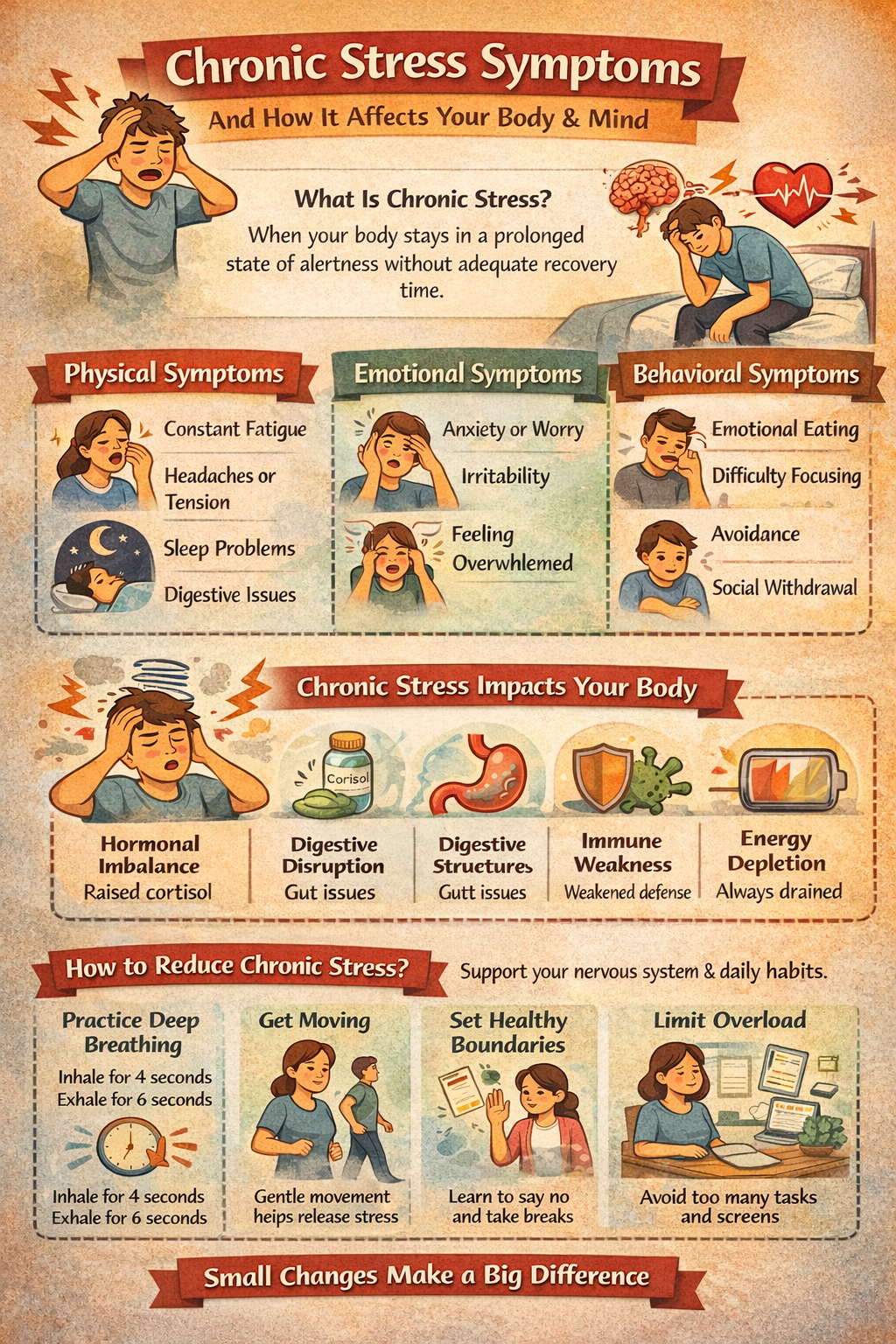
Chronic stress is when your body remains in a prolonged state of alertness without returning to rest.
Chronic stress is a long-term activation of your stress response system, even when there is no immediate threat.
Instead of switching off, your body stays “on,” making it harder to feel calm or energized.
What Are the Symptoms of Chronic Stress?
Chronic stress affects your body, mind, and behavior.
Physical Symptoms
- Constant fatigue
- Headaches or tension
- Sleep problems
- Digestive issues
Emotional Symptoms
- Anxiety or worry
- Irritability
- Feeling overwhelmed
- Difficulty relaxing
Behavioral Symptoms
- Emotional eating
- Difficulty focusing
- Avoidance
- Social withdrawal
These are coping responses, not failures.
How Does Chronic Stress Affect the Body?
Long-term stress impacts multiple systems.
Hormonal Imbalance
High cortisol disrupts sleep, energy, and cravings.
Digestive Disruption
Stress slows digestion and reduces nutrient absorption.
Immune System Impact
Chronic stress weakens immune function.
Energy Depletion
Constant activation leads to burnout.
How Does Stress Affect Eating Habits?
When stressed, your body looks for quick energy.
You may notice:
- Sugar cravings
- Emotional eating
- Irregular hunger
- Overeating or undereating
This is your body trying to regulate itself.
What Is the Role of the Nervous System?
Your nervous system controls how you respond to stress.
- Stress state → fight or flight
- Calm state → rest and digest
When stress is constant, your body stays in survival mode.
This makes it harder to relax, recover, or feel balanced.
Why Is Chronic Stress Easy to Miss?
Chronic stress builds slowly.
You may get used to feeling:
- Always tired
- Slightly anxious
- Constantly busy
It becomes your normal, even when it’s not healthy.
Why Is It Hard to Relax?
If you struggle to relax, there’s a reason.
When your body doesn’t feel safe, it won’t easily switch off. This is why rest can feel uncomfortable.
Your body needs safety, not pressure.
How to Reduce Chronic Stress Naturally
Focus on supporting your body.
1. Breathing Techniques
Inhale for 4 seconds, exhale for 6 seconds.
2. Gentle Movement
Walking, stretching, or gentle movement helps release stress
3. Emotional Awareness
Ask:
- “What am I feeling?”
- “What do I need?”
4. Reduce Overload
Set boundaries and avoid overcommitting.
A Simple Daily Stress Recovery Routine
Morning
- Breathing
- Light movement
Midday
- Break
- Body check-in
Evening
- Reduce screen time
- Relaxation
Consistency matters more than intensity.
Common Mistakes When Managing Stress
- Ignoring body signals
- Pushing through exhaustion
- Expecting quick results
- Doing too much at once
Recovery takes time.
Long-Term Stress Recovery
Focus on:
- Better sleep
- Balanced nutrition
- Sustainable habits
- Emotional awareness
This supports long-term regulation.
When to Seek Support
If stress feels:
- Constant
- Overwhelming
- Disruptive to daily life
Support can help you feel more stable.
How Coaching Can Support Stress Recovery
With the right support, you can:
- Understand your stress patterns
- Regulate your nervous system
- Build sustainable habits
- Improve your relationship with food and emotions
Final Thoughts
Chronic stress affects your whole system, not just your mind.
But your body can recover.
With the right support and consistent habits, you can feel calmer, more energized, and more balanced.
FAQs
What are the symptoms of chronic stress?
Fatigue, anxiety, sleep issues, and emotional overwhelm are common.
How does chronic stress affect the body?
It impacts hormones, digestion, energy, and immunity.
Can stress cause digestive issues?
Yes, it can slow digestion and cause discomfort.
How do I recover from chronic stress?
Focus on nervous system support, rest, and daily habits.
Is chronic stress dangerous?
If unmanaged, it can lead to long-term health issues.