
Gut brain connection is the link between your digestive system and your mental and emotional health. Your gut directly influences your mood, stress levels, and overall well-being through constant communication with your brain.
If you experience anxiety, brain fog, or mood swings alongside digestive issues, it’s not random. Your gut and brain are deeply connected.
What Is the Gut-Brain Connection?
The gut-brain connection, also known as the gut-brain axis, is a two-way communication system between your gut and your brain.
The gut-brain connection is how your digestive system and brain send signals to each other through nerves, hormones, and chemical messengers.
This means:
- Your brain affects digestion
- Your gut affects mood and emotions
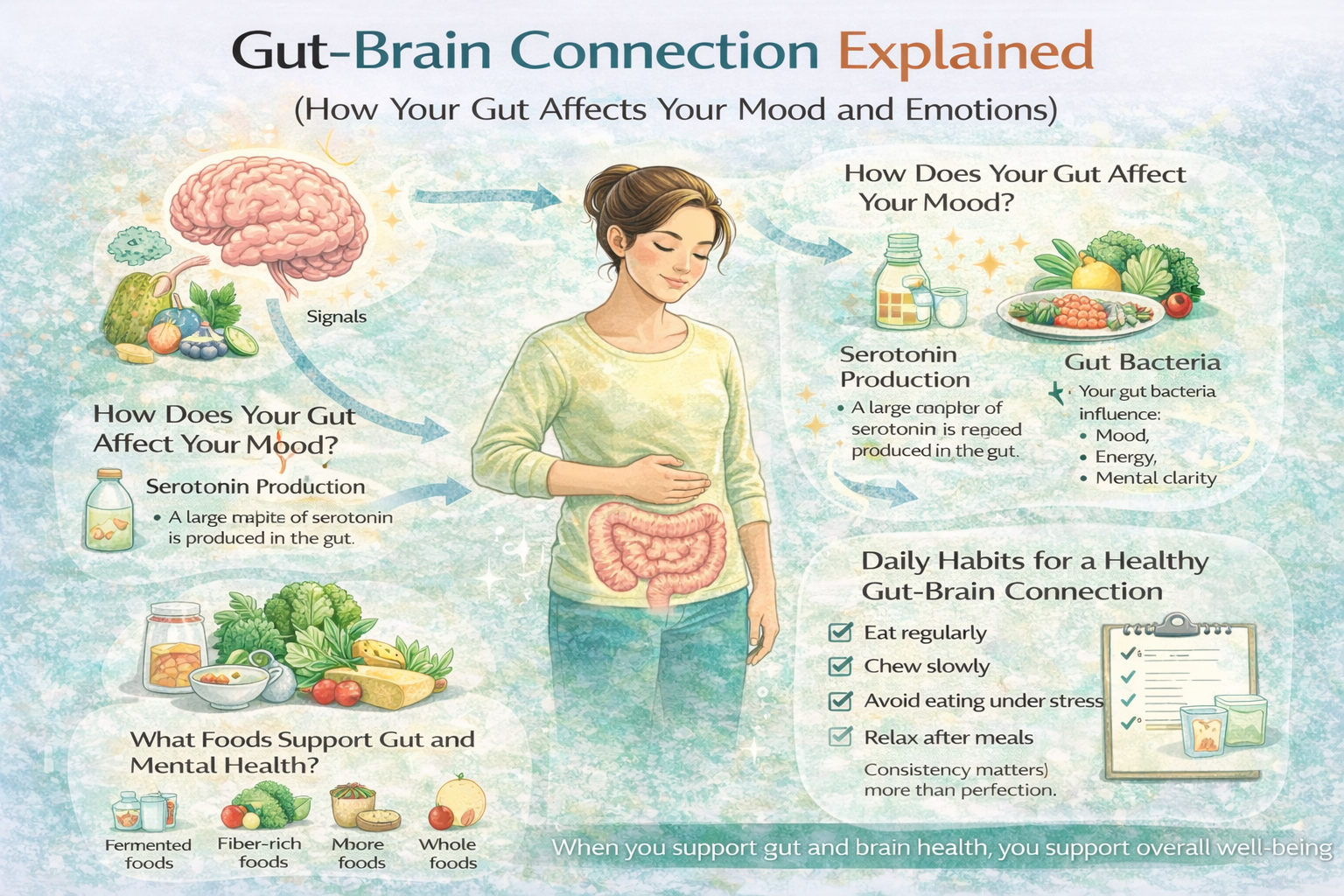
How Does the Gut Affect Your Mood?
Your gut plays a key role in emotional regulation.
Serotonin Production
A large portion of serotonin (a mood-regulating chemical) is produced in the gut.
Gut Bacteria
Your gut bacteria influence:
- Mood
- Energy
- Mental clarity
When your gut is balanced, your mood feels more stable.
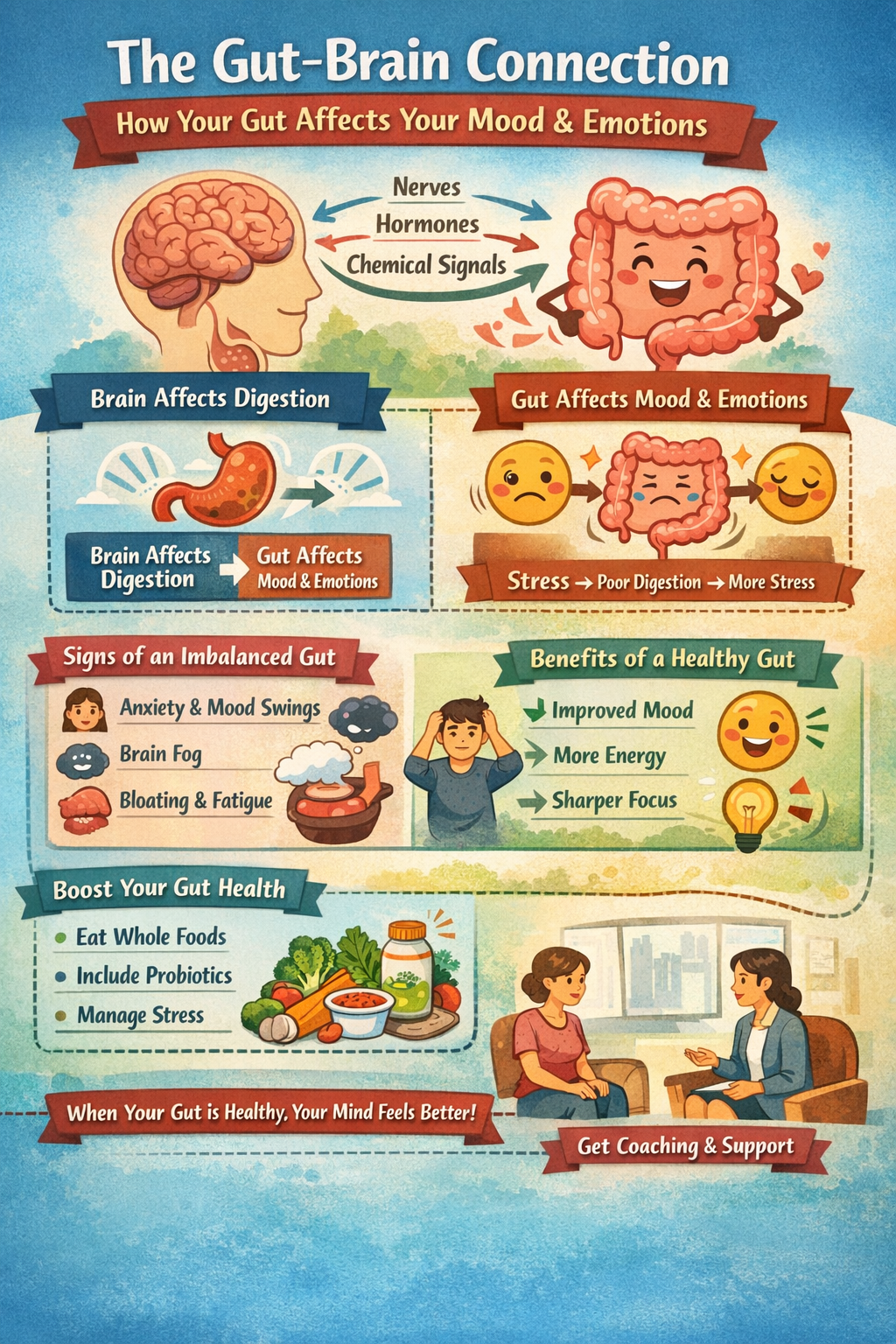
What Are the Signs Your Gut Is Affecting Your Mental Health?
You may notice both physical and emotional symptoms.
Physical Signs
- Bloating
- Digestive discomfort
- Low energy
Emotional Signs
- Anxiety
- Mood swings
- Brain fog
- Difficulty focusing
These often appear together.
How Does Stress Affect the Gut-Brain Connection?
Stress disrupts gut health.
When stressed:
- Cortisol increases
- Digestion slows
- Gut balance changes
This creates a cycle:
Stress → Poor digestion → More stress
What Role Does the Nervous System Play?
Your nervous system connects your gut and brain.
When your body feels safe:
- Digestion improves
- Nutrients are absorbed
- Your body feels balanced
When stressed:
- Digestion slows
- Discomfort increases
- Your body focuses on survival
How Does This Connection Affect Eating Habits?
The gut-brain connection influences how you eat.
You may notice:
- Cravings
- Emotional eating
- Irregular hunger signals
This is your body trying to regulate itself.
Why Do Gut Issues Lead to Emotional Eating?
When your gut is out of balance:
- Your body feels unstable
- Cravings increase
- Hunger signals become unclear
This is not about control, it’s about regulation.
How to Improve Gut Health Naturally
Support your body with simple habits.
1. Eat Whole Foods
Focus on:
- Vegetables
- Fruits
- Whole grains
- Healthy fats
2. Include Fiber
Supports healthy gut bacteria.
3. Stay Hydrated
Water supports digestion.
4. Regulate Your Nervous System
Stress management is essential.
What Foods Support Gut and Mental Health?
- Fermented foods → support gut bacteria
- Fiber-rich foods → improve digestion
- Whole foods → support overall balance
Daily Habits for a Healthy Gut-Brain Connection
- Eat regularly
- Chew slowly
- Avoid eating under stress
- Relax after meals
Consistency matters more than perfection.
When Should You Seek Support?
If you experience:
- Ongoing digestive issues
- Fatigue
- Mood changes linked to digestion
Support can help you break the cycle.
How Coaching Can Support Gut and Emotional Health
With the right support, you can:
- Understand root causes
- Improve nervous system regulation
- Build supportive habits
- Strengthen body awareness
Final Thoughts
Your gut and brain are deeply connected.
When your gut is supported, your mood, energy, and emotional stability improve.
Supporting both together creates lasting change.
FAQs
What is the gut-brain connection?
It’s the communication system between your gut and brain that affects mood and health.
Can gut health affect anxiety?
Yes, gut imbalance can contribute to anxiety and mood changes.
How do I improve gut health naturally?
Focus on whole foods, fiber, hydration, and stress support.
Does stress affect digestion?
Yes, stress slows digestion and disrupts gut balance.
Can gut health impact mood?
Yes, your gut plays a key role in regulating mood-related chemicals.