
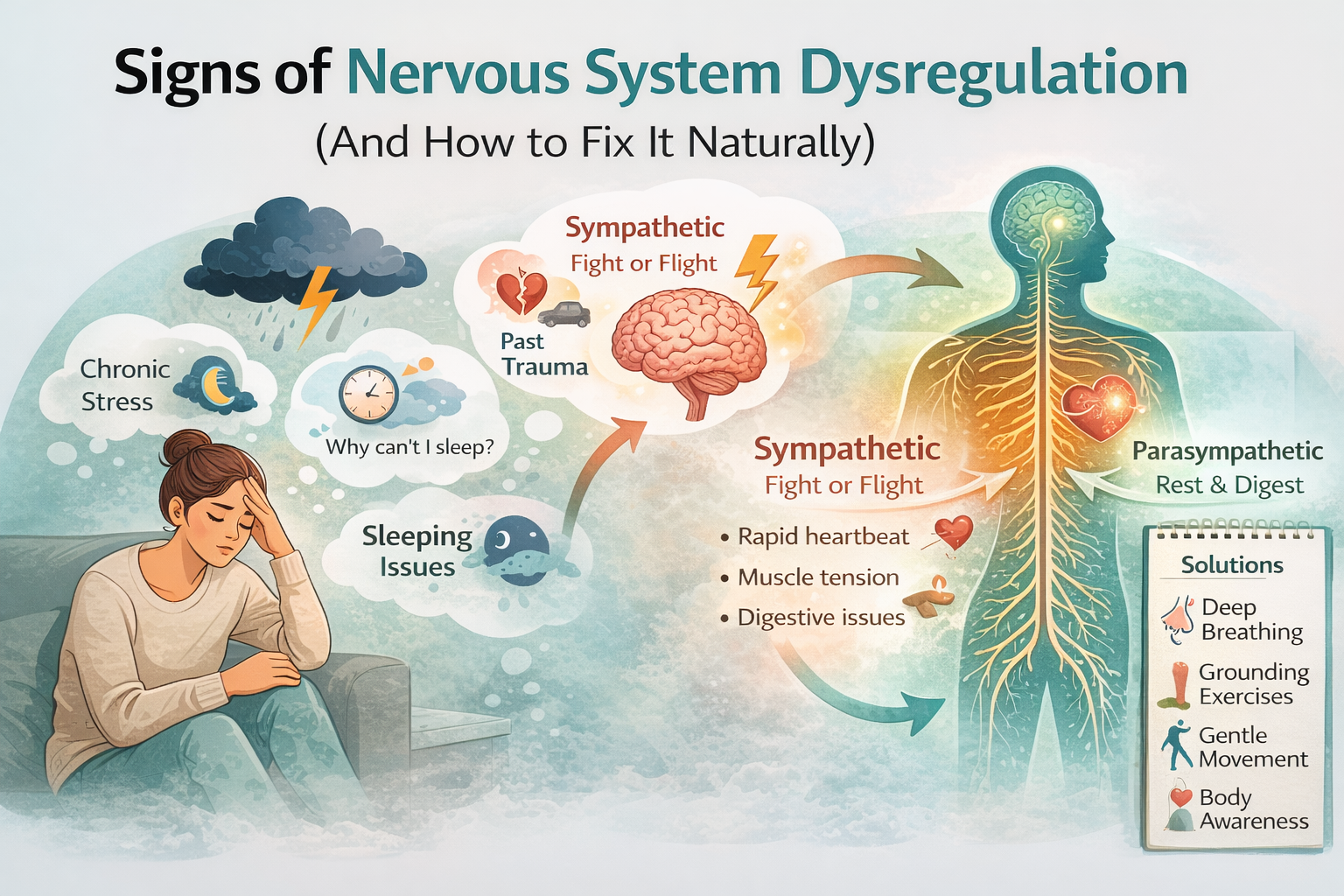
Signs of nervous system dysregulation include constant stress, anxiety, sleep issues, and emotional overwhelm, even without immediate danger. This can affect your mood, energy, sleep, digestion, and eating patterns.
If you feel anxious, overwhelmed, or unable to relax, your nervous system may need support. This is not a personal failure; it’s your body trying to protect you.
What Is Nervous System Dysregulation?
Nervous system dysregulation is when your body struggles to move between stress and relaxation states.
Your nervous system controls how you respond to safety and stress. When balanced, it shifts naturally. When dysregulated, it gets stuck in survival mode.
You may feel:
- Constant tension or anxiety
- “On edge” without reason
- Difficulty relaxing
What Are the Signs of Nervous System Dysregulation?
Recognizing symptoms is the first step.
Physical Signs
- Rapid heartbeat
- Muscle tension
- Fatigue
- Sleep issues
Emotional Signs
- Anxiety or overwhelm
- Irritability
- Mood swings
Mental Signs
- Racing thoughts
- Difficulty focusing
- Constant worry
These are signals that your body is under stress.
Why Does Nervous System Dysregulation Happen?
Dysregulation develops gradually.
Chronic Stress
Ongoing pressure keeps your body in survival mode.
Past Experiences
Unprocessed emotional experiences can keep your system on alert.
Lifestyle Factors
Poor sleep, irregular eating, and lack of rest all contribute.
How Does Nervous System Dysregulation Affect Eating?
When your body is stressed:
- Cravings increase
- Emotional eating becomes more likely
- Hunger signals feel inconsistent
This is your body trying to regulate itself.
What Happens in the Body During Stress?
Your nervous system has two main states:
- Sympathetic → stress (fight or flight)
- Parasympathetic → calm (rest and digest)
When stress is constant, your body stays in the stress state.
Regulation helps your body return to safety.
Why Is It Hard to Relax?
If you struggle to relax, there’s a reason.
When your body doesn’t feel safe, it won’t easily slow down. This is why forcing relaxation often doesn’t work.
Your body needs signals of safety, not pressure.
How to Regulate Your Nervous System Naturally
Focus on supporting your body.
1. Breathing Techniques
Inhale for 4 seconds, exhale for 6 seconds.
Repeat for 2–5 minutes.
2. Grounding Exercises
Bring attention to the present moment:
- Notice what you see
- Feel your body
- Focus on sensations
3. Gentle Movement
Walking, stretching, or light yoga helps release stress.
4. Body Awareness
Ask:
- “What am I feeling?”
- “What does my body need?”
A Simple Daily Nervous System Reset Routine
Morning
- Deep breathing
- Gentle stretching
Midday
- Short walk
- Quick check-in
Evening
- Reduce screen time
- Calm breathing
Small actions create stability.
Common Mistakes When Trying to Regulate
- Forcing relaxation
- Ignoring body signals
- Expecting fast results
- Doing too much at once
Regulation is about consistency.
Long-Term Nervous System Support
Focus on:
- Daily habits
- Stress reduction
- Better sleep
- Emotional awareness
This builds long-term balance.
When to Seek Support
If you experience:
- Constant anxiety
- Burnout
- Emotional overwhelm
Support can help you feel more stable.
How Coaching Can Support You
With the right support, you can:
- Understand your patterns
- Learn regulation tools
- Build supportive habits
- Improve your relationship with stress and food
Final Thoughts
Nervous system dysregulation is not permanent; it’s a response.
With the right support, your body can learn to feel safe again.
FAQs
What are the signs of nervous system dysregulation?
Anxiety, fatigue, sleep issues, and emotional overwhelm are common signs.
How can I calm my nervous system quickly?
Breathing, grounding, and gentle movement can help within minutes.
Can stress affect the nervous system?
Yes, chronic stress can dysregulate it over time.
How long does nervous system healing take?
It varies, but consistent habits create gradual improvement.
Can nervous system issues affect eating?
Yes, it can lead to cravings, emotional eating, and irregular hunger.