

You may be managing your everyday responsibilities just fine until one more demand makes everything feel overwhelming.
Or perhaps you experience the opposite. Instead of feeling anxious or reactive, you become quiet, disconnected, or unable to focus on something that would normally feel manageable.
The window of tolerance is a framework that helps explain these changes in our capacity to handle stress and emotions.
Within your window, you can experience difficult feelings while maintaining enough flexibility to think, respond, and stay engaged. Outside that range, you may experience heightened activation or a sense of emotional shutdown.
Understanding the difference can help you recognize your needs and choose supportive responses without forcing yourself to feel calm.
What Is the Window of Tolerance?
The window of tolerance is the range of emotional and physiological arousal within which a person can experience stress, process emotions, and respond to daily challenges without becoming excessively overwhelmed or disconnected.
Psychiatrist Daniel J. Siegel introduced the concept in 1999. It has since become a widely used framework in trauma-informed education and clinical discussions.
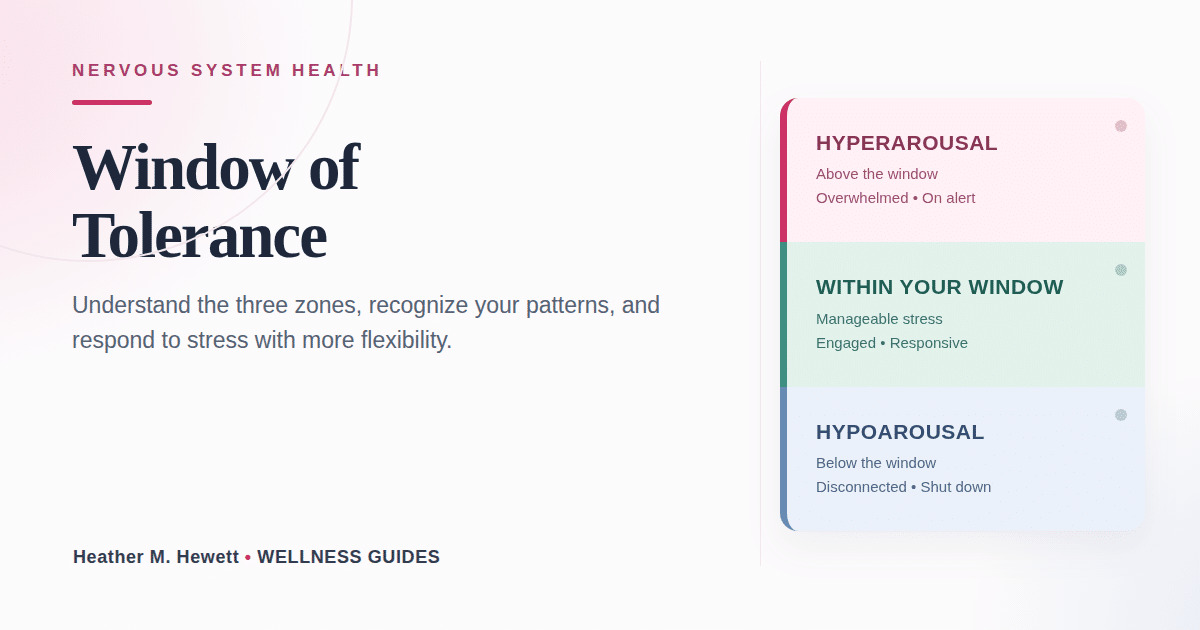
The model describes three general states:
- Within your window: Emotions and challenges remain manageable enough for flexible responses.
- Hyperarousal: You experience heightened activation, which may feel like anxiety, agitation, or an urgent need to react.
- Hypoarousal: You experience reduced engagement, which may feel like numbness, heaviness, or disconnection.
These states are described in the Bradford District Care NHS Foundation Trust’s Window of Tolerance resource.
The important distinction is that being within your window does not mean feeling calm or happy all the time.
You can feel nervous before a presentation, frustrated during a disagreement, or sad after a disappointment while still being able to make decisions and respond appropriately.
The goal is emotional flexibility, not the absence of discomfort.
Understanding the Three Zones of the Window of Tolerance
The window of tolerance is commonly illustrated as a manageable middle zone between states of heightened and reduced arousal.
| Zone | Common experiences | Supportive responses |
|---|---|---|
| Hyperarousal: Above the window | Racing thoughts, anxiety, irritability, tension, restlessness | Reduce stimulation, pause, practice comfortable grounding |
| Within the window | Emotional awareness, flexible thinking, engagement, capacity to recover | Maintain supportive routines, boundaries, and recovery time |
| Hypoarousal: Below the window | Numbness, disconnection, low engagement, difficulty responding | Gentle movement, external orientation, manageable activities, connection |
These are broad descriptions rather than fixed categories. Your experience may not fit neatly into one zone.
Educational illustration of a conceptual model, not a diagnostic scale.
1. Hyperarousal: When Everything Feels Too Much
Hyperarousal describes a state of increased alertness and stress-related activation.
You might notice:
- Racing thoughts or persistent worry
- Muscle tension
- Irritability or emotional sensitivity
- Difficulty concentrating
- Restlessness
- Feeling unusually alert to noises or interruptions
- An urgent need to escape or respond immediately
- Changes in breathing or heart rate during stress
For example, imagine receiving unexpected criticism during a busy workday.
On another day, you might consider the feedback and respond thoughtfully. But after several nights of poor sleep and multiple demanding deadlines, the same conversation may feel much more threatening.
Your existing stress load can influence your reaction.
The fight-or-flight response is associated with increased autonomic nervous system activation. However, these sensations can also occur for medical or psychological reasons unrelated to the window of tolerance.
My guide to nervous system dysregulation explores these patterns and their limitations in more detail.
2. Hypoarousal: When You Feel Numb or Disconnected
Hypoarousal describes a state of reduced activation or engagement within this framework.
Instead of feeling highly reactive, you may experience:
- Emotional numbness
- A sense of heaviness
- Difficulty starting everyday tasks
- Feeling detached or distant
- Reduced motivation
- Trouble making decisions
- Difficulty remaining engaged in conversations
- A sense of functioning on autopilot
Someone experiencing this pattern may appear calm from the outside while struggling internally.
Quietness is not always the same as feeling safe or regulated.
For some people, these experiences overlap with what is described as functional freeze.
But emotional numbness, fatigue, and difficulty concentrating can also be associated with depression, inadequate sleep, medication effects, medical conditions, and other factors.
The window of tolerance cannot identify the cause or provide a diagnosis.
3. Within Your Window: When Stress Feels Manageable
Being within your window means you have enough capacity to remain engaged with your experience.
You may still feel upset, worried, or frustrated.
However, you might be able to:
- Recognize your emotions
- Pause before responding
- Consider different options
- Communicate a boundary
- Ask for support
- Continue a conversation despite discomfort
- Return to a task after an interruption
- Recover gradually after a stressful experience
The window is not a permanent state.
Your capacity may change throughout the day depending on your health, environment, demands, and access to support.
For everyday examples of progress, see signs your nervous system is regulating.
How Do You Know If You're Outside Your Window of Tolerance?
One useful sign is a change in your ability to respond flexibly.
When stress becomes difficult to manage, you may feel unusually reactive, overwhelmed, withdrawn, or disconnected.
Intense overwhelm is sometimes described as feeling emotionally flooded, although it is not a diagnosis.
Consider asking yourself:
- Am I reacting more strongly than I normally would?
- Is it difficult to consider another perspective?
- Am I feeling physically tense or unusually alert?
- Am I withdrawing or struggling to engage?
- What happened before this change?
- Have I been sleeping, eating, and resting adequately?
- What would make the next few minutes more manageable?
You do not need to answer every question or identify your state perfectly.
Sometimes recognizing a pattern is enough to help you make a practical adjustment.
For example, you might notice that conversations become more difficult when you are exhausted or that crowded environments feel overwhelming after a demanding workday.
These observations can be useful without assuming that every reaction is a nervous system disorder.
Learning to observe physical sensations and changes in your experience is part of somatic awareness.
What Can Narrow Your Window of Tolerance?
A narrower window is a way of describing a reduced capacity to manage stress within this model.
Several factors may contribute to that experience.
Chronic Stress and Ongoing Demands
Financial pressure, caregiving responsibilities, work overload, relationship difficulties, and prolonged uncertainty can make ordinary challenges feel harder.
When demands repeatedly exceed available resources, even small additional tasks may feel overwhelming.
Sometimes the most helpful change is not another coping technique. It is addressing an unreasonable demand or seeking practical support.
For a closer look at the possible effects, read about chronic stress symptoms and when to seek medical advice.
Poor Sleep and Physical Health
Sleep affects attention, emotional responsiveness, and everyday functioning. If disrupted sleep is a recurring issue, see my guide to feeling tired but unable to sleep.
Pain, illness, inadequate nutrition, dehydration, and other physical factors may also influence how you feel.
These considerations matter because a difficult emotional experience does not always have a single psychological explanation.
Trauma and Previous Experiences
For some people, reminders of traumatic experiences may contribute to intense alertness, avoidance, or disconnection. My article on the idea of trauma being stored in the body explains why that phrase needs careful interpretation.
The Open University’s trauma-informed learning resource describes how previous trauma can affect the range of situations a person experiences as manageable.
However, feeling overwhelmed does not automatically mean you have PTSD or unresolved trauma.
Persistent or significant trauma-related symptoms should be assessed by an appropriately qualified mental health professional.
Environmental and Relationship Stress
Unsafe environments, unpredictable demands, persistent conflict, and lack of support may increase stress.
It is important not to turn the window of tolerance into a reason to tolerate harmful circumstances.
Sometimes the appropriate response involves strengthening boundaries, changing a situation, or accessing outside help.
My guide to nervous system safety explores the roles of surroundings, relationships, and choice.
How to Return Toward Your Window of Tolerance
There is no universal technique that works for everyone.
A useful starting point is to notice whether you feel overactivated or under-engaged and choose a response that matches your experience.
If You Feel Hyperaroused
When your thoughts are racing or your body feels tense, consider approaches that reduce unnecessary demands.
- Reduce stimulation. If possible, move somewhere quieter, lower background noise, or step away from an overwhelming screen.
- Notice your surroundings. Identify a few ordinary things you can see or hear. You do not need to concentrate intensely on internal body sensations.
- Try comfortable breathing. Allow your breathing to settle at a natural pace. Avoid forcing deep inhalations, holding your breath, or continuing an exercise that increases discomfort.
- Pause before responding. If a conversation feels overwhelming, you might say, “I need a few minutes to think before we continue.”
- Reach out to someone supportive. Appropriate connection may help you feel less isolated.
The Bradford NHS resource discusses everyday strategies for coping with stress and anxiety, while recognizing that some situations require professional treatment.
For additional approaches, explore these emotional regulation tools and choose what feels appropriate for you.
If You Feel Hypoaroused
When you feel numb, heavy, or disconnected, increasing pressure may not help.
Instead, you might try:
- Gentle movement. Stand up, change position, stretch comfortably, or walk a short distance if you feel able.
- External orientation. Notice an object, sound, color, or other detail in your surroundings.
- One manageable activity. Drink some water, open a window, or complete a simple task without requiring yourself to become immediately productive.
- Supportive contact. Consider spending time with a trusted person or sending a brief message.
- Basic physical care. Think about whether you need food, rest, medical attention, or relief from an ongoing demand.
Some inward-focused exercises can be uncomfortable for people experiencing panic, dissociation, or trauma-related distress.
If an activity makes you feel worse, stop or change it.
For additional ideas, see my guide to gentle somatic healing exercises.
How to Widen Your Window of Tolerance Over Time
Widening your window of tolerance means developing greater flexibility in how you recognize, respond to, and recover from manageable stress.
This is a goal expressed within the window of tolerance framework, not a medically established measurement of nervous system capacity.
There is no guaranteed timeline or single exercise that produces this outcome.
1. Recognize Your Early Stress Signals
Pay attention to changes that tend to happen before you feel overwhelmed or disconnected.
You might notice tight shoulders, irritability, difficulty listening, or an urge to withdraw.
Recognizing those changes earlier may give you more opportunities to respond.
2. Support Everyday Recovery
Consistent sleep habits, appropriate movement, regular meals, meaningful rest, and manageable routines can support general well-being.
You do not need an elaborate daily schedule.
A realistic routine that fits your circumstances is more useful than one that becomes another source of pressure.
For more practical habits, see ways to regulate your nervous system naturally.
3. Practice Coping Skills When Stress Is Manageable
It may be easier to become familiar with grounding, gentle relaxation, or emotional awareness when you are not already overwhelmed.
Try one approach and observe whether it feels useful.
Regular practice may build familiarity, but it does not guarantee that difficult emotions or stress responses will disappear.
My guide to self-regulation strategies covers additional ways to recognize feelings and respond.
4. Address Stressors Instead of Only Managing Reactions
Sometimes the practical situation needs attention.
You may need to:
- Adjust an unrealistic deadline
- Ask for help with responsibilities
- Set a boundary
- Reduce unnecessary commitments
- Seek medical advice
- Improve access to emotional or social support
Self-regulation skills can be helpful, but they do not replace necessary changes in your circumstances.
5. Choose Professional Support When Appropriate
Different types of support serve different purposes.
Nonclinical wellness coaching may help with everyday stress awareness, routines, personal goals, and practical coping strategies.
Licensed mental health care is more appropriate for diagnosing or treating mental health conditions and addressing significant trauma-related symptoms.
You can learn more about the distinctions in my article, What Is Somatic Coaching?.
A Simple Window of Tolerance Check-In
You can use this short reflection exercise when you feel comfortable doing so.
| Step | Ask yourself | Possible response |
|---|---|---|
| Notice | What am I experiencing right now? | Recognize a feeling, sensation, or change in attention |
| Consider | Do I feel overactivated, disconnected, or reasonably engaged? | Identify what seems most relevant |
| Respond | What would help me manage the next few minutes? | Rest, move gently, reduce stimulation, or seek support |
| Review | Did that response help? | Continue, adjust, or stop as needed |
This is a reflection tool rather than a diagnostic assessment.
You may not always know which zone best describes your experience.
If monitoring your internal state increases distress, focus on a comfortable external activity instead.
For a wider perspective, explore emotional self-awareness without requiring yourself to analyze every sensation.
Window of Tolerance Examples in Everyday Life
Understanding the concept becomes easier when you consider familiar situations.
Example 1: A Difficult Conversation at Work
You receive unexpected criticism in a meeting.
At first, you can listen and consider what is being said.
As the conversation continues, your thoughts begin racing and you feel an urgent need to defend yourself.
This may resemble a hyperarousal pattern. If workplace demands are ongoing rather than occasional, it may also help to recognize the signs of burnout.
Rather than responding immediately, you might ask for time to consider the feedback and return to the conversation later.
Example 2: Feeling Disconnected After a Demanding Day
After a full day of responsibilities, you sit down to answer a simple message but struggle to begin.
You feel emotionally flat and unusually tired. If fatigue persists even after adequate rest, my guide on feeling tired even after resting considers other possible explanations.
This could resemble a hypoarousal pattern, but exhaustion, poor sleep, illness, and other factors may also explain the experience.
Rest or a manageable activity may be more appropriate than forcing yourself through another demanding task.
Example 3: A Familiar Environment Suddenly Feels Overwhelming
You usually feel comfortable shopping for groceries.
But after several stressful days, the noise, crowds, and decisions feel unusually difficult to manage.
Stepping outside briefly, reducing sensory demands, or asking for assistance may help. For more examples of common activation patterns, read about nervous system regulation for anxiety.
These hypothetical examples illustrate an important principle:
Your capacity can change, and you can adjust your response without judging yourself for that change.
Common Mistakes When Using the Window of Tolerance Model
Assuming You Should Always Feel Calm
Being regulated does not mean eliminating anger, sadness, worry, or excitement.
The goal is maintaining enough flexibility to respond to those emotions.
For additional context, see my guide to building emotional resilience.
Treating Every Symptom as Nervous System Dysregulation
Fatigue, dizziness, rapid heartbeat, concentration difficulties, and emotional numbness can have different causes.
The model should not replace appropriate medical or mental health assessment.
Forcing Exercises That Feel Uncomfortable
An exercise is not automatically helpful because it is described as calming.
If breathing, body scanning, or another technique increases distress, stop and consider an alternative. You can also read about what it means to reset your nervous system, without treating a single exercise as a cure.
Ignoring the Source of Stress
If an environment is unsafe or your responsibilities are unsustainable, coping strategies alone may not resolve the problem.
Practical changes and appropriate support can be essential.
If ordinary demands are piling up, my guide to stress overload explains common signs and possible next steps.
Is the Window of Tolerance Scientifically Proven?
The window of tolerance is a conceptual model used in trauma-informed education and psychotherapy discussions to describe changes in emotional and physiological arousal.
It is not a medical diagnosis, a laboratory test, or a universally validated measure of nervous system function.
Researchers have discussed the model in relation to trauma and autonomic regulation. For example, a paper indexed in PubMed examines the window of tolerance framework in the context of complex emotional trauma.
However, research supporting a particular coping strategy does not establish that the entire model can be measured or expanded in a specific way.
The VA National Center for PTSD also distinguishes the limited evidence for various complementary practices from established clinical treatments for PTSD.
The most useful role of the framework is educational: helping people reflect on experiences and consider appropriate responses without using it to diagnose themselves.
Window of Tolerance vs. Nervous System Regulation
These ideas are related but not identical.
The window of tolerance describes a conceptual range of arousal within which emotions and stress remain manageable enough for flexible responses.
Nervous system regulation more broadly refers to the body’s adjustment of physiological activation and recovery as circumstances change.
The window of tolerance can help describe how these changes may feel during everyday experiences.
It does not provide a complete physiological explanation of the autonomic nervous system.
For a broader overview, read What Is Nervous System Regulation?.
When Should You Seek Professional Help?
Self-awareness and everyday coping practices are not appropriate substitutes for medical or mental health treatment.
For a comparison of care options, see nervous system regulation vs. therapy vs. medication.
Consider consulting a qualified healthcare or mental health professional if you experience:
- Persistent or severe anxiety
- Frequent panic attacks
- Significant dissociation
- Trauma-related flashbacks or nightmares
- Ongoing depression or emotional numbness
- Symptoms that interfere with daily functioning
- New, unexplained, or concerning physical symptoms
- Thoughts of self-harm or difficulty remaining safe
New or severe chest pain, fainting, substantial breathing difficulty, or other potentially serious physical symptoms require prompt medical assessment.
If you are in immediate danger or experiencing a mental health emergency, contact your local emergency services or an appropriate crisis service.
How Nervous System Regulation Coaching May Fit In
Understanding the window of tolerance may help you recognize everyday stress patterns and consider what support would be useful.
My approach to wellness coaching brings together practical self-awareness, gentle body-based strategies, emotional resilience, and sustainable lifestyle habits.
The focus is on helping you explore your experiences, understand recurring patterns, and identify supportive steps that fit your circumstances.
My Nervous System Regulation Coaching provides nonclinical wellness support.
It does not diagnose or treat PTSD, anxiety disorders, depression, or other medical or mental health conditions.
If you would like to understand the coaching approach and whether it may be appropriate for your goals, you are welcome to book a free consultation.
Frequently Asked Questions About the Window of Tolerance
What are the three zones of the window of tolerance?
The three zones are hyperarousal, the window of tolerance itself, and hypoarousal. Hyperarousal involves heightened activation, the middle zone represents manageable arousal, and hypoarousal describes reduced engagement or shutdown-like experiences.
How do I know if I'm outside my window of tolerance?
You may notice unusual reactivity, racing thoughts, agitation, emotional numbness, withdrawal, or difficulty engaging with everyday tasks. These signs are not specific to this model and may have other causes.
How can I widen my window of tolerance?
You can explore supportive routines, manageable coping skills, emotional awareness, boundaries, recovery time, and appropriate professional support. There is no guaranteed exercise or established universal timeline for widening the window.
Can chronic stress narrow your window of tolerance?
Within this framework, prolonged stress can reduce your perceived ability to manage everyday demands. Sleep, physical health, social support, environmental conditions, and other factors may influence your responses.
What are some window of tolerance exercises?
Common examples include sensory grounding, gentle movement, comfortable breathing, noticing your surroundings, and identifying manageable next steps. Choose activities that feel appropriate and stop if they increase distress.
Is the window of tolerance the same as the fight-or-flight response?
No. Fight-or-flight refers to physiological responses associated with stress or perceived threat. The window of tolerance is a broader framework describing manageable arousal alongside heightened and reduced-activation states.
Is hypoarousal the same as depression?
No. Hypoarousal is a descriptive state within this framework, while depression is a clinical condition requiring appropriate assessment. Some symptoms may overlap, but the window of tolerance cannot diagnose depression.
Does being within my window of tolerance mean I should always feel calm?
No. You can experience sadness, worry, frustration, and other strong emotions while remaining within your window. Emotional flexibility and the ability to respond appropriately matter more than constant calm.
Building a More Flexible Relationship With Stress
Your capacity to manage stress is not identical every day.
A situation that feels manageable when you are rested and supported may feel overwhelming when you are exhausted, unwell, or facing several demands at once.
The window of tolerance offers a way to understand those differences without treating every difficult response as a personal failure or medical condition.
Start by noticing one pattern. Consider what might be contributing to it. Then choose one realistic form of support, whether that means resting, moving gently, setting a boundary, asking for help, changing a difficult circumstance, or seeking qualified care.
The goal is not to eliminate stress. It is to develop a more flexible, compassionate, and informed way of responding to your needs.
Sources and Further Reading
- Bradford District Care NHS Foundation Trust: Coping When You Are Stressed, Anxious or Feeling Low — Window of tolerance, hyperarousal, hypoarousal, and coping approaches.
- The Open University: The Window of Tolerance — Trauma-informed educational discussion of the model.
- PubMed: Autonomic Dysregulation and the Window of Tolerance Model — Research discussion of the model in relation to complex emotional trauma.
- VA National Center for PTSD: Complementary and Integrative Health for PTSD — Clinical evidence considerations and the limitations of complementary approaches.
Medical disclaimer: This article provides general education and wellness information. It does not offer medical or psychological diagnosis, individualized treatment, or emergency care. Coaching and self-help practices do not replace appropriately licensed healthcare or mental health services.