
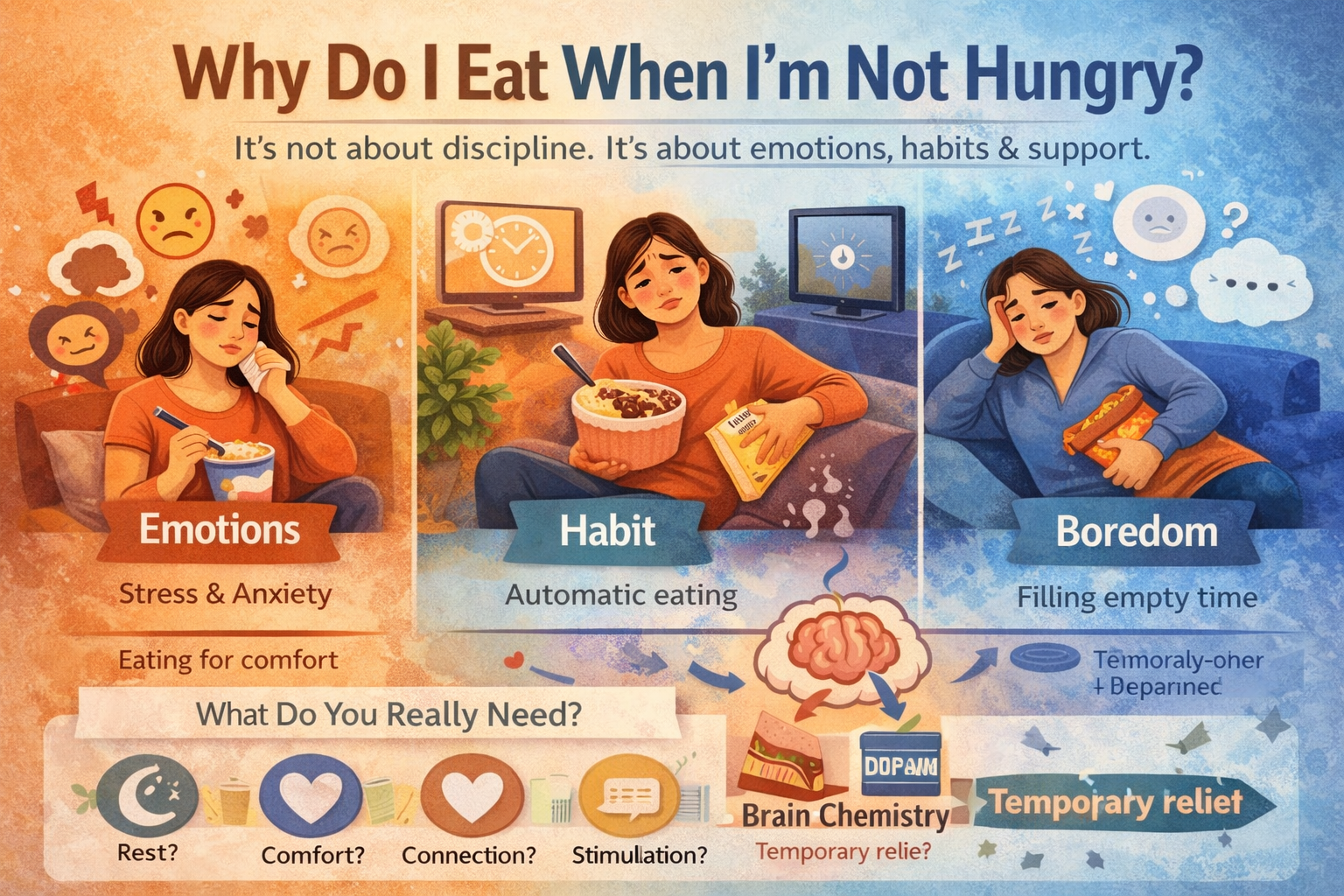
If you often ask, “Why do I eat when I’m not hungry?” you are not alone. Eating without physical hunger is a common experience, and it does not always mean you lack discipline or self-control.
Many people eat when they feel stressed, bored, anxious, tired, lonely, overwhelmed, or emotionally uncomfortable. Sometimes food becomes a quick way to feel calm, comforted, distracted, or grounded.
This pattern is not something to judge. It is something to understand.
Eating when you are not hungry can be connected to emotions, habits, stress, the brain’s reward system, past dieting, food restriction, or nervous system responses. When you understand what is driving the urge, it becomes easier to respond with awareness instead of guilt.
In this article, you will learn why eating without hunger happens, how to recognize emotional eating, and what practical steps can help you build a calmer relationship with food.
Medical note: This article is for educational and wellness purposes only. It does not replace medical, mental health, or eating disorder treatment. If eating feels out of control, secretive, distressing, or is followed by restriction, purging, or intense shame, please speak with a qualified healthcare provider. You can also read the health and coaching disclaimer for more information.
What Does It Mean to Eat When You Are Not Hungry?
Eating when you are not hungry means eating when your body does not physically need energy at that moment.
Physical hunger usually builds gradually. You may notice an empty stomach, lower energy, stomach growling, lightheadedness, or difficulty focusing. Non-hunger eating often feels different. It may feel sudden, emotional, automatic, or connected to a specific food.
For example, you may not feel physically hungry, but you may still reach for food when you are watching TV, finishing work, feeling stressed, or standing near the kitchen.
Eating without hunger can happen because of:
Stress
Boredom
Habit
Food cravings
Emotional discomfort
Feeling tired
Environmental triggers
Past restriction or dieting
A need for comfort or distraction
This pattern is often called emotional eating, stress eating, boredom eating, or mindless eating. The names may be different, but the deeper question is the same: what need is food helping you meet in that moment?
Why Do I Eat When I’m Not Hungry?
There is usually more than one reason behind eating when you are not hungry. For many people, the pattern comes from a mix of emotions, habits, stress, body cues, and learned routines.
Emotional Triggers
Emotions are one of the most common reasons people eat without physical hunger.
You may reach for food when you feel:
Sad
Stressed
Angry
Lonely
Anxious
Overwhelmed
Disconnected
Emotionally drained
Food can offer temporary comfort. It may create a short break from difficult feelings. It may also feel safe, familiar, and predictable when life feels uncertain.
According to Cleveland Clinic’s guide to emotional eating, emotional eating can happen when people eat in response to feelings such as stress, boredom, or anxiety rather than physical hunger.
This does not mean emotional eating is bad. Food can be comforting. The issue begins when food becomes the only coping tool, or when eating leads to guilt, shame, or feeling out of control.
Stress and Anxiety
Stress can make eating feel automatic. When your body feels stressed, it looks for fast relief. Food can become one of the quickest ways to calm the body or distract the mind.
This is especially common with sweet, salty, or high-fat foods. These foods may feel soothing in the moment because they can activate pleasure and reward pathways in the brain.
Harvard Health explains that ongoing stress can increase cortisol, a hormone that may increase appetite and motivation to eat. You can read more in their article on why stress can cause people to overeat.
If stress is a major trigger, eating may not be only about food. Your body may be asking for rest, safety, grounding, or emotional support.
Habit and Routine
Sometimes eating when not hungry is simply a habit.
Your brain can connect food with certain times, places, activities, or emotions. Once that connection becomes strong, the urge to eat can appear even when your body does not need food.
Common habit-based eating patterns include:
Snacking while watching TV
Eating while working
Eating after dinner every night
Grabbing food when walking through the kitchen
Finishing food because it is available
Eating at a certain time out of routine
For example, if you always eat snacks while watching a show, your brain may start expecting snacks as soon as the show begins. This does not mean you are physically hungry. It means your brain has learned a pattern.
The good news is that learned patterns can change with awareness and practice.
Boredom and Understimulation
Boredom eating is very common. Food can create stimulation, pleasure, and something to do.
When your day feels repetitive or emotionally flat, eating may become a way to add interest. This can happen even if you do not feel hungry.
Boredom eating is not a failure. It may be a sign that you need stimulation, connection, creativity, movement, or rest.
Instead of asking, “Why am I eating again?” try asking, “What am I really needing right now?”
Sometimes the answer is a walk. Sometimes it is a conversation. Sometimes it is a break, a task change, music, journaling, or simply permission to rest.
Food Restriction and Dieting
Eating when not hungry can also happen after restriction.
If you skip meals, cut calories too much, avoid certain foods, or follow strict food rules, your body may respond with stronger cravings later. This can make eating feel urgent or hard to stop.
Restriction can also make certain foods feel more powerful. When a food is labeled “bad” or “off limits,” it may become more mentally attractive. Then, when you finally eat it, it may feel difficult to stop.
This is one reason the answer to emotional eating is not always more control. Sometimes the answer is more nourishment, regular meals, and less guilt around food.
What Happens in the Brain During Non-Hunger Eating?
Eating can activate the brain’s reward system. This is one reason food can feel comforting during stress or emotional discomfort.
Highly palatable foods, such as sweet, salty, or rich foods, can influence dopamine pathways related to reward and motivation. A review available through the National Institutes of Health explains that food is a natural reward and dopamine is involved in reward-related eating behavior. You can read more in this NIH-indexed review on mood, food, and reward.
This can create a repeated cycle:
Trigger
Eating
Temporary relief
Guilt or discomfort
More emotional stress
The urge returns
The relief from eating is real, but it is often temporary. If the deeper need is not addressed, the urge may come back again.
This is why shame does not usually solve the pattern. Shame can increase stress, and stress can increase the urge to eat. Awareness and support are more helpful than self-criticism.
What Is the Role of the Nervous System?
Your nervous system helps your body respond to stress, safety, emotions, and the environment.
When your body feels calm and regulated, it is usually easier to notice hunger, fullness, and choice. When your body feels stressed or overwhelmed, it may look for quick comfort.
Food can become a fast regulation tool because it is accessible, familiar, and often soothing.
You may be more likely to eat without hunger when you are:
Exhausted
Overstimulated
Under pressure
Emotionally triggered
Disconnected from your body
Trying to calm down quickly
This is why eating can feel automatic. It is not always a logical decision. Sometimes it is a nervous system response.
If this feels like a frequent pattern, learning more about nervous system regulation may help you understand how stress and body signals affect eating habits.
How Do You Know If Eating Is Emotional?
Emotional eating often feels different from physical hunger.
Physical Hunger
Physical hunger usually:
Builds gradually
Comes with body signals
Can be satisfied with different foods
Improves after eating enough
Does not usually create guilt
Emotional Hunger
Emotional hunger often:
Comes on suddenly
Feels urgent
Craves a specific food
Is connected to a feeling or situation
Continues after fullness
May lead to guilt or regret
You may also notice that you eat after feeling full, eat without awareness, or feel like you are “checking out” while eating.
These signs are not proof that something is wrong with you. They are clues. They help you understand what your body or emotions may be asking for.
Why Is It Hard to Stop Eating When You Are Not Hungry?
It can be hard to stop because the pattern is not only about food. It is often about relief, regulation, comfort, and learned behavior.
If your brain has learned that food helps reduce stress, it may suggest food whenever discomfort appears. Even if part of you does not want to eat, another part may be looking for fast relief.
The cycle may look like this:
You feel stressed or uncomfortable.
You crave food.
You eat.
You feel better for a short time.
You feel guilty.
You promise to stop.
The next trigger happens.
You eat again.
This cycle can feel frustrating, but it can change. The first step is to stop seeing it as a discipline problem and start seeing it as information.
How to Stop Eating When You Are Not Hungry
The goal is not to never eat emotionally again. The goal is to become less automatic and more aware.
1. Pause Before Eating
Before eating, pause for 60 seconds.
Ask yourself:
Am I physically hungry?
What am I feeling right now?
What happened before this urge?
What do I need besides food?
You can still choose to eat. The pause is not about punishment. It is about creating awareness and choice.
2. Name the Trigger
Try to identify what started the urge.
Was it stress?
Was it boredom?
Was it loneliness?
Was it exhaustion?
Was it a difficult conversation?
Was it seeing food nearby?
Naming the trigger helps your brain understand the pattern. Once you see the pattern, it becomes easier to change.
3. Check Your Physical Needs
Sometimes eating without hunger is connected to unmet physical needs.
Ask yourself:
Did I eat enough today?
Did I skip a meal?
Did I sleep poorly?
Am I thirsty?
Have I been sitting too long?
Do I need a real meal instead of snacks?
If your body is underfed, tired, or stressed, cravings may become stronger. Balanced meals and rest can reduce the intensity of urges.
4. Match the Need With the Right Support
Instead of only trying to distract yourself, ask what kind of support you actually need.
If you need calm, try slow breathing or stretching.
If you need stimulation, try a walk, music, or a small task.
If you need comfort, try a warm drink, journaling, or a soft blanket.
If you need connection, text or call someone.
If you need rest, take a short break.
The goal is not to replace food with a random activity. The goal is to meet the real need more directly.
5. Eat Enough During the Day
If you do not eat enough earlier in the day, cravings may become stronger later.
Regular meals with protein, fiber, and healthy fats can support steadier energy and fullness. This makes it easier to tell the difference between physical hunger and emotional hunger.
You do not need perfect meals. You need consistent and satisfying meals.
Practical Strategies That Help
Small habits can reduce eating when not hungry over time.
Try to:
Eat meals at regular times
Avoid skipping meals
Keep satisfying foods available
Practice mindful eating
Limit multitasking during meals
Notice emotional triggers
Create a pause before snacking
Build non-food comfort tools
Keep a simple mood and food journal
Get support if the pattern feels hard to change
For gentle tools related to cravings, emotional eating, and body awareness, you can explore these free wellness resources.
How to Build a Healthier Relationship With Food
A healthier relationship with food is not built through guilt, punishment, or strict rules. It is built through awareness, trust, consistency, and compassion.
Focus on:
Removing guilt from eating
Understanding your emotions
Listening to your body
Eating enough during the day
Creating supportive routines
Allowing pleasure without shame
Building coping tools beyond food
When you stop fighting your body, it becomes easier to hear what it is trying to tell you.
When This Pattern Needs Extra Support
Eating when not hungry is common, but sometimes extra support is important.
Consider professional support if eating feels:
Frequent
Secretive
Compulsive
Emotionally distressing
Hard to control
Connected to guilt or shame
Followed by restriction or punishment
Linked to eating large amounts in a short time
Support can help you understand the pattern safely and build healthier ways to respond.
If the pattern feels frequent or difficult to change on your own, emotional eating support can help you better understand triggers, cravings, and food guilt without adding more shame.
Final Thoughts
Eating when you are not hungry is not a failure. It is a signal.
Your body may be asking for comfort, rest, relief, stimulation, connection, nourishment, or nervous system support. When you understand the reason behind the pattern, you can respond with more compassion and less guilt.
You do not need to fix yourself with more discipline. You need to understand what is happening and build new ways to support yourself.
Start small. Pause before eating. Name the feeling. Check your physical needs. Build one new coping tool. These small steps can begin to change the cycle.
If you are ready to better understand your eating patterns and explore support options, you can visit the Start Here page.
FAQs
Why do I eat when I’m not hungry?
You may eat when you are not hungry because of stress, emotions, boredom, habit, restriction, or nervous system responses.
Is eating when not hungry emotional eating?
Yes, it can be. If eating is driven by feelings instead of physical hunger, it may be emotional eating.
Is boredom eating normal?
Yes. Boredom eating is common because food can provide stimulation, comfort, or something to do.
How do I stop mindless eating?
Pause before eating, notice your trigger, and ask what you need besides food.
Can stress cause overeating?
Yes. Stress can increase cravings and make food feel like a quick source of relief.
Why do I crave food even when I am full?
You may crave food when full because of stress, emotions, habit, food cues, or the brain’s reward system.
What is the difference between hunger and emotional hunger?
Physical hunger builds gradually. Emotional hunger often feels sudden, urgent, and specific.
Can this habit be changed?
Yes. This habit can change with awareness, regular meals, stress support, and new coping tools.
Should I feel guilty for eating when I’m not hungry?
No. Guilt often makes the cycle worse. Awareness and compassion are more helpful.
When should I get help for emotional eating?
Get help if eating feels frequent, secretive, distressing, hard to control, or followed by guilt or restriction.