
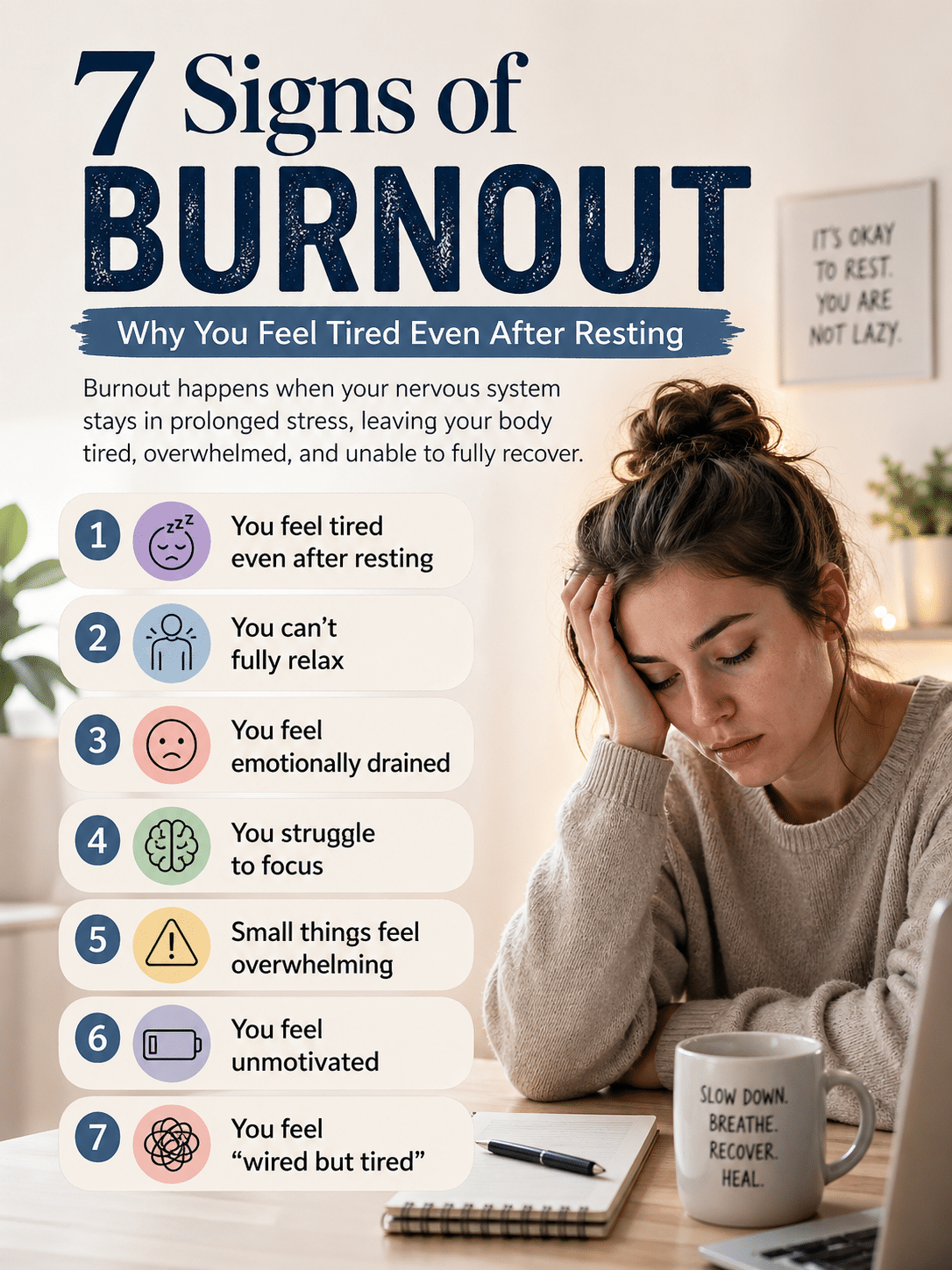
Do you wake up tired before your workday even begins? Do weekends, naps, or extra sleep no longer leave you feeling refreshed?
You may be dealing with more than ordinary tiredness.
Workplace burnout can develop after long periods of pressure, heavy workloads, limited recovery, unclear expectations, or constant emotional demands. It can affect your energy, concentration, motivation, mood, and ability to feel connected to your work.
Burnout is not a sign that you are weak, lazy, or incapable. It can be a sign that the demands placed on you have been greater than the support, control, or recovery time available to you.
This guide explains what workplace burnout is, seven common signs to watch for, why rest may not feel enough, and what practical steps may help.
What Is Workplace Burnout?
The World Health Organization defines burnout as a syndrome caused by chronic workplace stress that has not been successfully managed.
Burnout is commonly linked to three main experiences:
- Feeling physically and emotionally exhausted
- Becoming distant, negative, or cynical about work
- Finding it harder to complete tasks that once felt manageable
Burnout is different from having one stressful day or a difficult week. Short-term stress may ease after a deadline passes or a problem is resolved. Burnout is more likely to develop when high pressure continues for too long without enough support, recovery, or meaningful change.
For a broader explanation of chronic stress and recovery, read this guide to nervous system regulation.
Burnout vs. Stress vs. Ongoing Fatigue
Burnout, stress, and fatigue can feel similar, but they are not the same.
| Experience | What It Often Feels Like | What May Help |
| Normal stress | Busy, pressured, worried, but able to recover after the pressure passes | Rest, support, planning, and short-term workload changes |
| Workplace burnout | Exhaustion, low motivation, detachment from work, and difficulty keeping up | Recovery plus changes to workload, boundaries, support, or work conditions |
| Ongoing fatigue | Feeling tired for weeks, even after sleep or time off | A healthcare professional may need to assess possible causes |
You do not need to diagnose yourself. The goal is to notice patterns and understand what may need more attention.
7 Signs of Workplace Burnout
1. You Feel Exhausted Before the Workday Begins
One common sign of burnout is waking up already tired at the thought of work.
You may have slept for several hours, but opening your laptop, checking messages, attending meetings, or starting your tasks already feels draining.
This can feel different from ordinary sleepiness. You may feel like you have little emotional or mental energy left to give.
2. You Feel Detached or Negative About Work
Burnout can make you feel emotionally distant from work you once cared about.
You may become more irritated by small issues, less patient with coworkers, or more negative about meetings, clients, managers, or responsibilities. Work may begin to feel repetitive, pointless, or difficult to care about.
This emotional distance can be a sign that you have been carrying too much pressure for too long.
3. Simple Tasks Feel Harder Than They Used To
Burnout can make routine tasks feel unusually difficult.
You may struggle to write an email, make decisions, organise priorities, remember details, or start a task that would normally be straightforward. You may reread the same information several times but still find it hard to focus.
When your mental energy is low, even small responsibilities can feel much heavier than usual.
4. You Cannot Switch Off After Work
You may leave work physically, but your mind stays there.
You keep replaying conversations, worrying about unfinished tasks, checking notifications, or thinking about tomorrow’s workload. Even during dinner, family time, or bedtime, your mind may remain active.
If you often feel mentally restless or unable to settle, this article on feeling anxious for no clear reason may help you understand the connection between stress, anxiety, and feeling constantly on edge.
5. Small Demands Feel Overwhelming
A short message, a minor change in plans, a small mistake, or an unexpected request may feel much bigger than it normally would.
You may feel easily frustrated, close to tears, emotionally numb, or unable to deal with one more demand. This does not mean you are overreacting. It may mean your current energy and stress capacity are already stretched.
Burnout can lower the amount of pressure you can handle before feeling overwhelmed.
6. You Have Lost Motivation or Interest
Work you once enjoyed may no longer feel satisfying.
You might delay tasks, avoid responsibilities, lose interest in goals, or feel that nothing you do will make a difference. Even achievements may not feel rewarding.
A lack of motivation is not always a discipline problem. Sometimes it is a sign that your energy, attention, and emotional capacity need support.
7. You Feel Wired but Tired
You feel exhausted, but you still cannot fully relax.
Your body may feel tired while your mind keeps racing. You may struggle to fall asleep, wake up during the night, or feel unrefreshed after sleeping.
You may also rely more on caffeine, scrolling, or constant activity just to get through the day. This pattern can leave you feeling too tired to function well but too activated to rest properly.
You may also find it helpful to read about the difference between a dysregulated and regulated nervous system.
Why Rest May Not Feel Enough
Sleep, a quiet weekend, or a few days away from work can help. However, rest may not fully resolve burnout if the main sources of pressure are still waiting for you when you return.
For example, you may take time off but come back to:
- An unrealistic workload
- Constant messages or urgent requests
- Long working hours
- Unclear responsibilities
- Difficult team dynamics
- Little control over your schedule
- Pressure to always be available
Rest matters, but recovery becomes harder when the same stress pattern continues without change.
This is why burnout often requires more than trying to relax. It may require clearer boundaries, better priorities, workload adjustments, more support, or changes in how work demands are managed.
Common Causes of Workplace Burnout
Burnout is rarely caused by one difficult day. It is usually linked to repeated strain over time.
Common causes include:
- Too much work with too little time
- Long hours or unpredictable schedules
- Pressure to respond outside working hours
- Lack of control over workload or decisions
- Unclear roles or changing expectations
- Low support from managers or coworkers
- Lack of recognition for effort
- Emotionally demanding work
- Working through breaks, illness, or exhaustion
- Feeling unable to say no or ask for help
Burnout should not be treated as only an individual problem to solve alone. Work conditions also matter.
What to Do If You Think You Are Burned Out
Recovery does not need to begin with a major life decision. Small and realistic changes can help you regain a sense of control.
Identify What Is Draining You Most
Ask yourself what is taking the most energy from you right now.
Is it your workload, constant interruptions, unclear priorities, working after hours, lack of sleep, emotional pressure, or a difficult work environment?
Try to identify the main source of strain. A clear problem is easier to address than a general feeling that everything is too much.
Reduce One Repeat Stressor
Look for one source of pressure that happens repeatedly.
You might:
- Set a fixed time to stop checking work messages
- Turn off non-essential notifications
- Ask which tasks are truly urgent
- Block uninterrupted time for focused work
- Take a real lunch break away from your desk
- Stop agreeing to every request immediately
You may not be able to change your full workload at once. Reducing one repeat stressor can still make a difference.
Create Clearer Work Boundaries
Burnout often gets worse when work has no clear ending.
Create a short transition between work and personal time. This could be a walk, changing clothes, listening to music, writing down tomorrow’s priorities, or putting your laptop away at a set time.
The goal is to give your mind a clear signal that the workday has ended.
Protect Basic Recovery Habits
When people are burned out, basic needs are often the first things to disappear.
Try to protect the basics:
- Get regular sleep where possible
- Eat consistently instead of skipping meals
- Move your body in a manageable way
- Take short breaks before you feel completely depleted
- Spend time with people or activities that do not demand performance from you
These habits may not remove the cause of burnout on their own, but they can support recovery and improve your ability to cope.
For guided support, visit the free burnout and stress recovery resources.
Talk to Someone Before It Gets Worse
Burnout often grows in silence.
Consider speaking with a trusted manager, colleague, mentor, friend, counsellor, or healthcare professional. You do not need to have every answer before asking for support.
A conversation may help you clarify your workload, identify practical options, or recognise that you have been carrying more than is sustainable.
Stop Treating Burnout as a Personal Failure
Burnout is not proof that you are weak, unproductive, or incapable.
It can reflect an unhealthy workload, poor boundaries, limited support, or a work environment that asks too much for too long.
Being honest about your limits is not giving up. It is an important step toward protecting your wellbeing.
When Feeling Tired May Not Be Burnout
Feeling tired after rest does not automatically mean you have burnout.
Ongoing fatigue can also be linked to poor sleep, stress, anxiety, low mood, medication effects, nutritional concerns, physical health conditions, or other causes.
MedlinePlus lists many possible causes of fatigue, including sleep disorders, anemia, thyroid conditions, infections, chronic health conditions, depression, and anxiety.
Consider speaking with a qualified healthcare professional if your fatigue:
- Lasts for several weeks
- Gets worse over time
- Affects your ability to manage daily life
- Continues despite adequate sleep and rest
- Comes with other concerning physical or emotional symptoms
Getting support is not overreacting. It can help you understand what may be contributing to your exhaustion.
How Long Does Burnout Last?
Burnout recovery does not follow one fixed timeline.
Some people begin to feel better after making changes to their workload, sleep, boundaries, and support system. Others may need more time, especially if stress has been ongoing for months or years.
Recovery can depend on:
- How long the stress has been happening
- Whether the main work stressors change
- The level of support you have
- Your sleep and physical health
- Your ability to take time away from constant demands
- Whether you can set realistic boundaries
Try not to judge your progress by speed. Consistent support and practical changes usually matter more than trying to fix everything immediately.
Get Support for Burnout and Chronic Stress
Self-help strategies can be useful, but some people need more personalised support, structure, and accountability.
If you feel stuck in ongoing stress, overwhelm, or burnout patterns, nervous system regulation coaching may provide a supportive space to explore your patterns and build practical tools for recovery.
Coaching is not a replacement for medical or mental-health treatment. Speak with a qualified healthcare or mental-health professional if your symptoms feel severe, persistent, or difficult to manage.
Final Thoughts
Burnout is not a sign that you are weak or incapable.
It may be a sign that you have been operating under too much pressure for too long without enough recovery, support, or control.
You do not need to solve everything today. Start by noticing the pattern, identifying one source of strain, and taking one realistic step toward reducing it.
Small changes can create space for recovery. Asking for help can be one of the strongest things you do.
Frequently Asked Questions
What are the first signs of workplace burnout?
Early signs often include exhaustion, irritability, poor focus, low motivation, and difficulty switching off after work.
Can burnout make you tired even after sleeping?
Yes. Ongoing work stress can leave you feeling mentally and physically drained even after sleep or time off.
Is burnout the same as normal stress?
No. Normal stress is often temporary, while burnout is more persistent and may include exhaustion, detachment from work, and reduced performance.
Is burnout the same as anxiety or depression?
No. Burnout, anxiety, and depression are different, but some symptoms can overlap, including tiredness, poor focus, and low motivation.
Can a weekend off fix burnout?
Usually, no. A weekend may help temporarily, but recovery often requires changes to the ongoing stressors, workload, boundaries, or support available to you.
When should I talk to a healthcare professional about fatigue?
Talk to a healthcare professional if fatigue lasts for weeks, worsens, affects daily life, or continues despite enough rest and sleep.