
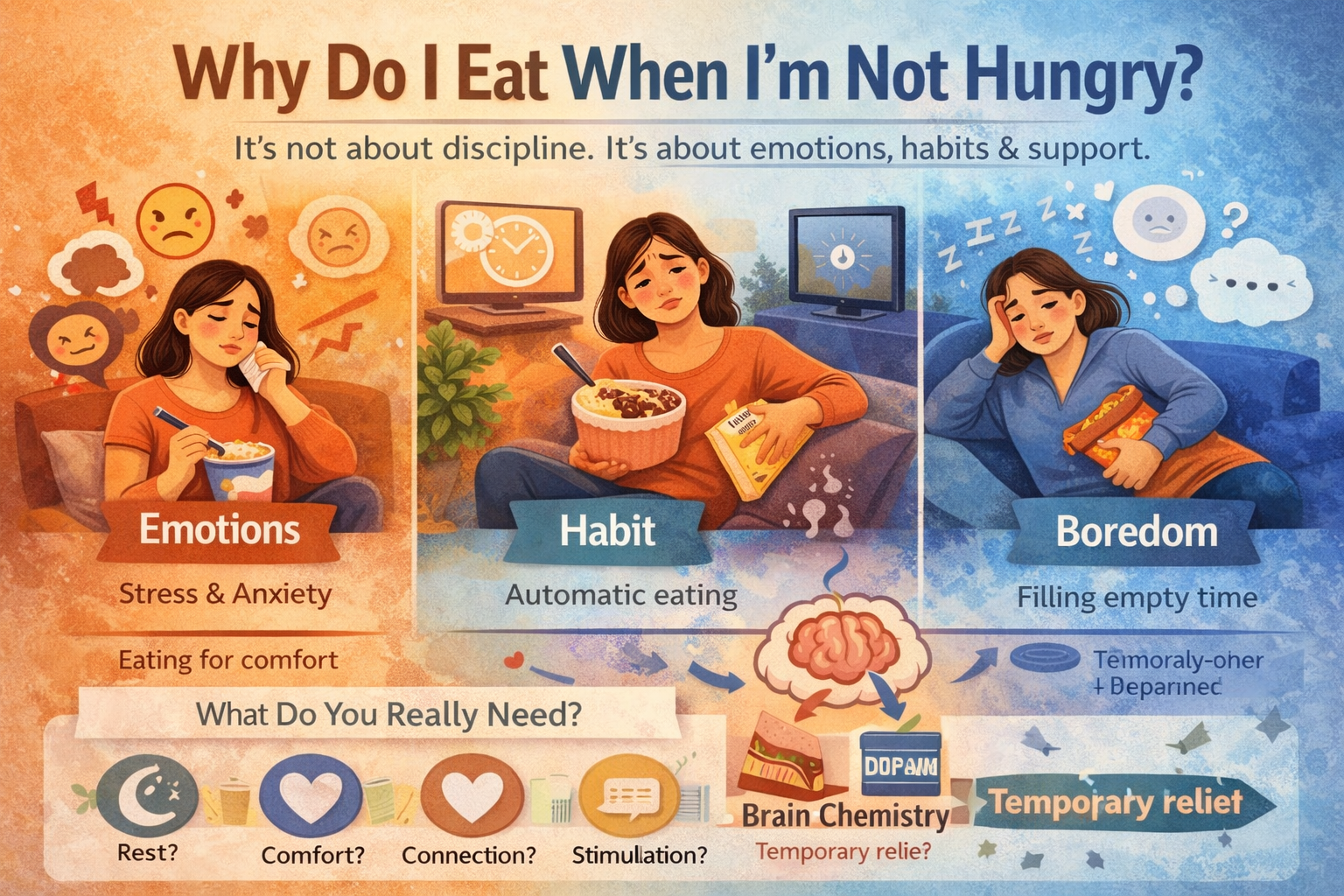
Eating when not hungry is a common pattern driven by emotions, habits, and nervous system responses. Eating when you’re not hungry is usually driven by emotions, stress, habits, or nervous system responses, not a lack of control. If you find yourself eating without physical hunger, your body may be trying to cope, regulate, or meet an unmet need.
This is not something to fix with discipline. It’s something to understand and support.
What Does It Mean to Eat Without Hunger?
Eating without hunger means eating when your body does not need energy.
It often feels:
- Sudden
- Automatic
- Emotion-driven
Eating without hunger is when food is used to cope with emotions, habits, or environmental triggers rather than physical need.
Why Do I Eat When I’m Not Hungry?
There are several underlying reasons.
Emotional Triggers
Stress, anxiety, or overwhelm can lead to eating as a coping tool.
Stress and Anxiety
Your body looks for quick ways to feel better food provides temporary relief.
Habit and Routine
Patterns like:
- Eating while watching TV
- Snacking at certain times
These become automatic over time.
Boredom
Food can become a way to fill time or create stimulation.
What Happens in the Brain During This?
This pattern is linked to your brain’s reward system.
When you eat certain foods, dopamine is released, creating temporary relief.
This creates a cycle:
Trigger → Eating → Relief → Repeat
What Is the Role of the Nervous System?
Your nervous system plays a key role.
When your body feels stressed:
- It looks for quick comfort
- Food becomes a fast solution
This is why eating feels automatic; it’s a regulatory response.
How Do You Know If Eating Is Emotional?
You may notice:
- Eating after feeling full
- Automatic or unconscious eating
- Strong cravings
- Guilt after eating
- Using food to cope
These are signals of deeper needs.
Why Is It Hard to Stop Eating Without Hunger?
This pattern is about regulation, not discipline.
When your body feels overwhelmed, it uses food to cope.
Your body is trying to support you.
How to Stop Eating When Not Hungry
Focus on awareness and support.
1. Build Awareness
Notice when and why it happens.
2. Pause Before Eating
Take 1–2 minutes before reacting.
3. Identify the Real Need
Ask:
- Do I need rest?
- Do I need comfort?
- Do I feel stressed?
4. Replace the Habit
Try:
- Walking
- Journaling
- Drinking water
- Talking
Practical Strategies That Help
- Practice mindful eating
- Eat balanced meals
- Notice triggers
- Build emotional awareness
Small changes create big shifts.
How to Build a Healthier Relationship with Food
Focus on:
- Removing guilt
- Listening to your body
- Understanding emotions
- Creating balance
This leads to long-term change.
Daily Habits to Reduce Non-Hunger Eating
- Eat regularly
- Stay hydrated
- Manage stress
- Stay aware of your body
Consistency builds stability.
When This Pattern Needs Support
If eating feels:
- Frequent
- Automatic
- Hard to control
Support can help you move forward safely.
How Coaching Can Help
With the right support, you can:
- Understand your triggers
- Regulate your nervous system
- Build awareness
- Create sustainable habits
Final Thoughts
Eating when you’re not hungry is not a failure; it’s a signal.
Your body is communicating a need.
When you understand it, you can respond with support instead of control.
FAQs
Why do I eat when I’m not hungry?
It’s often due to stress, emotions, habits, or nervous system responses.
Is boredom eating normal?
Yes, but frequent patterns may need awareness.
How do I stop mindless eating?
Pause, build awareness, and replace the habit.
Can stress cause overeating?
Yes, stress increases emotional eating.
Can this habit be changed?
Yes, with awareness and consistent support.