
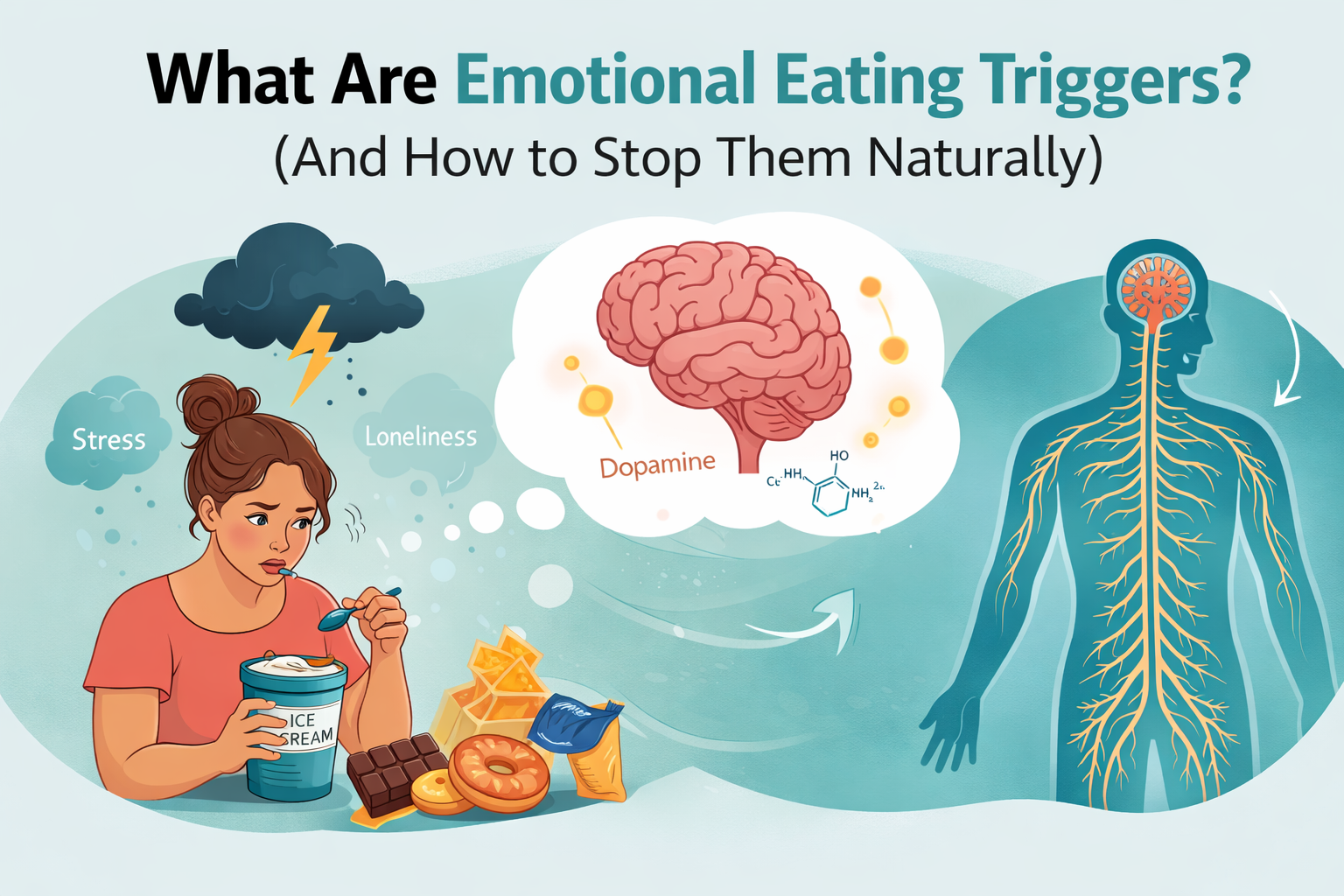
Emotional eating triggers are emotional, physical, or environmental cues that lead you to eat when you are not physically hungry. These triggers are often connected to stress, anxiety, boredom, loneliness, fatigue, food restriction, or unresolved emotions.
If you find yourself turning to food for comfort, it does not mean you lack discipline. Emotional eating is often a coping response. Food may provide comfort, distraction, relief, or a short sense of calm when emotions feel difficult to manage.
Understanding your triggers is the first step toward changing the pattern. When you know what starts the urge, you can respond with more awareness instead of reacting automatically.
In this article, you will learn what emotional eating triggers are, why they happen, how to recognize them, and simple ways to stop emotional eating naturally without dieting or shame.
Medical note: This article is for educational and wellness purposes only. It does not replace medical care, nutrition therapy, mental health care, or eating disorder treatment. If eating feels out of control, secretive, distressing, or is followed by restriction, purging, or intense shame, speak with a qualified healthcare provider.
What Are Emotional Eating Triggers?
Emotional eating triggers are internal or external cues that create the urge to eat for emotional reasons instead of physical hunger.
An internal trigger comes from inside you. It may be a feeling, thought, body sensation, or stress response. An external trigger comes from your environment, such as seeing food, watching TV, being around certain people, or passing a place where you usually buy snacks.
Common emotional eating triggers include:
Stress
Anxiety
Boredom
Loneliness
Fatigue
Conflict
Sadness
Feeling overwhelmed
Food guilt
Restrictive dieting
Certain times of day
Specific places or routines
Emotional eating often feels sudden, specific, and urgent. You may crave comfort foods such as sweets, chips, bread, chocolate, or snacks even if you recently ate.
Cleveland Clinic explains emotional eating as eating in response to feelings rather than physical hunger, often as a way to cope with stress, boredom, anxiety, or other emotions. Their guide to emotional eating gives a helpful overview of how this pattern can show up.
For a deeper foundation, this guide on what emotional eating is can help you understand the difference between emotional hunger and physical hunger.
Emotional Eating Triggers vs Physical Hunger
One reason emotional eating feels confusing is that emotional hunger can feel like real hunger. But the pattern is often different.
Physical Hunger
Physical hunger usually:
Builds gradually
Comes with body signals
Can be satisfied by different foods
Improves after eating enough
Usually stops when you feel full
Emotional Eating Trigger
An emotional eating trigger often:
Comes on suddenly
Feels urgent
Craves a specific comfort food
Appears after stress or emotion
May continue after fullness
May lead to guilt afterward
Sometimes both happen at the same time. You may be physically hungry and emotionally stressed. The goal is not to judge yourself. The goal is to pause and understand what your body is asking for.
Why Do Emotional Eating Triggers Happen?
Emotional eating triggers usually come from a mix of emotional, physical, behavioral, and nervous system factors.
Stress and Anxiety
Stress is one of the most common emotional eating triggers.
When stress is high, the body may look for quick comfort or energy. For many people, this increases cravings for sweet, salty, or high-energy foods.
The American Psychological Association has reported that many adults eat to manage stress, and stress can affect eating behaviors in different ways. You can read more in their report on stress and eating.
Stress eating may happen after:
A long workday
A difficult conversation
Financial pressure
Family conflict
Too many responsibilities
Feeling emotionally drained
Trying to push through exhaustion
In these moments, food may feel like the fastest way to calm the body.
Boredom and Loneliness
Boredom and loneliness can also trigger emotional eating.
Food can create stimulation, comfort, and something to do. If you feel disconnected, under-stimulated, or emotionally flat, eating may become a way to fill that space.
You may notice this trigger when you:
Snack while watching TV
Open the fridge without hunger
Eat when you feel lonely at night
Reach for food during quiet moments
Crave snacks when nothing feels interesting
The real need may be connection, stimulation, rest, or comfort.
Restrictive Dieting
Restrictive dieting can make emotional eating triggers stronger.
When you label foods as “bad,” skip meals, or try to eat very little during the day, your body and brain may become more focused on food. This can make cravings feel stronger later.
Restriction can create a cycle:
Restrict food
Feel deprived
Crave strongly
Eat past comfort
Feel guilty
Restrict again
This is why emotional eating often gets worse when the only strategy is more control.
Emotional Suppression
Emotional suppression means pushing feelings down instead of acknowledging them.
If emotions build up without being processed, they may show up through food cravings, late-night eating, or automatic snacking.
You may emotionally eat when you are trying not to feel:
Anger
Sadness
Fear
Shame
Loneliness
Disappointment
Exhaustion
Resentment
Food can create temporary relief, but the emotion often remains underneath.
Environmental Cues
Not all triggers are emotional at first. Some are environmental.
Examples include:
Seeing snacks on the counter
Eating while watching TV
Passing a bakery or drive-through
Keeping sweets near your desk
Eating at the same time every night
Snacking while scrolling your phone
The brain learns patterns. If a certain place or routine often includes food, the craving may appear automatically.
What Happens in Your Brain During Emotional Eating?
Emotional eating is closely linked to habit, reward, and relief.
When you eat a comforting food, your brain may experience temporary pleasure or calm. That relief can teach your brain to repeat the pattern the next time stress or emotion appears.
The cycle may look like this:
Trigger
Food craving
Eating
Temporary relief
Guilt or discomfort
More stress
Another craving
The relief is real, but it is usually short-lived. If the deeper need is not addressed, the urge often returns.
This is why shame does not help. Shame increases stress, and stress can increase emotional eating.
This article on the emotional eating cycle can help you understand why the pattern repeats and where to interrupt it.
How the Nervous System Influences Emotional Eating
Your nervous system plays an important role in emotional eating.
When your body feels stressed or unsafe, it may move into a survival state. In that state, food can feel like a fast way to regulate your body.
You may notice:
Urgent cravings
Eating quickly
Trouble pausing
Feeling disconnected from fullness
Wanting comfort foods
Eating even after a meal
Feeling guilty afterward
This does not mean emotional eating is only a habit. It can also be a nervous system response.
When your body feels overwhelmed, food may become one of the fastest ways to feel grounded, comforted, or distracted.
How Do You Know If You Are Eating Emotionally?
You may be experiencing emotional eating if:
You eat without physical hunger
You crave specific comfort foods
The urge comes on suddenly
Eating feels automatic or urgent
You eat after feeling full
You feel guilt or regret afterward
You eat when stressed, bored, or lonely
Food feels like your main coping tool
These signs are not failures. They are information.
A helpful question is:
“What happened right before I wanted to eat?”
That question can help you find the trigger.
Why Emotional Eating Is So Hard to Stop
Emotional eating is hard to stop because it often works in the short term.
Food may help you feel better for a few minutes. It may reduce stress, soften loneliness, distract from anxiety, or create comfort.
The problem is that the deeper need is still there.
That is why willpower alone usually does not work. If your body is overwhelmed, tired, underfed, or emotionally unsupported, it will keep looking for relief.
Mayo Clinic recommends identifying emotional eating triggers and finding healthier ways to cope with stress, boredom, and difficult emotions rather than relying on willpower alone. Their article on gaining control of emotional eating explains how recognizing patterns can help reduce emotional eating.
How to Stop Emotional Eating Naturally
Stopping emotional eating naturally means understanding the trigger and giving your body another way to feel supported.
Step 1: Track the Trigger
For one week, notice what happens before emotional eating.
Write down:
Time of day
What you felt
What happened before the urge
What food you wanted
Whether you were physically hungry
How you felt after eating
This is not for judgment. It is for pattern recognition.
Step 2: Pause Before Eating
A short pause creates space between the trigger and the response.
Try this:
Put both feet on the floor.
Take one slow breath.
Ask, “Am I physically hungry?”
Ask, “What am I feeling?”
Ask, “What do I need right now?”
You can still choose to eat. The pause is not a rule. It is a chance to listen.
Step 3: Name the Emotion
Naming the emotion can reduce the automatic feeling of the urge.
Try saying:
I feel stressed.
I feel lonely.
I feel tired.
I feel overwhelmed.
I feel unsupported.
I feel bored.
When you name the emotion, you can respond more directly.
Step 4: Regulate Your Body First
If the craving feels urgent, your body may need calming before choice feels possible.
Try:
Slow breathing
Grounding
Gentle stretching
Walking
Relaxing your jaw
Unclenching your hands
Stepping away from noise
For stress-based urges, this guide on EFT tapping for stress gives a simple body-based way to pause and support emotional overwhelm.
Step 5: Replace the Habit With the Right Support
Do not replace emotional eating with random distractions. Match the support to the need.
If you are lonely, connection may help.
If you are tired, rest may help.
If you are overwhelmed, a break may help.
If you are anxious, grounding may help.
If you are underfed, a real meal may help.
If you are bored, stimulation may help.
Helpful options include:
Journaling
Walking
Calling someone
Drinking tea
Sitting outside
Resting
Stretching
Listening to music
Taking a short break
Food can still be part of your life. The goal is not control. The goal is choice.
Practical Tools to Break the Cycle
The 60-Second Pause
Before eating, pause for one minute and ask:
What am I feeling?
What do I need?
Am I physically hungry?
This helps interrupt automatic eating.
The Trigger Journal
Write down emotional eating moments without judgment.
Use this format:
Trigger:
Emotion:
Food wanted:
Body sensation:
Need underneath:
Supportive next step:
Over time, patterns become easier to see.
The Hunger Check
Ask:
Is my hunger physical, emotional, or both?
If it is physical, eat something satisfying.
If it is emotional, add emotional support.
If it is both, you may need food and comfort.
The After-Eating Reset
After emotional eating, do not punish yourself.
Try saying:
This was information.
I can learn from this.
I do not need to restrict myself later.
My next choice can still support me.
This helps break the guilt cycle.
How to Break the Pattern Long Term
Emotional eating changes when you build a life with more support and fewer trigger overloads.
Helpful long-term steps include:
Eat regular meals
Avoid extreme restriction
Sleep when possible
Reduce daily stress
Build emotional awareness
Create non-food coping tools
Practice self-compassion
Notice patterns without shame
Support your nervous system
Stop skipping meals after emotional eating
For a broader strategy, this guide on how to break the cycle of emotional eating offers practical steps for moving out of the trigger, craving, guilt, and restriction loop.
Daily Habits to Reduce Emotional Eating Triggers
Small habits can reduce the intensity of triggers over time.
Try to:
Eat balanced meals regularly
Drink enough water
Prioritize sleep and rest
Take breaks before burnout
Reduce screen overload
Eat with fewer distractions
Notice body tension earlier
Journal emotions briefly
Move gently
Stop using guilt as motivation
Consistency matters more than perfection.
When to Seek Support
Emotional eating is common, but support may be important if the pattern feels frequent, overwhelming, or hard to manage alone.
Consider support if you notice:
Eating in secret
Feeling out of control around food
Frequent shame after eating
Binge eating episodes
Restricting after emotional eating
Food feels like your only coping tool
Eating to avoid painful emotions
The pattern affects daily life
If emotional eating triggers feel difficult to manage, emotional eating and food cravings support may help you understand triggers and build calmer tools without more dieting.
Final Thoughts
Emotional eating triggers are not proof that you are failing. They are signals.
Your body may be asking for comfort, rest, safety, nourishment, connection, or emotional support. When you understand the trigger, you can respond with more compassion and less guilt.
Start small. Notice the pattern. Pause before eating. Name the emotion. Support your body. Build one non-food coping tool.
Change becomes more natural when your body feels supported, not controlled.
FAQs
What triggers emotional eating?
Common emotional eating triggers include stress, anxiety, boredom, loneliness, fatigue, restrictive dieting, conflict, and unresolved emotions.
How do I stop emotional eating triggers?
Identify your triggers, pause before eating, name the emotion, and use supportive coping tools like breathing, journaling, walking, or rest.
Is emotional eating normal?
Yes. Emotional eating is common. Frequent, distressing, or out-of-control patterns may need more support.
Can stress cause emotional eating?
Yes. Stress can increase cravings and make food feel like a quick source of comfort or relief.
How do I reduce food cravings?
Eat regular balanced meals, sleep well, manage stress, avoid extreme restriction, and notice emotional triggers.
What is the difference between emotional hunger and physical hunger?
Physical hunger builds gradually. Emotional hunger often feels sudden, urgent, and focused on a specific comfort food.
Why do I emotionally eat at night?
Night eating may be linked to stress, fatigue, restriction during the day, habit, boredom, or needing comfort after a long day.
Should I avoid trigger foods?
Not always. Strict avoidance can make cravings stronger. It may help to reduce restriction and build more balanced food confidence.
What should I do after emotional eating?
Avoid punishment. Notice the trigger, return to regular eating, and choose one supportive action.
When should I get help for emotional eating?
Get support if emotional eating feels frequent, secretive, distressing, hard to control, or followed by guilt, restriction, or shame.