
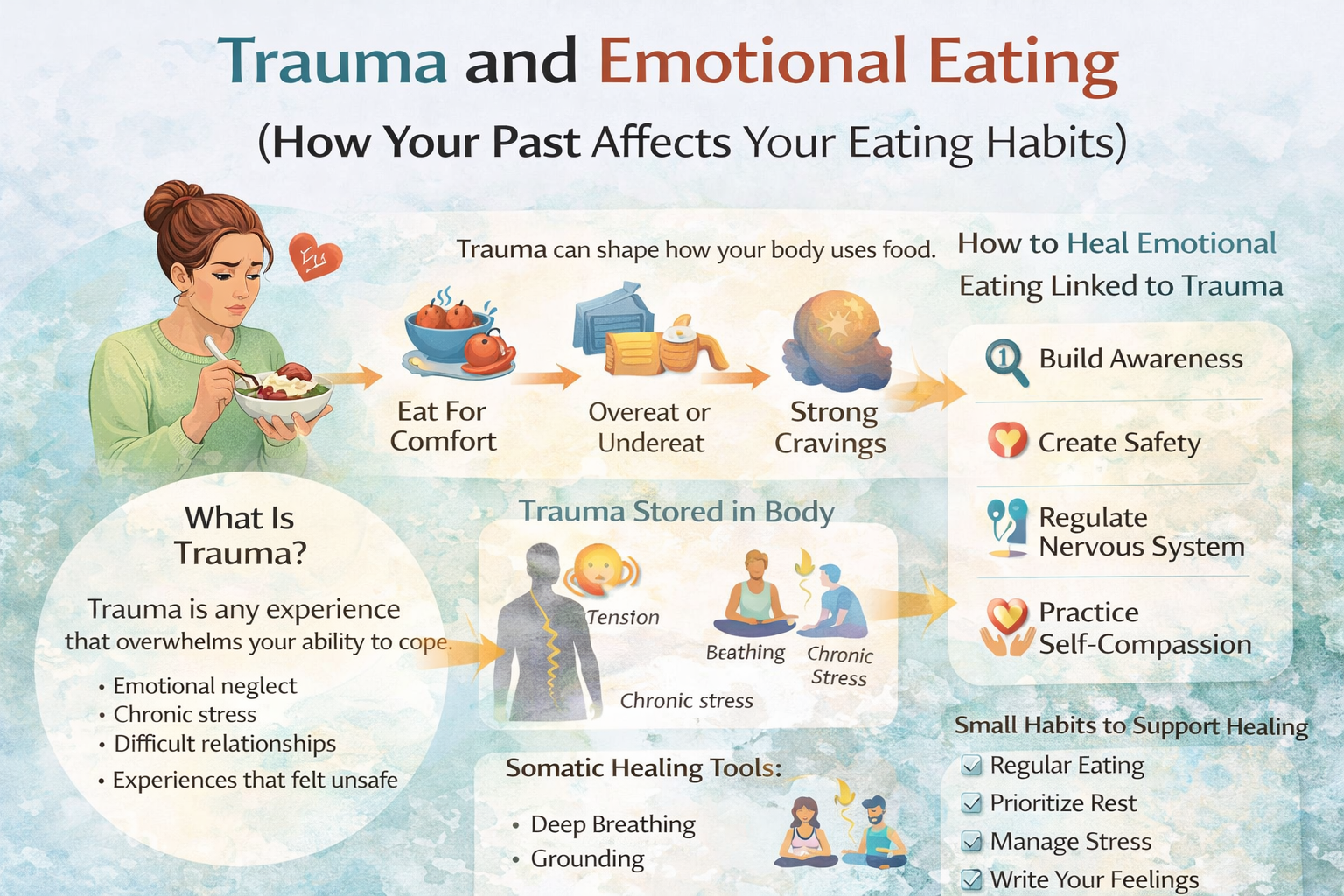
Trauma and emotional eating can be closely connected. For some people, eating becomes a way to manage stress, emotions, body discomfort, or a sense of feeling unsafe. This does not mean you lack control. It may mean your body learned to use food as a coping tool.
Emotional eating can happen when food provides comfort, distraction, numbness, or temporary relief. If you turn to food during difficult moments, it may not always be about physical hunger. It may be your nervous system trying to feel safer or more regulated.
Understanding this connection can help you approach emotional eating with more compassion. The goal is not to blame yourself. The goal is to understand what your body has been trying to do for you.
Medical note: This article is for educational and wellness purposes only. It does not replace trauma therapy, mental health care, medical care, diagnosis, or eating disorder treatment. If trauma symptoms, binge eating, restriction, purging, panic, depression, or thoughts of self-harm are present, please seek support from a qualified healthcare provider or licensed mental health professional.
What Is Trauma?
Trauma is not only about what happened. It is also about how your body and nervous system experienced it.
SAMHSA describes individual trauma as an event, series of events, or circumstances that are experienced as physically or emotionally harmful or life threatening and have lasting adverse effects on well-being.
Trauma may include:
Emotional neglect
Chronic stress
Loss or abandonment
Difficult relationships
Bullying or humiliation
Unpredictable environments
Experiences that felt unsafe
Physical, emotional, or sexual harm
Growing up without emotional support
Two people can go through similar events and respond differently. Trauma is deeply personal. What matters is how the experience affected your body, emotions, safety, and ability to cope.
How Trauma Can Affect Eating Habits
Trauma can change how your body relates to food, hunger, fullness, comfort, and control.
When your body does not feel safe, food may become a way to feel calmer, grounded, or protected. Eating may help create a brief sense of relief when emotions feel too intense.
Trauma-related eating patterns may include:
Eating for comfort
Eating to numb feelings
Eating when not physically hungry
Feeling disconnected from hunger cues
Overeating during emotional stress
Undereating when anxious or shut down
Feeling unsafe around certain foods
Feeling guilt or shame after eating
Using food to create routine or control
These patterns are not failures. They may be adaptive responses your body learned during times when support, safety, or emotional regulation were not available.
For a basic explanation of emotional eating, this guide on what emotional eating is may help clarify how emotions and food become connected.
The Link Between Trauma and Emotional Eating
Emotional eating often develops as a coping strategy.
The pattern may look like this:
A feeling becomes overwhelming.
Food provides comfort or numbness.
The body feels temporary relief.
The brain remembers food as safety.
The same urge returns during future stress.
Over time, this can become automatic. You may reach for food before you fully understand what you are feeling.
This is not because you are weak. It is because your brain and body are trying to reduce discomfort quickly.
NEDA notes that traumatic events can be a significant risk factor for eating disorders, especially those involving bingeing and purging symptoms. You can read more from the National Eating Disorders Association on eating disorders and trauma.
Emotional eating is not always an eating disorder. But when eating feels out of control, secretive, distressing, or tied to shame and restriction, professional support matters.
How Trauma Can Show Up in the Body
Trauma is not only mental. It can also affect the body.
You may notice:
Muscle tension
Shallow breathing
Digestive discomfort
Emotional sensitivity
Feeling numb or disconnected
Strong reactions to small triggers
Difficulty relaxing
Feeling constantly on edge
Trouble noticing hunger or fullness
Traumatic stress can sometimes lead people to feel either overwhelmed by emotion or emotionally numb. NCBI’s trauma-informed care guidance discusses how trauma can affect emotional regulation and the ability to manage difficult feelings. You can read more in this NCBI resource on understanding the impact of trauma.
When body discomfort builds, food may become one way to self-soothe. This is why trauma-related emotional eating often needs a safety-based approach rather than a control-based approach.
What Role Does the Nervous System Play?
Your nervous system helps your body detect safety, stress, and threat.
When the body feels unsafe, it may shift into survival states.
Fight
You may feel tense, irritated, reactive, or restless.
Flight
You may feel anxious, busy, panicked, or unable to slow down.
Freeze
You may feel numb, stuck, disconnected, or shut down.
In these states, food can become a quick way to feel calmer or more present. Some people eat to feel comforted. Others lose appetite because their body feels too activated or shut down.
This is why trauma and emotional eating are often connected through the nervous system. The eating pattern may be trying to help the body regulate.
How Do You Know If Eating May Be Trauma-Related?
Eating may be connected to deeper emotional or trauma patterns if you notice:
Eating to soothe emotions
Eating when you feel unsafe or overwhelmed
Feeling disconnected from hunger and fullness
Eating feels automatic or hard to pause
Strong guilt or shame after eating
Cravings after emotional triggers
Overeating after conflict or stress
Undereating when anxious or numb
Feeling afraid of losing control around food
Using food to avoid memories or feelings
These signs do not prove that trauma is the only cause. They are clues. They suggest that your eating pattern may be connected to emotional safety, nervous system stress, or past experiences.
This article on the emotional eating cycle may help you understand how triggers, eating, temporary relief, and guilt can repeat.
Why Trauma-Based Emotional Eating Is Hard to Stop
Trauma-based emotional eating can be hard to stop because the pattern may be rooted in protection.
Food may have helped you survive emotionally. It may have offered comfort when comfort was missing. It may have helped you feel grounded when your body felt unsafe.
That is why willpower often does not work.
If your body believes food is the safest available coping tool, forcing yourself to stop can feel threatening. Restriction may even make the pattern stronger.
A better question is not:
“Why can’t I stop?”
A more helpful question is:
“What is this eating pattern trying to protect me from feeling?”
That question creates compassion and opens the door to real change.
How to Heal Emotional Eating Linked to Trauma
Healing starts with safety, not control.
You do not need to fix everything quickly. Trauma-informed change usually happens through small, consistent steps that help the body feel safer.
1. Build Awareness Without Judgment
Start by noticing the pattern.
Ask yourself:
When do I emotionally eat?
What happened before the urge?
What emotion was present?
Did my body feel tense, numb, or unsafe?
Was I hungry, tired, lonely, or overwhelmed?
What did food help me feel or avoid?
Do not use these questions to criticize yourself. Use them to gather information.
2. Create a Sense of Safety
Before trying to change the behavior, help your body feel safer.
This may include:
Sitting down
Slowing your breathing
Putting both feet on the floor
Wrapping yourself in a blanket
Reducing noise or stimulation
Drinking water
Stepping away from conflict
Noticing the room around you
Small safety signals can make the urge feel less urgent.
3. Regulate Your Nervous System
Body-based regulation can help create space before emotional eating.
Try:
Slow breathing
Grounding
Gentle movement
Stretching
Relaxing your jaw
Unclenching your hands
Looking around the room
Naming five things you see
The goal is not to force calm. The goal is to help your body feel less alone in the emotional experience.
4. Practice Self-Compassion After Eating
What you do after emotional eating matters.
Shame often keeps the cycle going. If you emotionally eat and then punish yourself, restrict food, or call yourself a failure, the body may feel even less safe.
Try saying:
“That was a coping response.”
“My body was trying to help me.”
“I can learn from this without punishing myself.”
“My next choice can still support me.”
Self-compassion does not mean ignoring the pattern. It means changing the pattern without shame.
5. Rebuild Trust With Food
Trauma and dieting can both disconnect you from hunger, fullness, and body trust.
To rebuild trust, focus on:
Eating regularly
Reducing food guilt
Avoiding extreme restriction
Not skipping meals after emotional eating
Practicing gentle fullness awareness
Allowing satisfying foods
Not using food as punishment or reward
This guide on how to heal your relationship with food may help you think about food trust, body signals, and emotional safety in a more supportive way.
What Are Somatic or Body-Based Approaches?
Somatic means body-based. Somatic tools focus on body sensations, breath, movement, and awareness.
Because trauma can affect the body and nervous system, body-based tools may help some people feel more grounded.
Examples include:
Slow breathing
Grounding exercises
Gentle stretching
Body scanning
Mindful walking
Supportive touch
Relaxing tense muscles
Noticing body sensations
These practices should feel gentle and choice-based. If a practice feels overwhelming, stop and return to something simpler, such as opening your eyes, looking around the room, or feeling your feet on the floor.
Practical Steps You Can Start Today
You can begin with small steps.
Try this simple process:
Pause before eating.
Take one slow breath.
Name what you are feeling.
Ask what your body needs.
Choose one supportive action.
Eat if you still choose to eat.
Avoid punishment afterward.
Supportive actions may include:
Resting
Walking
Journaling
Texting someone safe
Sitting outside
Drinking water
Stretching gently
Taking a quiet break
Listening to calming music
The goal is not to never emotionally eat again. The goal is to have more options.
Daily Habits That Support Healing
Small daily habits can help your body feel safer over time.
Try to:
Eat regular meals
Prioritize rest
Drink enough water
Reduce overstimulation
Practice grounding
Sleep when possible
Notice emotional triggers
Take breaks before burnout
Move gently
Speak to yourself with less criticism
Healing is not about perfection. It is about repetition, safety, and support.
When to Seek Support
Support is important if emotional eating feels deeply rooted, overwhelming, or connected to past experiences.
Consider professional support if you notice:
Binge eating
Purging
Food restriction
Secretive eating
Panic or trauma symptoms
Feeling unsafe in your body
Intense guilt or shame around food
Eating to numb painful memories
Depression or hopelessness
Difficulty functioning in daily life
If trauma is central to your experience, licensed trauma therapy is usually the safest and most appropriate support. Coaching may help with emotional eating awareness and everyday coping skills, but it is not a replacement for trauma therapy.
This guide on EFT coaching vs therapy may help you understand the difference between coaching support and clinical therapy.
How Trauma-Informed Support Can Help
Trauma-informed support focuses on safety, choice, consent, pacing, and compassion.
The goal is not to force change. The goal is to understand why the pattern exists and build safer ways to respond.
Support may help you:
Understand emotional eating triggers
Notice nervous system patterns
Reconnect with body cues
Reduce shame around food
Build grounding tools
Practice self-compassion
Create sustainable eating habits
Know when therapy is needed
If emotional eating and cravings feel frequent or difficult to manage, emotional eating support may help with non-clinical support around triggers, food guilt, cravings, and body awareness.
Building a Healthier Relationship With Food
A healthier relationship with food after trauma is not built through control. It is built through trust.
Focus on:
Listening to your body
Eating enough
Reducing guilt
Honoring emotional needs
Creating structure without rigidity
Allowing comfort without shame
Building coping tools beyond food
Respecting your pace
Food may have been part of how you survived. You do not need to hate that part of yourself. You can thank your body for trying to protect you while slowly building new ways to feel safe.
Final Thoughts
Trauma and emotional eating are often connected through the nervous system, emotions, safety, and coping.
If food has become a way to feel safe, calm, numb, or comforted, that does not mean you are broken. It means your body found a way to get through difficult moments.
Change becomes more possible when you stop fighting your body and start listening to what it is trying to communicate.
Start small. Pause before eating. Notice the emotion. Support your body. Practice self-compassion. Seek trauma-informed support when needed.
Your eating habits can change, but they do not need to change through shame. They can change through safety, understanding, and care.
FAQs
Can trauma cause emotional eating?
Yes. Trauma can contribute to emotional eating when food becomes a way to cope, feel safe, or regulate emotions.
How do I know if my eating is trauma-related?
Eating may be trauma-related if it feels automatic, emotionally driven, hard to control, or connected to past stress or unsafe feelings.
Why do I feel out of control around food?
Feeling out of control can happen when your nervous system uses food for comfort, safety, or emotional regulation.
Can emotional eating be healed?
Yes. Emotional eating can improve with awareness, nervous system support, self-compassion, and appropriate professional help.
Is trauma-informed coaching the same as therapy?
No. Coaching can support awareness and coping skills, but trauma therapy is clinical care for trauma treatment.
What helps trauma-related emotional eating?
Safety-based tools such as grounding, slow breathing, regular meals, self-compassion, and trauma-informed support can help.
Should I diet to stop emotional eating?
No. Restrictive dieting often increases cravings, shame, and emotional eating cycles.
What are signs I need professional help?
Seek help if eating feels out of control, secretive, linked to purging or restriction, or connected to trauma symptoms, depression, or intense shame.
Can body-based tools help emotional eating?
Yes. Gentle body-based tools may help some people feel safer and more regulated before reacting to food urges.
What should I do after emotional eating?
Avoid punishment. Notice what triggered the eating, return to regular meals, and choose one supportive action.