
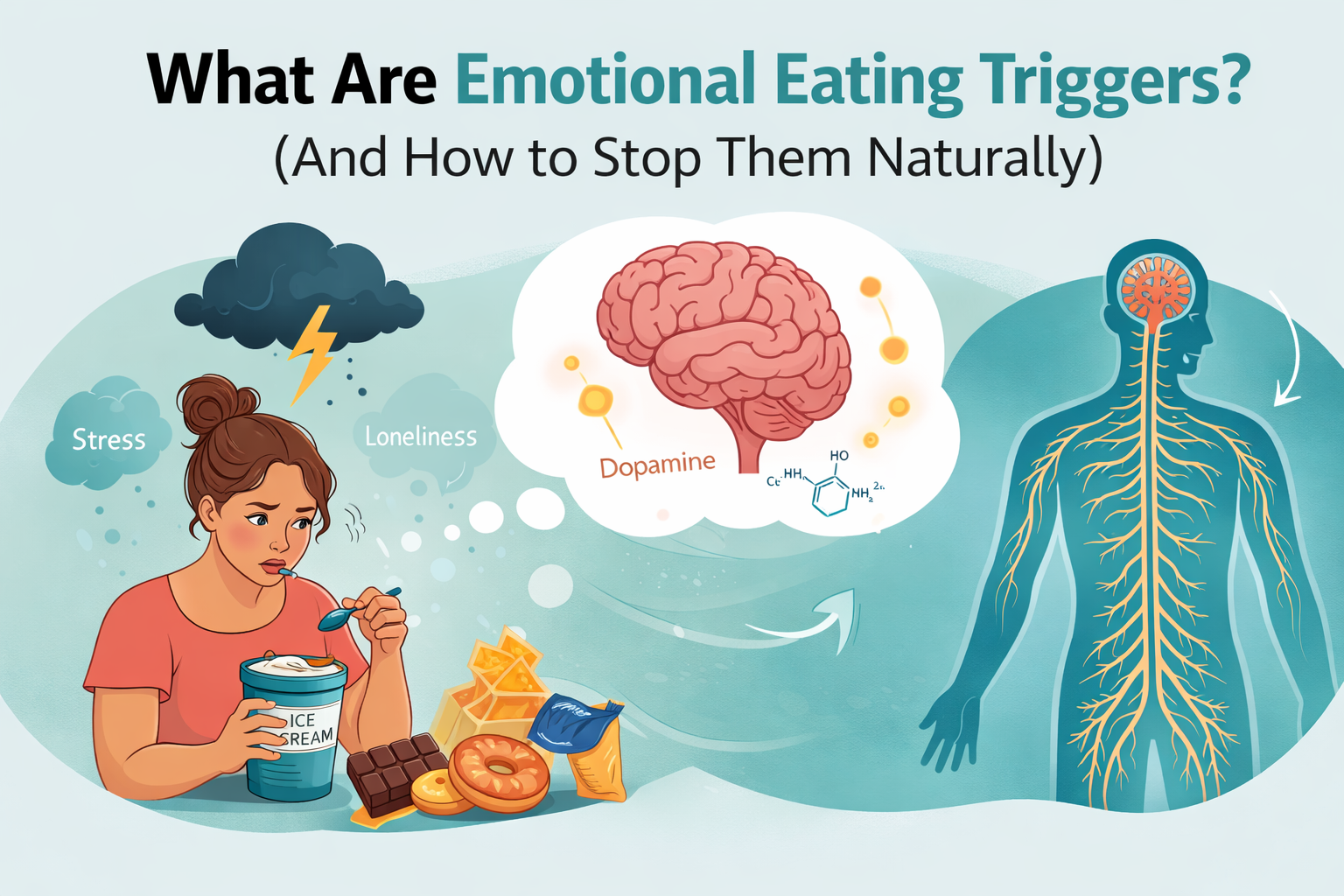
Emotional eating triggers are emotional or environmental signals that cause you to eat when you’re not physically hungry. These are often linked to stress, anxiety, boredom, or unresolved emotions.
If you find yourself turning to food for comfort, it’s not a lack of discipline. It’s often your nervous system trying to cope and feel safe. Understanding these triggers is the first step toward lasting change.
What Are Emotional Eating Triggers?
Emotional eating triggers are internal or external cues that lead you to eat for emotional reasons rather than physical hunger.
Emotional eating is when you eat to cope with feelings instead of responding to physical hunger.
Unlike physical hunger, emotional hunger feels sudden, specific, and urgent, often focused on comfort foods like sugar or snacks.
Why Do Emotional Eating Triggers Happen?
Emotional eating is usually driven by a mix of emotional, physical, and psychological factors.
Stress and Anxiety
When you’re stressed, your body releases cortisol, which increases cravings for high-energy foods.
Boredom and Loneliness
Food can become a way to fill emotional emptiness or create a distraction.
Restrictive Dieting
The more you restrict, the stronger cravings can become, leading to cycles of overeating.
Emotional Suppression
Unprocessed emotions build up over time and often show up through eating.
What Happens in Your Brain During Emotional Eating?
Emotional eating is closely linked to your brain’s reward system.
When you eat certain foods, your brain releases dopamine, creating temporary relief and pleasure.
This creates a cycle:
Emotion → Eating → Temporary relief → Repeat
Because the relief is short-lived, the pattern continues.
How Does the Nervous System Influence Emotional Eating?
Your nervous system plays a central role in emotional eating.
When your body feels stressed or unsafe:
- It enters a survival state
- It looks for quick comfort
- Food becomes a fast way to regulate
This is why emotional eating is not just a habit; it’s a nervous system response.
Until your body feels safe, these patterns can continue.
How Do You Know If You’re Eating Emotionally?
You may be experiencing emotional eating if:
- You eat without physical hunger
- Cravings feel sudden and specific
- Eating feels automatic or urgent
- You feel guilt or regret afterward
- Food becomes your main coping tool
These are signals, not failures.
Why Is Emotional Eating So Hard to Stop?
Emotional eating is not about discipline; it’s about regulation.
When your body feels overwhelmed, it uses food as a way to cope. This is why willpower alone doesn’t work.
Your body is trying to protect you, not work against you.
How to Stop Emotional Eating Naturally (Step-by-Step)
Instead of fighting the behavior, support your body.
1. Identify Your Triggers
Notice what you’re feeling before the urge to eat.
2. Pause Before Acting
Ask yourself:
“Am I physically hungry, or is this emotional?”
3. Regulate Your Nervous System
Use simple tools like breathing or grounding to calm your body.
4. Replace the Habit
Try:
- Walking
- Journaling
- Talking
- Resting
Practical Tools to Break the Cycle
Breathing Exercise
Slow breathing for 2–3 minutes helps calm your nervous system.
Emotional Check-In
Ask: “What am I feeling right now?”
Journaling Prompt
“What do I actually need in this moment?”
These create space between emotion and action.
Daily Habits to Reduce Emotional Eating
- Eat balanced meals regularly
- Prioritize sleep and rest
- Reduce daily stress
- Stay connected to your body
Consistency supports long-term change.
When to Seek Support
If emotional eating feels:
- Frequent
- Overwhelming
- Difficult to manage
Support can help you understand and shift these patterns safely.
How Coaching Can Support You
If you feel stuck, you don’t have to navigate this alone.
With the right support, you can:
- Understand your triggers
- Regulate your nervous system
- Build a healthier relationship with food
- Create sustainable habits
Final Thoughts
Emotional eating is not a failure; it’s a response.
Your body is trying to meet a need, whether it’s comfort, safety, or emotional support.
When you understand the root cause, change becomes more natural and sustainable.
FAQs
What triggers emotional eating?
Stress, anxiety, boredom, and unresolved emotions are the most common triggers.
How do I stop emotional eating?
Identify triggers, pause before eating, and use supportive coping strategies.
Is emotional eating normal?
Yes, but frequent patterns may indicate deeper emotional needs.
Can stress cause emotional eating?
Yes, stress hormones increase cravings and emotional eating.
How do I reduce food cravings?
Focus on balanced meals, emotional awareness, and nervous system support.