How to Build Emotional Resilience (And Feel More in Control of Your Emotions)

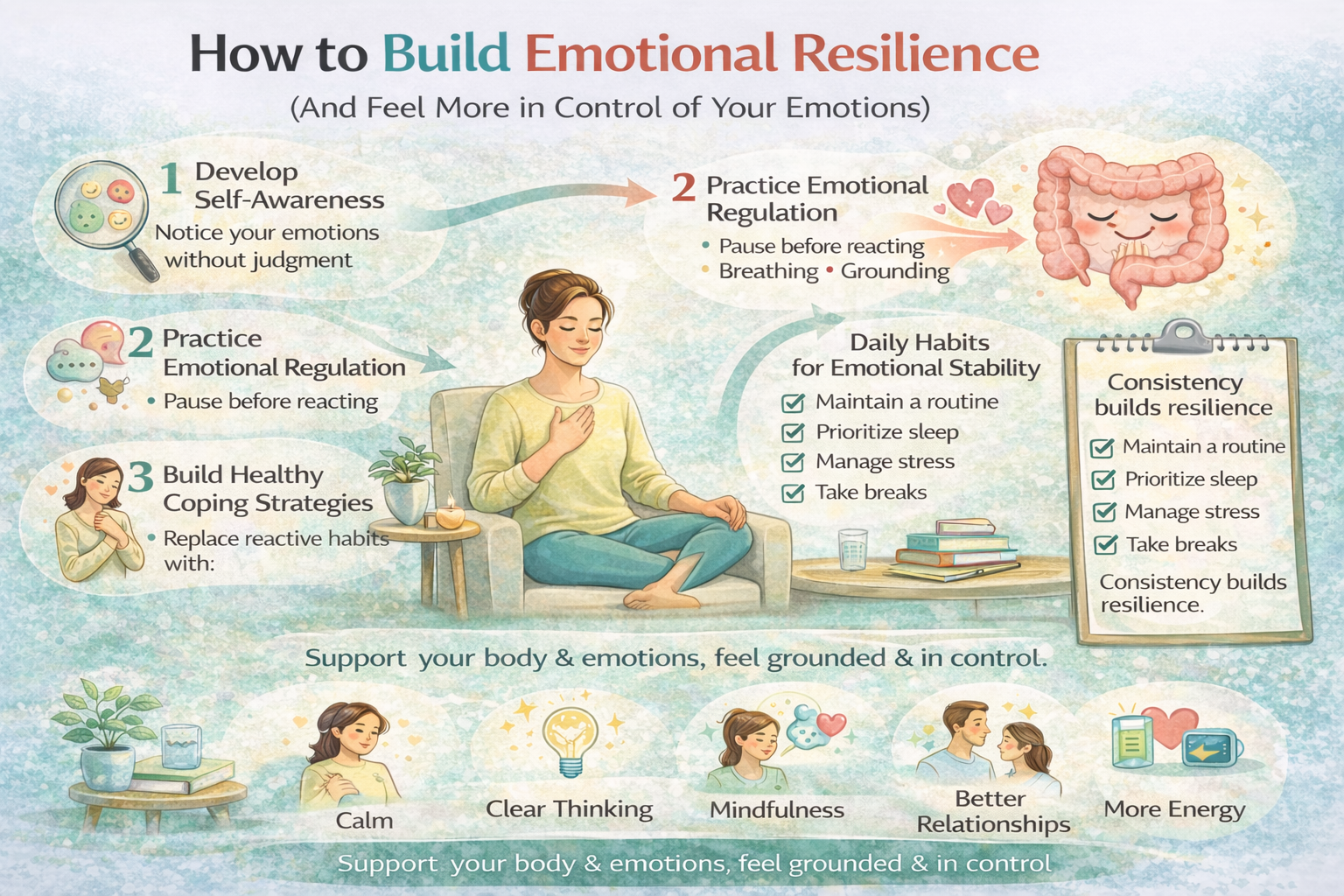
How to Build Emotional Resilience and Feel More in Control of Your Emotions

Emotional resilience is your ability to handle stress, process emotions, and recover from difficult moments without becoming completely overwhelmed. It helps you stay grounded, respond with more awareness, and feel more stable when life feels stressful. Building emotional resilience does not mean you never feel sad, anxious, angry, disappointed, or

Read More »
Chronic Stress Symptoms (And How It Affects Your Body and Mind)

Chronic Stress Symptoms: How Stress Affects Your Body and Mind

Chronic stress symptoms can appear when your body stays in a constant state of pressure without enough time to recover. Stress is not only a mental experience. It can affect your energy, mood, digestion, sleep, immune system, focus, and eating habits. If you feel tired, anxious, tense, emotionally drained, or

Read More »
Why Do I Crave Sugar (The Real Reasons Explained)

Why Do I Crave Sugar? The Real Reasons Explained

Why do I crave sugar? For many people, sugar cravings are not simply about willpower. They can be connected to blood sugar changes, stress, poor sleep, emotional triggers, food restriction, habits, and the brain’s reward system. A sugar craving is a strong urge to eat something sweet, even when you

Read More »
Woman practicing mindful self-care to stop emotional eating naturally without dieting or willpower

How to Stop Emotional Eating Naturally Without Dieting or Willpower

If you want to stop emotional eating naturally, trying harder to control food is usually not the most useful place to start. A more supportive approach is to understand what triggers the urge, check whether physical hunger is also present, make sure you are adequately nourished, pause before responding automatically,

Read More »
What Are Emotional Eating Triggers (And How to Stop Them Naturally)

Emotional Eating Triggers and How to Stop Them Naturally

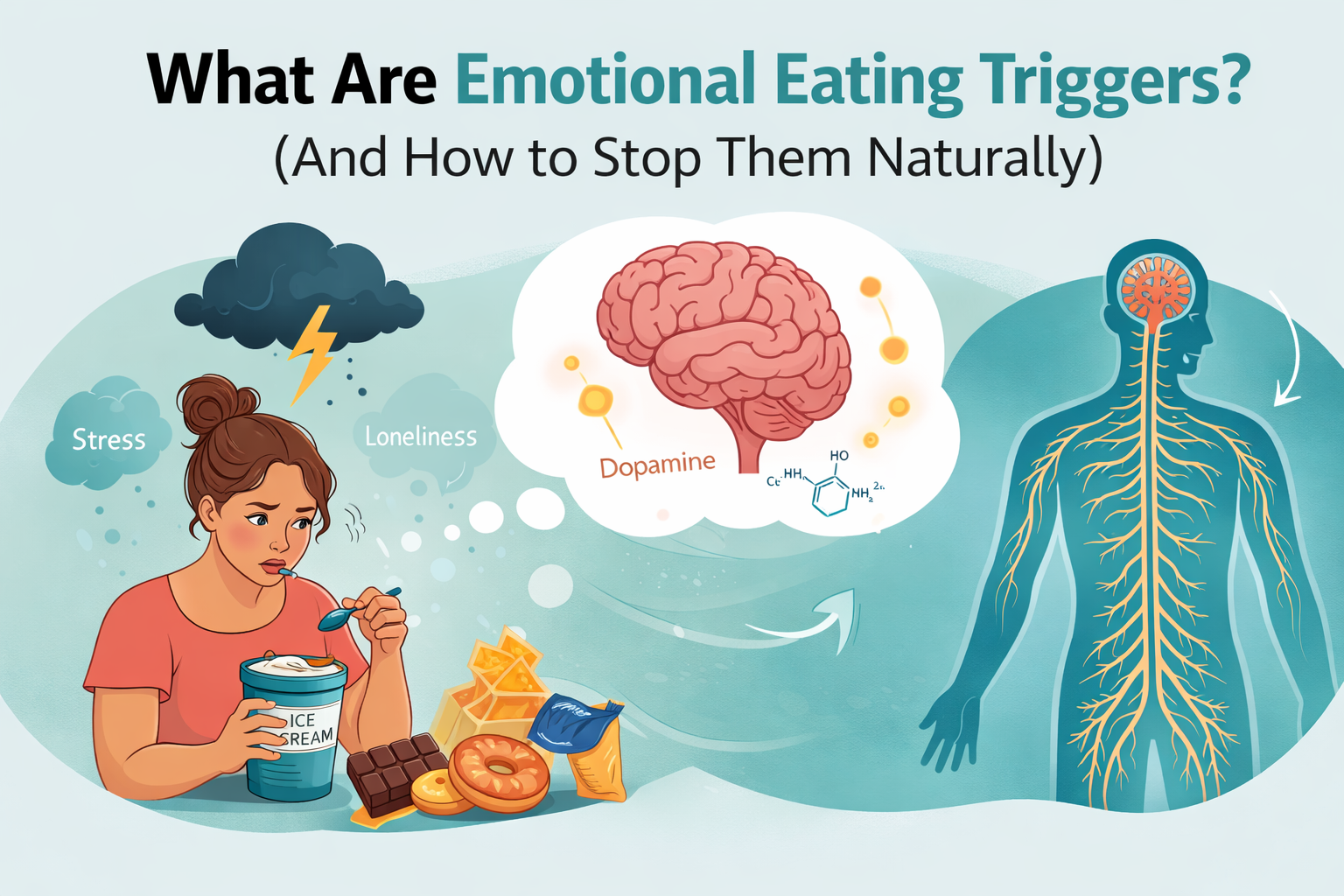
Emotional eating triggers are emotional, physical, or environmental cues that lead you to eat when you are not physically hungry. These triggers are often connected to stress, anxiety, boredom, loneliness, fatigue, food restriction, or unresolved emotions. If you find yourself turning to food for comfort, it does not mean you

Read More »

Get instant access to free resources and helpful insights—delivered straight to your mail inbox.

Subscription Form