
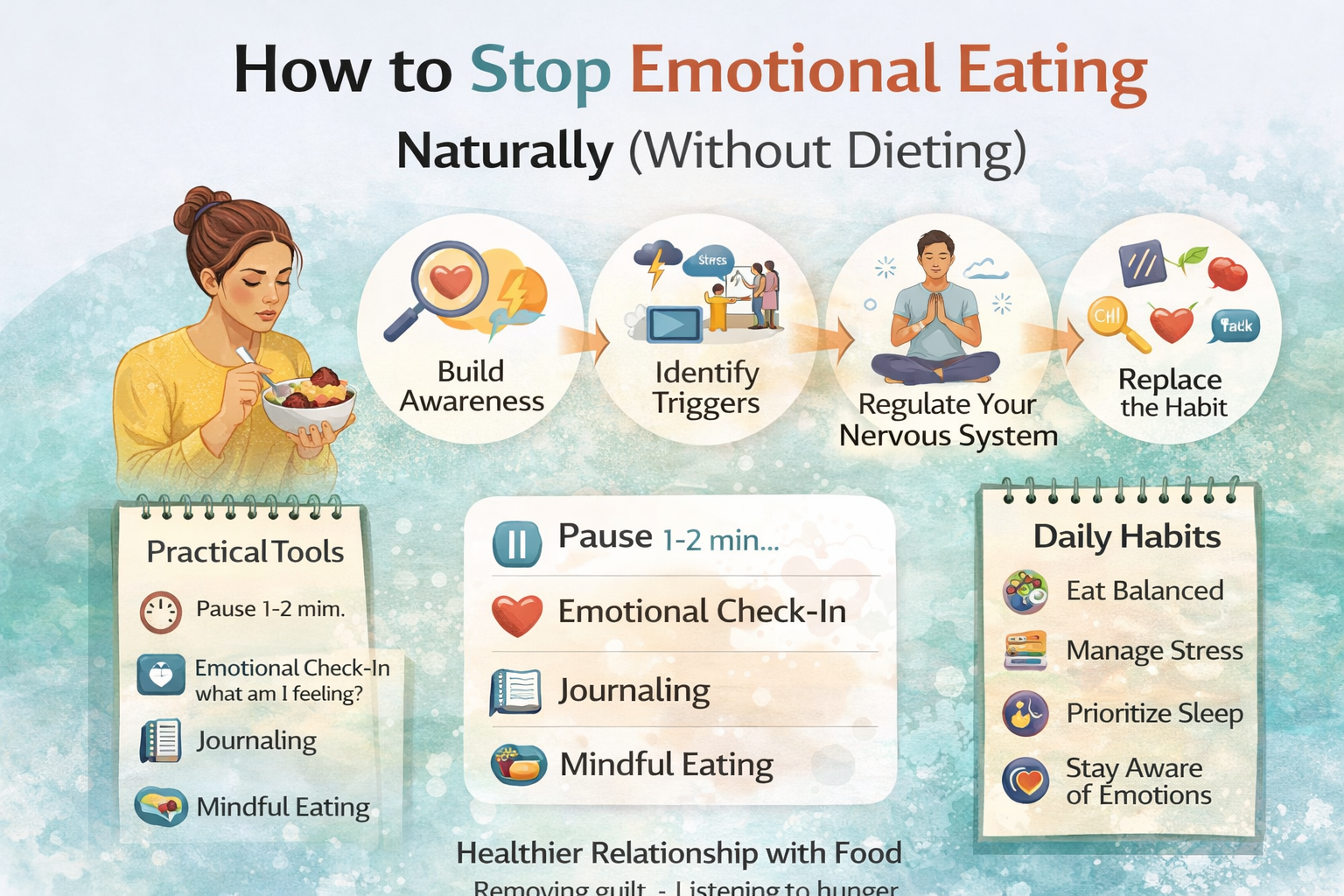
Stop emotional eating naturally by understanding your triggers, supporting your nervous system, and responding to emotions in a healthier way, not through dieting or willpower. Emotional eating happens when food is used to cope with stress, anxiety, or overwhelm rather than physical hunger.
If you keep repeating the same patterns, it’s not a failure. It’s your body trying to feel safe. With the right support, this pattern can change.
What Is Emotional Eating?
Emotional eating is when you eat in response to emotions instead of physical hunger.
It often feels:
- Sudden
- Specific (comfort foods)
- Difficult to control
Unlike physical hunger, it doesn’t always stop when you’re full.
Why Does Emotional Eating Happen?
Emotional eating is driven by emotional and biological factors.
Stress and Overwhelm
Food becomes a quick way to cope with pressure.
Emotional Suppression
Unprocessed emotions build up and lead to eating.
Habit Patterns
Your brain links emotions with food over time.
Lack of Awareness
Without emotional awareness, eating becomes automatic.
Why Does Dieting Make Emotional Eating Worse?
Dieting often increases emotional eating.
When you restrict:
- Cravings increase
- You feel deprived
- Binge–restrict cycles develop
- You disconnect from body signals
Restriction makes the pattern stronger, not weaker.
How Does the Nervous System Affect Emotional Eating?
Your nervous system plays a central role.
When your body is stressed:
- It enters survival mode
- It looks for comfort
- Food becomes a coping tool
Emotional eating is not just behavior; it’s a nervous system response.
How Do You Know If You’re Stuck in Emotional Eating?
You may notice:
- Eating without hunger
- Strong cravings
- Urgent or automatic eating
- Guilt after eating
- Using food to cope
These are signals, not failures.
Why Is Emotional Eating So Hard to Stop?
Emotional eating is about regulation, not discipline.
When your body feels overwhelmed, food becomes a fast way to feel better.
Your body is trying to protect you.
How to Stop Emotional Eating Naturally (Step-by-Step)
Focus on support, not control.
1. Build Awareness
Notice when emotional eating happens.
2. Identify Triggers
Is it stress, boredom, or something else?
3. Pause Before Eating
Create space before reacting.
4. Regulate Your Nervous System
Use breathing or grounding to calm your body.
5. Replace the Habit
Try:
- Walking
- Journaling
- Rest
- Talking
Practical Tools You Can Use Today
Pause Technique
Wait 1–2 minutes before eating.
Emotional Check-In
Ask: “What am I feeling?”
Mindful Eating
Slow down and notice your body.
Journaling
Write what you’re feeling instead of suppressing it.
How to Build a Healthier Relationship with Food
Focus on:
- Removing guilt around food
- Listening to hunger signals
- Allowing all foods
- Building trust with your body
This creates long-term balance.
Daily Habits That Reduce Emotional Eating
- Eat balanced meals
- Prioritize sleep
- Manage stress
- Stay aware of emotions
Small habits create lasting change.
When to Seek Support
- Frequent
- Overwhelming
- Hard to manage
Support can help you feel more stable.
How Coaching Can Support You
With the right support, you can:
- Understand your triggers
- Regulate your nervous system
- Build emotional awareness
- Create sustainable habits
This leads to long-term change.
Final Thoughts
Emotional eating is not something to fight; it’s something to understand.
Your body is communicating a need.
When you respond with support instead of control, change becomes more natural.
FAQs
How do I stop emotional eating naturally?
Focus on awareness, triggers, and supportive coping tools instead of restriction.
Why do I emotionally eat when I’m not hungry?
It’s usually linked to stress, emotions, or learned patterns.
Does dieting help emotional eating?
No, it often makes it worse.
Is emotional eating a disorder?
Not always, but frequent patterns may need support.
Can emotional eating be fixed permanently?
Yes, with awareness and consistent support.