
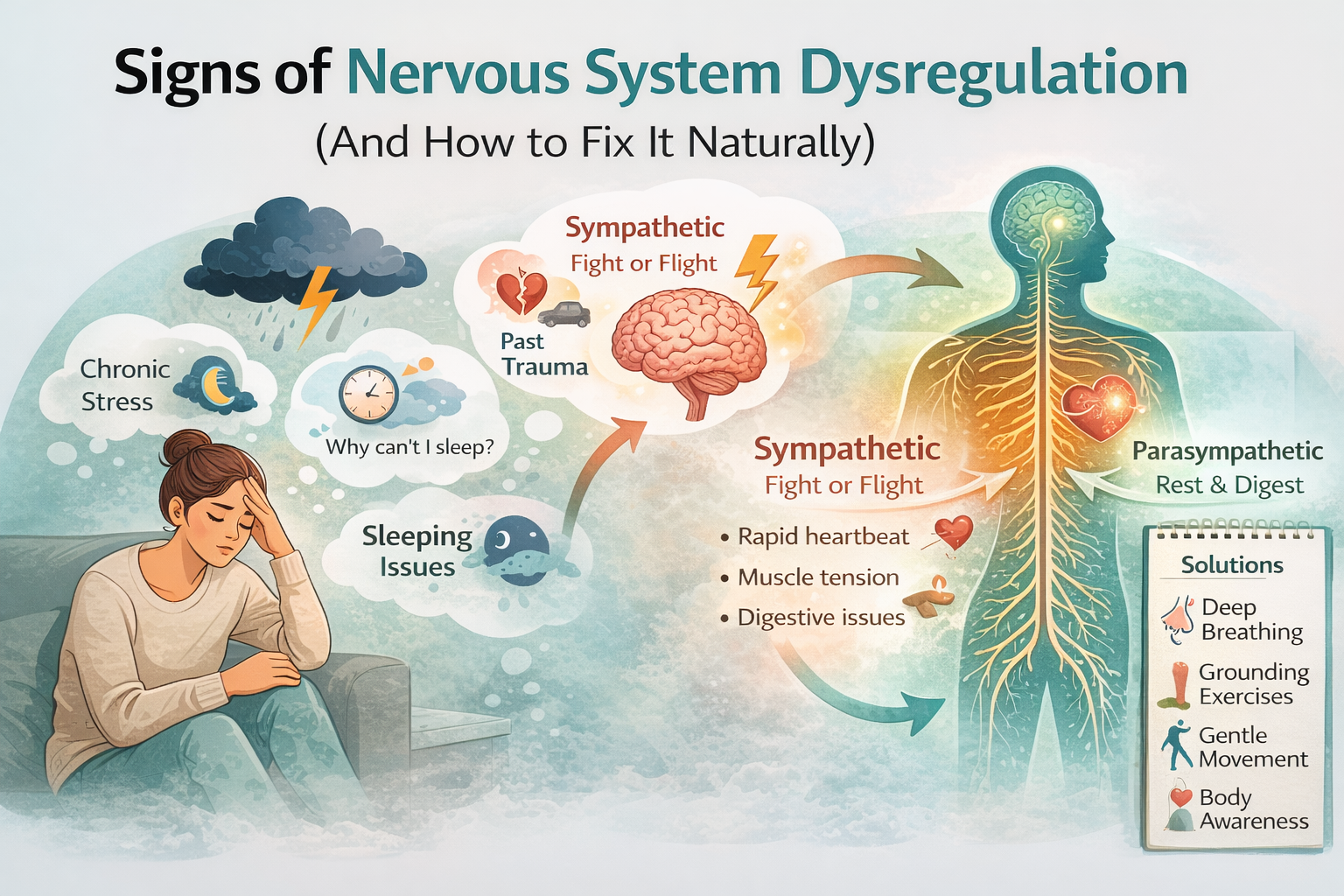
Signs of nervous system dysregulation can show up when your body feels stuck in stress mode, even when there is no immediate danger. You may feel anxious, tense, overwhelmed, exhausted, emotionally reactive, shut down, or unable to relax.
This is not a personal failure. It is often your body trying to protect you.
Your nervous system helps you respond to stress, safety, danger, rest, digestion, recovery, and emotional connection. When it is regulated, your body can move between alertness and calm more easily. When it is dysregulated, your system may stay stuck in survival mode for too long.
In this article, you will learn what nervous system dysregulation means, common signs to look for, why it happens, how it can affect eating and digestion, and simple ways to support regulation naturally.
Medical note: This article is for educational and wellness purposes only. It does not replace medical care, diagnosis, therapy, trauma treatment, or mental health support. If anxiety, panic, trauma symptoms, depression, or physical symptoms are severe or interfere with daily life, speak with a qualified healthcare provider or mental health professional.
What Is Nervous System Dysregulation?
Nervous system dysregulation means your body has difficulty shifting between stress and relaxation states.
Your nervous system is designed to protect you. It helps you respond to danger, recover from stress, digest food, sleep, connect with others, and feel safe in your body.
When your nervous system is regulated, you can experience stress and then return to balance. When it is dysregulated, your body may stay stuck in a stress response for too long.
You may feel:
Constantly on edge
Anxious without a clear reason
Emotionally reactive
Unable to relax
Exhausted but wired
Numb or disconnected
Stuck in survival mode
Cleveland Clinic explains that the autonomic nervous system includes the sympathetic system, which supports fight-or-flight responses, and the parasympathetic system, which supports rest-and-digest processes. You can read more about the autonomic nervous system.
For a deeper foundation, this guide on what nervous system regulation means explains how the body moves between stress, safety, and recovery.
Common Signs of Nervous System Dysregulation
Nervous system dysregulation can affect the body, emotions, thoughts, sleep, digestion, and behavior.
Physical Signs
You may notice:
Rapid heartbeat
Muscle tension
Jaw clenching
Tight chest
Shallow breathing
Fatigue
Headaches
Sleep problems
Digestive discomfort
Restlessness
Feeling wired but tired
These physical signs often happen because the body is staying alert instead of fully returning to rest.
Emotional Signs
You may feel:
Anxious
Overwhelmed
Irritable
Easily triggered
Emotionally reactive
Numb or shut down
Unable to relax
Disconnected from yourself
More sensitive than usual
Emotions may feel stronger than the situation seems to call for. This does not mean you are overreacting on purpose. It may mean your system has less capacity because stress has been building.
Mental Signs
You may experience:
Racing thoughts
Constant worry
Brain fog
Poor focus
Overthinking
Difficulty making decisions
Feeling mentally scattered
Trouble staying present
When the nervous system feels unsafe, the mind often tries to scan for problems. This can make it hard to focus, rest, or think clearly.
Behavioral Signs
You may notice:
Avoiding tasks
Withdrawing from people
Scrolling more often
Emotional eating
Cravings
Overworking
Difficulty resting
Procrastination
Snapping at others
Feeling unable to slow down
These behaviors are often attempts to cope. They are not character flaws. They are signs that the body may need more support, recovery, and safety.
Why Nervous System Dysregulation Happens
Nervous system dysregulation usually develops gradually. It often happens when stress, emotional pressure, or lack of recovery becomes too much for the body to process.
Chronic Stress
Ongoing stress can keep your body activated. Over time, the nervous system may begin to treat stress as the normal state.
Common stressors include:
Work pressure
Family responsibilities
Financial stress
Caregiving
Relationship conflict
Burnout
Health concerns
Emotional overload
Constant overstimulation
NIMH notes that stress can affect both the mind and body, including worry, tension, sleep problems, headaches, and physical discomfort. You can read more in this NIMH fact sheet on stress.
If you want to understand the broader body symptoms of long-term stress, this article on chronic stress symptoms explains how stress can affect energy, digestion, sleep, mood, and eating patterns.
Past Stressful Experiences
Past stressful or traumatic experiences can shape how the body responds to current stress. Sometimes the mind knows you are safe, but the body still reacts as if danger is present.
This can make relaxation feel difficult, even when nothing is wrong in the moment.
Poor Sleep and Lack of Recovery
Sleep is one of the main ways the body restores balance. When sleep is poor, your nervous system may become more sensitive to stress.
You may feel more reactive, anxious, foggy, emotional, or easily overwhelmed after poor sleep.
Overstimulation
Constant noise, screens, notifications, multitasking, busy schedules, and emotional demands can keep the nervous system activated.
Even if nothing dramatic is happening, your body may still feel overloaded from too much input.
Irregular Eating and Low Energy
Skipping meals, eating inconsistently, dehydration, or relying heavily on caffeine can make the body feel less stable.
When the body is undernourished, overtired, or low on energy, stress may feel harder to manage.
What Happens in the Body During Dysregulation?
Your nervous system is always scanning for safety and stress.
When it senses danger, pressure, or emotional overload, the sympathetic nervous system may activate. This is often called fight or flight.
In this state, you may notice:
Faster breathing
Increased heart rate
Tense muscles
Reduced digestion
More alertness
More urgency
Difficulty resting
The parasympathetic nervous system supports rest, digestion, recovery, and calm. When this system is more active, the body can digest, repair, sleep, and feel safer.
Dysregulation happens when your body struggles to move back into recovery after stress.
The goal is not to avoid all stress. The goal is to help your body return to balance more often.
How Nervous System Dysregulation Affects Eating and Digestion
Nervous system dysregulation can affect eating patterns because stress changes how the body experiences hunger, fullness, cravings, and comfort.
You may notice:
More sugar cravings
More emotional eating
Eating when not hungry
Skipping meals during stress
Overeating after a stressful day
Irregular hunger cues
Difficulty feeling full
Digestive discomfort after eating
Food can become a fast way to calm, distract, or comfort the body. This does not mean you lack control. It may mean your body is trying to regulate itself.
Digestion may also feel inconsistent when the nervous system is activated. Stress can make it harder for the body to shift into rest-and-digest mode, which may contribute to bloating, stomach tightness, appetite changes, or discomfort after meals.
Nervous System Dysregulation and Anxiety
Anxiety and nervous system dysregulation often overlap. Anxiety may feel like racing thoughts, worry, restlessness, tightness in the body, or a sense that something is wrong.
Sometimes anxiety is not only a thought pattern. It can also be a body state.
You may know logically that you are safe, but your body still feels activated. This is why thinking your way out of anxiety may not always work.
If anxiety and body-based stress feel connected, this article on nervous system regulation for anxiety may help you understand why calming the body can support emotional steadiness.
Why It Can Feel Hard to Relax
If you struggle to relax, there is a reason.
When your body does not feel safe, it will not easily slow down. You may tell yourself to calm down, but your body may still feel tense, alert, restless, or shut down.
This is why forcing relaxation often does not work.
Your nervous system responds better to safety signals than pressure.
Helpful safety signals include:
Slow breathing
Gentle movement
Grounding
Warmth
Quiet
Supportive touch
Reduced stimulation
Regular meals
Consistent rest
The goal is not to control your body. The goal is to communicate safety to your body.
How to Regulate Your Nervous System Naturally
Natural nervous system regulation is not about one perfect technique. It is about small, repeated practices that help your body feel safer over time.
1. Use Slow Exhale Breathing
Breathing is one of the simplest ways to support the stress response.
Try this:
Inhale for 4 seconds
Exhale for 6 seconds
Repeat for 2 to 5 minutes
A longer exhale may help your body shift toward calm. Harvard Health describes breath focus as a relaxation technique that uses slow, deep breathing to reduce stress. You can read more in their guide to relaxation techniques.
2. Try Grounding
Grounding brings your attention back to the present moment.
Try this simple practice:
Name 5 things you see
Name 4 things you feel
Name 3 things you hear
Name 2 things you smell
Name 1 thing you taste
This can help your brain and body notice that you are here, now, and safer than the stress response may be suggesting.
3. Move Gently
Movement helps release stress energy from the body.
Try:
Walking
Stretching
Shoulder rolls
Gentle yoga
Shaking out your hands
Standing up and changing position
You do not need intense exercise. The goal is to help your body move out of stuck stress energy.
4. Reduce Stimulation
If your system feels overloaded, less input can help.
Try:
Turning off notifications
Taking screen breaks
Lowering noise
Doing one task at a time
Creating quiet moments
Avoiding doom-scrolling before bed
Reducing stimulation gives your nervous system less to process.
5. Check In With Your Body
Body awareness helps you notice stress before it becomes overwhelming.
Ask:
Where do I feel tension?
What emotion is present?
What does my body need?
Do I need food, water, rest, movement, or connection?
This simple check-in helps you respond earlier instead of waiting until you crash.
6. Support Your Body With Food and Hydration
Your nervous system needs steady support.
Helpful foundations include:
Regular meals
Enough protein
Fiber-rich foods
Healthy fats
Water throughout the day
Less reliance on caffeine alone
For a nutrition-focused angle, this guide on foods for nervous system health gives simple food ideas that may support energy and stress resilience.
A Simple Nervous System Reset Routine
You do not need a complicated routine. Start with small practices you can repeat.
Morning Reset
Drink water
Take 3 slow breaths
Stretch for 2 minutes
Eat something nourishing
Set one realistic priority
Midday Reset
Step away from your screen
Take a short walk
Relax your jaw and shoulders
Eat a balanced meal
Ask, “What do I need right now?”
Evening Reset
Dim lights
Reduce screen time
Stretch gently
Write down racing thoughts
Practice slow breathing before bed
Consistency matters more than intensity. One small daily practice is better than a complicated routine you cannot maintain.
For moments when you feel activated and need fast support, this guide on how to regulate your nervous system quickly offers simple calming tools.
Common Mistakes When Trying to Regulate
Forcing Relaxation
Trying to force calm can create more pressure. Regulation works better when you support the body gently.
Ignoring Body Signals
Fatigue, tension, cravings, digestive discomfort, and poor sleep are signals. Listening early can prevent deeper overwhelm.
Expecting Fast Results
Some tools help quickly, but long-term regulation takes repetition. Your body learns safety over time.
Doing Too Much at Once
Too many techniques can become overwhelming. Choose one or two simple practices and repeat them.
Only Practicing When You Feel Terrible
Regulation works best when practiced regularly, not only during crisis moments.
Long-Term Nervous System Support
Long-term support comes from daily rhythms that help your body feel safer.
Focus on:
Better sleep
Regular meals
Hydration
Gentle movement
Emotional awareness
Healthy boundaries
Reduced overstimulation
Time outdoors
Supportive relationships
Consistent recovery
The nervous system responds to repetition. Small signals of safety, practiced consistently, can help your body build more capacity over time.
When to Seek Support
Nervous system dysregulation is common, but you do not have to manage everything alone.
Consider professional support if you experience:
Constant anxiety
Frequent panic
Burnout
Emotional overwhelm
Trauma symptoms
Difficulty sleeping
Feeling unsafe in your body
Stress that disrupts daily life
Eating patterns that feel distressing
Symptoms that keep getting worse
Support can help you understand your patterns and build safer tools for your body.
If dysregulation feels frequent or difficult to manage on your own, nervous system regulation support may help you explore structured, body-based ways to feel more stable.
Final Thoughts
Nervous system dysregulation is not a permanent identity. It is a response.
If your body feels anxious, tense, exhausted, shut down, or unable to relax, it may be trying to protect you from stress that has lasted too long.
You do not need to force calm. You need small, consistent signals of safety.
Start simple. Breathe slowly. Reduce stimulation. Move gently. Eat regularly. Rest when possible. Notice your body without judgment.
Over time, your nervous system can learn that it does not have to stay in survival mode all the time.
FAQs
What are the signs of nervous system dysregulation?
Common signs include anxiety, muscle tension, fatigue, sleep issues, racing thoughts, emotional overwhelm, and difficulty relaxing.
What does nervous system dysregulation feel like?
It can feel like being stuck on edge, emotionally reactive, exhausted, shut down, anxious, or unable to calm your body.
Can stress affect the nervous system?
Yes. Chronic stress can keep the nervous system activated and make it harder to return to calm.
How can I calm my nervous system quickly?
Slow breathing, grounding, gentle movement, and reducing stimulation can help your body begin to settle.
How long does nervous system regulation take?
Some tools may help within minutes, but long-term regulation usually improves through consistent daily practice.
Can nervous system dysregulation affect eating?
Yes. It can contribute to cravings, emotional eating, irregular hunger cues, and digestive discomfort.
Why can’t I relax even when nothing is wrong?
Your body may still feel unsafe or activated, even if your mind knows there is no immediate danger.
Can poor sleep worsen dysregulation?
Yes. Poor sleep can make the nervous system more sensitive to stress and emotional overwhelm.
What helps nervous system dysregulation naturally?
Helpful tools include slow breathing, grounding, gentle movement, regular meals, hydration, sleep, reduced stimulation, and emotional awareness.
When should I get support?
Get support if anxiety, overwhelm, sleep issues, trauma symptoms, or stress patterns interfere with daily life.