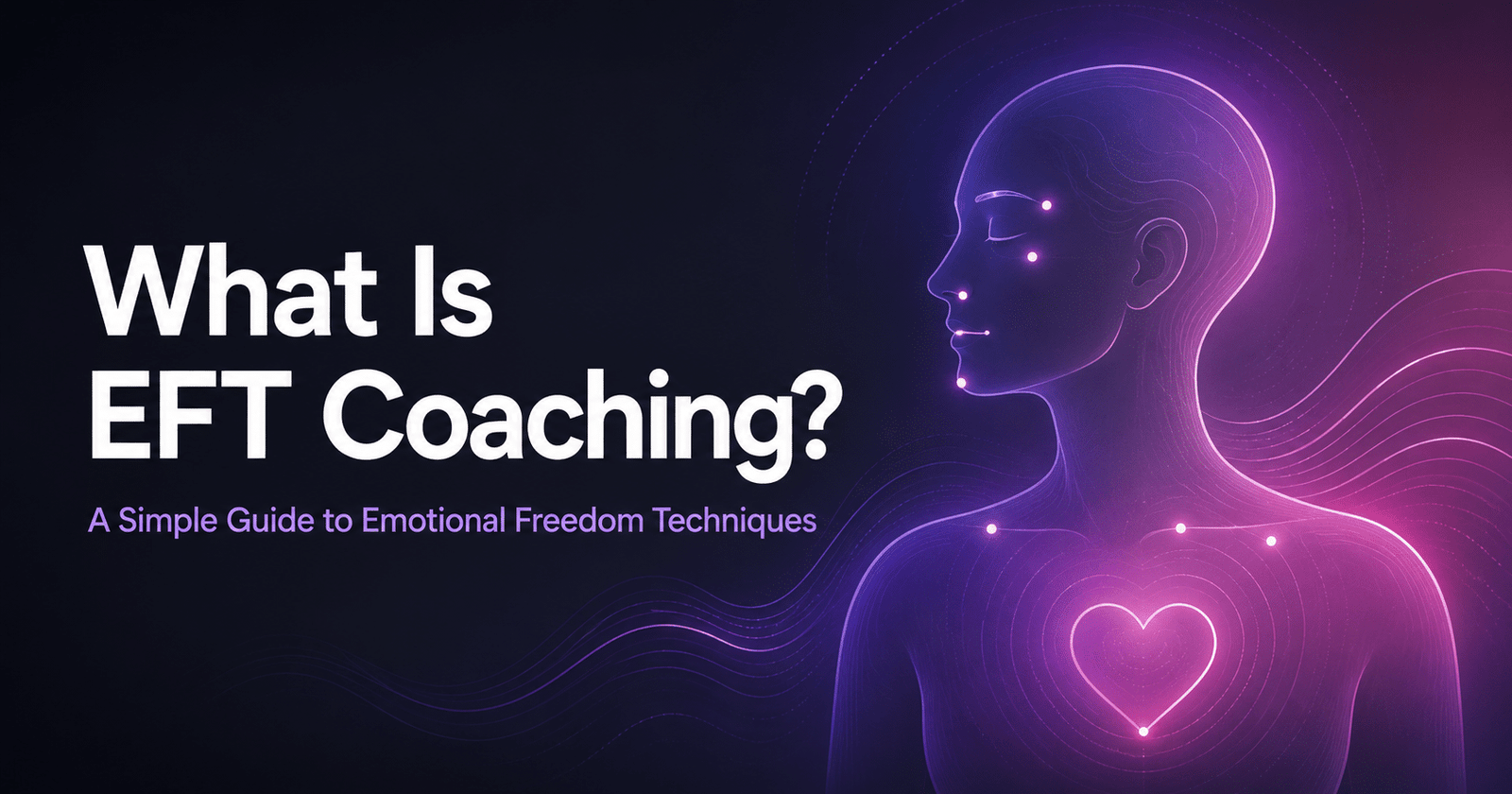
EFT coaching is a guided personal-development approach that uses Emotional Freedom Techniques, also called EFT tapping, to help people work with stress, emotional blocks, limiting beliefs, and repeated emotional patterns. During an EFT coaching session, an EFT coach helps you focus on a specific issue while gently tapping on acupressure points and noticing your thoughts, emotions, body sensations, and stress response.
EFT coaching is often used by people who want practical support with emotional regulation, confidence, self-doubt, overthinking, burnout patterns, cravings, or personal growth. It is not medical treatment or psychotherapy unless provided by a licensed professional.
If you are new to EFT and want to understand how tapping may support cravings or emotional eating patterns, you may also find this guide on EFT tapping for cravings helpful.
What Does EFT Stand For?
EFT stands for Emotional Freedom Techniques. It is also commonly called EFT tapping, tapping, or sometimes tapping therapy.
In this context, EFT does not mean Electronic Funds Transfer. It is also different from Emotionally Focused Therapy, which is a form of psychotherapy often used in relationship and couples therapy.
Emotional Freedom Techniques were popularized by Gary Craig and are commonly described as a mind-body technique that combines focused attention, self-acceptance statements, and tapping on specific acupressure or meridian points.
In simple terms, EFT tapping invites the body and mind to work together. Instead of only talking about a problem, you gently bring attention to the issue while tapping on specific points of the body. This may help some people feel calmer, more grounded, and more able to process emotional intensity.
What Is EFT Coaching?
EFT coaching is a guided coaching process where an EFT practitioner helps you use tapping to explore and reduce emotional intensity around a specific issue.
For example, someone may come to EFT coaching because they feel anxious before public speaking, stuck in self-sabotage, overwhelmed by work stress, blocked by emotional eating patterns, or held back by a belief such as “I am not good enough.”
Instead of only discussing the issue, an EFT coach guides the client to focus on the problem while tapping on EFT points. This creates a structured process for noticing what is happening in the nervous system, emotions, thoughts, and body.
The purpose is not to force positive thinking. The goal is to gently notice what is present, reduce emotional intensity where possible, and create space for a new response.
EFT coaching may include:
- Guided EFT tapping
- Emotional regulation tools
- Nervous system regulation
- Exploring limiting beliefs
- Identifying emotional blocks
- Working with repeated stress patterns
- Supporting confidence and self-trust
- Creating self-tapping practices between sessions
In my work, EFT is often used alongside nervous system regulation coaching to help clients build more emotional safety, resilience, and body awareness.
EFT coaching sits close to personal growth coaching, somatic coaching, and mind-body coaching. A skilled EFT coach should work within clear professional boundaries and refer clients to medical or mental-health professionals when needed.
How Does EFT Coaching Work?
EFT coaching usually follows a structured but flexible process. The session may feel simple on the outside, but it can help you become more aware of what your body and nervous system are holding.
1. Identify the Issue
The EFT session begins by choosing a specific issue. This could be a feeling, thought, memory, belief, body sensation, or situation.
Examples include:
- “I feel nervous before meetings.”
- “I keep avoiding difficult conversations.”
- “I feel overwhelmed when I think about work.”
- “I believe I will fail if people judge me.”
- “I want to eat when I feel stressed, even when I am not hungry.”
Specific issues usually work better than broad ones. “I feel tightness in my chest when I think about tomorrow’s presentation” is more useful than “I feel bad.”
2. Rate Emotional Intensity from 0–10
The EFT coach may ask you to rate the emotional intensity using a 0–10 scale.
For example:
- 0 = no emotional charge
- 10 = very intense emotional charge
This helps both you and the coach track whether the tapping is changing your emotional response.
3. Create a Setup Statement
A setup statement names the problem while adding a phrase of acceptance, honesty, or permission.
Example:
“Even though I feel nervous about this presentation, I can acknowledge how I feel right now.”
Some EFT practitioners use the classic phrase, “I deeply and completely accept myself.” Others use softer wording depending on what feels safe and believable for the client.
4. Tap on EFT Points
The coach guides you to tap gently on common EFT tapping points, such as the side of the hand, top of the head, eyebrow, side of the eye, under the eye, under the nose, chin, collarbone, and under the arm.
For a simple beginner explanation of common points, read this guide to EFT tapping points and cravings.
5. Notice Emotions, Body Sensations, Memories, and Thoughts
During tapping, you may notice changes. A feeling may soften, a memory may appear, a thought may shift, or a body sensation may move.
This is why trauma-informed EFT matters. A responsible EFT coach does not push you into painful material too quickly. The process should feel paced, respectful, and emotionally safe.
6. Re-Rate Intensity
After one or more tapping rounds, the coach may ask you to rate the issue again.
For example, the emotional intensity may move from 8 to 5, or from 5 to 2. Sometimes it may stay the same, shift into a different feeling, or reveal a deeper issue.
7. Repeat or Reframe
The coach may guide another round of tapping using new words based on what came up.
For example:
- “This fear of being judged”
- “This pressure to get everything perfect”
- “This old belief that I am not ready”
- “This tightness in my chest”
- “This urge to soothe myself with food”
The aim is to meet the real emotional pattern, not cover it up.
8. Create a Self-Practice Plan
At the end of the session, your EFT coach may suggest a simple self-tapping practice. This can help you use EFT for stress relief tapping, emotional regulation, or confidence support between sessions.
If stress and emotional eating are part of your pattern, this guide to emotional eating solutions may give you additional practical support.
What Happens in an EFT Coaching Session?
An EFT coaching session usually lasts between 45 and 90 minutes, depending on the practitioner and session format.
Before the Session
Before the first EFT session, the coach may ask about your goals, current stressors, emotional patterns, health history, and whether you are receiving medical or mental-health support.
This helps the coach understand whether EFT coaching is suitable for your needs.
You may also receive information about confidentiality, coaching boundaries, pricing, cancellation terms, and what EFT coaching can and cannot offer.
During the Session
The session usually starts with a conversation. You and the EFT coach identify the issue you want to work on. Then the coach guides you through tapping while checking in with your emotional intensity, thoughts, and body sensations.
You remain in control throughout the process. You do not have to share anything you are not ready to discuss.
Some clients begin with a gentle Mind-Body Nervous System Reset session when they want support for stress, overwhelm, shutdown, emotional reactivity, or deeper pattern awareness.
After the Session
After tapping, you may feel calmer, clearer, tired, emotional, or reflective. The coach may help you summarize what changed and suggest simple self-tapping homework.
EFT coaching should not leave you feeling pressured, judged, or dependent on the coach. A good practitioner helps you build your own self-regulation skills.
If you want to understand Heather’s wider approach to body-based support, you can also read more about how to regulate your nervous system naturally.
What Can EFT Coaching Help With?
EFT coaching may support some people with everyday emotional and personal-growth challenges, including:
- Stress
- Overthinking
- Anxiety-like feelings
- Emotional overwhelm
- Limiting beliefs
- Self-sabotage
- Confidence blocks
- Performance pressure
- Fear of visibility
- Relationship triggers
- Work stress
- Public speaking nerves
- Burnout patterns
- Emotional eating triggers
- Sleep-related stress
For example, EFT for stress may help someone notice the thoughts and sensations linked to work pressure. EFT for confidence may help someone explore the emotional charge behind self-doubt. EFT for burnout may help someone identify repeated patterns of over-giving, perfectionism, or difficulty saying no.
For people whose stress patterns show up through food, cravings, or binge eating, emotional eating and food cravings coaching may offer more targeted support.
EFT coaching does not cure anxiety, PTSD, depression, trauma, chronic pain, or any medical condition. It may be used as a supportive tool alongside appropriate professional care.
EFT Coaching vs EFT Therapy vs Self-Tapping
| Self-Tapping | EFT Coaching | EFT Therapy / Clinical EFT |
| Best for simple daily stress, mild emotional triggers, and personal self-regulation. | Best for personal growth, limiting beliefs, stress patterns, confidence blocks, and guided emotional work. | Best for clinically significant issues when provided by a licensed therapist or clinically trained professional. |
| You guide yourself using EFT tapping points and basic phrases. | An EFT coach guides the process, asks questions, tracks emotional intensity, and helps you work through patterns. | A therapist may integrate EFT within psychotherapy, trauma treatment, or mental-health care. |
| Useful between sessions or for everyday stress relief tapping. | More structured than self-tapping and often more personalized. | Requires appropriate clinical training, supervision, and professional licensing where relevant. |
| Not suitable for deep trauma work without support. | Not a replacement for medical or mental-health treatment. | May be suitable for trauma or diagnosed conditions when within the practitioner’s scope. |
Because EFT coaching is not a replacement for medical care or psychotherapy, please review the wellness and coaching disclaimer before beginning any coaching work.
Who Is EFT Coaching For?
EFT coaching may be suitable for people who:
- Feel emotionally stuck
- Notice repeated stress patterns
- Struggle with self-doubt or confidence blocks
- Want to work on limiting beliefs
- Feel overwhelmed by work, relationships, or visibility
- Want a practical self-regulation tool
- Are open to mind-body techniques
- Prefer a gentle, guided personal-growth approach
- Want to learn EFT tapping for use between sessions
It can be especially useful for people who understand their problem logically but still feel emotionally blocked.
For readers working on food freedom, body trust, or emotional eating patterns, this article on how to heal your relationship with food may be a helpful next step.
Who Should Be Careful with EFT Coaching?
EFT coaching is not suitable as a standalone approach for every situation.
People should seek support from a qualified healthcare professional, licensed therapist, crisis service, or emergency support provider when experiencing:
- Suicidal thoughts
- Severe emotional distress
- Severe depression
- PTSD symptoms
- Dissociation
- Psychosis
- Self-harm risk
- Recent traumatic events
- Severe panic symptoms
- Diagnosed mental-health conditions needing clinical care
An ethical EFT coach should explain their scope clearly and refer clients to licensed professionals when the issue is outside coaching boundaries.
If you are unsure whether coaching is the right level of support for you, visit the FAQs about holistic health coaching or contact a qualified healthcare professional for guidance.
Is EFT Coaching Evidence-Based?
EFT has been studied in relation to stress, anxiety, PTSD, emotional regulation, cortisol, and psychological distress. Some studies suggest that EFT may support emotional regulation and stress reduction for some people, but claims should stay balanced.
Research quality, practitioner training, client history, and the type of concern being addressed can all influence outcomes.
The safest way to describe EFT coaching is this: EFT may help some people manage stress, emotional intensity, cravings, and limiting beliefs, but it should not be used as a substitute for medical care, psychotherapy, or crisis support.
How to Choose a Qualified EFT Coach
Look for an EFT coach who can clearly explain their training, boundaries, and session process.
Use this checklist:
- Training in Emotional Freedom Techniques coaching
- Experience with your type of concern
- Clear coaching boundaries
- Trauma-informed EFT awareness
- Confidentiality policy
- Ethical testimonials without exaggerated cure claims
- Clear pricing and session structure
- Professional website and about page
- Willingness to refer to licensed professionals
- Calm, respectful communication
- No pressure to buy large session packages immediately
You can learn more about Heather’s background, training, and approach on the About Heather Hewett page.
You may also want to read client success stories to understand how others have experienced Heather’s nervous-system-centered support.
A strong EFT coach should never promise instant healing, guaranteed results, or cures for medical or mental-health conditions.
Online EFT Coaching vs In-Person EFT Coaching
Online EFT coaching can work well because clients tap on themselves while being guided by video call. This makes it accessible for people searching for online EFT coaching or an EFT coach near me when local options are limited.
For a good online EFT session, prepare:
- A private room
- Stable internet
- A charged device
- A comfortable chair
- Camera positioned so your face and upper body are visible
- Water nearby
- Time after the session to reflect
Online sessions should still include emotional safety, confidentiality, and clear boundaries.
If you are ready to ask questions or explore whether online support is a good fit, you can contact Heather here.
How Many EFT Coaching Sessions Do You Need?
The number of EFT coaching sessions depends on your goal, emotional intensity, and the depth of the pattern.
Some people notice a shift after one session. Others may need several sessions to work through deeper limiting beliefs, repeated stress responses, emotional eating triggers, or long-standing emotional blocks.
A simple issue, such as nerves before a presentation, may take fewer sessions. A repeated pattern, such as fear of visibility, self-sabotage, or stress eating, may need more time.
No ethical EFT coach should guarantee a fixed result in a fixed number of sessions.
Key Takeaways
- EFT stands for Emotional Freedom Techniques.
- EFT coaching uses tapping plus guided conversation.
- EFT tapping involves focusing on an issue while tapping on acupressure points.
- EFT coaching may help with stress, emotional blocks, cravings, limiting beliefs, and self-awareness.
- EFT coaching is not a replacement for medical or mental-health treatment.
- A qualified EFT coach should have training, ethical boundaries, trauma-informed awareness, and referral awareness.
Important Safety Disclaimer
EFT coaching is not medical treatment or psychotherapy unless provided by a licensed professional. EFT coaching does not diagnose, treat, cure, or prevent anxiety disorders, PTSD, depression, trauma, chronic pain, or any medical condition.
When someone is experiencing severe distress, trauma symptoms, suicidal thoughts, diagnosed mental-health conditions, dissociation, or a mental-health crisis, they should seek help from a qualified healthcare professional, licensed mental-health provider, emergency service, or local crisis support service.
For more information about scope of practice and wellness support, please read the full website disclaimer.
Ready to Explore EFT Coaching?
Not sure whether EFT coaching is right for you? If you are dealing with stress, emotional overwhelm, self-doubt, cravings, or patterns that feel hard to shift, an introductory EFT coaching conversation can help you understand whether this approach fits your needs.
You do not need to know everything about EFT before starting. A consultation can help you ask questions, understand the process, and decide whether EFT coaching feels like the right support for your current needs.
Ready to learn whether EFT coaching is a good fit for you? Book a free call or read real client success stories to see how nervous-system-centered support can help.
FAQ
What is EFT coaching?
EFT coaching is a guided coaching approach that uses Emotional Freedom Techniques, also called EFT tapping, to help people work with stress, emotional blocks, limiting beliefs, cravings, and repeated emotional patterns.
What does EFT stand for?
EFT stands for Emotional Freedom Techniques. It is also known as EFT tapping or tapping.
Is EFT coaching the same as therapy?
No. EFT coaching is not the same as psychotherapy unless the practitioner is also a licensed mental-health professional. EFT coaching focuses on personal growth, emotional regulation, and practical self-awareness. Therapy is clinical treatment for mental-health concerns.
What happens in an EFT coaching session?
In an EFT coaching session, you discuss a specific issue, rate its emotional intensity, create a setup statement, tap on EFT points, notice emotional or body changes, and re-rate the intensity. You may also receive a self-practice plan.
Can EFT coaching help with anxiety?
EFT coaching may help some people manage anxiety-like feelings, stress responses, and emotional overwhelm. It should not be presented as a cure for anxiety disorders. People with diagnosed anxiety should work with a qualified healthcare or mental-health professional.
How many EFT sessions do I need?
Some people notice changes after one session, while deeper patterns may require several sessions. The number depends on your goals, emotional intensity, history, and readiness.
Can I do EFT tapping by myself?
Yes. Self-tapping can be useful for everyday stress relief and emotional regulation. For deeper patterns, trauma-related material, or strong emotional reactions, working with a trained EFT practitioner may be safer and more effective.
Is EFT coaching safe?
EFT coaching is generally gentle when used appropriately, but it can bring up emotions, memories, or body sensations. People with severe trauma, suicidal thoughts, dissociation, or serious mental-health concerns should seek support from licensed professionals.
What should I look for in an EFT coach?
Look for training, experience, trauma-informed awareness, ethical boundaries, clear pricing, confidentiality, professional communication, and willingness to refer you to licensed professionals when needed.
Is online EFT coaching effective?
Online EFT coaching can be useful because the coach guides you while you tap on yourself. A private space, stable internet, and emotional safety are important for a good online session.
One Response