
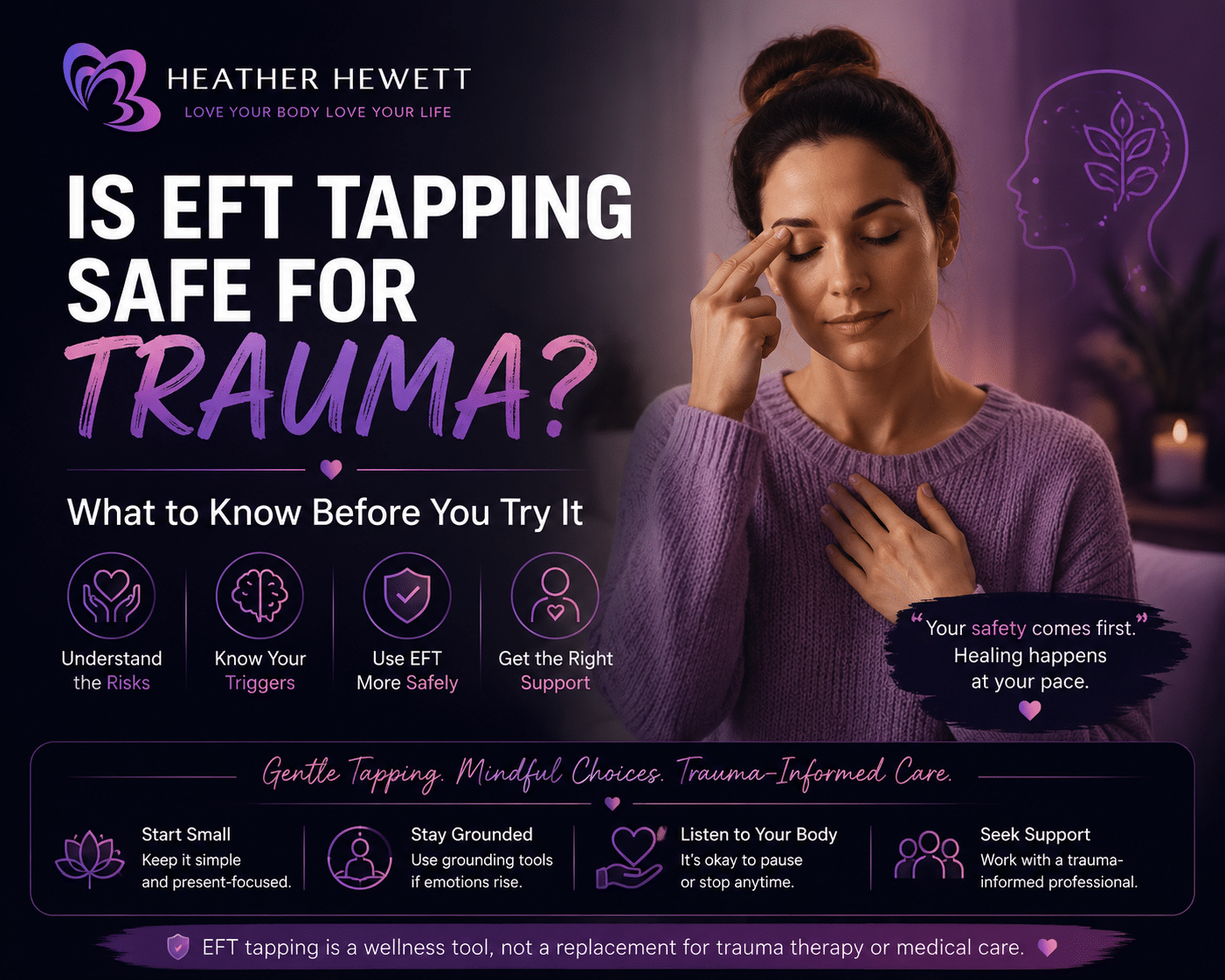
EFT tapping may be a supportive grounding practice for some trauma survivors, but it is not automatically safe for everyone. Self-guided tapping can become emotionally activating when it brings attention to traumatic memories, fear, or body sensations. If you have flashbacks, dissociation, severe panic, or feel unsafe, seek trauma-informed professional support.
This article refers to Emotional Freedom Techniques, or EFT tapping. It does not refer to Emotionally Focused Therapy or electronic funds transfer.
Table of Contents
- What Does Safety Mean When You Have Trauma?
- What Is EFT Tapping?
- Is EFT Tapping Safe for Trauma?
- Can EFT Tapping Trigger Flashbacks or Dissociation?
- When Self-Guided EFT May Be Appropriate
- When You Should Not Try EFT Alone
- What to Do if EFT Tapping Makes You Feel Worse
- EFT Tapping vs. EMDR, CPT, and Trauma Therapy
- How to Use EFT More Safely With a Trauma History
- How to Find a Trauma-Informed EFT Practitioner
- EFT Trauma Safety Decision Guide
- Final Thoughts
What Does Safety Mean When You Have Trauma?
Safety with trauma is not only about whether tapping feels physically comfortable. It also includes emotional safety, psychological readiness, and whether you have enough support if difficult symptoms arise.
Physical Safety
EFT tapping uses gentle fingertip pressure on points around the face, head, hands, and upper body. It is usually physically gentle when done lightly and when you avoid injured, painful, or irritated areas.
Emotional Safety
Emotional safety means you can notice a feeling without becoming overwhelmed by it. You may feel sadness, stress, or anxiety, but you are still able to stay connected to the room, your body, and the present moment.
Psychological Readiness
Your current symptoms matter. Tapping for work stress is different from tapping while focusing on abuse, loss, violence, or another traumatic experience. A person with flashbacks, panic, or dissociation may need more support than self-guided tapping can provide.
Support and Setting
It is easier to pause when you have a trusted person, a therapist, or a plan for grounding. Trauma work can be intense. No self-help exercise should require you to push through distress alone.
What Is EFT Tapping?
EFT tapping is a practice that combines focused attention with light tapping on specific points on the body. People may use it while noticing a current thought, feeling, body sensation, or stressful situation.
For example, someone may tap while saying, “I feel nervous about tomorrow,” or “My body feels tense after a difficult day.”
Some people use EFT as a brief emotional regulation or grounding practice. It may create a pause between a stressful trigger and an automatic reaction.
For a practical overview, read the EFT tapping points guide and learn what happens in an EFT session.
EFT is sometimes explained through “energy meridians.” That explanation should not be treated as established scientific fact. A more cautious explanation is that tapping combines focused attention, emotional awareness, gentle movement, and self-reflection.
Is EFT Tapping Safe for Trauma?
EFT tapping may be safe for some people with trauma when used gently for mild, present-day stress. It may not be safe to use alone for traumatic memories, flashbacks, dissociation, severe panic, or intense PTSD symptoms.
The answer depends on your symptoms, your current level of stability, and how you use the practice.
A brief tapping exercise may feel manageable when you are dealing with a busy day, mild anxiety, frustration, or nervousness. It can become more difficult when you focus on traumatic memories, shame, grief, fear, or physical sensations linked to trauma.
EFT tapping is not automatically harmful, but it is also not automatically safe for every trauma survivor. Emotional activation can happen when the nervous system interprets the practice as too intense or too close to painful material.
EFT may be a complementary self-regulation tool. It should not be described as a cure for PTSD, complex trauma, or emotional trauma. It should also not replace trauma-focused therapy or medical care.
For a balanced discussion of research limitations, read what research says about whether EFT is evidence based.
Can EFT Tapping Trigger Flashbacks or Dissociation?
Yes, it can trigger trauma-related responses for some people. Focusing on distressing emotions, memories, or body sensations may bring up strong reactions.
This does not mean that something is wrong with you. It may mean that your system needs a slower pace, stronger grounding skills, or professional support.
Signs You May Be Becoming Overwhelmed
Stop tapping if you notice:
- Feeling unreal, numb, detached, or far away
- Losing track of time
- Feeling disconnected from your body
- Sudden panic or intense fear
- Intrusive memories or flashbacks
- Crying or shaking that does not settle
- Feeling unable to return to the present
- Feeling unsafe or having thoughts of self-harm
Do not treat emotional intensity as proof that EFT is working. More distress does not always mean more healing.
Avoid using EFT to search for hidden or suppressed memories. If difficult memories appear, pause and discuss them with a licensed mental-health professional.
When Self-Guided EFT May Be Appropriate
Self-guided EFT may be more appropriate when you are emotionally stable and using it for a mild, current stressor.
Examples include:
- Feeling tense before a meeting
- Stress after a difficult workday
- Mild anxiety before sleep
- Nervousness before a social event
- Frustration after a busy schedule
- Feeling emotionally overloaded by everyday responsibilities
Keep the focus on what is happening now. For example, “I feel nervous about tomorrow” is usually less intense than trying to revisit a traumatic event in detail.
For gentle present-focused use, see EFT tapping for stress and EFT tapping for nervous system regulation.
When You Should Not Try EFT Alone
Avoid self-guided trauma processing with EFT if you are currently experiencing:
- Flashbacks or intrusive memories
- Dissociation or frequent emotional shutdown
- Severe panic attacks
- Intense PTSD or complex PTSD symptoms
- Thoughts of self-harm or suicide
- Current abuse, coercion, or immediate danger
- A recent traumatic event that still feels raw
- Severe depression, mania, hallucinations, or psychosis symptoms
- Substance intoxication or withdrawal
- Difficulty staying grounded in daily life
This does not mean EFT is permanently unsafe for you. It means your current needs may be better met through trauma-informed clinical care.
For a clear explanation of professional boundaries, read EFT coaching versus therapy.
What to Do if EFT Tapping Makes You Feel Worse
Stop tapping. Do not force yourself to finish the exercise.
Use these grounding steps:
- Stop tapping and place both feet on the floor.
- Look around the room and name five things you can see.
- Touch something cool, textured, or familiar.
- Take slow, natural breaths without forcing them.
- Drink water or eat something gentle if that feels supportive.
- Contact someone you trust.
- Reach out to a licensed mental-health professional if the distress does not settle.
If you feel unsafe, may harm yourself, or cannot return to the present, seek urgent help. In the United States, you can call, text, or chat with the 988 Suicide & Crisis Lifeline. Call 911 or go to the nearest emergency department if there is immediate danger.
EFT Tapping vs. EMDR, CPT, and Trauma Therapy
EFT tapping is not a replacement for trauma-focused therapy.
EFT may help some people pause, notice emotions, and feel more grounded. However, people with PTSD or complex trauma may need treatments designed specifically for trauma-related symptoms.
EMDR
Eye Movement Desensitization and Reprocessing, known as EMDR, is a structured therapy that helps people process distressing memories with trained professional support.
CPT
Cognitive Processing Therapy, known as CPT, helps people examine and work with difficult trauma-related beliefs, such as guilt, shame, blame, or fear.
PE
Prolonged Exposure, known as PE, is a structured treatment that gradually helps people approach trauma-related memories and situations they may avoid.
The VA National Center for PTSD identifies CPT, EMDR, and PE as recommended trauma-focused psychotherapies for PTSD. The NICE PTSD guideline also recommends trauma-focused CBT and EMDR for adults with PTSD.
EFT may sometimes be used as a supportive coping tool alongside treatment. It should not replace therapy, medication discussions, clinical assessment, or safety planning.
How to Use EFT More Safely With a Trauma History
Use a gentle approach. The goal is not to force an emotional release or revisit trauma before you are ready.
Stay Present-Focused
Choose a current feeling such as stress, tension, overwhelm, frustration, or nervousness. Avoid detailed trauma memories during self-guided practice.
Start With Low-Intensity Stress
Begin with a feeling that is uncomfortable but manageable. You should still be able to notice your surroundings and stop easily.
Keep Sessions Short
Try one or two minutes at first. A short practice may be enough. Longer does not always mean better.
Keep Grounding Tools Nearby
Have water, a textured object, a cool cloth, or a supportive person nearby. These tools can help you return to the present if you feel activated.
Stop When Distress Rises
Stop if you become panicked, numb, detached, or emotionally flooded. Do not continue because you think you “should” finish.
For more support around choosing between independent practice and guided help, read self-tapping versus EFT coaching.
How to Find a Trauma-Informed EFT Practitioner
A trauma-informed practitioner should respect your pace, boundaries, and right to stop.
Look for someone who:
- Explains their training and qualifications clearly
- Uses informed consent before emotional work
- Understands dissociation and emotional flooding
- Does not pressure you to share trauma details
- Is willing to slow down or stop
- Does not promise quick trauma healing
- Refers to licensed clinical support when needed
- Clearly explains whether they provide coaching or psychotherapy
Use these questions to ask before choosing an EFT coach to assess a practitioner’s training, approach, and professional boundaries.
EFT Trauma Safety Decision Guide
Green: Gentle Self-Use May Be Appropriate
You may be in a safer position for present-focused tapping when you have:
- Mild everyday stress
- A generally stable mood
- The ability to stay present
- A clear sense of when to stop
- Support available if needed
- No focus on trauma memories
Yellow: Go Slowly and Consider Professional Guidance
Use extra caution if you have:
- A trauma history with occasional anxiety
- Emotional reactions that rise quickly
- Regular nightmares or intrusive thoughts
- Difficulty knowing when to stop
- Uncertainty about whether you dissociate
- Frequent overwhelm or shutdown
Red: Stop Self-Guided Trauma Work and Seek Support
Pause tapping for trauma-related material if you are experiencing:
- Flashbacks
- Dissociation
- Severe panic
- Self-harm or suicidal thoughts
- Current danger or abuse
- Emotional flooding that does not settle
- An inability to ground yourself
This guide is educational only. It is not a diagnosis or a substitute for professional mental-health care.
Final Thoughts: Is EFT Safe for Trauma?
Is EFT safe for trauma? It may be helpful as a gentle grounding practice for some people, especially when the focus is mild, present-day stress.
However, trauma-related symptoms can make self-guided EFT emotionally intense. Flashbacks, dissociation, panic, intrusive memories, and emotional flooding are signs to pause and seek qualified support.
You do not need to push through distress to heal. Prioritize emotional safety, stay present-focused, and consider trauma-informed professional care when self-help tools are not enough.
Medical Disclaimer
This article is for educational purposes only. It does not provide medical, psychiatric, psychological, or crisis advice. It does not replace diagnosis, treatment, or care from a licensed professional.
Seek urgent support if you are in immediate danger, cannot stay safe, or may harm yourself.
Frequently Asked Questions
Is EFT tapping safe for trauma?
Sometimes, but not for everyone. EFT may be suitable for mild present-day stress, but self-guided tapping can be too activating for flashbacks, dissociation, severe panic, or trauma memories.
Can EFT tapping trigger traumatic memories?
Yes, it can. Focusing on emotions or body sensations may bring up distressing memories or trauma responses. Stop tapping and ground yourself if you feel overwhelmed.
Can I do EFT tapping alone if I have PTSD?
Use caution. Brief tapping for mild current stress may be manageable, but do not try to process trauma memories alone if you have flashbacks, panic, or dissociation.
Can EFT tapping make trauma worse?
It can increase distress for some people. This may happen when tapping activates painful memories, fear, body sensations, or emotional flooding. Stop instead of pushing through.
Is EFT tapping safe for complex PTSD?
It may not be safe for self-guided trauma processing. Complex PTSD can involve intense emotions, shame, dissociation, and relationship trauma. Professional support is often safer.
Can EFT tapping cause dissociation?
It may trigger dissociation in vulnerable people. Any exercise that focuses on distressing emotional material can feel too intense. Stop if you feel numb, unreal, disconnected, or confused.
What should I do if EFT tapping makes me feel worse?
Stop tapping and ground yourself. Put your feet on the floor, notice your surroundings, hold something cool, contact someone trusted, and seek professional help if distress continues.
Is EFT tapping a replacement for EMDR or trauma therapy?
No. EFT is not a replacement for EMDR, CPT, PE, trauma-focused CBT, medication discussions, or professional trauma treatment.
Can EFT tapping help with anxiety after trauma?
It may help with mild anxiety for some people. It can be used as a short grounding practice, but persistent anxiety, panic, nightmares, or intrusive memories need professional assessment.
Who should avoid self-guided EFT tapping?
People with severe or active symptoms should avoid trauma-focused tapping alone. This includes flashbacks, dissociation, suicidal thoughts, self-harm urges, current abuse, severe panic, and substance withdrawal.
How do I find a trauma-informed EFT practitioner?
Look for training, consent, boundaries, and referral practices. Choose someone who understands dissociation, respects your pace, does not make cure claims, and refers out for clinical care when needed.
Does EFT tapping have side effects?
It can bring up strong emotions. Some people may experience sadness, fear, fatigue, intrusive memories, numbness, or overwhelm. Emotional intensity is not proof that tapping is helping.