
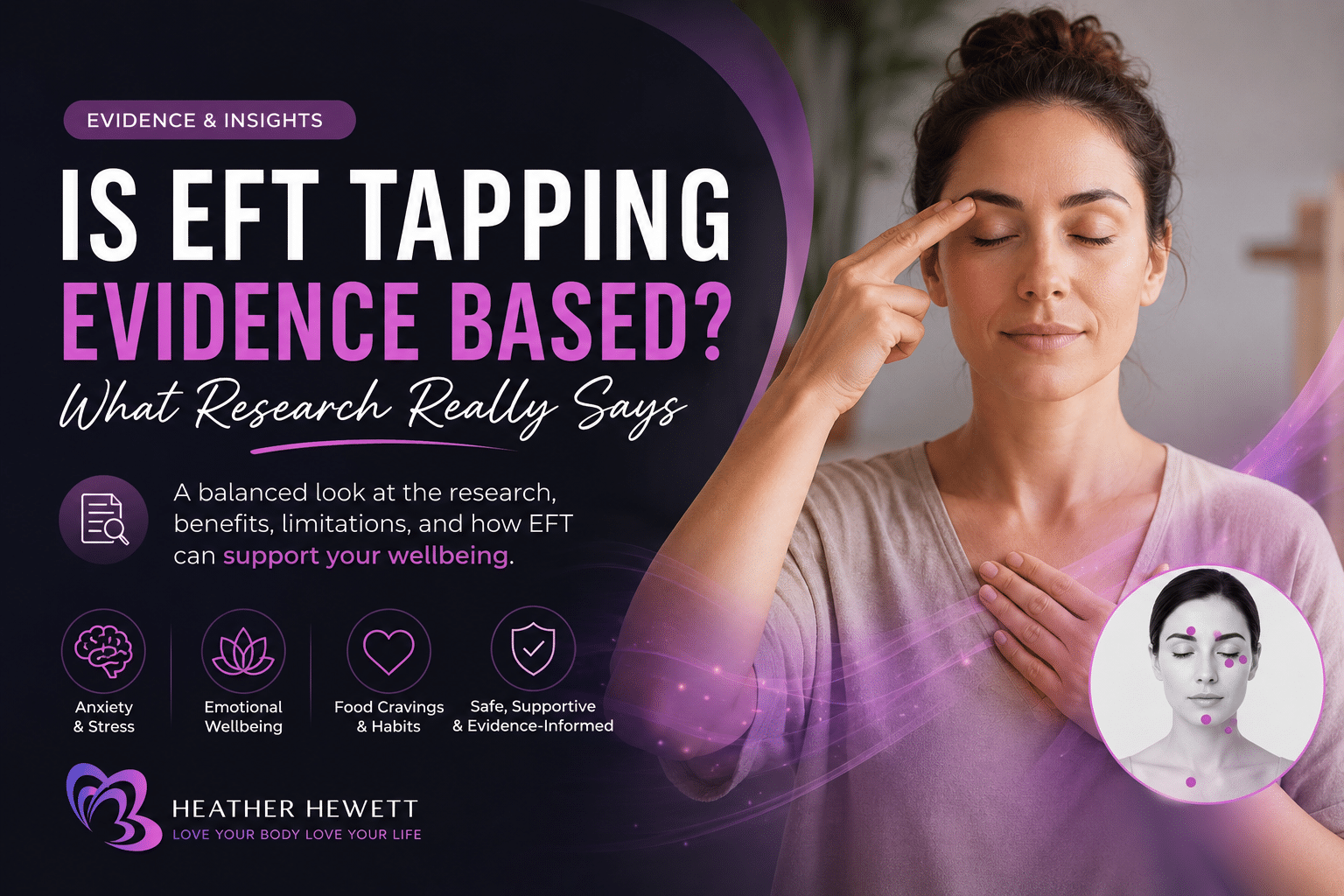
EFT tapping has a developing evidence base, but it is not a stand-alone treatment for every concern. Research suggests it may help some people with anxiety, stress, food cravings, and emotional distress. However, the evidence still has limitations, including small studies, inconsistent protocols, and limited direct comparisons with established mental-health treatments.
This article refers to Emotional Freedom Techniques, often called EFT tapping or tapping therapy. It does not refer to Emotionally Focused Therapy, which is a separate form of psychotherapy that also uses the abbreviation EFT.
The most accurate answer is that EFT may be a useful complementary emotional-regulation practice. It should not be described as a cure, a universal solution, or a replacement for therapy, prescribed medication, medical treatment, or trauma-focused care.
What Does “Evidence Based” Actually Mean?
When people ask, “Is EFT evidence based?” They usually want to know whether EFT tapping is legitimate, scientifically researched, and safe to consider.
Evidence based does not mean guaranteed to work. It also does not mean that every claim made about a technique online has been proven.
In health and wellbeing, an evidence-based practice brings together:
- The best available research
- Professional judgment and appropriate training
- A person’s individual needs, goals, preferences, and health circumstances
The quality of research matters. A practice may show encouraging results in early or small studies but still need larger, independent trials before experts can make strong conclusions.
It also matters what EFT is compared with. A technique that performs better than no support at all may still not have enough evidence to show that it works as well as Cognitive Behavioral Therapy, trauma-focused therapy, medication, or other established care.
That is the most responsible way to view EFT tapping today: research-supported in some areas, promising for some people, but still developing.
What Is EFT Tapping?
EFT stands for Emotional Freedom Techniques. It is a structured practice that combines focused attention on a stressful thought, feeling, craving, memory, or trigger with gentle tapping on selected points on the face and upper body.
A typical EFT tapping session may include:
- Identifying a specific emotional issue or trigger
- Noticing the intensity of that experience
- Using an acknowledgement or self-acceptance statement
- Tapping through a sequence of points
- Pausing to observe emotional, mental, or physical changes
EFT often overlaps with elements found in other wellbeing and psychological practices. These may include emotional awareness, mindfulness, cognitive reframing, attention to body sensations, and gradual exposure to difficult thoughts or feelings.
Some EFT explanations refer to energy meridians. Those explanations remain debated and should not be presented as established scientific fact. A more cautious explanation is that EFT combines focused attention, verbal reframing, emotional processing, gentle movement, and a structured pause from automatic reactions.
For a practical introduction, read What Is EFT Coaching? and What Does an EFT Coach Do?.
What Does Research Say About EFT Tapping?
Research on Emotional Freedom Techniques has explored anxiety, stress, trauma-related symptoms, food cravings, emotional eating, pain, phobias, and depressive symptoms.
The findings are encouraging in some areas, but the evidence is not equally strong for every concern.
A 2025 systematic review of EFT for anxiety disorders included seven randomized controlled trials. The review found that studies comparing EFT with no intervention generally reported improvements in anxiety symptoms. However, the review also found only one direct comparison with Cognitive Behavioral Therapy, and that study did not find a significant difference between EFT and CBT.
This suggests EFT may help some people manage anxiety symptoms, but it does not prove that EFT is more effective than CBT or suitable as a replacement for mental-health treatment.
Research on food cravings is also encouraging but limited. A randomized controlled trial comparing EFT and CBT for food cravings found comparable outcomes in adults with overweight or obesity during an eight-week intervention. That result is useful, but one study cannot establish EFT as treatment for eating disorders, binge eating disorder, obesity, or every type of emotional eating.
Some research reviews have reported improvements in trauma-related symptoms. However, this area requires especially careful interpretation. A peer-reviewed commentary on EFT and PTSD evidence identified concerns about research overlap, inclusion decisions, and the risk of overstating how robust the available evidence is.
The balanced conclusion is that EFT may help some people reduce emotional intensity, notice triggers, and build a more intentional response to stress. It should not be marketed as a cure or a substitute for qualified professional care.
EFT Research at a Glance
| Research Area | What Research Suggests | Main Limitation | Practical Meaning |
| Anxiety | Some studies and reviews suggest EFT may reduce anxiety symptoms. | Limited direct comparison research with CBT and other established treatments. | EFT may be a supportive coping tool, not a replacement for qualified care. |
| Everyday stress | EFT may help some people slow down, notice emotions, and reduce short-term stress intensity. | Studies use different methods, durations, and outcome measures. | EFT may fit into a wider stress-management routine. |
| Trauma-related symptoms | Some reviews report positive outcomes for trauma-related distress. | Study quality, overlap, replication, and interpretation remain debated. | EFT should not replace trauma-focused therapy. |
| Food cravings | One randomized study found comparable outcomes between EFT and CBT. | More studies are needed with different populations and longer follow-up. | EFT may support awareness of emotional or stress-related cravings. |
| Emotional eating | EFT may help some people pause before habitual eating responses. | Direct research on emotional eating specifically remains limited. | Use EFT with nutrition support, emotional skills, and appropriate care. |
What Are the Limitations of EFT Research?
A useful answer to “Does EFT tapping work?” needs to include both potential benefits and clear limitations.
Small Studies and Different Methods
Many EFT studies use relatively small samples. Small studies can offer useful early evidence, but they do not always show whether results will apply to larger or more diverse populations.
Research methods also vary. Some studies use brief self-guided tapping, while others use longer practitioner-led sessions. Some use structured Clinical EFT, while others use broader tapping approaches. These differences make it harder to compare results directly.
Limited Independent Replication
Independent replication means separate research teams repeat studies and reach similar findings. Replication is important because it helps show whether an effect is reliable rather than limited to one setting, one team, or one type of participant.
EFT research has expanded, but more independent and well-designed studies are still needed.
Limited Long-Term Follow-Up
A person may feel calmer after a tapping session, and that can be meaningful. However, short-term symptom changes do not automatically show whether benefits continue months or years later.
Research needs to continue examining long-term outcomes, especially for more complex concerns such as trauma symptoms, chronic anxiety, and disordered eating.
EFT Is Not the Same as Established Clinical Treatment
Positive results compared with no support do not automatically prove that EFT is equivalent to therapy.
People may improve because they receive attention, hope, structure, emotional exposure, relaxation time, reflective questions, or support from a practitioner. These are valuable factors, but they are not unique to EFT.
There is also ongoing debate about whether tapping points themselves provide a specific benefit beyond common factors such as focused attention, emotional exposure, expectation, reframing, and a supportive relationship.
This does not mean a person’s positive experience with EFT is not real. It means claims should stay proportional to the evidence.
Statements such as “EFT cures anxiety,” “tapping permanently rewires the brain,” or “EFT releases stored trauma” go beyond what current evidence can reliably support.
Is EFT as Effective as Cognitive Behavioral Therapy?
Current evidence does not show that EFT is consistently as effective as Cognitive Behavioral Therapy across all mental-health concerns.
CBT has a broader and more established evidence base for anxiety, depression, panic symptoms, trauma-related symptoms, obsessive-compulsive concerns, and many other conditions. It is commonly used by licensed mental-health professionals.
Some EFT studies have compared tapping with CBT. The food-cravings trial discussed above found comparable results between EFT and CBT in one adult sample. However, a limited number of comparisons cannot prove that the two approaches are equally effective in every setting.
A responsible interpretation is:
- EFT may be a helpful complementary emotional-regulation practice.
- CBT has a larger and more established evidence base.
- The best approach depends on the individual, the concern being addressed, and the level of support needed.
- EFT may sometimes be used alongside therapy rather than as an alternative to therapy.
To understand the boundaries between coaching, therapy, and broader wellness support, read How Heather Helps and the site Disclaimer.
Why Is EFT Sometimes Considered Controversial?
EFT is controversial because research findings and theoretical explanations do not all receive the same level of scientific support.
Many people say tapping helps them feel calmer, less overwhelmed, or more able to pause before reacting. Some studies have also reported positive outcomes for anxiety, stress, trauma-related symptoms, and food cravings.
At the same time, critics raise concerns about small samples, inconsistent research methods, limited independent replication, overlapping evidence reviews, and explanations involving energy meridians.
The best conclusion is not that EFT is “fake,” and it is not that EFT is proven beyond doubt.
EFT is a developing complementary practice with promising findings, important limitations, and a need for more strong independent research.
Can EFT Replace Therapy, Medication, or Medical Care?
No. EFT should not replace qualified mental-health care, medical assessment, prescribed medication, or treatment for serious symptoms.
EFT may be used as one supportive emotional-regulation practice within a wider wellbeing plan. It may help people pause, name what they feel, and respond differently to stress or cravings.
However, coaching is not psychotherapy. A coach does not diagnose mental-health conditions, prescribe medication, provide emergency care, or replace a licensed psychologist, therapist, psychiatrist, physician, or registered dietitian when clinical care is needed.
People with persistent anxiety, depression, panic, trauma-related symptoms, eating disorder symptoms, addiction concerns, or symptoms that disrupt everyday life should seek appropriate professional support.
Heather’s Online EFT Coaching page explains that her service is educational and wellness-focused, not psychotherapy or clinical mental-health treatment.
Who May Find EFT Helpful as a Supportive Practice?
EFT may be worth exploring as a supportive practice for adults who want to understand emotional patterns and build more intentional responses.
Some people use EFT while working with:
- Everyday stress or emotional overwhelm
- Performance nerves
- Self-critical thoughts
- Habit loops
- Stress-related eating
- Food cravings
- Sugar cravings
- Nighttime eating patterns
- Difficulty pausing before reacting
- General nervous system support
- Emotional triggers connected to work, relationships, or daily routines
For emotional eating, EFT is usually most useful as one part of a broader approach. That may include consistent nourishment, sleep support, trigger awareness, self-compassion, emotional skills, and professional care where appropriate.
When Should You Seek Qualified Professional Support?
EFT can be a useful self-help or coaching tool for everyday stress, but it should not be the only form of support for everyone.
Seek help from a licensed healthcare or mental-health professional if you experience:
- Persistent or worsening anxiety
- Depression symptoms that affect daily life
- Panic attacks
- Trauma-related symptoms
- Eating disorder symptoms
- Addiction concerns
- Significant sleep disruption
- Symptoms that interfere with work, school, relationships, or daily functioning
- Any situation where you feel unsafe or unable to cope
For trauma-related symptoms, it is important to work at a pace that feels safe. Focusing on distressing experiences without suitable support can feel overwhelming for some people.
How EFT Can Fit Into a Whole-Person Support Plan
EFT is most useful when it is not treated as a magic solution.
A whole-person support plan may include:
- Nervous system regulation practices
- Sleep and recovery support
- Regular, nourishing meals
- Stress-management habits
- Emotional awareness
- Mindful behavior change
- Support around cravings and emotional eating
- Compassionate accountability
- Therapy or medical care when appropriate
For some people, EFT creates a brief pause between an emotional trigger and an automatic behavior. That pause may make it easier to choose a different next step, such as eating a balanced meal, taking a walk, writing down a thought, grounding through the senses, resting, or contacting a trusted person.
Nutrition can also play a role in overall wellbeing. Explore Clinical Nutrition Coaching, Nutrition Counseling, Foods for Nervous System Health, and Can Stress Cause Weight Gain?.
Heather M Hewett’s work combines EFT tapping with nervous-system-aware, trauma-informed, and nutrition-informed coaching.
The Bottom Line: Is EFT Evidence Based?
EFT tapping has a developing evidence base.
Research suggests that EFT may help some people with anxiety, stress, emotional intensity, food cravings, and some trauma-related symptoms. However, the limitations of the research mean EFT should not be described as a cure, a universal solution, or a replacement for established mental-health or medical care.
The most responsible way to view EFT is as a complementary emotional-regulation practice. It may help some people notice triggers, reduce emotional intensity, and create more space for intentional choices.
If you decide to explore EFT, use it as part of a wider support plan. Seek qualified professional care when symptoms are severe, persistent, trauma-related, or disruptive to daily life.
Disclaimer
This content is for educational purposes only. EFT coaching and self-help tapping practices do not replace medical advice, diagnosis, psychotherapy, crisis support, prescribed medication, or treatment from qualified healthcare professionals.
If you are experiencing persistent, worsening, trauma-related, or disruptive symptoms, seek appropriate support from a licensed healthcare or mental-health professional.
Frequently Asked Questions
Is EFT evidence based?
EFT tapping has a developing but still limited evidence base. Research suggests possible benefits for anxiety, stress, cravings, and emotional distress, but larger independent studies and stronger treatment comparisons are still needed
Is EFT tapping backed by science?
EFT tapping has been studied in randomized trials, systematic reviews, and meta-analyses. Some studies report positive outcomes for anxiety, stress, and food cravings, but research quality and methods vary.
Is EFT tapping scientifically proven?
EFT tapping is not proven to work for everyone or every condition. Current research is promising but incomplete, so EFT should be treated as a complementary practice rather than a cure, guaranteed treatment, or substitute for professional care.
Is EFT tapping legitimate?
EFT tapping is a legitimate complementary wellbeing practice with published research. It may help some people manage stress, emotional triggers, and cravings, but it does not replace diagnosis, psychotherapy, medical treatment, or prescribed medication.
Is EFT tapping pseudoscience?
EFT is debated because energy-meridian explanations are not established scientific facts. However, EFT itself has been researched, with some studies reporting positive emotional-health outcomes while its mechanisms and evidence quality remain contested
Does EFT tapping work for anxiety?
EFT tapping may reduce anxiety symptoms for some people in some settings. A recent review found positive findings against no intervention, while the available CBT comparison found no statistically significant difference between approaches.
Does EFT tapping work for stress?
EFT tapping may help some people manage everyday stress and emotional intensity. It creates a structured pause for focused attention, self-awareness, and emotional regulation, but it works best within a wider stress-support plan.
Does EFT tapping work for trauma?
EFT may help manage trauma-related emotional distress, but it cannot replace trauma-focused therapy. Research findings are promising yet debated, and self-guided work with painful memories can feel overwhelming without appropriate pacing or support.
Is EFT as effective as CBT?
Current evidence does not establish EFT as consistently equal to Cognitive Behavioral Therapy. Some studies show comparable outcomes in limited situations, such as food cravings, but CBT has a broader evidence base across mental-health conditions.
Can EFT replace therapy?
EFT should not replace therapy for persistent or disruptive symptoms. It may support emotional regulation alongside appropriate care, but anxiety, depression, trauma symptoms, panic, eating disorders, or addiction concerns require qualified assessment and treatment.
Can EFT replace medication?
EFT should never replace prescribed medication or medical treatment. Do not start, stop, or change medication because of tapping; discuss medication decisions with the clinician who prescribed it. EFT may be used as an additional coping practice, but it is not medical care.
Is EFT safe to try on your own?
EFT is commonly used as a gentle self-help practice for everyday stress. Self-guided tapping may not be enough for active trauma, panic, severe anxiety, depression, eating disorder symptoms, or addiction concerns affecting daily life.
Does EFT help with emotional eating?
EFT may help people notice emotions and stress triggers before they eat automatically. It can create a pause around self-criticism, overwhelm, or habits, but it is not a stand-alone treatment for eating disorders or binge eating.
Does EFT help with food cravings?
EFT may reduce the emotional intensity of food cravings for some people. One randomized study found comparable food-craving outcomes between EFT and CBT in a specific adult sample, but more research is needed.
Can EFT help with sugar cravings?
EFT may help identify emotional or stress-related triggers behind sugar cravings. It is most useful as a pause-and-notice practice alongside regular meals, sleep support, stress management, and individualized nutrition guidance where appropriate.
Is Clinical EFT different from general EFT tapping?
Clinical EFT is more structured than general online tapping. It is a manualized format commonly used in research, whereas EFT videos and scripts online vary in training, sequence, language, and quality.
Why is EFT controversial?
EFT is controversial because its research findings and explanations are uneven. Some studies report benefits, while critics question study quality, replication, and whether tapping adds effects beyond attention, exposure, relaxation, expectation, or supportive guidance.
What does evidence-based EFT mean?
Evidence-based EFT uses research, professional judgment, individual context, and clear safety limits. It does not mean EFT works for everyone, replaces clinical treatment, or supports exaggerated medical claims.
Should I use EFT for trauma without a therapist?
Do not rely on EFT alone for active trauma symptoms. Working with painful memories without appropriate pacing can be overwhelming, so trauma-informed mental-health support is usually safer when symptoms are distressing or disruptive.
Can EFT be used alongside therapy?
EFT may be used alongside therapy when it fits your care plan. Some people use tapping between sessions to notice triggers or manage stress, but it should support rather than replace individualized treatment.