
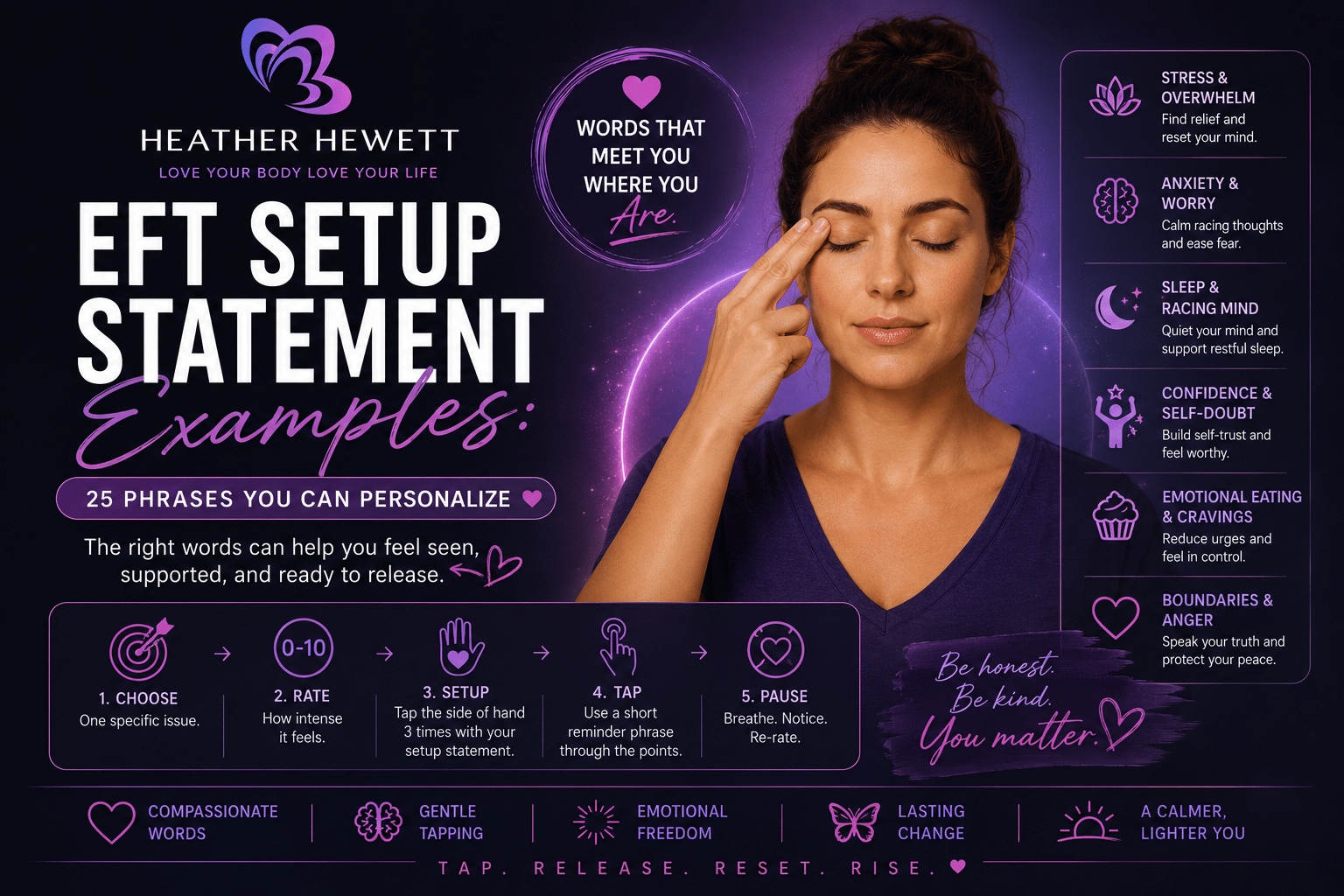
An EFT setup statement is a phrase you say while tapping the side-of-hand point before moving through the rest of the EFT tapping sequence. It usually names a specific emotion, thought, body sensation, or situation that feels difficult, then adds a compassionate or accepting statement. The wording can be personalized so it feels honest and believable.
Looking for EFT setup statement examples that feel natural instead of forced? EFT means Emotional Freedom Techniques, also called EFT tapping or tapping. In this article, EFT does not mean electronic funds transfer or Emotionally Focused Therapy.
An EFT setup statement is a phrase said while tapping the side-of-hand point, often called the karate chop point, before tapping through the rest of the sequence. You do not need perfect words to begin. Honest, specific language often feels more supportive than trying to say something overly positive. The goal is simply to notice what you are experiencing and give yourself a moment of compassionate attention.
Table of Contents
- What Is an EFT Setup Statement?
- The Basic EFT Setup Statement Formula
- How to Use an EFT Setup Statement During Tapping
- EFT Setup Statement Examples for Stress and Overwhelm
- EFT Setup Statement Examples for Anxiety and Worry
- EFT Setup Statement Examples for Sleep
- EFT Setup Statement Examples for Confidence
- EFT Setup Statement Examples for Emotional Eating and Cravings
- EFT Setup Statement Examples for Boundaries and Anger
- Setup Statement vs. Reminder Phrase
- How to Make Your EFT Setup Statement More Specific
- When “I Accept Myself” Does Not Feel True
- When Self-Guided EFT May Not Be Enough
What Is an EFT Setup Statement?
An EFT setup statement is a longer phrase used at the side-of-hand point before beginning a tapping round. It usually names the emotion, thought, body sensation, or situation that feels difficult and adds a compassionate phrase. You can adjust the words so they feel believable and emotionally safe for you.
The setup statement is often repeated three times while tapping the side of the hand. After that, you use a shorter reminder phrase while tapping through the other EFT points.
For a fuller overview of the process, read about what EFT coaching involves.
The Basic EFT Setup Statement Formula
A simple EFT setup statement usually has two parts: naming the specific issue you are experiencing and adding a compassionate, accepting response.
Even though I feel [emotion or body sensation] about [specific situation], I accept how I feel right now.
You can also try these gentler alternatives:
- “Even though part of me feels [emotion], I am open to being kind to myself right now.”
- “Even though this feels difficult, I can acknowledge what I am feeling.”
- “Even though I am struggling with [situation], I am open to feeling a little more supported.”
- “Even though I feel this in my body, I can notice what I need right now.”
Choose wording that feels honest. Self-acceptance does not mean you like what is happening, approve of it, or have to solve it immediately. It means you are allowing yourself to notice the experience without adding more judgment.
Want Personalized Support With EFT?
If you understand the basics of EFT tapping but want help applying it to recurring stress, emotional patterns, cravings, or other personal concerns, personalized EFT coaching can provide more structured support.
How to Use an EFT Setup Statement During Tapping
1. Choose One Specific Issue
Pick one current issue, such as a stressful email, a craving, worry about tomorrow, tension in your shoulders, or fear of being judged.
2. Notice What Feels Most Active
Ask yourself what is present right now. You may notice an emotion, a thought, a body sensation, a memory, or an urge.
3. Rate the Intensity
Use a 0 to 10 scale. Zero means the feeling is very low. Ten means it feels very intense.
4. Repeat the Setup Statement Three Times
Tap gently on the side-of-hand point while saying your setup statement three times.
5. Use a Short Reminder Phrase
Tap through the remaining points while repeating a short phrase such as “this work pressure,” “this tight chest,” or “this fear of judgment.”
6. Pause and Reassess
Take a breath and notice what has changed. You may want to continue, change your wording, or simply stop and rest.
For more support with grounding and emotional regulation, explore EFT tapping for nervous system regulation.
EFT Setup Statement Examples for Stress and Overwhelm
Stress can show up as a busy mind, body tension, irritability, or the feeling that too much depends on you. These EFT setup statement examples focus on everyday pressure without asking you to pretend everything is fine.
When You Have Too Many Tasks
Setup statement:
“Even though I have too many things to do and my mind feels crowded, I can acknowledge how overwhelmed I feel.”
Reminder phrase:
“This crowded feeling.”
Gentle reframe:
“I can take one thing at a time.”
When Work Pressure Feels Heavy
Setup statement:
“Even though I feel pressure to get everything right at work, I am open to giving myself some breathing room.”
Reminder phrase:
“This work pressure.”
Gentle reframe:
“I can focus on the next helpful step.”
When You Feel Burned Out
Setup statement:
“Even though I am tired of carrying so much, I can notice that part of me needs support.”
Reminder phrase:
“So tired of carrying this.”
Gentle reframe:
“Rest can be part of moving forward.”
When You Feel On Edge
Setup statement:
“Even though I feel tense and on edge today, I can be curious about what my body needs.”
Reminder phrase:
“This tense feeling.”
Gentle reframe:
“I can soften a little right now.”
When Everyone Needs Something From You
Setup statement:
“Even though everyone seems to need something from me, I can acknowledge that this feels like a lot.”
Reminder phrase:
“This is a lot.”
Gentle reframe:
“My needs matter too.”
For a more detailed stress-focused guide, visit EFT tapping for stress.
EFT Setup Statement Examples for Anxiety and Anticipatory Worry
Anxiety may relate to a specific event or may feel harder to explain. Start with the part that feels most true in the moment.
When You Are Worrying About Tomorrow
Setup statement:
“Even though I keep imagining everything that could go wrong tomorrow, I can acknowledge how worried I feel.”
Reminder phrase:
“All this tomorrow worries me.”
Gentle reframe:
“I am here at this moment.”
Before a Job Interview
Setup statement:
“Even though I am nervous about this interview and afraid I will freeze, I can be kind to myself while I prepare.”
Reminder phrase:
“Afraid I will freeze.”
Gentle reframe:
“I can show up as I am.”
Before Public Speaking
Setup statement:
“Even though speaking in front of people makes my body feel shaky, I can acknowledge this fear without judging it.”
Reminder phrase:
“This shaky fear.”
Gentle reframe:
“I can take one breath at a time.”
When You Fear Being Judged
Setup statement:
“Even though I am afraid people will judge me, I can notice how vulnerable this feels.”
Reminder phrase:
“Fear of being judged.”
Gentle reframe:
“I do not need everyone’s approval.”
When Anxiety Has No Clear Cause
Setup statement:
“Even though I feel anxious and do not fully know why, I can allow myself to notice what is here.”
Reminder phrase:
“This unknown anxiety.”
Gentle reframe:
“I can move slowly with this.”
EFT Setup Statement Examples for Sleep and Racing Thoughts
These phrases can be used as part of a calming bedtime routine. They are not intended to treat insomnia or replace professional care for ongoing sleep difficulties.
When Your Mind Replays the Day
Setup statement:
“Even though my mind keeps replaying everything from today, I can acknowledge that I am having a hard time settling.”
Reminder phrase:
“This is replaying my mind.”
Gentle reframe:
“I do not have to solve everything tonight.”
When You Worry About Tomorrow
Setup statement:
“Even though I keep planning for tomorrow instead of resting, I can let myself return to this moment.”
Reminder phrase:
“Worried about tomorrow.”
Gentle reframe:
“Tomorrow can wait until tomorrow.”
When Your Body Feels Tense
Setup statement:
“Even though my shoulders and chest feel tight, I can notice this tension with gentleness.”
Reminder phrase:
“This is body tension.”
Gentle reframe:
“My body deserves a pause.”
When You Feel Frustrated About Not Sleeping
Setup statement:
“Even though I am frustrated that I cannot settle down, I can acknowledge how tired I feel.”
Reminder phrase:
“Frustrated and tired.”
Gentle reframe:
“I can stop fighting at this moment.”
EFT Setup Statement Examples for Confidence and Self-Doubt
Self-doubt can become louder when you are trying something new, making a decision, sharing your work, or being seen by others.
When You Fear Making a Mistake
Setup statement:
“Even though I am scared of making a mistake, I can acknowledge how much this matters to me.”
Reminder phrase:
“Afraid to get it wrong.”
Gentle reframe:
“I can learn as I go.”
When You Do Not Feel Good Enough
Setup statement:
“Even though part of me believes I am not good enough, I am open to meeting myself with more compassion.”
Reminder phrase:
“Not good enough.”
Gentle reframe:
“I am more than this thought.”
When You Compare Yourself to Others
Setup statement:
“Even though I keep comparing myself to other people, I can notice how discouraged I feel.”
Reminder phrase:
“All this comparison.”
Gentle reframe:
“My path is still my own.”
When You Feel Like an Impostor
Setup statement:
“Even though I worry people will find out I do not belong here, I can acknowledge how vulnerable this feels.”
Reminder phrase:
“I do not belong.”
Gentle reframe:
“I can let myself keep learning.”
Explore EFT tapping for confidence for more support around self-doubt and fear of being seen.
EFT Setup Statement Examples for Emotional Eating and Cravings
Food urges can be connected to stress, comfort, habit, loneliness, fatigue, restriction, or many other experiences. These statements are not meant to shame eating. They are simply a way to pause and notice what may be happening underneath the urge.
When You Want Comfort From Food
Setup statement:
“Even though I want food to comfort me right now, I can acknowledge that something in me needs care.”
Reminder phrase:
“Wanting comfort.”
Gentle reframe:
“I can pause and check in.”
When You Have Stress Cravings
Setup statement:
“Even though I am craving something because this day feels overwhelming, I can notice the stress underneath this urge.”
Reminder phrase:
“This stressed craving.”
Gentle reframe:
“I can support myself without rushing.”
When You Feel a Nighttime Urge to Eat
Setup statement:
“Even though I feel pulled toward food late at night, I can be curious about what I am feeling.”
Reminder phrase:
“This nighttime urge.”
Gentle reframe:
“I can slow down for one moment.”
When You Feel Guilty After Eating
Setup statement:
“Even though I feel upset and ashamed after eating, I can acknowledge that shame is making this harder.”
Reminder phrase:
“This food guilt.”
Gentle reframe:
“I deserve compassion, not punishment.”
For further support, read about EFT tapping for emotional eating and EFT for cravings.
EFT Setup Statement Examples for Relationships, Boundaries, and Anger
Relationships can bring up fear, resentment, people-pleasing, and emotional reactivity. Focus on your own feelings and needs rather than trying to change another person through tapping.
When You Fear Disappointing Someone
Setup statement:
“Even though I am afraid they will be disappointed if I say no, I can acknowledge how hard boundaries feel.”
Reminder phrase:
“Afraid to disappoint them.”
Gentle reframe:
“My needs are allowed to matter.”
Before a Difficult Conversation
Setup statement:
“Even though I feel anxious about this conversation, I can let myself prepare without needing to be perfect.”
Reminder phrase:
“This conversation anxiety.”
Gentle reframe:
“I can speak one honest sentence.”
When You Feel Resentful After Conflict
Setup statement:
“Even though I feel angry and resentful after what happened, I can acknowledge that part of me feels hurt.”
Reminder phrase:
“This hurt and anger.”
Gentle reframe:
“I can give myself time before reacting.”
Setup Statement vs. Reminder Phrase: What Is the Difference?
| Element | Purpose | When to Use It | Example |
| Setup statement | Names the issue and adds compassionate or accepting wording. | At the side-of-hand point before tapping through the sequence. | “Even though I feel nervous about tomorrow, I can acknowledge how worried I am.” |
| Reminder phrase | Keeps your attention on the issue in a few words. | While tapping through the remaining tapping points. | “This tomorrow worry.” |
| Gentle reframe | Offers a supportive possibility that feels believable. | Later in the round when you feel ready. | “I can take one step at a time.” |
A setup statement is longer because it gives context. A reminder phrase is shorter because it is repeated across the tapping points.
How to Make Your EFT Setup Statement More Specific
Specific wording can help you identify what is active right now. Instead of starting with a broad phrase such as “I feel anxious,” name the trigger, body sensation, fear, or thought connected to the feeling.
| Too General | More Specific | Why It Helps |
| “Even though I feel anxious…” | “Even though my chest feels tight when I think about tomorrow’s presentation, I can acknowledge how nervous I feel.” | It names the trigger and body sensation. |
| “Even though I feel bad…” | “Even though I feel guilty after saying no to my coworker, I can notice how hard boundaries feel.” | It gives the feeling context. |
| “Even though I have cravings…” | “Even though I want something sweet after this difficult day, I can notice how much comfort I want right now.” | It identifies the emotional need without shame. |
| “Even though I doubt myself…” | “Even though I am afraid I will sound foolish in the meeting, I can acknowledge this fear of being judged.” | It names the underlying concern. |
When personalizing an EFT setup statement, consider these five details:
- Trigger: What happened or what are you thinking about?
- Emotion: What feeling is most present?
- Body sensation: Where do you feel it in your body?
- Meaning or belief: What are you afraid this situation means?
- Compassionate phrase: What wording feels possible to say right now?
What if “I Accept Myself” Does Not Feel True?
You do not need to force a phrase that feels unrealistic or emotionally unsafe. Try a softer alternative instead.
- “I am willing to notice how this feels.”
- “I can be curious about what is coming up.”
- “I am open to being a little kinder to myself.”
- “I can acknowledge that this is hard.”
- “I do not have to solve everything right now.”
- “I can give myself a moment of support.”
The goal is not to say the perfect phrase. The goal is to use words you can say honestly.
When Self-Guided EFT May Not Be Enough
EFT can be a complementary self-help and wellness practice. It is not a substitute for medical care, diagnosis, psychotherapy, emergency support, or treatment from a licensed mental-health professional.
Seek qualified professional support if you experience severe distress, thoughts of self-harm, panic symptoms, trauma symptoms, eating-disorder symptoms, persistent anxiety or depression that affects daily functioning, or a medical or mental-health emergency.
Guided support may also be helpful when a pattern feels confusing, intense, or connected to difficult past experiences. Learn more about self-tapping vs. EFT coaching and what happens in an EFT session.
Read the full wellness disclaimer for important information about the scope of wellness education and coaching.
Final Thoughts on EFT Setup Statement Examples
EFT setup statement examples can help you begin without overthinking what to say. The most helpful phrase is often one that is specific, honest, and kind enough to feel believable.
Start with one current feeling, body sensation, thought, or situation. You can change the words as new emotions or needs become clearer. The purpose is not to force positivity. It is to make space for awareness and support.
For personalized guidance, explore online EFT coaching or start here for personalized support.
Before booking, you can also review the EFT coaching cost and session options.
Frequently Asked Questions
What is an EFT setup statement?
An EFT setup statement is a longer phrase used at the side-of-hand point before tapping through the EFT sequence. It names the current issue and adds compassionate or accepting wording.
What is the basic EFT setup statement formula?
A simple formula is: “Even though I feel [emotion] about [situation], I accept how I feel right now.” You can replace the final phrase with softer wording that feels more believable.
What do you say at the karate chop point in EFT?
Say your full setup statement while tapping the side of your hand. Repeat it three times before moving to the other tapping points.
How many times should I repeat an EFT setup statement?
Repeat the setup statement three times at the side-of-hand point. Then use a shorter reminder phrase while tapping through the remaining points.
What is the difference between a setup statement and a reminder phrase?
A setup statement is a longer phrase that names the problem and adds compassion. A reminder phrase is a shorter version repeated during the tapping sequence.
Can I change the words in an EFT setup statement?
Yes. Change the words whenever your feelings, thoughts, or body sensations shift. Use wording that feels honest and emotionally safe.
What are good EFT tapping phrases for anxiety?
Helpful anxiety phrases include “this tomorrow worry,” “this fear of being judged,” “this tight chest,” or “this unknown anxiety.” Choose the phrase that best matches what feels active.
Can EFT tapping help with emotional eating or cravings?
Some people use EFT as a pause to notice stress, comfort-seeking, or food-related feelings. It does not replace professional support for eating disorders or ongoing distress around food.
Can EFT tapping replace therapy or medical treatment?
No. EFT tapping does not replace therapy, medical care, medication, diagnosis, or emergency support. It can be used as a complementary wellness practice.
What should I do if tapping brings up intense emotions?
Pause the tapping and use grounding, such as slow breathing or placing your feet on the floor. Seek support from a licensed professional or emergency service if you feel unsafe.
Can beginners use EFT setup statements?
Yes. Beginners can use simple, honest phrases about what they feel right now. You do not need perfect words or advanced knowledge to start gently.
What should I say if “I accept myself” does not feel true?
Try softer wording such as “I can acknowledge this is hard” or “I am open to being a little kinder to myself.” Choose a phrase that feels possible to say.