
Emotional resilience is your ability to handle stress, process emotions, and recover from difficult moments without becoming completely overwhelmed. It helps you stay grounded, respond with more awareness, and feel more stable when life feels stressful.
Building emotional resilience does not mean you never feel sad, anxious, angry, disappointed, or overwhelmed. It means you learn how to move through emotions with more support, less self-criticism, and a stronger ability to recover.
If you often feel reactive, emotionally drained, stuck in stress cycles, or easily overwhelmed, emotional resilience can help you build more steadiness from the inside out.
In this article, you will learn what emotional resilience means, why it matters, what can weaken it, and simple steps to build it over time.
Medical note: This article is for educational and wellness purposes only. It does not replace medical care, mental health care, diagnosis, or treatment. If you feel unable to cope, experience frequent panic, severe depression, trauma symptoms, thoughts of self-harm, or difficulty functioning, please speak with a qualified healthcare provider or mental health professional. You can also read the health and coaching disclaimer for more information.
What Is Emotional Resilience?
Emotional resilience is the ability to adapt to stress, experience emotions, and recover from challenges while maintaining a sense of inner stability.
The American Psychological Association describes resilience as the process and outcome of adapting successfully to difficult or challenging life experiences through mental, emotional, and behavioral flexibility. You can read more in the APA guide to resilience.
Emotional resilience helps you:
Stay calmer under pressure
Recover from stress more easily
Pause before reacting
Understand your emotional triggers
Handle conflict with more awareness
Return to balance after difficult moments
Feel more capable during challenges
Resilience is not something you either have or do not have. It can be strengthened with practice, support, self-awareness, and consistent daily habits.
What Emotional Resilience Does Not Mean
Many people misunderstand emotional resilience.
Emotional resilience does not mean:
Never feeling emotional
Ignoring stress
Forcing positivity
Staying calm all the time
Suppressing emotions
Pretending everything is fine
Handling everything alone
Never needing support
Real emotional resilience is not about becoming emotionless. It is about learning how to feel emotions without being controlled by them.
You can be emotionally resilient and still cry. You can be resilient and still need rest. You can be resilient and still ask for help.
Struggling emotionally does not mean you are weak. It may mean your nervous system has been under pressure for too long.
Signs You May Need More Emotional Resilience
You may benefit from building emotional resilience if you often notice:
Feeling overwhelmed easily
Reacting strongly to small stressors
Difficulty calming down
Mood swings
Emotional exhaustion
Feeling mentally drained
Avoiding difficult emotions
Shutting down during conflict
Overthinking after stressful moments
Feeling stuck in survival mode
Struggling to recover after stress
These signs are not personal failures. They are signals that your system may need more support, recovery, and regulation.
If these patterns feel familiar, this guide on signs of nervous system dysregulation may help you understand how stress can show up in the body and emotions.
Why Emotional Resilience Is Important
Emotional resilience affects many areas of life.
Mental and Emotional Well-Being
Resilience helps reduce the intensity of stress and emotional overwhelm. It does not remove all stress, but it can help you recover more quickly.
Decision-Making
When emotions feel intense, it can be harder to think clearly. Emotional resilience helps create space between what you feel and how you respond.
Relationships
When you are more emotionally regulated, it becomes easier to communicate calmly, listen, repair conflict, and avoid reacting from stress.
Physical Health
Stress affects the body as well as the mind. Emotional resilience can support healthier stress responses, better daily routines, and more consistent self-care.
Emotional Resilience and Relationships
Emotional resilience can affect how you communicate, connect, and respond to others.
When stress levels stay high, emotional reactions often become stronger. You may withdraw, become defensive, shut down, over-explain, or react more sharply than you want to.
Low emotional resilience in relationships may look like:
Becoming emotionally reactive
Withdrawing from others
Difficulty communicating calmly
Shutting down during conflict
Feeling emotionally exhausted around people
Taking things personally
Struggling to recover after disagreements
As emotional resilience improves, relationships may feel more stable. You may be able to pause before responding, express needs more clearly, and recover from conflict with less emotional shutdown.
What Is the Role of the Nervous System?
Your nervous system plays a major role in emotional resilience.
When your nervous system feels regulated, emotions often feel more manageable. You may still feel stress, but you have more capacity to respond instead of react.
When your nervous system feels dysregulated, emotions can feel intense, urgent, or difficult to control. Your body may move into fight, flight, freeze, or shutdown patterns.
A regulated nervous system may support:
Clearer thinking
Better emotional awareness
Improved stress recovery
More calm in the body
More choice in how you respond
A dysregulated nervous system may contribute to:
Emotional overwhelm
Anxiety
Irritability
Shutdown
Overthinking
Low stress tolerance
Feeling constantly on edge
This is why emotional resilience often begins with nervous system support. If you want a deeper explanation, this guide on what nervous system regulation means can help.
Why Does It Feel Hard to Stay Emotionally Balanced?
It can feel hard to stay emotionally balanced when your system has been under stress for too long.
If you are constantly managing pressure, responsibilities, emotional demands, poor sleep, or unresolved stress, your capacity can shrink. Then small problems may feel much bigger than they normally would.
This is not a weakness. It is a biological response.
Your body may be trying to protect you, conserve energy, or signal that it needs rest, safety, and support.
How Chronic Stress Reduces Emotional Resilience
Chronic stress can gradually reduce emotional resilience over time.
When the body stays activated for long periods, it may have less capacity to process emotions, recover from stress, and feel calm.
Chronic stress may contribute to:
Emotional exhaustion
Low stress tolerance
Anxiety
Burnout
Irritability
Mental fatigue
Overwhelm
Difficulty relaxing
Feeling emotionally numb
Over time, even small situations can feel emotionally intense. This does not mean your body is failing. It means your system may need more recovery.
The CDC recommends healthy stress-coping practices such as taking breaks, breathing, stretching, journaling, spending time outdoors, connecting with others, and making time to unwind. You can read more in the CDC guide on managing stress.
What Affects Emotional Resilience?
Emotional resilience is influenced by many factors.
Chronic Stress
Ongoing stress can reduce your ability to cope and recover.
Past Experiences
Past emotional experiences can shape how your body responds to current stress.
Sleep Quality
Poor sleep can make emotions feel stronger and reduce your ability to respond calmly.
Nutrition and Hydration
Low energy, inconsistent meals, or dehydration can make stress harder to manage.
Support System
Safe relationships and emotional support can strengthen resilience.
Self-Awareness
Understanding your emotions, triggers, and body signals makes it easier to respond with care.
Nervous System Regulation
When your body feels safer and more regulated, emotional recovery often becomes easier.
How Poor Sleep Affects Emotional Resilience
Sleep plays an important role in emotional regulation and stress recovery.
When sleep quality decreases, your nervous system may become more sensitive to stress. You may feel more irritable, anxious, reactive, or emotionally exhausted.
Poor sleep may contribute to:
Mood swings
Low patience
Anxiety
Emotional exhaustion
Low stress tolerance
Difficulty coping
Brain fog
Stronger emotional reactions
Improving sleep does not fix everything overnight, but it can make emotional resilience easier to build.
Helpful sleep habits include:
Keeping a consistent bedtime
Reducing screens before bed
Avoiding caffeine late in the day
Creating a calming evening routine
Getting morning light when possible
Giving yourself enough time to rest
What Low Emotional Resilience Can Feel Like
Low emotional resilience can affect both your emotions and your body.
It may feel like:
Feeling emotionally drained
Overreacting to stress
Difficulty calming down
Feeling mentally exhausted
Shutting down emotionally
Becoming easily overwhelmed
Feeling stuck in survival mode
Struggling to recover after stressful situations
When stress builds up, your body may focus more on protection than emotional balance. This can make everyday life feel heavier.
Emotional Resilience and Survival Mode
Survival mode happens when the body feels constantly stressed, emotionally unsafe, or under pressure.
When you are in survival mode, your nervous system may stay alert even when there is no immediate danger.
You may notice:
Overthinking
Panic
Emotional reactivity
Feeling numb
Difficulty relaxing
Exhaustion
Shutting down emotionally
Feeling constantly on edge
In this state, emotional resilience can feel harder because the body is prioritizing protection.
As your body begins to feel safer and more regulated, emotional resilience may improve naturally over time.
Signs Your Emotional Resilience Is Improving
Building emotional resilience is usually gradual. Small changes often appear before big changes become obvious.
Signs of improvement may include:
You recover from stress more quickly
Your emotions feel less overwhelming
You pause before reacting
You notice triggers earlier
You feel calmer more often
You communicate more clearly
You need less time to recover after conflict
Difficult situations feel more manageable
You feel safer in your body
Even small emotional improvements matter. Resilience grows through repeated experiences of support, recovery, and self-awareness.
Why Self-Compassion Improves Emotional Resilience
Many people try to build emotional resilience through pressure, criticism, or perfectionism. But self-criticism often increases emotional stress.
Self-compassion creates more emotional safety. It helps you respond to difficulty with support instead of shame.
Self-compassion may include:
Speaking to yourself more gently
Allowing rest
Accepting difficult emotions
Reducing unrealistic pressure
Supporting yourself during stressful moments
Recognizing that struggle is part of being human
NIH-indexed research suggests self-compassion can be a valuable coping resource during stressful life events. You can read more in this review on self-compassion, stress, and coping.
How to Build Emotional Resilience Step by Step
Building emotional resilience takes time. The goal is not to fix everything quickly. The goal is to build small skills that help your body and emotions feel more supported.
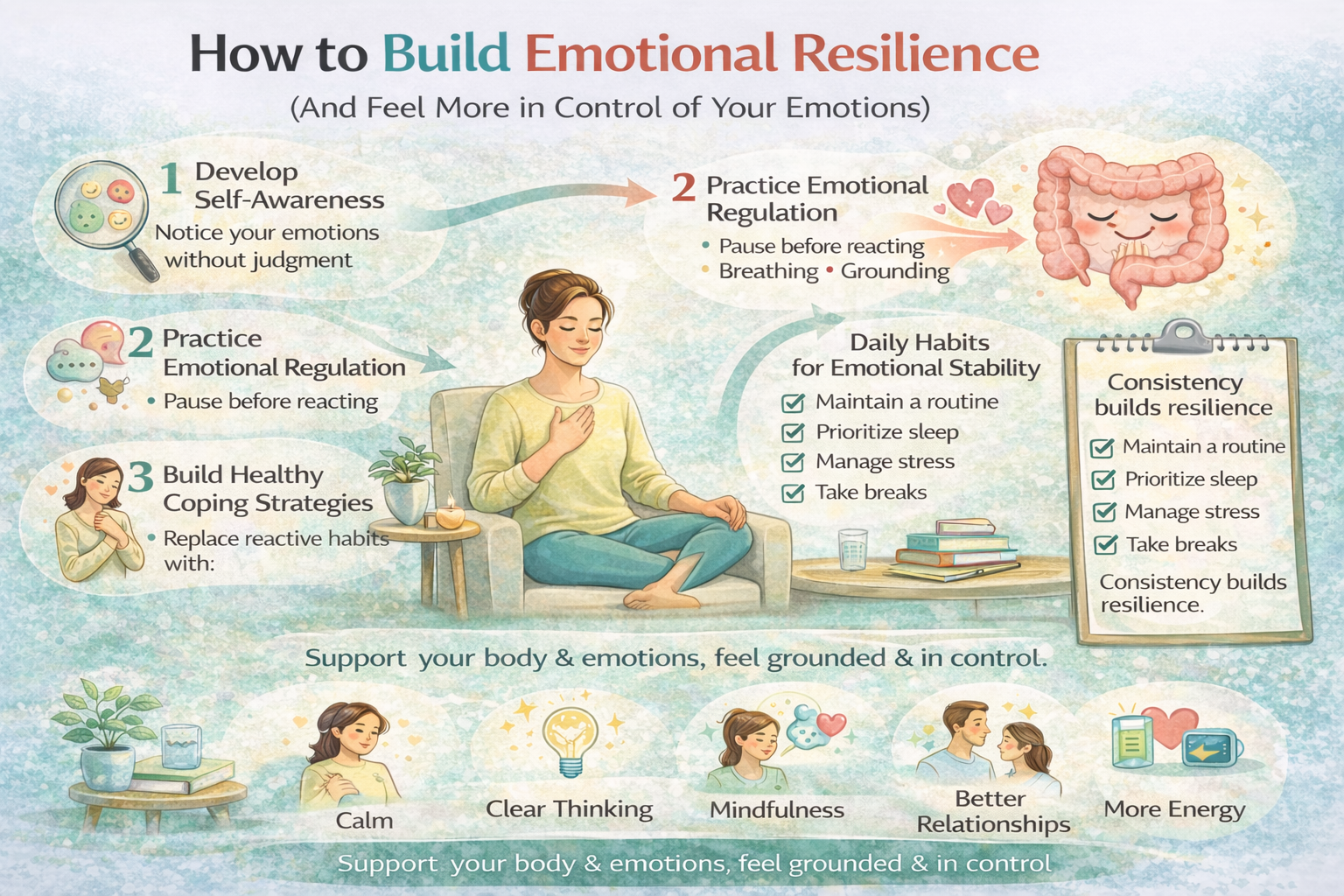
1. Develop Self-Awareness
Start by noticing your emotional patterns without judging them.
Ask yourself:
What situations trigger me?
What emotions feel hardest to manage?
Where do I feel stress in my body?
Do I react, shut down, or avoid it?
What helps me recover?
Self-awareness gives you more choice. You cannot change a pattern you cannot see.
2. Practice Emotional Regulation
Emotional regulation means learning how to stay connected to yourself when emotions feel intense.
Simple tools include:
Slow breathing
Grounding
Taking a pause
Naming the emotion
Relaxing your jaw and shoulders
Stepping away briefly when needed
Using supportive self-talk
You do not need to calm down instantly. Even creating a small pause is progress.
3. Build Healthier Coping Strategies
Healthy coping tools help you move through stress without adding more harm.
Helpful options may include:
Walking
Journaling
Talking to someone safe
Stretching
Resting
Listening to calming music
Taking a short break
Spending time outside
Using grounding exercises
The best coping tool is the one that meets the real need. If you need rest, rest helps more than distraction. If you need support, connection helps more than isolation.
4. Support Your Nervous System
Emotional resilience becomes easier when your nervous system feels safer.
Supportive practices include:
Eating regular meals
Staying hydrated
Getting enough sleep
Taking breaks
Reducing overstimulation
Moving gently
Creating quiet moments
Practicing breathing exercises
This guide on how to regulate your nervous system naturally shares simple ways to support the body through stress.
5. Practice Self-Compassion
When emotions feel intense, try replacing criticism with support.
Instead of saying:
“Why am I like this?”
Try:
“This is hard, and I can support myself through it.”
Instead of saying:
“I should be over this.”
Try:
“My body may need more time and care.”
This kind of language can help reduce shame and create a stronger foundation for emotional recovery.
6. Focus on Consistency Over Perfection
Emotional resilience develops through repetition.
Small supportive actions practiced consistently are often more helpful than dramatic changes that only last a few days.
Try choosing one small habit, such as:
Three slow breaths each morning
A five-minute walk
A short evening journal
A regular bedtime
A daily emotional check-in
Consistency helps the nervous system gradually feel safer and more stable.
Practical Techniques to Strengthen Emotional Resilience
You can use simple techniques to build emotional resilience in daily life.
Breathing
Slow breathing can calm your body and create a pause before reacting.
Try inhaling for 4 seconds and exhaling for 6 seconds for 2 to 5 minutes.
Grounding
Grounding brings your attention back to the present moment.
Try naming:
5 things you see
4 things you feel
3 things you hear
2 things you smell
1 thing you taste
Body Awareness
Notice where stress shows up in your body.
Do you feel tightness in your chest?
Do your shoulders rise?
Does your jaw clench?
Does your stomach tighten?
Noticing body signals earlier can help you respond before stress becomes overwhelming.
Emotional Check-Ins
Ask yourself:
What am I feeling?
What do I need?
What would support me right now?
This simple habit helps you build connection with your emotions instead of ignoring them.
Gentle Tapping
Some people use EFT tapping as a self-support practice for stress and emotional intensity. It is not a replacement for medical or mental health care, but it may help create a pause and support emotional awareness.
You can learn more in this guide to EFT tapping for nervous system regulation.
Daily Habits for Emotional Stability
Daily habits help build emotional resilience over time.
Try to:
Maintain a routine
Prioritize sleep
Eat regular meals
Stay hydrated
Move your body gently
Take breaks
Reduce overstimulation
Spend time outdoors
Limit constant scrolling
Journal your emotions
Connect with supportive people
Practice self-compassion
You do not need to do all of these at once. Choose one or two habits that feel realistic.
For gentle tools related to emotional regulation, stress, cravings, and body awareness, you can explore these free wellness resources.
What Can Make Emotional Resilience Worse?
Some habits and patterns can make an emotional overwhelm stronger.
These may include:
Chronic stress
Poor sleep
Constant overstimulation
Ignoring emotions
Burnout
Overworking
Self-criticism
Lack of rest
Emotional suppression
Isolation
Skipping meals
Trying to stay strong all the time
When your nervous system stays under pressure for too long, emotional recovery becomes harder.
This does not mean you are failing. It means your body may need a different kind of support.
Common Mistakes When Building Resilience
Ignoring Emotions
Ignoring emotions may work temporarily, but emotions often return stronger later.
Trying to Stay Strong All the Time
Strength does not mean never needing rest. Rest is part of resilience.
Expecting Quick Results
Emotional resilience takes time. Small progress still counts.
Being Self-Critical
Self-criticism increases stress. Self-compassion supports recovery.
Doing Too Much at Once
Trying to change everything at once can overwhelm the nervous system. Start small.
When to Seek Support
It is normal to feel stressed sometimes. But ongoing emotional overwhelm may need extra support.
Consider speaking with a qualified professional if you feel:
Constantly overwhelmed
Emotionally unstable
Unable to cope
Frequently panicked
Deeply disconnected
Stuck in trauma responses
Unable to function normally
Hopeless or unsafe
Controlled by emotional reactions
Exhausted for a long time
Support can help you understand what is happening and build safer, more personalized tools.
If emotional overwhelm, shutdown, or chronic stress feels hard to manage alone, emotional resilience support may be a helpful place to explore structured guidance.
Building a More Balanced Life
Emotional resilience is not about becoming perfect. It is about building a more balanced relationship with stress, emotions, and recovery.
Focus on:
Balance, not perfection
Consistency, not intensity
Awareness, not control
Support, not pressure
Recovery, not constant pushing
Some days will still feel difficult. That does not mean you are failing. It means you are human.
Emotional Resilience Is About Support, Not Perfection
Many people believe emotional resilience means never struggling emotionally. In reality, resilience is not about avoiding stress or staying calm all the time.
It is about learning how to move through difficult emotions with more awareness, recovery, and self-support.
You may still have hard days. You may still feel overwhelmed sometimes. But over time, emotional resilience can help stressful moments feel less consuming and easier to recover from.
Final Thoughts
Emotional resilience is not about avoiding stress. It is about learning how to move through stress with more awareness and support.
When you build emotional resilience, you may feel more grounded, more stable, and more capable of handling life’s challenges.
Start small. Notice your emotions. Breathe before reacting. Rest when your body needs it. Practice self-compassion. Support your nervous system. Build habits that help your body feel safer.
Small steps repeated consistently can create meaningful emotional change over time.
If you are ready to better understand your stress patterns and explore support options, you can visit the Start Here page.
FAQs
What is emotional resilience?
Emotional resilience is the ability to handle stress, process emotions, and recover from challenges in a healthier way.
Can emotional resilience be learned?
Yes. Emotional resilience can be built through self-awareness, emotional regulation, healthy coping tools, and consistent support.
How do I become emotionally stronger?
Start by noticing your triggers, practicing calming tools, improving sleep, taking breaks, and responding with self-compassion.
Why do I feel overwhelmed so easily?
You may feel overwhelmed easily because of chronic stress, poor sleep, burnout, emotional overload, or nervous system dysregulation.
How long does it take to build emotional resilience?
It varies. Some tools may help quickly, but lasting resilience usually grows through consistent daily practice over time.
What causes low emotional resilience?
Low emotional resilience can be linked to chronic stress, burnout, poor sleep, past experiences, self-criticism, and lack of recovery.
Can nervous system regulation improve emotional resilience?
Yes. A more regulated nervous system can help emotions feel calmer and easier to manage.
What are healthy coping strategies for emotional stress?
Healthy coping tools include breathing, grounding, journaling, movement, rest, supportive connection, and emotional check-ins.
Can stress reduce emotional resilience?
Yes. Chronic stress can lower your capacity to cope and make emotions feel more intense.
When should I get support for emotional overwhelm?
Get support if emotional overwhelm feels constant, intense, hard to manage, or interferes with daily life, relationships, sleep, or safety.