
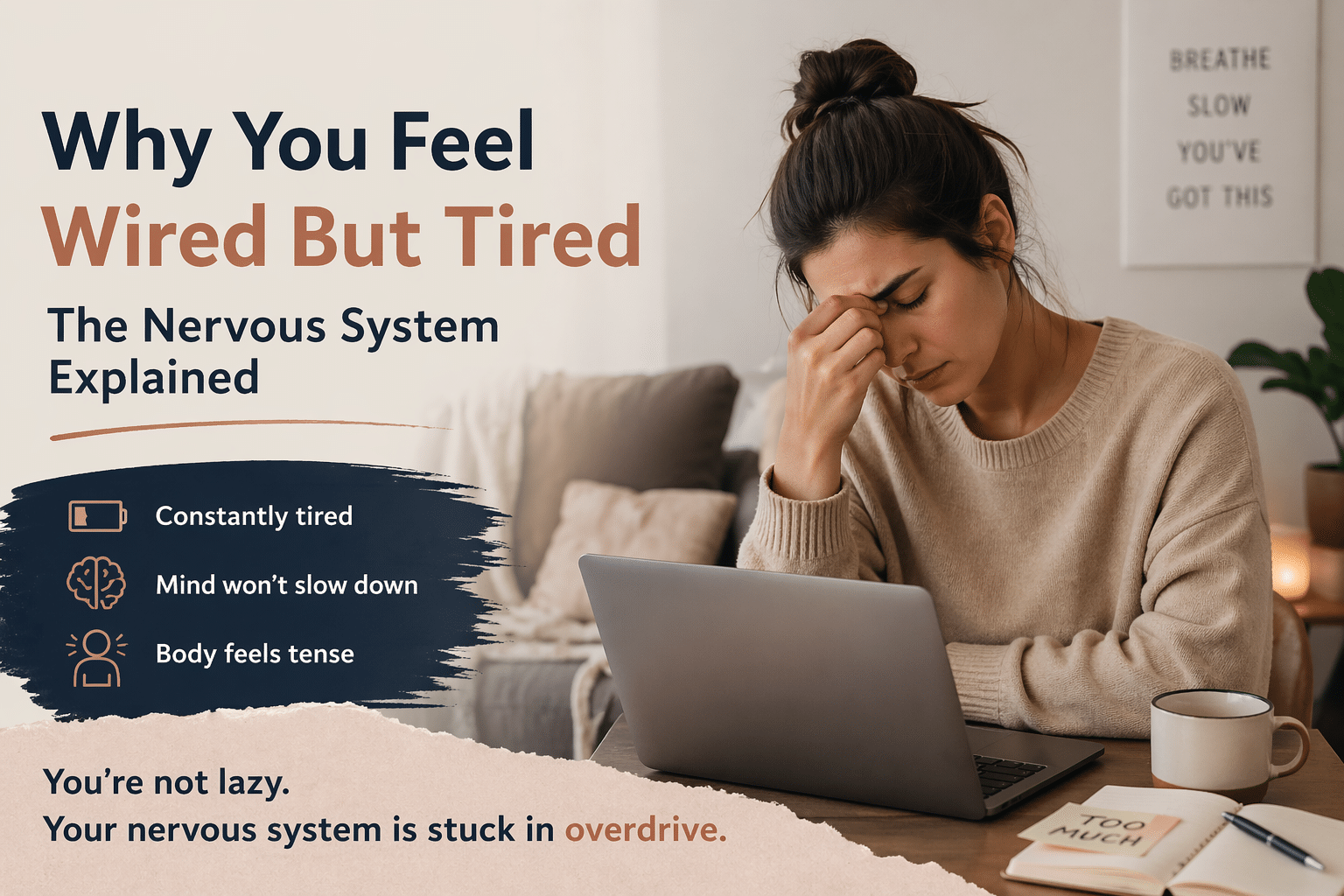
Do you ever feel like your body is running on high alert, but at the same time, you’re completely drained?
You feel restless, tense, maybe even anxious…
But also tired, unmotivated, and low on energy.
It’s confusing.
You think: “Am I anxious or just exhausted? Why do I feel both at the same time?”
If this sounds familiar, there’s a very specific reason for it.
And it has everything to do with your nervous system.
If you feel wired but exhausted at the same time, your nervous system is likely stuck in a state of chronic stress (fight-or-flight). This keeps your body activated while draining your energy, creating the feeling of being both alert and exhausted at once.
What Does “Wired But Tired” Mean?
“Wired but tired” is a state where your body feels deeply exhausted, but your mind remains alert, restless, and unable to switch off. It often shows up when you’re ready to sleep, yet your brain keeps racing with thoughts, ideas, or tension, making it difficult to relax. This creates a frustrating disconnect between physical fatigue and mental stimulation, leaving you stuck between needing rest and not being able to achieve it.
Here’s what people commonly experience in this state:
- Your body feels drained, heavy, and low on energy after a long day
- Your mind stays active with racing thoughts, worries, or overstimulation
- You may feel tired throughout the day, but suddenly more alert at night
- Falling asleep becomes difficult, even when you feel exhausted
- Sleep quality is often poor, leading to light or interrupted sleep
Several underlying factors can contribute to this imbalance:
- Chronic stress: Keeps your nervous system constantly activated
- High cortisol levels: Stress hormones remain elevated when they should decline
- Excessive screen time: Blue light and mental stimulation delay relaxation
- Irregular sleep habits: Inconsistent routines disrupt your body clock
- Caffeine or stimulants: Especially later in the day, prolong alertness
Over time, being “wired but tired” can turn into a cycle. Poor sleep leaves you feeling even more fatigued, which increases stress and makes it harder to unwind at night. Understanding this state is key to breaking the pattern, as it highlights the need to calm your nervous system, build consistent sleep habits, and allow both your body and mind to fully recover.
What’s Happening Inside Your Nervous System
Your nervous system has two main modes:
- Fight-or-flight (stress mode)
- Rest-and-digest (calm mode)
When everything is balanced, your body moves between these states naturally.
But when stress becomes constant, your system gets stuck in activation.
That means:
- Your body stays alert
- Your muscles stay tense
- Your brain keeps scanning for problems
At the same time, your energy reserves start running out.
So you feel exhausted, but your system won’t let you fully relax.
Why Your Body Gets Stuck in Survival Mode
Your nervous system is designed to protect you from danger.
But when stress becomes constant, the body can stay stuck in survival mode even after the stressful situation has passed.
This can happen after:
- chronic stress
- burnout
- emotional overwhelm
- long-term pressure
- unresolved trauma
- ongoing anxiety
When the nervous system stays activated for too long, the body may struggle to fully relax, slow down, or recover properly.
This is why many people feel:
- tired but restless
- exhausted but unable to sleep
- mentally overstimulated
- emotionally drained
- constantly “on edge”
Your body is not failing.
Your nervous system is trying to protect you based on what it has learned through stress and overload.
Why You Feel This Way Even When Life Seems Fine
This is where people get confused.
You might look at your life and think:
“There’s nothing seriously wrong… so why do I feel like this?”
The answer is conditioning.
Your nervous system doesn’t only respond to what’s happening now.
It responds to:
- Past stress
- Repeated pressure
- Long-term overload
If your body has been in stress mode for long enough, it starts treating that state as normal.
So even when things slow down, your system doesn’t.
Signs Your Nervous System Is Stuck in Stress Mode
When your nervous system is stuck in stress mode, your body stays in a constant state of alertness even when there’s no immediate threat. This can affect how you feel both mentally and physically, often without you realizing that stress is the root cause. Instead of shifting naturally between activity and rest, your system remains “switched on,” making it difficult to relax, focus, or recover properly.
Here are some common signs to look out for:
- Feeling constantly on edge, anxious, or easily overwhelmed
- Difficulty relaxing, even during downtime or before sleep
- Racing thoughts or an overactive mind, especially at night
- Frequent fatigue paired with restlessness or irritability
- Trouble falling asleep or staying asleep
- Increased sensitivity to noise, light, or small stressors
- Muscle tension, headaches, or tightness in the chest or shoulders
- Digestive issues like bloating, discomfort, or irregular appetite
These symptoms often build up gradually and can become your “new normal” if left unchecked. Over time, staying in this heightened state can drain your energy, disrupt your sleep, and make everyday challenges feel harder than they should. Recognizing these signs early is important, as it allows you to take steps to calm your nervous system and restore a healthier balance between stress and relaxation.
Why Rest Alone Doesn’t Fix It
A lot of people try to solve this by resting more.
They take breaks, sleep longer, or try to “do nothing.”
But it doesn’t fully help.
Why?
Because your body doesn’t feel safe enough to relax.
Even when you’re physically resting, your nervous system may still be active.
That’s why you can lie in bed and still feel tense.
Or take time off and still feel drained.
The Missing Link: Regulation, Not Just Rest
To actually feel better, your body needs more than rest.
It needs regulation.
Nervous system regulation helps your body shift out of stress mode and into a state where real recovery can happen.
Without that shift, your system stays stuck:
- Activated enough to feel anxious
- Drained enough to feel exhausted
How to Fix Feeling Wired But Exhausted
Fixing the “wired but exhausted” feeling starts with calming your nervous system and helping your body shift out of constant alert mode. It’s not just about getting more sleep; it’s about creating the right conditions for your mind and body to actually relax, recover, and reset. Small, consistent changes in your daily habits can make a big difference over time.
Here are practical ways to break the cycle:
- Create a consistent sleep routine: Go to bed and wake up at the same time every day to regulate your body clock
- Limit screen time at night: Reduce exposure to blue light at least 1–2 hours before bed to help your brain wind down
- Cut back on caffeine: Avoid caffeine in the afternoon and evening, as it can keep your system overstimulated
- Practice relaxation techniques: Deep breathing, meditation, or light stretching can signal your body to relax
- Get natural daylight exposure: Sunlight in the morning helps balance your sleep-wake cycle and energy levels
- Move your body regularly: Gentle exercise like walking can reduce stress and improve sleep quality
- Manage stress during the day: Take short breaks, avoid constant multitasking, and give your mind time to reset
- Create a calming night routine: Reading, journaling, or taking a warm shower can help transition your body into rest mode
The key is consistency rather than perfection. When you support your nervous system daily, your body gradually learns to switch off at night and restore its natural rhythm. Over time, this helps you feel calmer, sleep better, and wake up with more balanced energy instead of feeling both wired and exhausted.
Why This Pattern Doesn’t Just Go Away on Its Own
If you’ve been feeling this way for a while, you might be waiting for it to “pass.”
But the truth is, this pattern tends to continue unless something changes.
Because your nervous system has learned to operate this way.
And learned patterns don’t disappear automatically.
They need to be retrained.
You’re Not Lazy, Your System Is Overloaded
This is one of the most important things to understand.
Feeling wired but exhausted doesn’t mean:
- You lack discipline
- You’re unmotivated
- You’re doing something wrong
It means your body has been under pressure for too long.
And now it doesn’t know how to fully switch off.
When You Need More Structured Support
Simple techniques can help, but if your nervous system has been stuck in this state for a long time, you may need a more structured approach.
That’s where deeper support becomes important.
Inside this nervous system reset group for chronic stress and emotional overwhelm, the focus is on helping you move out of constant activation, build regulation skills, and create a sense of safety in your body again.
Instead of pushing yourself harder, the goal is to work with your nervous system in a way that actually leads to lasting change.
Need Extra Support?
If your nervous system has been stuck in this pattern for a long time, simple tips might not be enough.
Inside my nervous system reset program, you’ll learn how to move out of constant stress, rebuild safety in your body, and feel calm, focused, and energized again.
Final Thoughts
If you feel wired all the time but also exhausted, it’s not random.
It’s your nervous system trying to protect you while running on empty.
And the solution isn’t more discipline or more effort.
It’s learning how to bring your body out of stress mode and back into balance.
With the right approach, your system can shift.
And when it does, you won’t feel like you’re constantly fighting your own body anymore.
FAQs
Why do I feel tired but can’t relax?
This usually happens when your nervous system is stuck in stress mode. Your body feels exhausted, but your mind stays alert, making it hard to fully relax.
Is being wired but tired a sign of anxiety?
Yes, it can be. Chronic stress and anxiety keep your nervous system activated, which can make you feel both restless and drained at the same time.
How do I calm my nervous system fast?
You can calm your nervous system by slowing your breathing, reducing stimulation, and creating a sense of safety in your body through simple daily practices.
Can chronic stress make you feel wired but tired?
Yes. Chronic stress can keep your nervous system stuck in fight-or-flight mode, making you feel mentally alert while physically exhausted.