
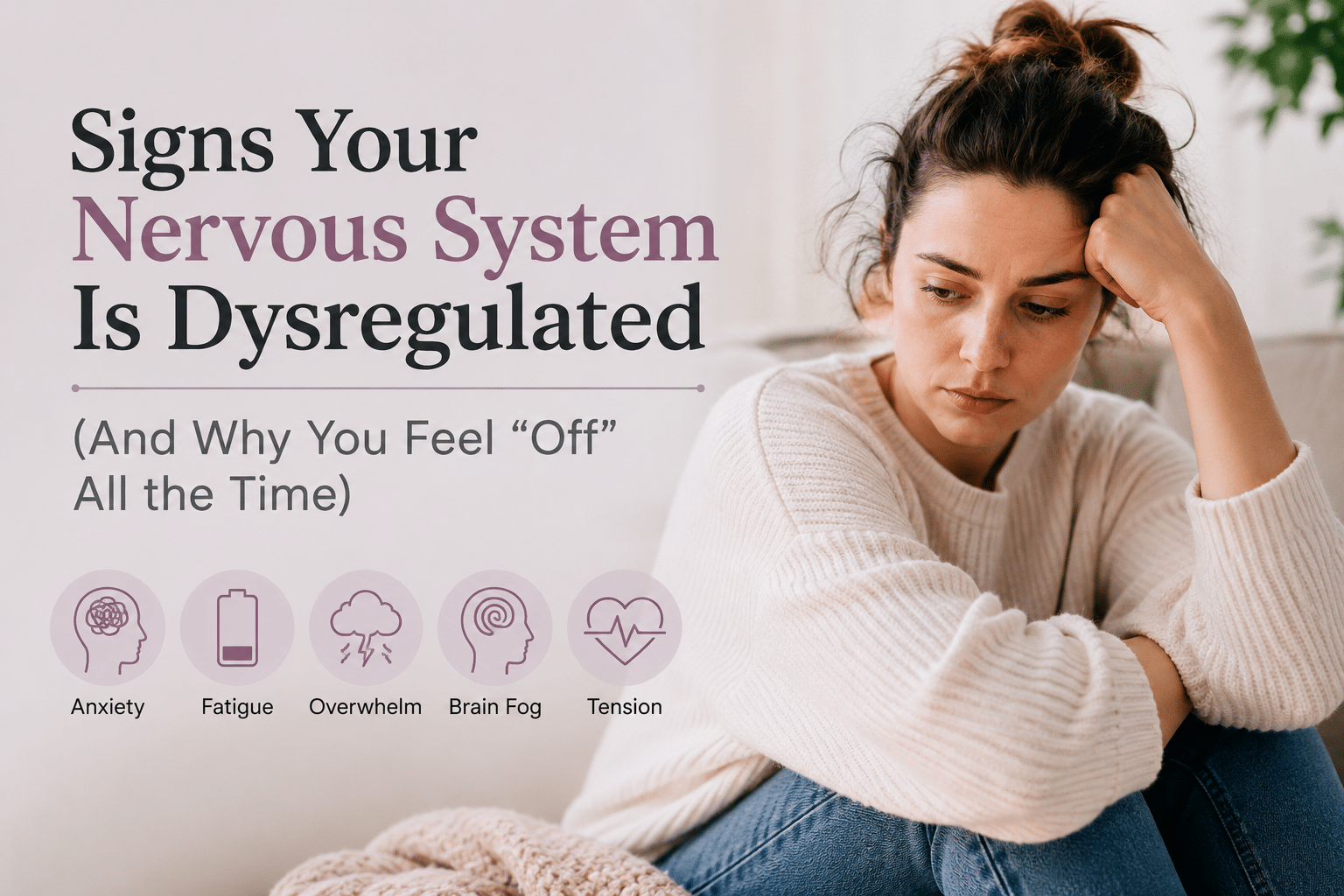
Have you ever felt like something is just… off?
Not exactly anxious.
Not exactly sick.
But not calm or settled either.
You can’t fully relax.
Your body feels tense.
Your mind doesn’t quite switch off.
And you can’t always explain why.
If that sounds familiar, you’re likely not dealing with a mindset issue.
You’re experiencing nervous system dysregulation.
Signs of a dysregulated nervous system include constant tension, feeling anxious without a clear reason, difficulty relaxing, fatigue combined with restlessness, and emotional overwhelm. These symptoms happen when your body stays stuck in a stress response instead of returning to a calm state.
What Does “Dysregulated” Actually Mean?
Your nervous system is designed to move between stress and calm naturally.
- Stress mode (fight-or-flight) helps you respond to challenges
- Calm mode (rest-and-digest) helps you recover and feel safe
But when your system becomes dysregulated, it gets stuck.
Instead of switching off after stress, it stays activated.
That’s when you start feeling “off” all the time.
Fight, Flight, Freeze, and Shutdown Responses
When the nervous system becomes dysregulated, the body often shifts into automatic survival responses.
These responses are designed to protect you during stress or danger, but when they stay active for too long, they can affect emotional and physical well-being.
The most common nervous system survival responses include:
Fight
Feeling irritable, emotionally reactive, frustrated, or easily triggered.
Flight
Constant overthinking, anxiety, restlessness, perfectionism, or feeling unable to slow down.
Freeze
Feeling emotionally stuck, disconnected, numb, unmotivated, or mentally overwhelmed.
Shutdown
Feeling exhausted, emotionally detached, hopeless, or disconnected from daily life.
Many people move between these states without realizing their nervous system is trying to protect them.
Learning nervous system regulation may help the body gradually feel safer and more balanced over time.
10 Signs Your Nervous System Is Dysregulated
Here are some of the most common signs:
1. You Feel Anxious for No Clear Reason
Even when life seems okay, your body feels on edge.
(This often overlaps with why you can’t relax even when nothing is wrong; your system is activated beneath the surface.)
2. You’re Always “Wired but Tired”
You feel restless and alert, but also completely exhausted.
(This is a classic pattern explained in more detail in why you feel wired all the time but also exhausted, where your body is stuck between stress and burnout.)
3. You Struggle to Fully Relax
Even during rest, your body doesn’t feel calm.
4. Your Mind Keeps Scanning for Problems
You’re always thinking ahead, anticipating issues, or overanalyzing.
5. You Feel Overwhelmed Easily
Small tasks can feel like too much.
6. You Experience Constant Muscle Tension
Tight shoulders, jaw clenching, or body stiffness without a clear cause.
7. You Feel Drained, Even After Rest
Sleep or breaks don’t fully restore your energy.
8. You React More Than You Want To
You feel emotionally triggered or reactive more easily.
9. You Have Trouble Focusing
Your attention feels scattered or foggy.
10. You Don’t Feel Fully Present
It’s hard to feel grounded or connected to the moment.
Physical Symptoms of Nervous System Dysregulation
Nervous system dysregulation affects both the mind and body.
Many people notice physical symptoms long before they realize stress is affecting their nervous system.
Common physical symptoms may include:
- Muscle tension
- Jaw clenching
- Fatigue
- Headaches
- Digestive discomfort
- Chest tightness
- Difficulty sleeping
- Shallow breathing
- Racing heartbeat
- Feeling physically restless
These symptoms happen because the body remains stuck in a prolonged stress response instead of fully returning to a calm, regulated state.
Over time, constant activation can leave the body feeling exhausted, tense, and overwhelmed.
Emotional Symptoms of Nervous System Dysregulation
Nervous system dysregulation can affect emotions just as strongly as physical health.
Many people feel emotionally overwhelmed without understanding that chronic stress may be affecting their nervous system beneath the surface.
Common emotional symptoms may include:
- anxiety
- irritability
- emotional overwhelm
- feeling emotionally reactive
- panic
- emotional numbness
- mood swings
- low stress tolerance
- constant worry
- difficulty feeling calm
- feeling emotionally exhausted
Over time, emotional stress may increase feelings of burnout, overwhelm, and mental fatigue.
This is why nervous system healing often focuses on both emotional regulation and physical recovery together.
Why This Happens
Nervous system dysregulation doesn’t appear out of nowhere.
It builds over time.
Common causes include:
- Chronic stress
- Burnout
- Emotional pressure
- Overworking or overthinking
- Lack of recovery time
Your body adapts by staying in a constant state of alertness.
And eventually, that becomes your baseline.
Why Your Body Stays Stuck in Stress Mode
Your nervous system learns through repetition.
When stress happens repeatedly without enough recovery, the body may begin treating stress responses as normal.
This means the nervous system may continue staying alert even when there is no immediate danger present.
Over time, the body can become highly sensitive to:
- pressure
- overstimulation
- conflict
- emotional stress
- uncertainty
- constant demands
This is why many people feel unable to fully relax even during quiet moments.
The nervous system is not trying to harm you. It is trying to protect you based on patterns it learned over time.
Heather’s Personal Experience With Nervous System Dysregulation
There was a time when Heather constantly felt emotionally exhausted, tense, and unable to fully relax, even during quiet moments. She often described it as feeling “off” all the time without fully understanding why.
At first, it didn’t feel like obvious anxiety. Instead, it showed up as overthinking, muscle tension, emotional overwhelm, difficulty slowing down, and feeling stuck in a constant state of alertness.
Like many people dealing with chronic stress and burnout, she eventually realized her nervous system had been staying in survival mode for far too long. Learning how to slow down, reduce pressure, and create small moments of safety became an important part of rebuilding emotional balance and regulation over time.
Why You Feel “Off” Instead of Clearly Anxious
One of the most confusing parts is that it doesn’t always feel like anxiety.
Instead, it feels vague.
You might think:
- “Something feels wrong, but I don’t know what”
- “I just don’t feel like myself”
That’s because your nervous system is activated at a low, constant level—not always intense, but always present.
Why This Doesn’t Fix Itself Automatically
Many people assume this will go away with time.
But it usually doesn’t.
Because your nervous system has learned this pattern.
And learned patterns need to be retrained.
Without that, your system continues to:
- Stay alert
- Burn energy
- Avoid fully relaxing
Why Nervous System Dysregulation Can Last for Years
Many people assume stress naturally disappears once life calms down.
But nervous system patterns often continue long after stressful situations end.
This happens because the nervous system learns patterns through repetition.
When the body spends long periods in stress, pressure, burnout, emotional overwhelm, or survival mode, those responses can eventually become automatic.
Over time, the nervous system may begin treating tension, hypervigilance, and emotional overwhelm as its “normal” state.
That’s why many people continue feeling anxious, overstimulated, exhausted, or emotionally reactive even when they’re trying to rest.
Healing usually requires helping the body experience consistent safety, recovery, and regulation over time.
Can Nervous System Dysregulation Affect Relationships?
Nervous system dysregulation can also affect communication, emotional connection, and relationships.
When the body feels stressed or unsafe, emotional reactions often become stronger and harder to manage.
Some people may notice:
- becoming emotionally reactive
- withdrawing from others
- feeling irritated easily
- shutting down during conflict
- difficulty trusting people
- emotional exhaustion around social interaction
Many people blame themselves for these reactions without realizing their nervous system may be overwhelmed.
As nervous system regulation improves, emotional balance and communication often become easier over time.
The Shift: From Dysregulation to Safety
The goal isn’t to “force calm.”
It’s to help your body feel safe again.
When your body feels safe:
- Tension reduces
- Your mind slows down
- Your energy stabilizes
This process is called nervous system regulation.
What a Regulated Nervous System Feels Like
Many people don’t realize how much tension they’re carrying until their nervous system begins feeling more regulated.
A regulated nervous system doesn’t mean you never experience stress.
It means your body can move through stress without staying stuck in it.
A more regulated nervous system may feel like:
- Being able to relax more easily
- Feeling calmer emotionally
- Recovering faster after stress
- Sleeping more deeply
- Feeling safer in your body
- Thinking more clearly
- Responding instead of reacting
- Feeling more present and grounded
Over time, regulation helps life feel less overwhelming and more manageable.
2 Simple Ways to Start Regulating Your Nervous System
1. Create Micro Moments of Safety
Instead of trying to relax for long periods, start small.
- Sit quietly for a minute
- Notice your breath
- Let your body settle
Short, repeated moments teach your system safety.
2. Reduce Constant Stimulation
Your system may be overloaded from continuous input.
Try:
- Less screen time
- More quiet moments
- Slowing your pace
This helps your body come out of constant alert mode.
What Keeps the Nervous System Stuck in Survival Mode?
Several habits and lifestyle patterns can make nervous system dysregulation worse over time.
These may include:
- Constant overstimulation
- Poor sleep
- Lack of rest
- Burnout
- Emotional suppression
- Overworking
- Perfectionism
- People-pleasing
- Chronic stress
- Never slowing down
When the body doesn’t experience enough recovery, the nervous system may continue operating from protection instead of safety.
You’re Not Broken, You’re Dysregulated
This is a key distinction.
You’re not failing.
You’re not lazy.
You’re not doing life wrong.
Your nervous system is simply stuck in a pattern it learned over time.
And that pattern can change.
When You Need More Structured Support
If you’ve been feeling this way for a long time, simple tips may not be enough on their own.
That’s where a structured approach becomes important.
Inside this nervous system reset group for stress, anxiety, and emotional regulation, the focus is on helping you move out of chronic dysregulation, build consistent regulation habits, and create a sense of safety in your body again.
Instead of forcing change, the approach is about working with your nervous system in a way that actually leads to lasting results.
Daily Habits That Support Nervous System Regulation
Small daily habits often support nervous system healing more effectively than extreme routines or quick fixes.
Helpful habits may include:
- Slowing down your pace
- Creating quiet moments
- Spending less time overstimulated
- Improving sleep routines
- Eating consistently
- Certain foods for nervous system health may also support stress recovery and balance.
- Practicing breathing exercises
- Taking breaks during the day
- Spending time outdoors
- Reducing pressure on yourself
Consistency helps teach the nervous system that it no longer needs to stay in constant survival mode.
Small Signs Your Nervous System Is Healing
Nervous system healing often happens gradually.
Many people expect dramatic changes, but recovery usually begins through small improvements repeated consistently over time.
Signs your nervous system may be healing include:
- feeling calmer after stress
- sleeping more deeply
- recovering faster emotionally
- less muscle tension
- improved focus
- feeling safer in your body
- reacting less intensely
- experiencing more emotional balance
- feeling more present during daily life
Small improvements are still meaningful progress.
Over time, these changes may help life feel less overwhelming and more manageable.
What Triggers Nervous System Dysregulation Symptoms?
Nervous system dysregulation symptoms often become stronger during periods of stress, overstimulation, emotional pressure, burnout, or lack of recovery.
Common triggers may include:
- poor sleep
- emotional overwhelm
- conflict
- overstimulation
- overworking
- constant pressure
- lack of rest
- chronic anxiety
- perfectionism
When the nervous system already feels overloaded, even small stressors can feel difficult for the body to manage.
Final Thoughts
If you’ve been feeling “off” for a while and can’t fully explain why, there’s a strong chance your nervous system is dysregulated.
And that’s something you can work with.
By understanding your body and learning how to regulate it, you can move out of constant tension and into a more stable, calm state.
You don’t need to push harder.
You need to support your system differently.
FAQs
Can nervous system dysregulation cause physical symptoms?
Yes. Nervous system dysregulation can contribute to fatigue, tension, headaches, digestive issues, sleep problems, and feeling physically on edge.
How do I know if my nervous system is dysregulated?
Common signs include feeling anxious, tense, overwhelmed, emotionally reactive, unable to relax, or constantly exhausted.
Can a dysregulated nervous system heal?
Yes. With consistent regulation practices, stress reduction, recovery, and nervous system support, the body can gradually become more regulated over time.
Why do I feel anxious for no reason?
Your nervous system may be staying activated beneath the surface, even when there’s no immediate danger present.
Can chronic stress dysregulate the nervous system?
Yes. Long-term stress can keep the body stuck in survival responses and make relaxation more difficult over time.
How long does nervous system healing take?
Healing timelines vary, but consistent stress reduction and regulation habits may gradually improve symptoms over time.
Can nervous system dysregulation affect sleep?
Yes. Many people experience poor sleep, restlessness, or difficulty relaxing when the nervous system stays activated.
What does a dysregulated nervous system feel like?
A dysregulated nervous system may feel like constant tension, emotional overwhelm, overthinking, fatigue, restlessness, or difficulty fully relaxing.